
NEWS
Hormuud Bets $19 Down Will Finally Pull Somalia Online
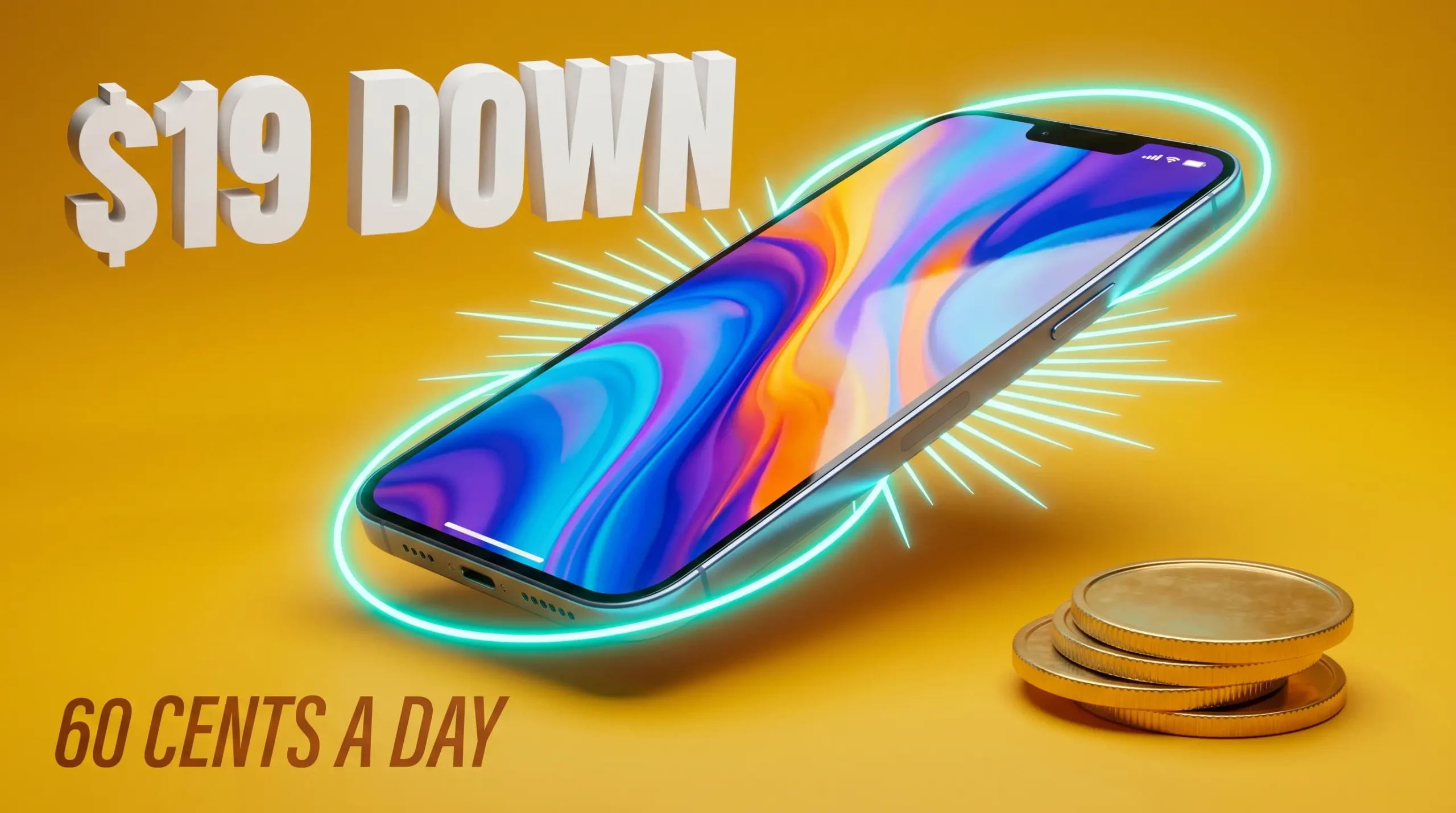
Mogadishu’s biggest telecom operator just put a smartphone within reach of almost every adult in the country for the price of a chai habit. Hormuud Telecom and device financier Get-Phone launched Somalia’s first structured smartphone financing program at the Decale Hotel on May 5, 2026, opening enrollment with a $19 deposit and daily payments of $0.60. The plan targets 10,000 devices by June and 100,000 by year-end, then expands into Puntland and Somaliland.
The math is what makes this story land. The average Hormuud customer already spends roughly $0.50 per day on data and minutes. Adding a smartphone to that line item costs them another 10 cents.
Behind the simple numbers sits a quieter story: this is less a phone deal than a credit infrastructure rollout dressed up as one. The repayment engine is Hormuud’s EVC Plus mobile money platform, which the operator says serves roughly four million customers, and the underwriting layer scores eligibility from SIM-usage patterns, not bank statements.
The Deal That Costs Less Than Lunch
Customers walk into a Hormuud branch, pay $19 up front, and walk out with an internet-ready handset the same day. From that point, $0.60 lands daily on the device through EVC Plus. The fee bundles 1GB of mobile data, 40 minutes of voice calls, and the device installment in a single charge.
Repayment terms run six to 12 months. Get-Phone CEO Omar Abdi confirmed the structure is interest-free and Sharia-compliant, which lets the program reach the large share of Somalis who refuse conventional credit on religious grounds.
That is not a marketing line. Somalia’s mobile money market runs on Islamic-finance principles by default, and any device-financing model that smuggled riba into the contract would have died on contact with the Mogadishu street.
How $0.60 A Day Actually Works
The headline price hides three different things: a hardware payment, a data bundle, and a voice allowance, all settled through the same daily mobile-money debit. Strip the bundle out and the marginal cost of the smartphone over a feature phone is roughly 10 cents per day, since most customers already spend $0.50 daily on prepaid airtime and data.
Eligibility runs on a proprietary scoring engine that reads how a SIM has behaved over time. Top-up cadence, voice patterns, length of network tenure, and EVC Plus transaction history feed the model. No bank statement, no formal employment proof, no national ID requirement for most applicants.
A second layer hardens the underwriting: a family-guarantor mechanism, where a relative co-signs through their own SIM. The structure leans on Somalia’s clan and family networks rather than against them, and that detail mattered during the pilot.
Here is what the pricing block looks like in practice.
- $19: one-time deposit at any Hormuud or Get-Phone counter
- $0.60 per day: device installment plus 1GB data plus 40 minutes of voice
- 6 to 12 months: repayment window, interest-free
- 4 million: existing EVC Plus customers who can repay through the same wallet they already top up
Why EVC Plus Is The Real Engine
Mobile money in Somalia is not an alternative payment method. It is the payment method. A 2025 Frontiers study on EVC Plus and humanitarian aid delivery documented the platform’s reach at over 80 percent of the adult population in southern and central Somalia, with daily transaction volumes that dwarf the country’s banking sector.
That base is what allows daily-rate device repayment to work at all. A Kenyan or Nigerian operator running the same product would face card declines, USSD timeouts, and bank-rail friction. In Somalia, $0.60 deducts from an EVC Plus wallet in seconds.
| Variable | Hormuud / Get-Phone | M-Kopa (Kenya) |
|---|---|---|
| Upfront deposit | $19 | ~$15 to $35 |
| Daily payment | $0.60 (bundles data and voice) | ~$0.45 to $0.65 (device only) |
| Repayment rail | EVC Plus mobile money | M-Pesa |
| Pilot default rate | Under 4% | Around 10% market average |
| Compliance frame | Sharia-compliant, interest-free | Conventional interest model |
The Sharia-Compliance Twist Mainstream Banks Couldn’t Crack
Conventional device financing in Muslim-majority markets has stalled for years on a single problem: interest. A standard installment plan with a stated APR is haram under most local interpretations, and households simply refuse it. Get-Phone’s contract is structured along ijarah and murabahah lines, where the financier owns the device, sells it forward at a fixed markup, and collects in known installments.
That structure is not exotic in Somalia. It is the default. Salaam Somali Bank, Premier Bank, and Kaah International Microfinance Services have all built consumer products on the same legal scaffolding, and Hormuud chose to plug into it rather than fight it.
This program is built on the belief that when you give people access to the right tools at the right price, they will do extraordinary things, said Get-Phone CEO Omar Abdi at the Decale Hotel launch.
A 4% Default Rate That Caught Lenders Off Guard
The most under-reported number from Tuesday’s launch is the pilot default rate. Hormuud said the February-to-March Mogadishu pilot recorded delinquency below 4 percent. M-Kopa, the most successful pay-as-you-go device financier in East Africa, has openly said its market default rate sits closer to 10 percent in Kenya, and the company has fought legal battles over its enforcement tactics.
Hormuud’s number is genuinely low for an unbanked-population product. Two design choices explain it.
First, the family-guarantor mechanism. A delinquent borrower drags a named relative’s SIM into the same delinquency status, which collapses voice, data, and EVC Plus access for both parties at once. Social cost replaces legal cost.
Second, the same SIM that owes money is the SIM the borrower depends on for income, banking, and family contact. There is no walking away from a Hormuud number in Somalia. The asset and the collateral are the same object.
If that 4 percent figure holds at 100,000 devices, the program crosses the threshold where international development financiers and impact funds typically step in. A loan book performing inside 4 percent loss is investment-grade by emerging-market standards.
ZTE Devices And What They Mean For Margins
Mainstream coverage skipped the supply side entirely. Get-Phone’s product page lists ZTE as the curated handset partner, which lines up with the broader pattern across low-margin African device financing: Chinese OEMs are the only ones willing to ship sub-$100 4G devices in volume with the LTE bands East African networks need.
The choice has consequences. ZTE’s bill of materials at this tier sits well under $50, leaving room inside Get-Phone’s contract for the markup that funds the financing risk. A Samsung or Xiaomi device at the same price band would have left no room for either bundled data or a 4 percent default cushion.
Vision 2060 And The GDP Math Behind The Pitch
Deputy Prime Minister Salah Ahmed Jama framed the rollout as a building block of Somalia’s Centennial Vision 2060, the long-term plan to lift the country to middle-income status by mid-century. “A smartphone today is far more than a device; it is a gateway to commerce, education, and opportunity,” Jama said at the launch.
The macro case is real. A World Bank background paper for the World Development Report found that a 10-percentage-point increase in fixed broadband penetration lifts GDP growth by roughly 1.38 percent in developing economies. GSMA’s 2025 Mobile Economy Africa report went further, projecting that closing the continent’s mobile internet usage gap by 2030 could add around $700 billion to African GDP.
Where Somalia sits today makes the upside concrete.
- 11.5 million: active mobile connections, equal to 58.1 percent of the population
- 27.6 percent: individual internet penetration at the end of 2025
- 75.7 percent: share of mobile connections already on 3G, 4G, or 5G
- 22.7 percent vs 47.1 percent: rural versus urban internet access reported in Somalia’s Digital Inclusion Policy
- Sixth of annual income: typical upfront cost of an entry smartphone before this program
Frequently Asked Questions
How Do I Sign Up For The Get-Phone Smartphone Plan In Mogadishu?
Walk into any Hormuud branch or Get-Phone service point with an active Hormuud SIM and $19 in cash or EVC Plus balance. Staff verify your number against the SIM-usage credit score, register a family guarantor where required, and hand over the device the same day. Daily $0.60 deductions begin from your EVC Plus wallet the next morning, and the eGet customer app tracks your remaining balance in real time.
What Happens If I Miss A Daily Payment?
Short grace periods apply, then the device’s data and voice features pause until the wallet is topped up. The handset is not bricked outright in the early window. If delinquency runs longer, the family guarantor’s SIM is flagged too, which is the social pressure point that kept pilot defaults below 4 percent. Long-term non-payment can lead to device deactivation and recovery under the Sharia-compliant ijarah terms.
Is This Plan Actually Interest-Free Under Islamic Finance Rules?
Yes. Get-Phone CEO Omar Abdi confirmed at the May 5 launch that the contract is structured along Sharia-compliant lines, with the financier owning the device and selling it forward at a known markup rather than charging riba. The total amount you pay across six to 12 months is fixed at signing, and there are no late-payment interest charges added. Customers can request the contract documentation in Somali or English at any branch.
Can I Use The Phone On A Network Other Than Hormuud?
Not during the financing period. The device is tied to your Hormuud SIM, since the SIM doubles as your identity, your credit file, and your repayment rail through EVC Plus. Once you complete the six-to-12-month term, ownership transfers and the device unlocks for use on other carriers. Hormuud has not yet published a buy-out option for early settlement, but Get-Phone branches in Mogadishu are accepting written queries.
When Will The Program Reach Puntland And Somaliland?
Hormuud said the second wave starts after the 10,000-device Mogadishu phase clears in June 2026, with the 100,000-device national target running through December. Puntland’s Bosaso and Garowe and Somaliland’s Hargeisa are flagged as the first regional launches. Customers outside Mogadishu can register interest through the eGet app or at Hormuud retail outlets, and the company has committed to publishing a regional rollout calendar on its corporate updates page as zones come online.
If the pilot’s 4 percent default rate holds at scale, the program stops being a corporate social responsibility story and turns into something rarer: a viable consumer-credit business built on top of a mobile-money rail in a country where formal banking still touches under 10 percent of adults. That is the lever that turns Hormuud’s masts into smartphones, and smartphones into the GDP line that Vision 2060 has been chasing on paper for a year. The next 100,000 devices will tell whether the math survives contact with the rest of the country.
GAMING
Asha Sharma Reshuffles Xbox Leadership In Race To Project Helix
Xbox CEO Asha Sharma reshuffled her senior team on Tuesday, importing four executives from Microsoft’s CoreAI division and elevating 20-year company veteran Jason Ronald to run Project Helix, the next-generation Xbox console. The May 5, 2026 memo, sent to Xbox staff and seen by IGN, said it had become “too hard to ship impact quickly” and that the unit “lacks the capability we need in some key areas.” Hardware revenue at Microsoft’s gaming segment fell 33% in the March quarter, the second straight quarter of 30%-plus declines, and Sharma’s runway to a Helix dev kit launch in 2027 is short.
The reshuffle pulls together CoreAI lieutenants who reported to Sharma before her February move to gaming and shifts veteran hardware leader Roanne Sones into an advisor role later this year. It also ends Kevin Gammill’s 24-year run at Microsoft.
Who’s In, Who’s Out At The New Xbox
Sharma’s note names six new appointees and two notable exits. Most picks come from people she worked with at CoreAI, the engineering group inside Microsoft that builds the Copilot stack, GitHub Copilot, and the Azure AI Foundry tools she previously oversaw as president of CoreAI Product before Microsoft’s February announcement of her appointment as gaming CEO. The full slate breaks out like this:
- Jason Ronald moves up to lead Project Helix and the wider Xbox platform after more than two decades on Xbox hardware.
- Jared Palmer joins from CoreAI to run platform-level developer tooling and content infrastructure; he previously served as SVP at GitHub and VP at Vercel.
- Tim Allen takes over experience design, fusing product design, engineering, research, and creative under one fan-first mandate.
- Jonathan McKay becomes Xbox’s head of growth, joining from CoreAI after stints at Meta and OpenAI.
- Evan Chaki runs a new engineering group focused on cutting repetitive work and simplifying internal development.
- David Schloss moves from Instacart, where he worked alongside Sharma, to lead Xbox subscriptions and cloud.
- Roanne Sones, the corporate vice president overseeing Xbox devices, takes a planned leave of absence later this year and returns as an Xbox advisor.
- Kevin Gammill, a 24-year Microsoft veteran whose career spanned Xbox user experience and game dev platforms, exits the company.

The CoreAI Imports
Four of the six new lieutenants come straight from CoreAI. Their reporting relationships at Sharma’s old org give the move a clear shape. She is importing the team that ran her previous group’s product velocity engine.
Palmer’s brief, “investing in the systems that make it easy to build, submit and scale high-quality games,” reads as a developer-tools mandate transposed from CoreAI’s GitHub Copilot work into Xbox’s certification, publishing, and live-ops pipelines. Chaki’s remit, removing repetitive work and simplifying day-to-day development, fits the same pattern. Both reflect what CoreAI shipped fast and what Xbox has not.
The Promotions And Exits
Ronald’s elevation is the load-bearing internal pick. He has worked on Xbox hardware programs since the original Xbox One generation and now owns the most consequential roadmap in Microsoft Gaming.
Gammill’s departure quietly closes a long chapter. He spent 24 years at Microsoft across two stints, most of it on Xbox user experience, gaming partner programs, and developer publishing tools. Sones, who led the Xbox Series X|S devices group, will leave for a long-planned absence and rejoin later in an advisory capacity.
The Numbers Behind The Hurry
Xbox is bleeding revenue on the hardware side. Microsoft’s FY26 Q3 segment revenue results show gaming revenue down 7% year-over-year for the quarter ending March 31, 2026, content and services down 5%, and hardware down 33%. That marks the ninth consecutive quarter of hardware declines and the second straight quarter with a 30%-plus drop, after a 32% fall in the December quarter.
Total Xbox gaming revenue slid to roughly $5.34 billion from $5.72 billion the year prior, a $380 million gap inside a single quarter. The hardware line is the most exposed, given Xbox Series X|S consoles are deep into the back end of their generation.
Sharma acknowledged the shortfall in a public note last week. “Player and revenue growth has not yet met our ambition,” she wrote, adding that Xbox still has “work to do to earn every player today and into the future.”
That admission sits awkwardly next to a Microsoft Cloud quarter that delivered $54 billion in revenue, up 29%, and an AI business now running at a $37 billion annual revenue rate. Inside Redmond, gaming is the slow lane in a company whose other lanes are sprinting.
A CoreAI Pipeline Now Plugs Straight Into Xbox
The overlap between Sharma’s old org and her new team has set off alarms with industry watchers. Joost van Dreunen, founder of analytics firm Aldora and a lecturer at NYU Stern, told the trade press the move signals a shift in priority order at Microsoft Gaming.
“Gaming might become subordinate to Microsoft’s horizontal AI ambitions rather than treated as a category with its own logic and culture.”
Sharma has tried to head off that read. She has publicly pledged no “soulless AI slop” on Xbox and framed the new appointments internally as bringing in the best talent rather than reorienting Xbox’s AI policy. IGN reported that the company’s prior stance on AI tooling and content remains unchanged.
There is also a tension inside Sharma’s own messaging. In an April 24 interview transcript with Sharma and chief content officer Matt Booty, she told independent journalist Stephen Totilo: “I want to make the right decision, not the fastest decision.” Two weeks later, her staff memo argues the opposite, that shipping speed is the bottleneck. The reshuffle is how she squares those two statements.
Project Helix Runs On A Tight Clock
Project Helix is the gun to Sharma’s head. The next-gen Xbox, previewed at GDC in March with detailed silicon specs, runs on a custom AMD SoC with RDNA 5 graphics, AMD FSR Next+ machine-learning upscaling, GPU Directed Work Graph Execution, and Deep Texture Compression. Microsoft has confirmed alpha hardware ships to developers in 2027.
From a typical 18-to-24 month dev kit window, a late 2027 or 2028 consumer launch is the only realistic read. That is the timeline Ronald inherits.
The headline feature is platform reach. Helix is being designed to play “your Xbox console and PC games,” a clear positioning shift toward Valve’s Steam Machine and Windows 11 handhelds rather than head-to-head against the PlayStation 6.
That requires new tooling, new certification flows, and a much deeper PC build pipeline. Most of that work falls to Palmer and Chaki, whose CoreAI backgrounds are precisely about developer infrastructure rather than triple-A game production. The fit is tighter than the headlines suggest.
If Helix slips, Sharma’s memo on velocity becomes an indictment of her first year. If it lands on time and runs well, the CoreAI imports will look prescient.
Game Pass Math Is The Other Squeeze
The hardware line is not the only number sliding. Xbox’s content and services revenue, which includes Game Pass, was down 5% year-over-year in the same March quarter. Microsoft’s April 21 Game Pass pricing update tried to widen the funnel by trading away day-one Call of Duty access in exchange for a sharp price drop.
- $22.99 per month: New Game Pass Ultimate price, down from $29.99 set last year.
- $13.99 per month: New PC Game Pass price, down from $16.49.
- About $300 million: Estimated Call of Duty console and PC sales Microsoft gave up in the prior year by including the franchise on Game Pass at launch, per internal accounting cited in the FTC trial record.
- Roughly 12 months: The expected delay future Call of Duty titles will see before reaching the subscription.
That concession was Sharma’s first hard pricing decision, and it hands cash flow back to the publisher side of the house. It also slows the perception that Xbox subsidies are propping up Activision Blizzard’s release calendar.
What The Memo Actually Asked For
The reshuffle lands a month after Sharma and Booty’s “We Are Xbox” mission statement, which retired the Microsoft Gaming brand and reset platform priorities to four areas: hardware, content, experience, and services. The document also acknowledged player frustration over higher prices, missing console features, and a thin PC presence.
The new appointments map almost one-to-one onto those four pillars. Schloss owns services. Allen owns experience. Palmer and Chaki own the platform plumbing under both content and hardware. Ronald sits across content and hardware via Helix.
The cultural ask in the memo is bigger than the org chart. Sharma wants less time spent inward, more time with players, and faster shipping cycles. Whether a CoreAI playbook can produce that inside the largest console publisher Microsoft has ever owned, after Activision Blizzard King added more than 30,000 employees to the unit in 2023, is the bet she has now placed in writing.
Sharma’s first ten weeks have already produced a brand reset, a Game Pass repricing, a public memo on culture, and a leadership rewrite. The next visible test is whatever Xbox shows of Project Helix later this year, with developers waiting and Microsoft’s quarterly earnings cadence ticking. The clock she described in May is the same clock everyone else can read.
CRYPTO
Republic Tokenizes Animoca Brands Equity on Solana for Retail Buyers
Republic, the global investment platform with $3 billion deployed across 2,500-plus companies, is moving Animoca Brands’ private equity onto the Solana blockchain, a tokenization push first unveiled on September 30, 2025 and still rolling out as of May 2026. Existing Animoca shareholders can already claim tokenized shares directly to their wallets through Republic, and a public waitlist for new buyers is open at republic.com/animoca. The deal lands while Animoca, the Hong Kong Web3 group with more than 600 portfolio investments, races toward a separate $1 billion Nasdaq listing through a reverse merger with Currenc Group targeted to close inside 2026.
Andrew Durgee, Co-CEO at Republic, called the structure “a precedent for how companies can structure their equity for the future” in Republic’s September 30, 2025 announcement on tokenizing Animoca equity. Pricing, the exact token standard, and the public trading start date have not yet been disclosed.
The setup is unusual. Animoca was kicked off the Australian Securities Exchange on March 9, 2020 after the ASX cited governance concerns and “involvement in cryptocurrency related activities.” Six years later, the company is using the same crypto rails it was once punished for to reach retail investors again, this time on Solana, this time with regulators watching.
How the Solana Token Actually Works
Solana hosts the mint. Republic handles distribution, identity checks, and secondary trading. The tokens represent economic exposure to Animoca’s equity rather than direct cap-table ownership, a design Republic has standardized through its Mirror Tokens program for private companies.
Existing shareholders need to register a whitelisted wallet before they can claim. New buyers join the waitlist and clear Republic’s eligibility checks, which typically split between Republic’s Regulation D explainer for accredited US investors and Regulation S for offshore participants. Republic has said the Animoca token “will comply with existing regulatory requirements” without naming a specific exemption for this offering.
The minimum buy-in for Republic’s public Mirror Token tier starts at roughly $50, with no accreditation required. That floor is what makes the offering meaningfully different from the over-the-counter secondary market where Animoca shares have traded since the ASX exit.
What’s confirmed so far:
- Tokens minted on Solana and distributed to whitelisted wallets
- Trading routed through Republic’s global marketplace once live
- Compliance anchored to existing US and offshore securities exemptions
- Existing shareholders eligible to claim tokenized representations of their holdings
What’s still blank:
- The exact SPL token standard or custom contract structure
- Public trading start date and any lockup or holding period
- Per-token pricing and any cap on retail allocation
- Whether the token survives, converts, or unwinds at the Nasdaq merger close

The $1 Billion Nasdaq Bid Running In Parallel
Animoca isn’t betting on tokens alone. On November 3, 2025, Currenc Group, a Singapore-based fintech trading on Nasdaq under ticker CURR, signed a non-binding term sheet for a reverse merger with Animoca Brands Corporation Limited. The combined entity targets a roughly $1 billion valuation, well below Animoca’s last private mark of $5.9 billion set in 2022.
Animoca shareholders would hold about 95% of the merged company under the headline terms in Animoca Brands’ November 2025 reverse merger announcement with Currenc Group. Existing Currenc holders would keep the remaining 5%. Closing requires regulatory sign-off in the US and Australia, audited financials, court authorization in Australia, and a shareholder vote on both sides.
The two tracks complement each other in a way most private companies can’t replicate. The Nasdaq listing buys institutional credibility and a real ticker. The Solana token opens fractional, 24/7 access to a global retail base that may never read a prospectus.
It also creates a regulatory question nobody has fully answered. If the Nasdaq deal closes on schedule, Animoca’s claim on its own balance sheet will exist in two parallel forms: registered common stock under SEC oversight, and tokenized economic-exposure wrappers distributed through Republic. Holders of each will track the same financial statements.
That dual structure is now a live test of the SEC Division of Corporation Finance’s January 2026 staff statement on tokenized securities, which warned that wrapping a security in token form “does not change the fundamental nature of the underlying security.” Republic and Animoca will be the first scaled issuance regulators get to grade against that line.
A Six-Year Round Trip Through Crypto
Animoca’s ASX exit is the part of this story most coverage has skipped. The ASX’s March 2020 official removal notice for Animoca Brands ended a five-year listing that started on January 23, 2015. The delisting forced the company into private fundraising, where Temasek and GGV Capital led a $110 million round in August 2022 at a $6 billion valuation. The portfolio has grown from about 540 investments at the end of 2024 to more than 600 today.
Tokenizing Animoca Brands’ equity on Solana showcases what Internet Capital Markets make possible, instant, global access to private company ownership. Solana’s high-performance infrastructure ensures that tokenized shares can move with the same speed and efficiency as the internet itself.
Those words came from Lily Liu, President of the Solana Foundation, in the joint announcement. The framing matters: the company that lost its public listing for crypto activity is now the showcase asset for crypto-native public markets. Yat Siu, Co-Founder and Executive Chairman of Animoca Brands, has been blunt about why on the speaking circuit, calling 2026 “the year of the utility token” on Jacquelyn Melinek’s December 2025 podcast and telling audiences the broader industry must “tokenize or die.”
Inside Republic’s Mirror Token Playbook
Mirror Tokens are Republic’s Mirror Tokens program documentation applied to private-company exposure at retail scale. Republic has already deployed the wrapper for SpaceX. The Animoca offering is the first tied to a Web3-native company at this size.
Each Mirror Token gives holders economic exposure that tracks the underlying equity, distributed under existing securities exemptions. They sit on-chain, transfer only between whitelisted wallets, and resolve to cash settlement at defined corporate events such as a sale, merger, or public listing.
Republic has been explicit that Mirror Tokens do not carry voting rights and are not equivalent to holding common stock on a cap table. That distinction is the operating reality even when the marketing leans into the language of ownership.
| Feature | Mirror Token | Nasdaq Common Stock |
|---|---|---|
| Minimum buy-in | About $50 | One share at market price |
| Eligibility | Public, no accreditation required | Anyone with a brokerage account |
| Trading hours | 24/7 once listed | Nasdaq market hours |
| Right conferred | Economic exposure | Direct ownership and voting |
| Settlement rail | On-chain, Solana | DTCC, T+1 |
The table is the cleanest answer to the question retail investors keep asking on Republic’s interest forms: am I buying the same thing a Nasdaq investor will buy after the merger? No. You’re buying something cheaper to access, faster to trade, and structurally junior on rights.
Solana’s RWA Surge In Hard Numbers
The Animoca deal arrives with Solana already running hot in the real-world-asset segment. The chain has spent 2025 and early 2026 turning into the default settlement layer for tokenized stocks, treasuries, and private equity wrappers.
The numbers behind that shift, drawn from the Solana Foundation’s State of Solana February 2026 report and related ecosystem data:
- $1.71 billion Solana RWA market cap, an all-time high recorded in late February 2026, up 45% in 30 days
- 325% growth across calendar 2025, lifting the segment from roughly $200 million in January 2025 to about $873 million by January 2026
- 55-plus tokenized equities already live on Solana through xStocks, including wrappers of Apple and Tesla
- $18.9 trillion projected total tokenized-asset market by 2033, per the joint Ripple and BCG forecast
What Yat Siu Is Telling Markets Now
Siu has spent the past six months running a public campaign for tokenized equity. In a January 2026 Invezz interview he argued identity and intellectual-property tokenization will drive mainstream adoption. A March 2026 CoinShares conversation cast Animoca itself as “a gateway to the utility tokens of Web3.”
His framing matters because Animoca is doing both at once. The Nasdaq merger gives the company access to traditional capital and the disclosure regime that comes with it. The Solana token gives it a retail distribution channel no listed peer has at this scale.
If Republic ships the offering before the Nasdaq close, Animoca becomes the first live experiment in whether retail crypto demand can meaningfully price a private-then-public company in real time. The answer arrives this year, and the SEC will be reading the filings.
Frequently Asked Questions
Can I Buy Tokenized Animoca Shares Today?
Not yet. As of May 2026 the offering is in waitlist mode at republic.com/animoca. Existing Animoca shareholders can claim tokens directly by registering a whitelisted Solana wallet. New buyers can submit interest, get notified when the public sale opens, and clear Republic’s identity and jurisdiction checks before any allocation. Republic has not posted a public sale date, token price, or hard cap.
Do These Tokens Give Me Voting Rights At Animoca?
No. Republic’s Mirror Token structure provides economic exposure to the underlying equity but does not carry shareholder voting rights, board nomination rights, or a seat on Animoca’s cap table. If you want a voting interest, the relevant route is buying common stock in the merged Currenc-Animoca entity once it lists on Nasdaq, expected to close in 2026 under ticker CURR pending regulatory and shareholder approvals.
What Happens To My Token When The Nasdaq Merger Closes?
Republic has not published the conversion mechanics yet. Mirror Tokens typically resolve to cash settlement or a defined exchange ratio at corporate events like a merger or IPO. Watch the republic.com/animoca update page for the binding terms before the Currenc reverse merger closes, and read the offering memorandum carefully for any forced redemption, lockup, or pro-rata adjustment language.
Is This Legal Where I Live?
Eligibility depends on your country and accreditation status. Republic typically segments offerings between Regulation D for accredited US investors and Regulation S for non-US buyers, with several jurisdictions blocked entirely. The Republic platform runs a residency check during signup. If your country shows as restricted, no waitlist conversion or wallet whitelist will be possible regardless of how much capital you commit.
How Is This Different From Buying Animoca On An OTC Desk?
Three differences matter. The minimum drops from tens of thousands of dollars on OTC desks to roughly $50 on Republic. Settlement runs on Solana in seconds rather than over multi-day broker workflows. And secondary trading is concentrated on Republic’s marketplace instead of fragmented across private brokers, which should narrow bid-ask spreads once volume builds. The trade-off is the lack of voting rights.
Republic and Animoca have framed this as a precedent. The truthful read is narrower: it’s the first time a Web3 company with a real $1 billion-plus public path is using tokenization as a parallel distribution rail, and the SEC’s January 2026 staff guidance will get its first scaled stress test in the process. Whether the experiment ends as a template or a cautionary tale depends on what trades, at what price, on Solana the morning the offering finally goes live.
NEWS
Metalenz Polar ID Hides Face Unlock Under OLED Smartphone Screens
Metalenz on Monday unveiled Polar ID Under Display, a face authentication camera that reads polarized light through a fully powered-on smartphone OLED screen. The Boston-based startup demonstrated the system in the I-Zone at Display Week in Los Angeles on May 4, 2026, claiming a 0% spoof acceptance rate. The product is engineered for payment-grade unlock and targets consumer devices in 2028.
The launch matters because the Android side of the phone industry has tried for six years to hide the front camera beneath the screen and failed. Image quality drops. Diffraction artifacts smear faces. Light transmission through OLED panels collapses. Polar ID does not solve those problems by capturing a better picture. It sidesteps them by reading something cameras have never bothered to look at: the polarization of the light bouncing off skin.
That is the angle most coverage missed. This is not a better selfie camera hidden under the display. It is a sensor that does not care about traditional image quality at all.
How Polar ID Reads Light Differently Through The Display
Polar ID uses a single near-infrared illuminator at 940nm and a meta-optic camera the size of a U.S. penny, according to Metalenz’s Polar ID product brief. The metasurface is a flat array of nanostructures that sorts photons by polarization state. When 940nm light hits a real face, skin returns a distinctive polarization signature. Silicone, resin, paper, and 3D-printed masks return a different one.
OLED panels block roughly 70 to 80 percent of visible light. They block far less near-infrared. Crucially, they preserve polarization. That is why Polar ID survives under the screen while red-green-blue cameras still hallucinate. The sensor reads a physical property of the light, not the picture it forms.
The optical foundation comes from Federico Capasso’s metasurface lab at Harvard SEAS, where Metalenz holds an exclusive worldwide license. Capasso co-founded the company in 2017. Polar ID was demonstrated on a Snapdragon-powered reference platform, with the Samsung ISOCELL Vizion 931 image sensor sitting behind the metasurface as the light engine.

Why The 2028 Date Hides A Bigger Industry Reset
The under-display version arrives a year after the standard Polar ID module, which is locked for 2027 launch. Wired reported the staggered rollout means notches and punch-holes do not vanish overnight. Selfie cameras still need cutouts. What disappears first is the secure-unlock cutout, the slab of dead screen real estate Apple’s TrueDepth array has occupied since 2017.
That gap matters. Apple’s notch survived the iPhone X, X S, 11, 12, and 13. The Dynamic Island repackaged it on every iPhone since 2022. Android phones tried optical fingerprint readers, basic 2D face unlock, and ultrasonic in-display sensors. None of them passed bank-grade liveness tests at scale.
Polar ID claims to do that without a cutout at all. Rob Devlin, Metalenz’s CEO and co-founder, has framed the polarization approach in plain terms.
“Even if someone makes a perfect 3D scan of your face and puts it into the most jarringly lifelike silicone mask that you’ll ever see, Polar ID can still reject it. Other devices out there that are just using 2D, or even 3D, are able to be tricked by these masks. But Polar ID cannot.”
Devlin made those remarks on the ID Talk podcast in 2024, well before the Display Week reveal. The May 4 announcement is the first time the company has publicly demonstrated the same polarization trick surviving an active OLED stack.
Phone makers have a reason to push hard on this. Mobile payment volume in the U.S. crossed $1.4 trillion in 2025, and regulators in the EU and India now require liveness detection for any face-based payment authorization. A face unlock that fails a printed-mask test is a compliance problem. A face unlock with no visible camera is a marketing one nobody has solved.
Inside The UMC Deal That Made The Optic Manufacturable
The under-display piece is the headline. The reason it is shippable is a contract Metalenz signed in November 2025 with Taiwan’s United Microelectronics Corporation for Polar ID mass production. UMC is fabricating the meta-optic layer on its 40nm process node using 300mm wafer-on-wafer bonding. That is the same scale the company uses for its commercial CMOS image sensors.
The numbers below frame what this transition looks like compared with conventional 3D face unlock hardware.
| Specification | Apple TrueDepth (2017 baseline) | Metalenz Polar ID |
|---|---|---|
| Active components | Dot projector, flood illuminator, IR camera | One 940nm illuminator, one meta-optic camera |
| Module footprint | Multi-element notch array | Penny-diameter single optic |
| Anti-spoof technique | Structured light depth map | Polarization signature read |
| Stated spoof acceptance rate | Not publicly disclosed | 0%, per Metalenz |
| Resolution claim | Reference | 10x structured light, per Metalenz |
Why Samsung’s Galaxy S27 Ultra Looks Like Launch Candidate Number One
Metalenz has not named a launch customer. It does not need to. The fingerprints are visible in the supply chain. Samsung’s ISOCELL Vizion 931 is the chosen sensor partner, with Metalenz’s 2024 confirmation of the Samsung Vizion 931 light engine noting 60% quantum efficiency at 850nm and 38% at 940nm. Firmware leaks from the Galaxy S27 Ultra build chain in early 2026 reference a polarization-based authentication module. Samsung pulled back from a generic under-display selfie camera roadmap last year. Polar ID gives it a different way back into the all-screen race.
For Samsung, this is also a Face ID counter at a moment when Apple has stalled its own under-display ambitions. Reports through 2025 said Apple shelved plans to bury TrueDepth under the iPhone display by 2027. The Dynamic Island, which Cupertino once described as a transitional design, now looks indefinite.
Devlin’s UMC partner has been just as direct on the manufacturing reality.
“This collaboration will enable UMC to expand our offering into sensor integrated metasurfaces and play a pioneering role in delivering this disruptive imaging technology to market,” said Steven Hsu, Vice President of Technology Development at UMC, in the November 2025 production announcement.
If a Galaxy S27 Ultra ships with Polar ID in early 2027, the under-display variant follows in a 2028 device. Samsung has the volume Metalenz needs. Metalenz has the only optic Samsung does not have to build itself.
The Spoofing Problem That Broke Earlier Under Display Attempts
ZTE’s Axon 20 5G shipped the first under-display selfie camera in 2020. Five generations and four years later, ZTE devices still produce visibly hazier images in the camera region. Xiaomi’s Mix 4 quietly fell off the roadmap. Samsung’s Galaxy Z Fold series stuck with a soft-edge under-display camera that owners commonly disable. Image quality is not the only failure. None of those cameras can authenticate a payment.
Liveness detection is the part that broke earlier attempts. A 2D camera can be fooled by a high-resolution photo. A standard structured-light projector can be fooled by a silicone mask molded from a 3D scan. Independent testing on consumer Android face unlock between 2022 and 2024 found print and replay attacks succeeding well above 5 percent of the time on most flagship devices, far above payment thresholds.
Polar ID’s polarization read is the bypass. Skin scatters polarized light in ways silicone, latex, and 3D-printed resins cannot reproduce, a property documented in Capasso group research on metasurface full-Stokes polarization cameras in Science. The single-frame nature of the read also matters. Replay attacks need motion. A static polarization signature taken in one capture cycle leaves no window.
What The Roadmap Still Leaves Unanswered
Polar ID can authenticate a face. It cannot, by itself, take a selfie. The selfie cutout question stays open until phone makers decide whether to keep a parallel under-display RGB camera or accept that a hole-punch front camera lives forever. Metalenz has hinted at a path with its February 2026 Polar 3D announcement at Mobile World Congress, which uses the same hardware to generate relightable 3D avatars from a single image. That is a digital identity play, not a vacation-photo replacement.
Pricing is also missing from the public picture. Metalenz says Polar ID lowers cost versus structured-light face unlock by collapsing the dot projector, flood illuminator, and IR camera into one optic and one light source. It has not shared a target bill of materials. Until a Galaxy device ships with the module priced into the BOM, the affordability claim runs on the company’s word.
Frequently Asked Questions
When Can I Buy A Phone With Polar ID?
The first phones using the standard above-display Polar ID module are scheduled for 2027, with the under-display version targeting 2028. Industry leaks point to a Samsung Galaxy flagship as the launch device, though Samsung has not confirmed. If the Galaxy S27 Ultra ships on its usual February cadence, expect the first commercial Polar ID consumer purchase window in early 2027.
Does Polar ID Work With Sunglasses Or A Face Mask?
Yes. Metalenz states Polar ID functions with sunglasses, surgical masks, and across all lighting conditions, including total darkness, because it uses an active 940nm near-infrared illuminator rather than ambient visible light. The polarization read does not depend on seeing your full face in color. Apple’s Face ID added mask support in iOS 15.4. Polar ID claims it from day one without a software workaround.
Will The Notch Or Punch-Hole Disappear When Polar ID Ships?
Not entirely. Polar ID hides only the secure face authentication camera. Phones still need a separate selfie camera for video calls and photographs, and current under-display RGB selfie cameras remain visibly hazy. Expect 2027 and 2028 phones to remove the Face ID-style notch while keeping a smaller punch-hole for selfies, unless makers accept an under-display selfie camera with degraded quality.
Is Polar ID Actually More Secure Than Apple Face ID?
Metalenz claims a 0% spoof acceptance rate against printed photos, video replays, and high-quality silicone 3D masks. Apple does not publish a comparable spoof acceptance figure for Face ID. Independent third-party verification of Polar ID is not yet public. Until certification bodies such as FIDO Alliance or iBeta Level 2 publish results, the 0% figure is a vendor claim, not an audited benchmark.
Can Older Phones Be Updated To Use Polar ID?
No. Polar ID is a hardware module that needs the meta-optic camera, the 940nm illuminator, and a compatible image signal processor. No software update can add it to an existing phone. The module also needs an OLED display tuned for near-infrared transmission. Buyers wanting Polar ID will need a phone designed and shipped with the hardware integrated, starting in 2027.
The harder test for Polar ID is not the demo bench at Display Week. It is the first quarter Samsung, Google, or a Chinese OEM ships a phone where the front of the device is unbroken glass and a payment app still clears in under a second. If that quarter lands in 2028, the notch story ends. If it slips, the cutout outlives another generation of phones.
-
APPS18 hours agoGoogle’s Buried Page Reveals 500 Niche Websites Still Making Cash
-
CRYPTO4 hours agoAndreessen Horowitz Bets $2.2B on Crypto’s Quiet Cycle
-
CRYPTO4 hours agoRepublic Tokenizes Animoca Brands Equity on Solana for Retail Buyers
-
GAMING4 hours agoAsha Sharma Reshuffles Xbox Leadership In Race To Project Helix
-
CRYPTO4 hours agoWells Fargo Says Circle Is Crypto’s Underappreciated Winner
-
CRYPTO4 hours agoMoonPay Buys DFlow For $100M, Grabs Solana’s Execution Layer
-
NEWS4 hours agoFreeBSD dhclient Bug Hands Root to Anyone on Your Wi-Fi
-
AI4 hours agoDriscoll Pushes Nine Defense Giants to Open Code at Fort Carson





