
NEWS
Hormuud Bets $19 Down Will Finally Pull Somalia Online

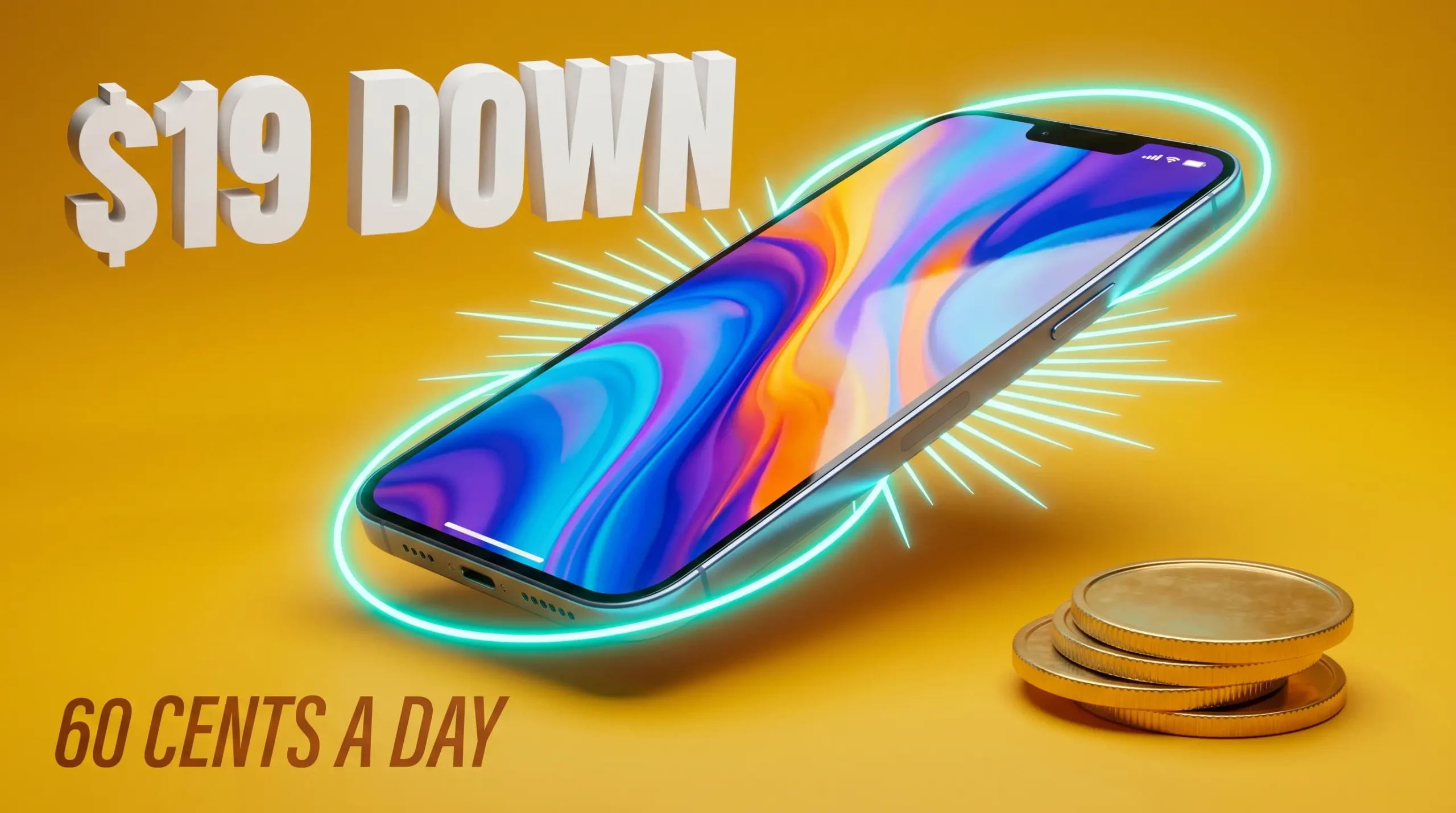
Mogadishu’s biggest telecom operator just put a smartphone within reach of almost every adult in the country for the price of a chai habit. Hormuud Telecom and device financier Get-Phone launched Somalia’s first structured smartphone financing program at the Decale Hotel on May 5, 2026, opening enrollment with a $19 deposit and daily payments of $0.60. The plan targets 10,000 devices by June and 100,000 by year-end, then expands into Puntland and Somaliland.
The math is what makes this story land. The average Hormuud customer already spends roughly $0.50 per day on data and minutes. Adding a smartphone to that line item costs them another 10 cents.
Behind the simple numbers sits a quieter story: this is less a phone deal than a credit infrastructure rollout dressed up as one. The repayment engine is Hormuud’s EVC Plus mobile money platform, which the operator says serves roughly four million customers, and the underwriting layer scores eligibility from SIM-usage patterns, not bank statements.
The Deal That Costs Less Than Lunch
Customers walk into a Hormuud branch, pay $19 up front, and walk out with an internet-ready handset the same day. From that point, $0.60 lands daily on the device through EVC Plus. The fee bundles 1GB of mobile data, 40 minutes of voice calls, and the device installment in a single charge.
Repayment terms run six to 12 months. Get-Phone CEO Omar Abdi confirmed the structure is interest-free and Sharia-compliant, which lets the program reach the large share of Somalis who refuse conventional credit on religious grounds.
That is not a marketing line. Somalia’s mobile money market runs on Islamic-finance principles by default, and any device-financing model that smuggled riba into the contract would have died on contact with the Mogadishu street.
How $0.60 A Day Actually Works
The headline price hides three different things: a hardware payment, a data bundle, and a voice allowance, all settled through the same daily mobile-money debit. Strip the bundle out and the marginal cost of the smartphone over a feature phone is roughly 10 cents per day, since most customers already spend $0.50 daily on prepaid airtime and data.
Eligibility runs on a proprietary scoring engine that reads how a SIM has behaved over time. Top-up cadence, voice patterns, length of network tenure, and EVC Plus transaction history feed the model. No bank statement, no formal employment proof, no national ID requirement for most applicants.
A second layer hardens the underwriting: a family-guarantor mechanism, where a relative co-signs through their own SIM. The structure leans on Somalia’s clan and family networks rather than against them, and that detail mattered during the pilot.
Here is what the pricing block looks like in practice.
- $19: one-time deposit at any Hormuud or Get-Phone counter
- $0.60 per day: device installment plus 1GB data plus 40 minutes of voice
- 6 to 12 months: repayment window, interest-free
- 4 million: existing EVC Plus customers who can repay through the same wallet they already top up
Why EVC Plus Is The Real Engine
Mobile money in Somalia is not an alternative payment method. It is the payment method. A 2025 Frontiers study on EVC Plus and humanitarian aid delivery documented the platform’s reach at over 80 percent of the adult population in southern and central Somalia, with daily transaction volumes that dwarf the country’s banking sector.
That base is what allows daily-rate device repayment to work at all. A Kenyan or Nigerian operator running the same product would face card declines, USSD timeouts, and bank-rail friction. In Somalia, $0.60 deducts from an EVC Plus wallet in seconds.
| Variable | Hormuud / Get-Phone | M-Kopa (Kenya) |
|---|---|---|
| Upfront deposit | $19 | ~$15 to $35 |
| Daily payment | $0.60 (bundles data and voice) | ~$0.45 to $0.65 (device only) |
| Repayment rail | EVC Plus mobile money | M-Pesa |
| Pilot default rate | Under 4% | Around 10% market average |
| Compliance frame | Sharia-compliant, interest-free | Conventional interest model |
The Sharia-Compliance Twist Mainstream Banks Couldn’t Crack
Conventional device financing in Muslim-majority markets has stalled for years on a single problem: interest. A standard installment plan with a stated APR is haram under most local interpretations, and households simply refuse it. Get-Phone’s contract is structured along ijarah and murabahah lines, where the financier owns the device, sells it forward at a fixed markup, and collects in known installments.
That structure is not exotic in Somalia. It is the default. Salaam Somali Bank, Premier Bank, and Kaah International Microfinance Services have all built consumer products on the same legal scaffolding, and Hormuud chose to plug into it rather than fight it.
This program is built on the belief that when you give people access to the right tools at the right price, they will do extraordinary things, said Get-Phone CEO Omar Abdi at the Decale Hotel launch.
A 4% Default Rate That Caught Lenders Off Guard
The most under-reported number from Tuesday’s launch is the pilot default rate. Hormuud said the February-to-March Mogadishu pilot recorded delinquency below 4 percent. M-Kopa, the most successful pay-as-you-go device financier in East Africa, has openly said its market default rate sits closer to 10 percent in Kenya, and the company has fought legal battles over its enforcement tactics.
Hormuud’s number is genuinely low for an unbanked-population product. Two design choices explain it.
First, the family-guarantor mechanism. A delinquent borrower drags a named relative’s SIM into the same delinquency status, which collapses voice, data, and EVC Plus access for both parties at once. Social cost replaces legal cost.
Second, the same SIM that owes money is the SIM the borrower depends on for income, banking, and family contact. There is no walking away from a Hormuud number in Somalia. The asset and the collateral are the same object.
If that 4 percent figure holds at 100,000 devices, the program crosses the threshold where international development financiers and impact funds typically step in. A loan book performing inside 4 percent loss is investment-grade by emerging-market standards.
ZTE Devices And What They Mean For Margins
Mainstream coverage skipped the supply side entirely. Get-Phone’s product page lists ZTE as the curated handset partner, which lines up with the broader pattern across low-margin African device financing: Chinese OEMs are the only ones willing to ship sub-$100 4G devices in volume with the LTE bands East African networks need.
The choice has consequences. ZTE’s bill of materials at this tier sits well under $50, leaving room inside Get-Phone’s contract for the markup that funds the financing risk. A Samsung or Xiaomi device at the same price band would have left no room for either bundled data or a 4 percent default cushion.
Vision 2060 And The GDP Math Behind The Pitch
Deputy Prime Minister Salah Ahmed Jama framed the rollout as a building block of Somalia’s Centennial Vision 2060, the long-term plan to lift the country to middle-income status by mid-century. “A smartphone today is far more than a device; it is a gateway to commerce, education, and opportunity,” Jama said at the launch.
The macro case is real. A World Bank background paper for the World Development Report found that a 10-percentage-point increase in fixed broadband penetration lifts GDP growth by roughly 1.38 percent in developing economies. GSMA’s 2025 Mobile Economy Africa report went further, projecting that closing the continent’s mobile internet usage gap by 2030 could add around $700 billion to African GDP.
Where Somalia sits today makes the upside concrete.
- 11.5 million: active mobile connections, equal to 58.1 percent of the population
- 27.6 percent: individual internet penetration at the end of 2025
- 75.7 percent: share of mobile connections already on 3G, 4G, or 5G
- 22.7 percent vs 47.1 percent: rural versus urban internet access reported in Somalia’s Digital Inclusion Policy
- Sixth of annual income: typical upfront cost of an entry smartphone before this program
Frequently Asked Questions
How Do I Sign Up For The Get-Phone Smartphone Plan In Mogadishu?
Walk into any Hormuud branch or Get-Phone service point with an active Hormuud SIM and $19 in cash or EVC Plus balance. Staff verify your number against the SIM-usage credit score, register a family guarantor where required, and hand over the device the same day. Daily $0.60 deductions begin from your EVC Plus wallet the next morning, and the eGet customer app tracks your remaining balance in real time.
What Happens If I Miss A Daily Payment?
Short grace periods apply, then the device’s data and voice features pause until the wallet is topped up. The handset is not bricked outright in the early window. If delinquency runs longer, the family guarantor’s SIM is flagged too, which is the social pressure point that kept pilot defaults below 4 percent. Long-term non-payment can lead to device deactivation and recovery under the Sharia-compliant ijarah terms.
Is This Plan Actually Interest-Free Under Islamic Finance Rules?
Yes. Get-Phone CEO Omar Abdi confirmed at the May 5 launch that the contract is structured along Sharia-compliant lines, with the financier owning the device and selling it forward at a known markup rather than charging riba. The total amount you pay across six to 12 months is fixed at signing, and there are no late-payment interest charges added. Customers can request the contract documentation in Somali or English at any branch.
Can I Use The Phone On A Network Other Than Hormuud?
Not during the financing period. The device is tied to your Hormuud SIM, since the SIM doubles as your identity, your credit file, and your repayment rail through EVC Plus. Once you complete the six-to-12-month term, ownership transfers and the device unlocks for use on other carriers. Hormuud has not yet published a buy-out option for early settlement, but Get-Phone branches in Mogadishu are accepting written queries.
When Will The Program Reach Puntland And Somaliland?
Hormuud said the second wave starts after the 10,000-device Mogadishu phase clears in June 2026, with the 100,000-device national target running through December. Puntland’s Bosaso and Garowe and Somaliland’s Hargeisa are flagged as the first regional launches. Customers outside Mogadishu can register interest through the eGet app or at Hormuud retail outlets, and the company has committed to publishing a regional rollout calendar on its corporate updates page as zones come online.
If the pilot’s 4 percent default rate holds at scale, the program stops being a corporate social responsibility story and turns into something rarer: a viable consumer-credit business built on top of a mobile-money rail in a country where formal banking still touches under 10 percent of adults. That is the lever that turns Hormuud’s masts into smartphones, and smartphones into the GDP line that Vision 2060 has been chasing on paper for a year. The next 100,000 devices will tell whether the math survives contact with the rest of the country.


South Korea Retail Investors Face Reckoning After KOSPI AI Rally Collapses

Surrey AI Maps Three Heart Attack Paths and Their Molecular Roots

Germany Locks Neutral Apple ATT Prompts Across Most of Europe

Apple’s 5% EU Fee Quietly Rewrites Alternative App Store Math

Apple’s EU Fee Truce Cuts Complexity but Leaves Rivals Fuming

Pixel 11 Pro Fold Trades Thinness for Durability and Seven-Year Stay

Mayo AI Flags HCM Obstruction From Everyday Ultrasound Videos

Indian Brands Quietly Scale Landmark Screens and Home Tech

Navin Vatsa Turns Grief Into a Lifetime of Quiet Seeing

Google Bets Pixel 11 Agentic AI Will Redefine Phones

Oracle Cuts 21,000 Jobs in a Year, Cites AI in 10-K Filing

Fable 5 and Mythos 5 Return as US Lifts Anthropic Export Controls

SpaceX’s Google Deal Turns a Rocket Company Into a Cloud Landlord

CD Projekt Red Co-CEO: Redemption Arc Isn’t Done, Witcher 4 in 2027

XPL Rallies 30% Ahead of Plasma One Card Tier Launch

Google Search Profiles Build a Follow Graph Inside Discover

DGO App Brings Rs 549 Mobile Pass for FIFA World Cup 2026 in Nepal

Moonshot AI Targets $30 Billion in China’s Fastest AI Funding Sprint

Oppo’s ColorOS 17 Eligibility List Leaves A-Series Buyers Behind

Microsoft Xbox Layoffs Start in July as Sharma Slams 3% Margin
-
 AI2 months ago
Oracle Cuts 21,000 Jobs in a Year, Cites AI in 10-K Filing
-
 AI2 months ago
Fable 5 and Mythos 5 Return as US Lifts Anthropic Export Controls
-
 AI3 months ago
SpaceX’s Google Deal Turns a Rocket Company Into a Cloud Landlord
-
 GAMING2 months ago
CD Projekt Red Co-CEO: Redemption Arc Isn’t Done, Witcher 4 in 2027
-
 CRYPTO3 months ago
XPL Rallies 30% Ahead of Plasma One Card Tier Launch
-
 NEWS3 months ago
Google Search Profiles Build a Follow Graph Inside Discover
-
 APPS3 months ago
DGO App Brings Rs 549 Mobile Pass for FIFA World Cup 2026 in Nepal
-
 AI3 months ago
Moonshot AI Targets $30 Billion in China’s Fastest AI Funding Sprint