
APPS
Winamp’s Latest Revival Bets on Deezer for 2027 Hybrid Player
Winamp taps Deezer white-label tech and catalog for a 2027 hybrid player that mixes streaming, local files and radio, after decades of comeback tries.

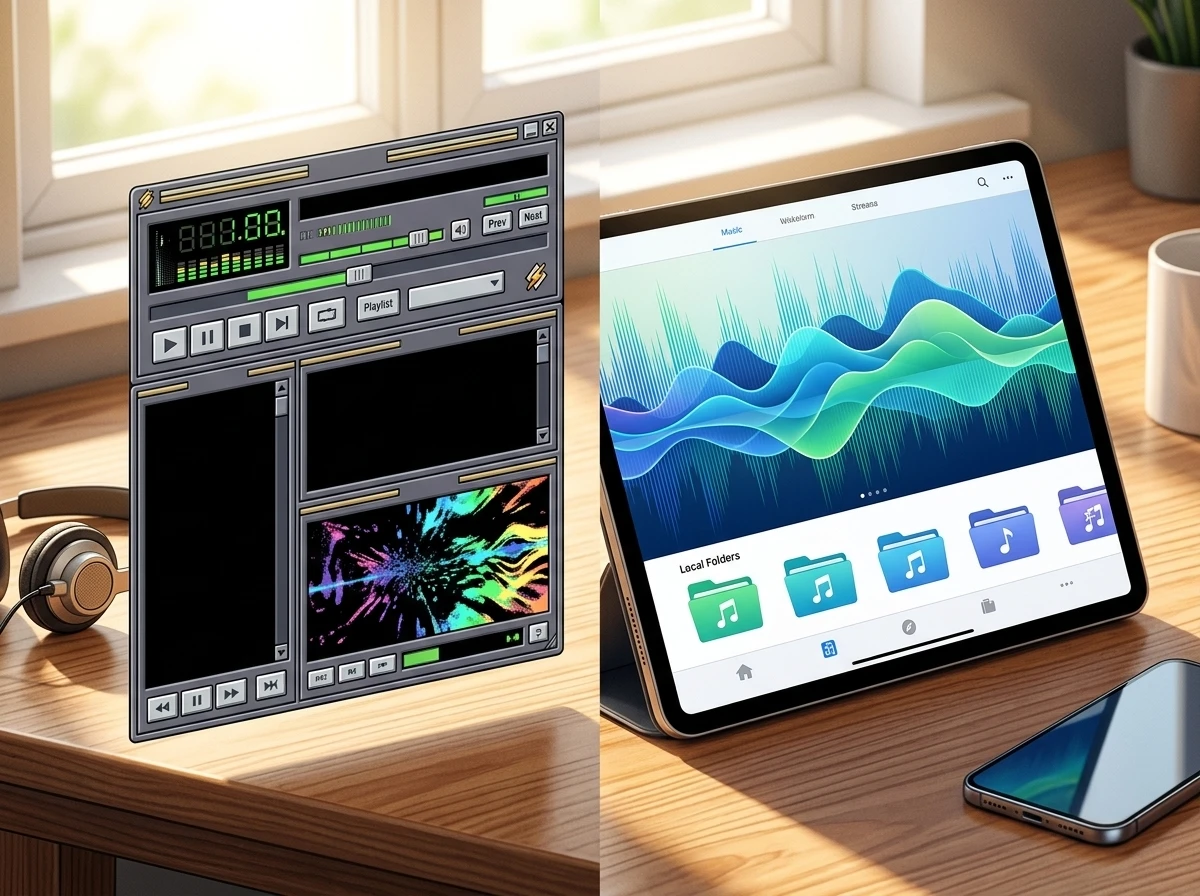
Winamp will launch a next-generation music player in the first half of 2027 that runs a premium subscription service powered by Deezer under a white-label deal. The new Winamp Player aims to combine streaming with local libraries, internet radio, podcasts and cloud files inside one customizable interface.
The companies announced the partnership on July 29, 2026. Deezer supplies the backend and licensed catalog while Winamp keeps the brand and front-end experience. This marks the latest attempt to restore the once-dominant MP3-era player to relevance.
The gap between announcement and launch leaves both sides time to integrate systems and shape the interface. Winamp can refine the front end while Deezer wires in the catalog and streaming stack behind it.
How the White-Label Deal Works
Deezer provides its white-label music streaming technology and global music catalogue. Winamp sells and brands the subscription as its own. Users experience a native Winamp product. Deezer stays largely invisible in the interface.
White-label deals keep the technology supplier in the background. The consumer brand owns billing, support and the look of the app. Winamp therefore skips the long, costly work of securing a full licensed catalog on its own, a barrier that slowed earlier restarts.
Alexandre Saboundjian, chief executive of Winamp Group, said the deal gives the company “access to world-class streaming technology and one of the richest music catalogues in the world,” letting it focus on a unique product that brings everything users want to listen to in one place.
Thierry Ascarez, Winamp’s chief business officer, framed it as more than a tech agreement. Users will discover a new generation of the Winamp Player rather than another streaming service. Julien Delbourg, Deezer’s chief commercial officer, said Deezer will support the vision with technology, catalog and experience connecting artists with fans.
The three executives describe complementary roles. Winamp gains the catalog and infrastructure it lacked. Deezer gains another outlet that puts its technology in front of people who already open a music app each day. Neither side needs to rebuild what the other already runs.
A Player Built for Scattered Listening Habits
The 2027 Winamp Player rejects the pure-streaming template. It treats local files, radio and podcasts as first-class citizens alongside the paid stream.
- Premium subscription streaming via Deezer’s infrastructure
- Users’ own downloaded music collections and local libraries
- Internet radio stations
- Podcasts
- Cloud-stored audio files
- Highly customizable interface with new social features and discovery tools
That mix matches habits pure streaming never fully replaced. Many listeners still hold personal archives collected over years. They jump between radio streams and podcast episodes in the same session. One interface that treats each source as equal removes the need to switch apps mid-listen.
Full product details remain under wraps until closer to launch. The free desktop player will later incorporate the premium service for its existing base.
Folding the paid tier into the free client lowers the barrier for current users. They will not need a separate download to try subscription features. The path from free desktop habit to paid hybrid use stays inside software they already know.
Twenty-Five Years of Near Misses and Restarts
Winamp’s path tracks the full arc of digital music. The pattern of bold claims followed by stalled momentum has repeated for decades.
- 1997-1999: Nullsoft’s Justin Frankel and Dmitry Boldyrev release Winamp. It becomes the default MP3 player with skins, plugins and the “it really whips the llama’s ass” slogan. AOL buys Nullsoft for $80 million.
- 2000s-2013: Under AOL, development slows. iTunes and later streaming erode its lead. AOL plans to shut it down in 2013.
- 2014: Belgian firm Radionomy acquires Winamp and Shoutcast from AOL, keeping the desktop client alive.
- 2018-2019: Radionomy (later Llama Group) promises a full multi-platform reboot and updates the classic player.
- 2022-2023: Relaunch focuses on aggregating multiple streaming services plus music NFTs. Creator tools and a Fanzone fan-subscription platform follow. Source-code release attempt in 2024 draws criticism and is pulled.
- 2025: Llama Group renames itself Winamp Group to center the brand.
- 2026-2027: Deezer white-label deal supplies the missing licensed catalog and streaming stack for a hybrid player.
Each chapter shows the same gap. Technical updates and brand energy arrived without a full licensed streaming backbone. The Deezer deal closes that gap by design.
Earlier efforts often lacked deep rights deals or clear differentiation. The current move finally outsources the hardest part of modern music services.
The 2025 rename to Winamp Group tightened focus on the core brand a year before the streaming piece locked in. That sequence put identity first and infrastructure second, the reverse of several prior attempts.
What Deezer Gains from Another Sales Channel
Deezer has leaned harder into B2B after direct-consumer growth faced headwinds. Its Deezer for Business unit already serves telecoms, hardware and retail partners. The Winamp deal adds a branded consumer outlet without the cost of winning new direct subscribers itself.
B2B deals spread the fixed costs of catalog licensing and infrastructure across more outlets. A white-label consumer product fits that model cleanly. Deezer does not chase the same direct subscriber it already works to hold. It powers someone else’s brand instead.
Recent Deezer subscriber and revenue figures over recent years show total subscribers around 8.9 million in mid-2026 after earlier peaks near 10.5 million, with partnership channels fluctuating. Direct subscribers have shown more resilience in some quarters. Winamp’s claimed 40 million active desktop users dwarf that base, even if free desktop usage is not equivalent to paid streaming.
Even a modest conversion rate from that desktop pool would lift Deezer’s partnership revenue line. Direct growth has proven harder in recent periods, so channel deals carry more weight inside the company.
For Deezer the arrangement is low-risk distribution. For Winamp it is the infrastructure upgrade previous relaunches never secured.
The 40 Million Users Who Never Fully Left
Winamp repeatedly cites more than 40 million people still actively using the free desktop player worldwide. That number has appeared in successive announcements and sits far above Deezer’s paid base. It is the core asset the company points to as proof of brand residual strength.
Active use of a free desktop player differs from a paid subscription habit. Still, the figure has held steady enough across announcements to serve as the company’s main proof point. It suggests the software never vanished from daily routines even as the wider industry moved on.
Those users already manage local libraries, playlists and radio. The hybrid pitch speaks directly to them. Whether enough will pay for a Winamp-branded Deezer stream is the open test. Pure streaming giants already own discovery algorithms, family plans and hardware integrations that take years and billions to match.
Nostalgia for skins, visualizers and the sense of owning files remains real. On X and forums, listeners still recall building libraries the hard way and treating the player as personal software rather than a feed. That emotional hook is free marketing the new product can ride, yet it does not automatically convert into subscriptions.
Those memories create an opening. They do not guarantee payment. The product must deliver enough daily value that the subscription feels like an upgrade to software users already trust, not a new service to judge from zero.
| Service | Approx. Scale | Core Strength |
|---|---|---|
| Winamp free desktop | 40M+ active users | Local libraries, customization, loyalty |
| Deezer total | ~8.9M subscribers (H1 2026) | Catalog, HiFi, B2B partnerships |
| Spotify | Hundreds of millions paid | Discovery, playlists, podcasts, scale |
| Apple Music / YouTube Music | Large paid bases | Hardware lock-in, video, ecosystem |
The table underlines the gap. Winamp starts with loyalty and a different product thesis rather than scale.
What the 2027 Player Has to Prove
Success will require more than branding. The interface must feel distinctly Winamp, not a reskinned Deezer. Social features and organization tools need to solve real friction that pure streamers leave unaddressed. Pricing and family options will face immediate comparison shopping.
- Interface that feels distinctly Winamp rather than a reskinned Deezer
- Social features and organization tools that solve real friction
- Pricing and family options that survive comparison shopping
Winamp Group already runs adjacent businesses: Jamendo for independents, Bridger for rights, Hotmix radio and creator tools. The player can feed into that Winamp Group ecosystem spanning artists and fans. A tighter loop between listening and supporting creators could differentiate it, especially as the industry debates tools such as music industry moves on AI content labels.
Linking listening to those existing pieces could turn a player into a hub. Fans who already treat Winamp as personal software may respond to clearer paths for supporting artists inside the same window.
Previous restarts chased the moment: multi-service aggregation when that seemed hot, NFTs when crypto music peaked. This one leans into the permanent reality that many people still keep files and want one app that respects them. That is a clearer thesis than past attempts.
Winamp Group Ties Listening to Creators
The company already operates several music businesses under one roof. They give the 2027 player ready connections that earlier standalone relaunches lacked.
- Jamendo for independent artists
- Bridger for rights
- Hotmix radio
- Creator tools and the Fanzone fan-subscription platform
A listener who finds an independent track through the hybrid interface could move toward Jamendo or a fan subscription with fewer steps. The player becomes the front door rather than a separate bet.
Earlier relaunches treated the desktop client as an isolated product. This structure treats it as the entry point to services already running inside the group. The difference is structural, not cosmetic.
The Launch Will Test Old Loyalty
Everything turns on conversion after the first half of 2027. The free desktop base supplies the audience. The Deezer catalog and stack supply the content. The customizable interface and hybrid sources supply the claimed difference.
Pure streaming giants already own discovery algorithms, family plans and hardware integrations. Winamp cannot match those assets on a short timeline. It can only offer a different starting point: files first, streaming second, all under a brand many users never fully abandoned.
Previous efforts chased multi-service aggregation and music NFTs when those ideas peaked. The current thesis sticks to a lasting habit. People still keep local libraries. They still want one place for radio, podcasts and cloud files beside a paid stream.
That clarity may help. Execution after launch will decide whether clarity is enough to turn residual loyalty into recurring revenue.
Whether the hybrid model converts 40 million free users into a sustainable paid base, or simply keeps the desktop client relevant a bit longer, will become clear after the H1 2027 launch and the product reveals that precede it.


South Korea Retail Investors Face Reckoning After KOSPI AI Rally Collapses

Surrey AI Maps Three Heart Attack Paths and Their Molecular Roots

Germany Locks Neutral Apple ATT Prompts Across Most of Europe

Apple’s 5% EU Fee Quietly Rewrites Alternative App Store Math

Apple’s EU Fee Truce Cuts Complexity but Leaves Rivals Fuming

Pixel 11 Pro Fold Trades Thinness for Durability and Seven-Year Stay

Mayo AI Flags HCM Obstruction From Everyday Ultrasound Videos

Indian Brands Quietly Scale Landmark Screens and Home Tech

Navin Vatsa Turns Grief Into a Lifetime of Quiet Seeing

Google Bets Pixel 11 Agentic AI Will Redefine Phones

Oracle Cuts 21,000 Jobs in a Year, Cites AI in 10-K Filing

Fable 5 and Mythos 5 Return as US Lifts Anthropic Export Controls

SpaceX’s Google Deal Turns a Rocket Company Into a Cloud Landlord

CD Projekt Red Co-CEO: Redemption Arc Isn’t Done, Witcher 4 in 2027

XPL Rallies 30% Ahead of Plasma One Card Tier Launch

Google Search Profiles Build a Follow Graph Inside Discover

DGO App Brings Rs 549 Mobile Pass for FIFA World Cup 2026 in Nepal

Moonshot AI Targets $30 Billion in China’s Fastest AI Funding Sprint

Oppo’s ColorOS 17 Eligibility List Leaves A-Series Buyers Behind

Microsoft Xbox Layoffs Start in July as Sharma Slams 3% Margin
-
 AI2 months ago
Oracle Cuts 21,000 Jobs in a Year, Cites AI in 10-K Filing
-
 AI2 months ago
Fable 5 and Mythos 5 Return as US Lifts Anthropic Export Controls
-
 AI2 months ago
SpaceX’s Google Deal Turns a Rocket Company Into a Cloud Landlord
-
 GAMING2 months ago
CD Projekt Red Co-CEO: Redemption Arc Isn’t Done, Witcher 4 in 2027
-
 CRYPTO2 months ago
XPL Rallies 30% Ahead of Plasma One Card Tier Launch
-
 NEWS2 months ago
Google Search Profiles Build a Follow Graph Inside Discover
-
 APPS2 months ago
DGO App Brings Rs 549 Mobile Pass for FIFA World Cup 2026 in Nepal
-
 AI2 months ago
Moonshot AI Targets $30 Billion in China’s Fastest AI Funding Sprint