
AI
Moonshot AI’s $30 Billion Ask Became a $35 Billion Close
Moonshot AI’s $30 billion June ask closed at $35 billion after Kimi K3, and a $50 billion Hong Kong filing now carries a US distillation fight.

Moonshot AI closed a $3.5 billion round at a $35 billion valuation on July 29, after going out in June for a $30 billion tag. The Beijing lab behind the Kimi assistant had already taken $2 billion at $20 billion on May 7. The June figure was a listing price, not a hole in the till.
People close to that June process said the company was shopping between $1 billion and $2 billion of new capital. It took $3.5 billion instead, then started talking about a $50 billion pre-IPO mark and a confidential Hong Kong filing aimed at about $3 billion.
The $30 Billion Ask Closed Above the Ask
Moonshot, whose Chinese name is Yue Zhi Anmian, or Dark Side of the Moon, was founded in March 2023 by Yang Zhilin, Zhou Xinyu and Wu Yuxin, Tsinghua classmates. Yang had worked at Google Brain and Meta AI and trained at Carnegie Mellon. Kimi launched in October 2023 on a 200,000-Chinese-character window, then stretched to 2 million characters in March 2024.
That consumer trick made the early money easy. Alibaba led a $1 billion round at $2.5 billion in February 2024. Tencent and Gaorong Capital added $300 million at $3.3 billion that August. IDG Capital led $500 million at $4.3 billion in January 2026, and a $700 million step in February printed a $10 billion tag. On May 7, Meituan’s Long-Z Investments led $2 billion at $20 billion, with China Mobile and CPE Yuanfeng in the group. Long-Z alone put in more than $200 million. Huafeng Capital, which advised some of those buyers, put the six months through May 7 at $3.9 billion.
A month later the company was already back in the market for the $30 billion valuation it first sought. The cash was not the point. Public comps in Hong Kong were already live, DeepSeek was taking outside money for the first time, and a $20 billion private mark would have looked cheap next to those tapes. The June ask was the first dress rehearsal for a float.
MOONSHOT’S CLOSED ROUNDS
- February 2024: Raises $1 billion at $2.5 billion, Alibaba in the lead.
- August 2024: Adds $300 million at $3.3 billion from Tencent and Gaorong Capital.
- January 2026: IDG Capital leads $500 million at $4.3 billion.
- February 2026: Takes $700 million at $10 billion from existing backers.
- May 7, 2026: Closes $2 billion at $20 billion, Meituan Long-Z in the lead.
- July 29, 2026: Closes $3.5 billion at $35 billion, with the National Artificial Intelligence Industry Investment Fund among the leads.
A dated ledger of Moonshot’s funding rounds still lists the $50 billion follow-on as open. Investors had been told to expect a close around August 27. No on-record confirmation followed.
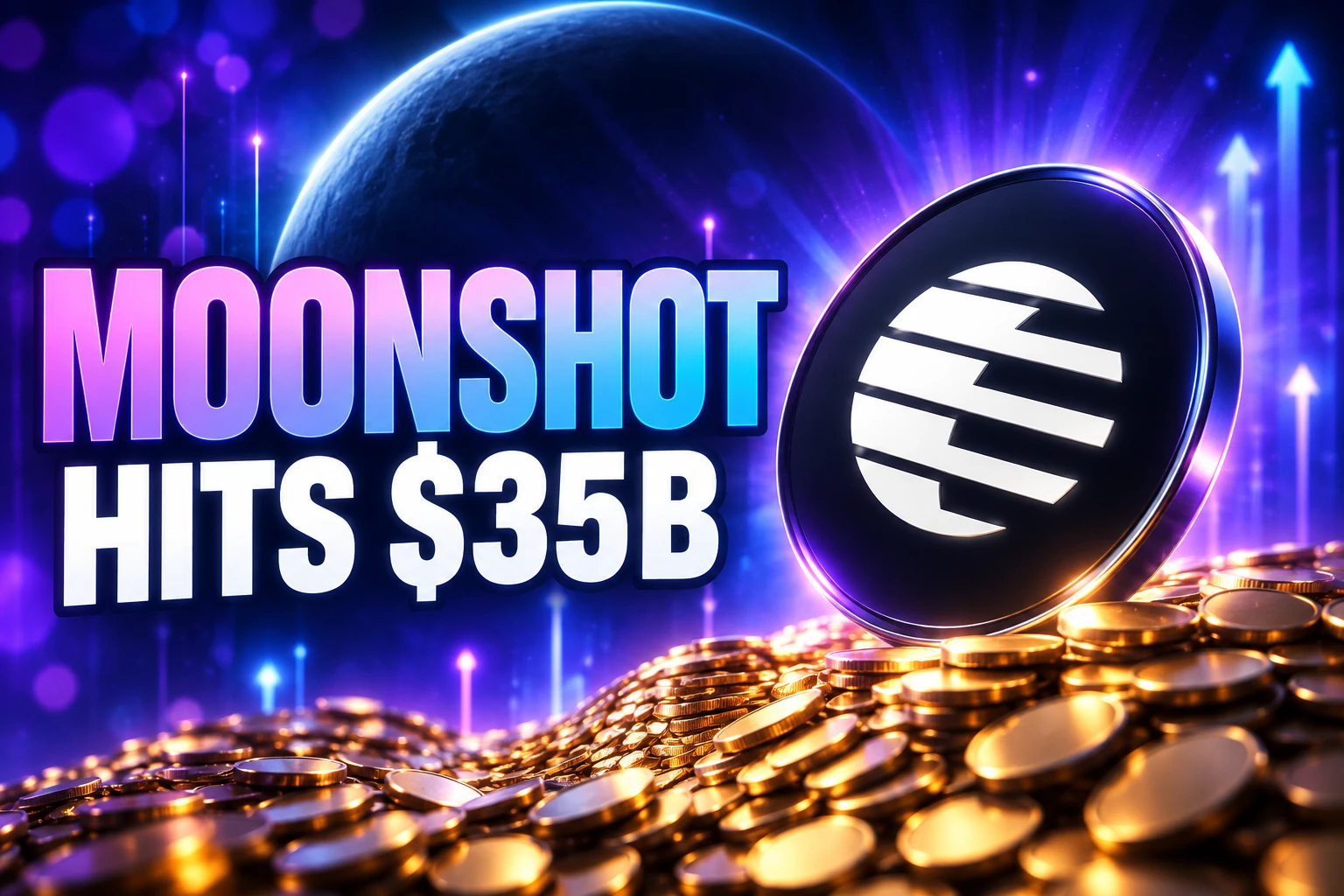
$3.5 Billion Came With a State AI Fund
The July check was 1.75 times the $2 billion top of the June cash ask, and the post-money tag sat $5 billion above the $30 billion target. The valuation step from May’s $20 billion to July’s $35 billion is 75%. People familiar with the round named China’s National Artificial Intelligence Industry Investment Fund among the leads. That is the same state vehicle that took a direct, voting stake in DeepSeek’s first outside round, while commercial buyers in that deal went into a lock-up with no votes.
Beijing is not picking a single national champion. It is putting state paper under more than one frontier lab so a Hong Kong or Shanghai listing does not rest on one cap table. Moonshot gets a political underwriter. The fund gets a second model shop beside DeepSeek.
WHERE THE MARKS SAT ON SEPTEMBER 3
| Lab | Status | Latest mark |
|---|---|---|
| Moonshot AI | Private | $35 billion last close; $50 billion in talks |
| DeepSeek | Private | about $74 billion, per people familiar |
| Z.AI (formerly Zhipu) | Hong Kong listed | $66 billion market cap |
Those three numbers are why $30 billion could not hold. A private lab that lists under Z.AI’s tape looks like the leftover tiger. MiniMax also listed in Hong Kong in January, which is why Moonshot spent the spring unwinding its offshore red-chip structure and shifting to an onshore China domicile before any filing.
What Kimi K3 Put on the Open-Weight Table
The product that let the July round clear sits in the company’s own open 2.8-trillion-parameter Kimi K3 model post. Moonshot introduced K3 on July 16 as a mixture-of-experts system with native vision and a 1-million-token context window. It calls K3 the first open 3T-class model. It also says, in the same post, that overall performance still trails Claude Fable 5 and GPT 5.6 Sol.
K3 AS SHIPPED
- Scale: 2.8 trillion total parameters, with 16 of 896 experts active per token.
- Context: a 1-million-token window aimed at long coding and knowledge work.
- Efficiency claim: about 2.5 times the scaling efficiency of Kimi K2, per Moonshot.
- Price: the Kimi API list price of $3 per million input tokens, $15 per million output, and $0.30 on cache hits.
- Weights: full Kimi K3 weights on Hugging Face on July 27, under a custom Kimi K3 License rather than plain MIT.
The license is the commercial tell. Hosts that sell K3 as a service above $20 million of annual revenue have to strike a separate deal, with revenue sharing of up to 30%. Open weights got the model onto foreign developer stacks. The paid clause keeps the large hosts on the hook.
Moonshot’s official account posted the weight drop the same day.
Releasing the model weights and technical report of Kimi K3.
Kimi K3 is our most capable model: a 2.8T MoE model with native visual understanding and a 1M-token context window.
New model architecture: 2.5x the intelligence per unit of compute, not just more params.
Alongside… pic.twitter.com/Yz5uWeMbIm
— Kimi.ai (@Kimi_Moonshot) July 27, 2026
Annual recurring revenue reached $200 million in April and $300 million in June, before the K3 launch briefly forced a pause on new subscriptions. The company has about 300 people. Kimi the consumer app, once third in China by monthly users in 2024, was around eighth by April 2026 as Doubao, Qwen and DeepSeek took share. The valuation is no longer a chatbot story. It is an API and agent-coding story, with customers that have included Cursor, DoorDash and Thinking Machines Lab.
On July 31, K3 also went live on Microsoft Foundry through Fireworks AI, which put the model on Azure without Moonshot running the cluster. That is the on-ramp for the later cloud talks.
Hong Kong Gets a Confidential $3 Billion Filing
Three people familiar with the process said in early September that Moonshot had confidentially filed for a Hong Kong listing and was aiming to raise about $3 billion. Goldman Sachs, CICC and Deutsche Bank are on the books. Goldman and Deutsche Bank declined to comment. Moonshot said it does not comment on market rumours or speculation.
The same people put the company at $50 billion in an ongoing private round. That figure was still the working private mark in commentary on September 12. It has not been confirmed as a close. A listing as early as the first quarter of 2027 would still need approvals and a market that can digest another China AI float. Hong Kong listings had already taken in $41.2 billion by mid-August, up 142% from a year earlier, with Chinese technology names doing most of the work.
WHAT WE KNOW
- Last close: $3.5 billion at $35 billion on July 29.
- June target: $1 billion to $2 billion of cash at a $30 billion valuation, which the July round beat on both axes.
- Banks named: Goldman Sachs, CICC and Deutsche Bank on a confidential Hong Kong filing aimed at about $3 billion.
WHAT IS UNCONFIRMED
- The $50 billion round: people familiar put that tag on an ongoing raise; no close has been confirmed on the record.
- The listing date: early 2027 is a source timeline, not a prospectus.
- US cloud splits: talks with Microsoft, Amazon and Google on hosting K3 remain early, with the split and data terms unresolved.
A $50 billion private tag would still sit under DeepSeek’s about $74 billion and Z.AI’s $66 billion market cap, which is the point of printing it before the float rather than after.
Who Still Owns Moonshot After Six Rounds?
Alibaba’s Hong Kong annual report for the fiscal year ended March 31, 2024 said the group had invested about $800 million for an approximately 36% preferred stake. That filing implied a price near $2.2 billion, against the $2.5 billion headline on the February 2024 round. Later raises have made the current percentage unclear. Alibaba has stayed in subsequent rounds, as has Tencent, which arrived in August 2024. HongShan, formerly Sequoia China, and IDG Capital are still on the institutional list.
The May 2026 round added China Mobile and CPE Yuanfeng, a CITIC-linked private equity shop, beside Meituan. The July round added the National Artificial Intelligence Industry Investment Fund. The cap table is now a mix of platform money (Alibaba, Tencent, Meituan), a state telecom, CITIC paper, and the national AI fund. That is a listing register, not a seed syndicate.
Yang remains chief executive. The consumer app still carries his English nickname. The economic story has shifted to Kimi Code, Kimi Work, and the API. Hiring around that product line, including a consumer-product lead coming across from gaming, is how the company is trying to turn a long-context toy into a paid work surface.
Washington Opened a Distillation File on K3
The same July week that priced the company at $35 billion also produced the charge that now travels with every US meeting. On July 22, Michael Kratsios, director of the White House Office of Science and Technology Policy, posted the White House science office’s K3 distillation claim.
We have information that Moonshot AI distilled Anthropic’s Fable for the development of its K3 model.
Michael Kratsios, Director, White House Office of Science and Technology Policy, on X
He added that large-scale covert distillation aimed at stealing proprietary US technology is unacceptable, and that Moonshot had acquired GB300-equipped servers and used GB300s in Thailand. Treasury Secretary Scott Bessent has said a trade blacklist is on the table. Moonshot has disputed the claim that K3’s results came from distillation. Independent researchers also noted that Fable 5 had only been back online for about two weeks before the July 16 launch, which is a tight window for the full-model story Washington told.
The charge did not land, among working engineers, as a lab-notebook finding. It landed as a trade complaint. Every frontier lab trains on public code and writing, and the replies under Kratsios’s post went straight at that double standard. The policy file is still the file. US committees have already asked DoorDash, Airbnb and Cursor for documents on Kimi use. CISA, the NSA and the FBI later named Moonshot among China labs they say ran industrial-scale distillation against US models.
Anthropic went further on September 10. It said Moonshot ran 5,380 accounts, mostly appearing in Singapore and Japan, and logged more than 23 million Claude exchanges from May to July, including about 300,000 real customer requests in one 10-day stretch, then showed some Claude answers back as Kimi. Those are Anthropic’s figures, from Anthropic’s own report, and they have not been tested in court. They are already expensive. A Hong Kong listing that wants Microsoft, Amazon or Google as a K3 host has to price a White House distillation file, a Treasury blacklist threat, and an Anthropic complaint that some Kimi users may have been talking to Claude without knowing it.
That is the downside inside the overshoot. The June $30 billion ask did what it was built to do. It pulled a state fund into a $35 billion close, put a $50 billion sticker on a confidential filing, and lined Kimi K3 up next to Z.AI and DeepSeek. The model that made those marks possible is also the exhibit in the US case that can stall the cloud revenue a public company would need to defend them.
Disclaimer: This article is news reporting and analysis of private-company fundraising and is for information only. It is not investment advice, a solicitation, or a recommendation to buy or sell any security, private share, or fund interest in Moonshot AI or its backers. Readers should consult a licensed financial adviser or securities lawyer before acting on any valuation or listing plan. Figures and statuses reflect the sources cited as of the article’s date and may change as the private round and Hong Kong filing move.

Instagram Plus Tests a Read-Only Mode That Cuts Stories

Altman Asks the Public to Accept Some AI Harm

Google Freezes OSS VRP Product Reports After AI Flood

AI Agents Make Payment Rails the Scarce Prize

Turkey’s Crypto Boom Now Runs Through Three Banks

Fable 5 Came Back Under a Commerce On-Off Switch

Google’s SpaceX GPU Lease Has a Sept. 30 Deadline

Plasma One’s XPL Locks Face a 1.81 Billion Cliff

DGO’s Rs 549 World Cup Pass Cost Fans Sleep and Data

Moonshot AI’s $30 Billion Ask Became a $35 Billion Close
-
 AI3 months ago
Fable 5 Came Back Under a Commerce On-Off Switch
-
 AI4 months ago
Google’s SpaceX GPU Lease Has a Sept. 30 Deadline
-
 CRYPTO4 months ago
Plasma One’s XPL Locks Face a 1.81 Billion Cliff
-
 APPS4 months ago
DGO’s Rs 549 World Cup Pass Cost Fans Sleep and Data
-

 NEWS4 months ago
ColorOS 17 Device List Spans Oppo, OnePlus and Realme
-

 GAMING4 months ago
Xbox Cuts 3,200 Jobs After Five Years of Thin Returns
-
 GAMING4 months ago
The RTX 4050 Under Rs 70,000 Hides a Wattage Gap
-

 AI3 months ago
Boris Cherny’s Loops Still Demand a Higher Production Bar