
NEWS
iPhone 18 Pro Ships Variable Aperture and a Gated Siri
iPhone 18 Pro starts at $1,199 with a variable-aperture camera, while Siri AI ships as a capped beta EU iPhones will not get.

Apple priced the iPhone 18 Pro at $1,199 and billed it as an intelligent personal hub, with Siri AI arriving as a beta that Europe will not get. iPhone 18 Pro Max starts at $1,299. Pre-orders open Saturday, September 12, and stores get the phones Friday, September 18.
Greg Joswiak, Apple’s senior vice president of Worldwide Marketing, said the company took huge leaps in camera, performance, battery, and intelligence. The camera and the battery numbers are finished products. The assistant is not.
Six Blades in the Main Camera
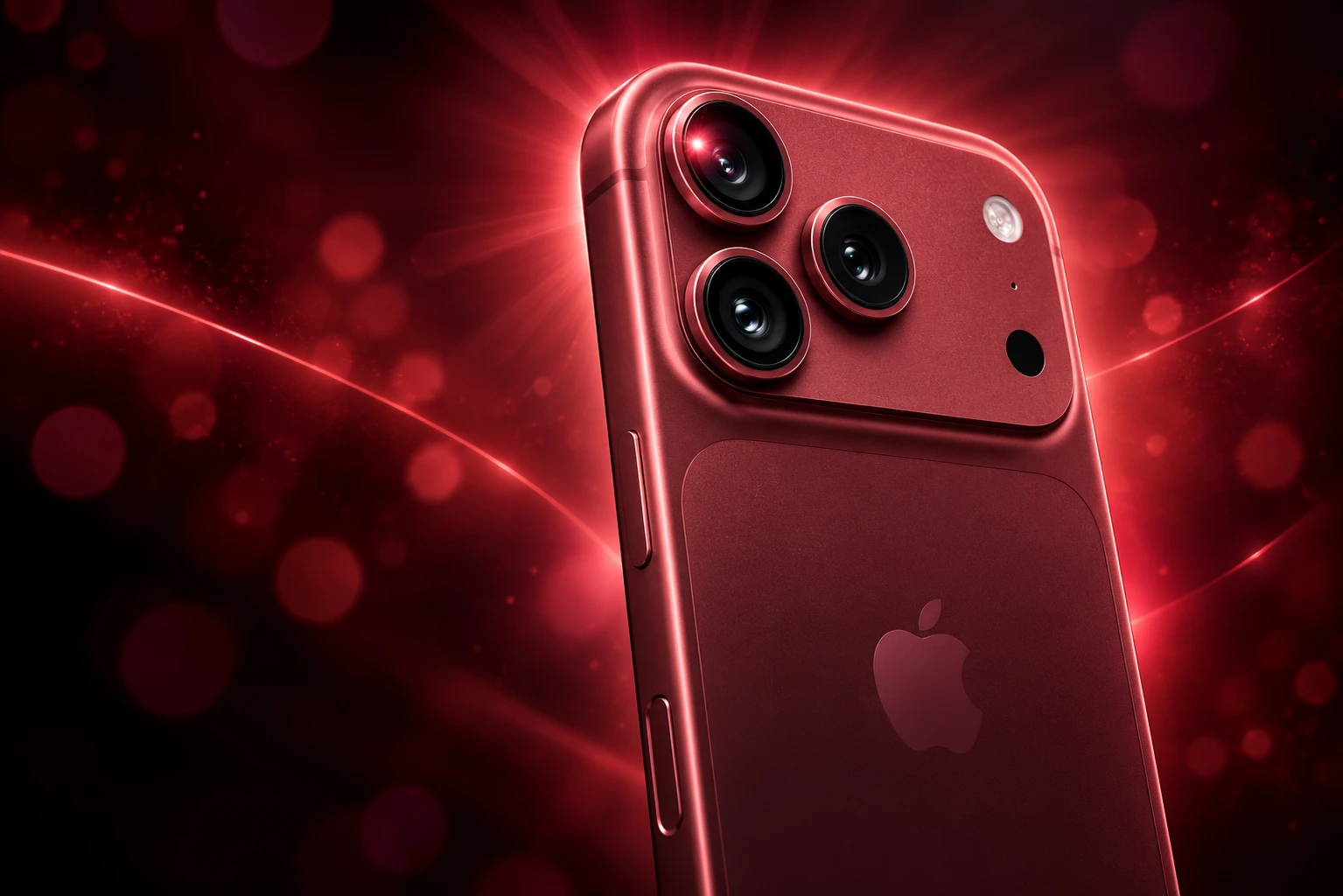
The 48MP Fusion Main camera with variable aperture is the first iPhone camera that can open and close its iris. Six laser-cut blades, driven by a new rotor, move between four aperture settings in the Camera app, and Apple says the lens can widen to ƒ/1.48 for low light. A new sensor sits behind that mechanism, and Apple says group shots keep more detail in the back row because depth of field is no longer a fixed compromise.
Pro Controls turn that hardware into a small cinema kit. Aperture, shutter speed, and white balance are now manual, and a histogram sits on the viewfinder so exposure is not a guess. Developers get an API across the full aperture range, which matters more than another megapixel bump on a 48MP stack that was already there last year.
PRO CONTROLS IN THE CAMERA APP
- Aperture: Four settings the user can set by hand, or leave on automatic for depth and light.
- Shutter and white balance: Direct sliders for motion blur and color, rather than burying them in Photographic Styles.
- Histogram: Live exposure check across the scene before the shutter fires.
- After capture: Cinematic effects can be applied to video shot at up to 60 fps, and Time-lapse now records in 4K Dolby Vision HDR.
Apple Reference Image is the quieter camera add. In Reference mode the new sensor signs every pixel it sees, and Private Cloud Compute builds an unalterable reference file that sits next to the regular photo, like a digital negative. Capture will not be on iPhone 18 Pro models in the EU at launch, and the feature will not be in China at launch because of local rules. SynthID support for spotting AI-edited frames is promised in a later software update this year.
The Assistant Europe Will Not Get
iPhone 18 Pro and iPhone 18 Pro Max ship with iOS 27, Apple Intelligence, and Siri AI. Siri AI can search messages, mail, and photos with personal context, act on what is on screen, and run a Siri mode in Camera. Image Playground now makes photorealistic pictures. Safari’s Notify Me watches a page for a restock or a price drop. Apple still says on-device processing and Private Cloud Compute keep that work private.
The same launch note says Siri AI rolls out as a beta on Monday, September 14, in English, for users 13 and older. French, Japanese, Korean, Portuguese, and Spanish follow in October. Features that lean on server-side models, including Siri AI, photo editing tools, Image Playground, and AFM 3 Cloud models in Shortcuts, have daily usage limits. Apple says expanded access will be available for a fee later, and that most iCloud+ plans already raise the cap. iCloud+ still starts at $0.99 a month.
Google, for its part, told Apple developers they can call cloud-hosted Gemini models in the Foundation Models framework through the same API as on-device Apple models, starting with iOS 27. That is the stack under a hub Apple keeps describing as private at its core. People who already ran Siri AI’s public beta on iOS 27 have seen the personal-context pitch the Pro phones now advertise.
We’re deeply disappointed that our EU users won’t have Siri AI on iPhone or iPad when we share our new software releases later this year.
Craig Federighi, senior vice president of Software Engineering, Apple
On June 8, Apple said the Digital Markets Act blocked a safe way to give rival assistants the same system access Siri AI would have. It offered a Trusted System Agent intermediary and an 18-month phased rollout. The European Commission rejected those plans. European Commission spokesperson Thomas Regnier said the choice not to ship Siri AI in the EU was Apple’s and Apple’s only. Mac and Vision Pro in the bloc still get Siri AI. WatchOS does not, because it needs a paired iPhone that has the feature. Apple has no timeline for Siri AI on iOS or iPadOS in the 27 EU member states.
WHAT WE KNOW
- Beta date: Siri AI opens in English with iOS 27 on Monday, September 14, and is blocked for users under 13.
- EU iPhone: No Siri AI on iOS, iPadOS, or watchOS in the EU at launch, and no date for a change.
- Metered features: Server-side Apple Intelligence tools, including Siri AI and Image Playground, have daily caps, with higher limits on most iCloud+ plans and a paid expansion later.
WHAT IS UNCONFIRMED
- Cap size: Apple has not published how many server-side requests a free user, or an iCloud+ user, gets in a day.
- Fee: The future paid tier has no price, no name, and no start date.
- EU path: There is still no agreed interoperability design that would put Siri AI on an EU iPhone.
Apple Intelligence itself is listed for English, Danish, Dutch, French, German, Italian, Norwegian, Portuguese, Spanish, Swedish, Turkish, Vietnamese, simplified and traditional Chinese, Japanese, and Korean. Several of those languages will have a Pro phone whose camera iris works and whose new assistant does not.
Two Extra Hours Hide in the SIM Tray
eSIM-only iPhone 18 Pro models are rated for up to 36 hours of video playback. eSIM-only iPhone 18 Pro Max models are rated for up to 45 hours, which Apple calls the largest battery-life increase it has ever put on an iPhone. Those figures use the space a physical SIM tray used to occupy, and Apple says that swap is worth two extra hours of video. Last year’s eSIM ratings were 33 hours on iPhone 17 Pro and 39 hours on iPhone 17 Pro Max.
VIDEO HOURS AND STARTING PRICES
| Model | Starts at (U.S.) | eSIM video playback | Chip |
|---|---|---|---|
| iPhone 17 Pro | $1,099 | 33 hours | A19 Pro |
| iPhone 18 Pro | $1,199 | 36 hours | A20 Pro |
| iPhone 17 Pro Max | $1,199 | 39 hours | A19 Pro |
| iPhone 18 Pro Max | $1,299 | 45 hours | A20 Pro |
The two-hour eSIM bonus applies in Bahrain, Canada, Guam, Japan, Kuwait, Mexico, Oman, Qatar, Saudi Arabia, the UAE, the U.S., and the U.S. Virgin Islands. Everywhere else keeps a physical tray and a smaller cell. Apple says more than 500 carriers already support eSIM, including AT&T, T-Mobile, and Verizon.
Charging is part of the same battery brief. iPhone 18 Pro can reach 50 percent in about 15 minutes on a wire, or 50 percent in 30 minutes on MagSafe, using Apple’s 40W Dynamic Power Adapter with 60W Max and USB PD 3.1 with adjustable voltage. Five minutes of wired charging on iPhone 18 Pro Max is rated for about seven hours of video. A new typical-use model, built from real-world data, puts that Max at up to 30 hours on a full charge. Last year’s Pro line needed about 20 minutes to hit 50 percent.
A20 Pro Pins Silicon to a Larger Chamber
A20 Pro is built on a 2-nanometer process. Apple moved the memory beside the die, in packaging it says is inspired by M-series chips, so the silicon can sit directly on a new vapor chamber. That chamber has three times the surface area of the iPhone 17 Pro unit. Apple rates the pairing as the highest sustained performance it has put in an iPhone, up to 40 percent above the last generation.
A20 PRO AT A GLANCE
- CPU and GPU: A 6-core CPU with Neural Accelerators, and a 7-core GPU Apple rates up to 40 percent faster than A19 Pro.
- Memory path: 50 percent more memory bandwidth than A19 Pro, with RAM taken off the chip’s heat path.
- Neural Engine: Dual 16-core blocks, 32 cores in all, which Apple says doubles A19 Pro’s on-device AI throughput.
- Radios: N1 for Wi-Fi 7, Bluetooth 6, and Thread; C2, the next cellular modem, uses 15 percent less energy than C1X and adds mmWave in the U.S.
The same front of the phone gets a smaller Dynamic Island that can show three Live Activities at once and still run Face ID. That is the change a buyer will see before they ever open Camera or Siri. It is also the change that makes a $100 price step look, at a glance, like a finish swap.
Who Gets the Intelligent Personal Hub?
The Pro line is one product in the keynote and several products after checkout. Camera hardware is global. Battery life is not. Siri AI is not. A U.S. eSIM Max can quote 45 hours of video and a beta assistant on September 14. A French iPhone 18 Pro Max, bought the same weekend, keeps a SIM tray, loses those two video hours, and keeps the old Siri on iPhone with no date for the new one.
WHERE THE HUB STOPS
- EU iPhones: No Siri AI, no Siri mode in Camera, no dedicated Siri app, and no watchOS copy of the assistant, across 27 member states.
- Age gate: Siri AI is off for users under 13, even in countries where the beta is live.
- Language window: English on September 14; five more languages in October; Apple Intelligence’s broader language list does not move the Siri AI beta any faster.
- Daily caps: Server-side Siri AI, Image Playground, and related tools stop when the allowance runs out, unless a qualifying iCloud+ plan, or a future paid tier, raises it.
- Physical SIM markets: Same cameras and chip, two fewer hours of rated video playback because the tray stays in the chassis.
That split is why the hub line in the press release does not travel with the hardware. The iris, the chamber, and the 2-nanometer die do. The assistant follows a beta calendar, a regulator, an age limit, and a meter.
Burgundy, Glacier, and the $100 Step
Both phones come in burgundy, glacier, silver, and black, in 256GB, 512GB, 1TB, and 2TB. Burgundy is the finish that filled the first-hour posts, because it is the thing you can see without a lab. The other first-hour complaint was the price. iPhone 17 Pro opened at $1,099 and iPhone 17 Pro Max at $1,199. The new pair is $100 higher at every starting tier.
Monthly, Apple lists $49.95 for iPhone 18 Pro and $54.12 for iPhone 18 Pro Max over 24 months. Apple Upgrade, a Klarna lease in the U.S., starts as low as $34.99 a month for 24 months on iPhone 18 Pro. Apple Trade In credits $175 to $885 for iPhone 13 or later. Select carriers add up to $1,200 toward an 18 Pro or 18 Pro Max when the inbound phone is an iPhone 14 or later, in any condition.
The color-and-island read is easy to make if you only watch the keynote stills. It undersells the iris and oversells the assistant. A buyer who wants the mechanical aperture, the chamber, and the extra video hours in an eSIM country is shopping a different phone than last year’s Pro. A buyer who wants the hub Apple put in the first paragraph is shopping a beta, a cap, and, in the EU, a wait with no date.
Saturday Pre-Orders, Friday in Stores
THE SEPTEMBER SHIP WINDOW
- September 9, 2026: Apple announces iPhone 18 Pro and iPhone 18 Pro Max in Cupertino, and the extra free year of satellite features for iPhone 14, 15, and 16 users closes at midnight PT for devices already activated in a supported country.
- September 12, 2026: Pre-orders open at 5 a.m. PT in more than 65 countries and regions, including the U.S., the UK, China, India, Japan, and Germany.
- September 14, 2026: iOS 27 and Apple Intelligence land as a free update; Siri AI opens as an English beta on supported devices.
- September 18, 2026: iPhone 18 Pro and iPhone 18 Pro Max go on sale in the first wave of countries.
- September 25, 2026: A second wave of 20 countries and regions gets the phones.
- October 2026: Siri AI adds French, Japanese, Korean, Portuguese, and Spanish. The EU iPhone date stays blank.
Stores will put burgundy and glacier on the table first, because that is what a window display can hold. The iris will show up the first night someone drags aperture by hand. The assistant will show up as a beta meter in some countries, and as last year’s Siri in others, until Apple and Brussels write a date that does not exist yet.

Instagram Plus Tests a Read-Only Mode That Cuts Stories

Altman Asks the Public to Accept Some AI Harm

Google Freezes OSS VRP Product Reports After AI Flood

AI Agents Make Payment Rails the Scarce Prize

Turkey’s Crypto Boom Now Runs Through Three Banks

Fable 5 Came Back Under a Commerce On-Off Switch

Google’s SpaceX GPU Lease Has a Sept. 30 Deadline

Plasma One’s XPL Locks Face a 1.81 Billion Cliff

DGO’s Rs 549 World Cup Pass Cost Fans Sleep and Data

Moonshot AI’s $30 Billion Ask Became a $35 Billion Close
-
 AI4 months ago
Fable 5 Came Back Under a Commerce On-Off Switch
-
 AI4 months ago
Google’s SpaceX GPU Lease Has a Sept. 30 Deadline
-
 CRYPTO4 months ago
Plasma One’s XPL Locks Face a 1.81 Billion Cliff
-
 APPS4 months ago
DGO’s Rs 549 World Cup Pass Cost Fans Sleep and Data
-
 AI4 months ago
Moonshot AI’s $30 Billion Ask Became a $35 Billion Close
-
 NEWS5 months ago
ColorOS 17 Device List Spans Oppo, OnePlus and Realme
-

 GAMING4 months ago
Xbox Cuts 3,200 Jobs After Five Years of Thin Returns
-
 GAMING4 months ago
The RTX 4050 Under Rs 70,000 Hides a Wattage Gap