
NEWS
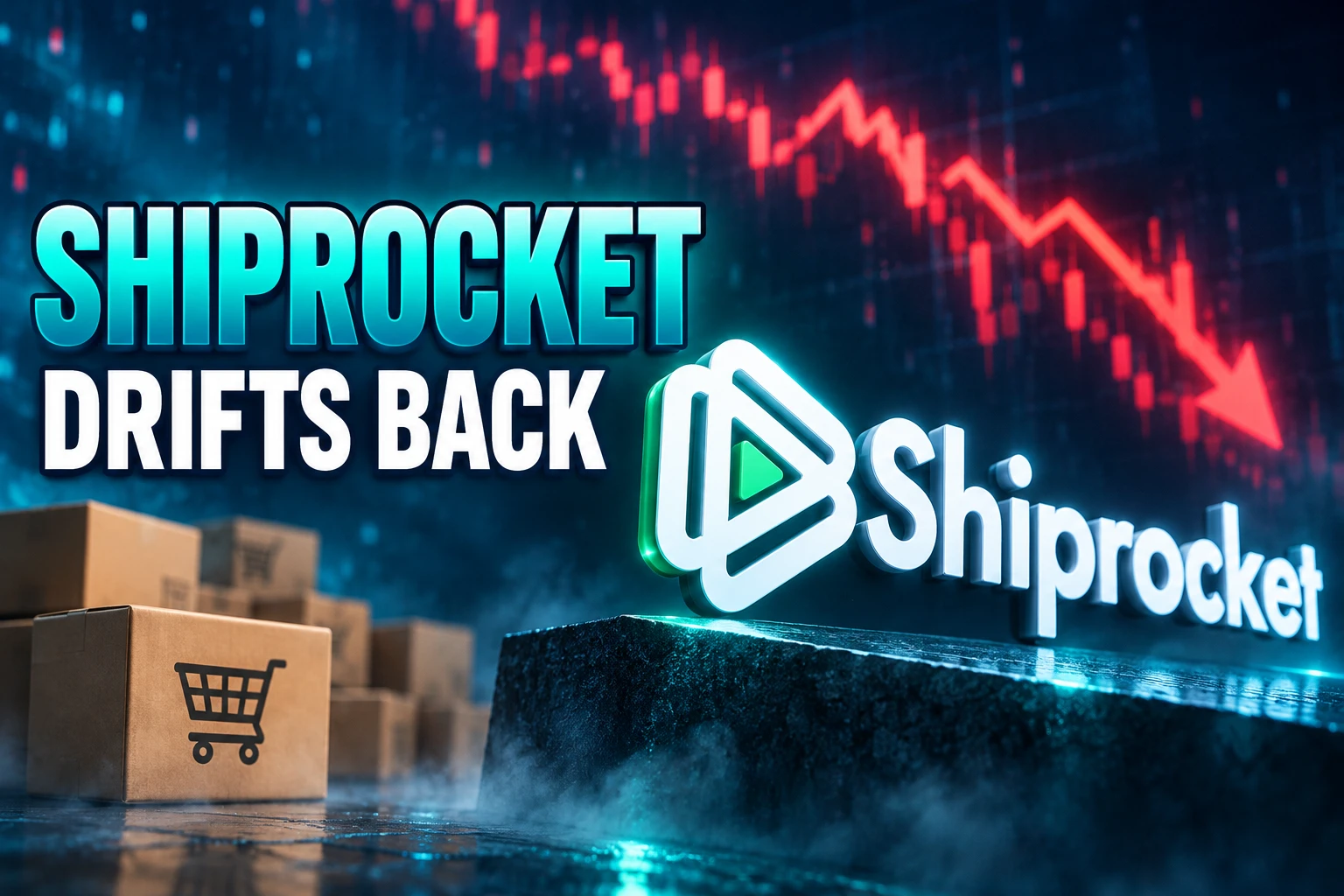
Shiprocket IPO Paid the Grey Market Then Drifted Back
Shiprocket IPO paid a 35% grey-market pop on August 19, then drifted back toward the ₹131 open as losses continued.

Shiprocket shares opened at ₹131 on the NSE on August 19, a 35.05% premium to the ₹97 issue price.
Grey-market desks had been quoting a ₹35 premium, which implied ₹132. The open paid that wager almost tick for tick. The afternoon close at ₹143.45 did not last, and the June quarter still ended in a loss.
The Grey Market Called ₹131 Almost Exactly
Shiprocket Limited, the Gurugram merchant shipping software firm, priced its IPO at ₹97, the top of a ₹92 to ₹97 band, and raised ₹1,617.48 crore. That bag mixed a fresh issue of ₹885.50 crore with an offer for sale of ₹731.98 crore. Bidding ran from August 12 to 14. Allotment was finalised on August 17, and the stock listed on the BSE and NSE on August 19.
On BSE the first print was ₹129.50, a 33.5% premium. One lot is 154 shares, so the NSE open put a minimum bid of ₹14,938 at a gain of ₹5,236. By the close the NSE last price was ₹143.45, 47.89% above the issue, which is a different reading from the open and from where the stock sits now.
PRICE PATH VERSUS THE ₹97 ISSUE
| Price (₹) | Vs ₹97 | |
|---|---|---|
| Grey market implied (₹35 premium) | 132 | 36.08% |
| NSE open, August 19 | 131 | 35.05% |
| BSE open, August 19 | 129.50 | 33.5% |
| NSE close, August 19 | 143.45 | 47.89% |
| Peak, August 20 | 156.9 | 61.75% |
| Trough, August 28 | 124 | 27.84% |
| Last close, September 11 | 133.99 | 38.13% |
The unofficial premium was never a promise. It was a side-market price for a one-day pop, and on that narrow test it cleared. Everything above ₹131 was a second wager on a still-lossy logistics platform, and that is the wager the aftermarket has been marking down.
Retail Faced 46 Times More Bids Than Shares
NSE figures put the public issue at 99.38 times subscribed. Qualified institutional buyers bid 122.8 times their quota, non-institutional investors 88.99 times, retail 46.42 times, and employees 55.51 times. Retail had 10% of the offer, institutions 75%, and non-institutional buyers 15%.
HOW THE BOOK CLOSED
| Category | Times subscribed |
|---|---|
| QIB | 122.8 |
| NII | 88.99 |
| Retail | 46.42 |
| Employee | 55.51 |
| Total | 99.38 |
A 46.42-times retail book means a single-lot application was roughly a one-in-46 draw. Most money that went into the IPO never bought a share, so the listing gain accrued to a thin slice of the crowd that filled the book. Applicants who had already clocked the thin retail odds in a 99-times book were watching a lottery, not a placement.
Results posted on the KFin Technologies allotment portal on August 17, with a parallel check on the BSE application status page through an application number or PAN. Refunds and demat credit ran on August 18. For the people who did get a lot, the grey-market number was the whole trade if they sold into the open. Anyone still holding past that print owns the operating company.
Founders Sold a Slice; Lightrock Led the Cash-Out
The company has no identifiable promoter, a fact that also strips out the usual 18-month promoter lock. Bertelsmann Nederland B.V. remains the largest holder at 21.32% of pre-offer capital and stayed out of the sale. Eternal Limited, formerly Zomato, at 6.85%, and Temasek-linked MacRitchie Investments at 5.29%, also held.
Lightrock, through LR India Fund, was the largest seller. Co-founders Saahil Goel, the managing director and chief executive, and Gautam Kapoor each sold ₹61 crore of stock and kept most of their 4.84% pre-offer stakes. Vishesh Khurana, who left the firm in May 2026, sold ₹20 crore. The employee ESOP trust held 5.97% going in. Later-stage funds that entered at higher marks were selling below the prices disclosed as their acquisition costs in the offer papers, while early backers were not.
SELLING SHAREHOLDERS IN THE OFFER
- Lightrock: ₹271.7 crore, the largest line in the offer for sale.
- Tribe Capital III: ₹120 crore from the early-stage book.
- Saahil Goel: ₹61 crore, with the bulk of his stake retained.
- Gautam Kapoor: ₹61 crore on the same trim.
- Vishesh Khurana: ₹20 crore after leaving the company in May 2026.
The issue itself had already been cut from the ₹2,342.3 crore outlined in the updated draft prospectus. Fresh proceeds are earmarked as ₹365.6 crore for the core and emerging platforms and ₹210 crore to repay debt, with the rest tagged for acquisitions and general use. The company keeps an API-led stack for MSME and large-retailer shipping, checkout, ads and cross-border orders rather than a warehouse fleet of its own. In FY26 it served 214,769 active merchants, processed 202.08 million unique transactions, and employed 1,470 permanent staff plus 2,578 contract workers.
Gains Past the Open Did Not Stick
On August 20, the session after listing, the stock printed a high of ₹156.9, which is 61.75% above the issue and the peak of its short public life. By August 28 it had traded down to ₹124, still 27.84% above ₹97, and 5.3% below the ₹131 open. That trough is the 52-week low because the name has only been listed since mid-August.
FROM ANCHOR DAY TO THE SEPTEMBER CLOSE
- August 11, 2026: Anchors take 7,49,91,568 shares for ₹727.42 crore at ₹97.
- August 12 to 14, 2026: Public bidding fills a 99.38-times book.
- August 17, 2026: Basis of allotment is finalised.
- August 19, 2026: Lists at ₹131 on the NSE and closes at ₹143.45.
- August 20, 2026: Trades as high as ₹156.9.
- August 28, 2026: Prints the ₹124 low.
- September 11, 2026: Last close ₹133.99, up ₹4.82 or 3.73% on the day, on 9,390,124 shares.
The September 11 close of ₹133.99 is 38.13% above the issue, 2.28% above the NSE open, and 6.59% below the listing-day close. Market value that afternoon was ₹9,748.8 crore. In the Aug-Sep IPO window a 35.05% open sat in the middle of the pack, not at the top, and the return since listing is roughly a rounding error. The grey-market trade got paid. The hold-through-listing trade has been a grind back toward that same number.
June Quarter Still Closed With a ₹13.7 Crore Loss
The first accounts as a listed company, for the quarter ended June 30, showed operating revenue of ₹592.1 crore, up 33.8% from ₹442.5 crore a year earlier. Consolidated net loss narrowed 24% to ₹13.7 crore from ₹18 crore, and 16% from the March quarter’s ₹16.3 crore. Reported EBITDA loss shrank to ₹21 crore from ₹26 crore. On the company’s adjusted basis, EBITDA was a positive ₹8.9 crore, against ₹1 crore a year earlier.
FIRST PUBLIC QUARTER AFTER LISTING
- Core shipping: Revenue ₹411.7 crore, up 22%, with adjusted EBITDA of ₹52.7 crore and a 12.8% margin against 12.3% a year ago.
- Emerging stack: Revenue ₹180.4 crore, up 70%, now 30% of sales against 24% a year ago, still at a -24% EBITDA margin against -38%.
- Scale: 224,314 active merchants, trailing-twelve-month GMV of ₹34,661.8 crore, 216 million unique transactions.
- FY26 base: Revenue ₹2,024.1 crore, up 24%, with a ₹79.2 crore net loss against ₹74.4 crore in FY25 and ₹595.1 crore in FY24.
Checkout and marketing inside the emerging line rose about 193%. Contribution from that segment improved to 15.3% from 9.3%, or ₹27.7 crore from ₹9.8 crore. Group contribution was ₹115.1 crore, a 19.4% margin. The core line is paying for ads, cross-border and omnichannel tools that still lose money. Nikhil Gangwar, a SEBI-registered analyst at Equivision Consulting, put the split in one line after the print: “Growth is real, profits are still a promise.”
We are only a few years into a decade-long build, and we continue to double down and invest behind unlocking the true potential of India’s businesses.
Saahil Goel, Managing Director and Chief Executive, Shiprocket, June quarter earnings call
Goel also said merchants driving India’s next leg of online trade will not build their own logistics, payments and growth stack. “They will rent it. That is what we are building.” He put the MSME universe at about 60 million firms that “need a stack they can take pieces from and grow into,” and pointed to an e-commerce market he expects at $180 to $200 billion by 2030. The June quarter earnings call transcript filed with BSE carries the full exchange, including the RADAR courier-intelligence tool, an ads suite, and cargo slots into Blinkit and Zepto dark stores. Shares had finished at ₹134.50 ahead of that release, already a shade under the ₹131 listing open depending on the session, and they have not reclaimed the August 19 close.
Half the Anchor Book Unlocked on September 10
Anchors were allotted 7,49,91,568 shares on August 11 for ₹727.42 crore. Under the standard split, 50% of that line came off the 30-day lock on September 10. The rest is due on November 13. Because there is no promoter group, pre-issue holders sit on a six-month lock rather than an 18-month promoter freeze, so more stock becomes free on the same calendar as a normal float, only without a controlling block behind it.
The August 2026 shareholding snapshot shows promoter at 0%, public at 76.39%, mutual funds at 7.71%, other institutions at 6.03%, and FIIs at 4.65%. That is a free-float heavy register for a name that listed less than a month earlier and still prints losses. The grey-market bet was a one-session spread, and it settled. The register that remains is a software company funding a 70% emerging line with a 22% shipping core, at ₹133.99, 2.28% above the open that already paid the punters who left on day one.
Frequently Asked Questions
What Is Shiprocket’s NSE Symbol and BSE Scrip Code?
The NSE ticker is SHIPROCKET, the BSE scrip code is 544871, and the ISIN is INE0FOO01011. Face value is ₹10 per equity share. Those identifiers did not change with listing and are the ones broker platforms and depositories use for the name.
Did the Shiprocket IPO Carry a Promoter Lock-In?
No. The offer papers state there is no identifiable promoter, so the usual 18-month promoter lock does not apply. Pre-issue capital is under a six-month lock, which is why the free float can widen faster than in a promoter-led listing.
What Employee Terms Applied in the Shiprocket IPO?
Eligible staff could buy at a ₹9 discount to the final ₹97 price, and 1,13,637 shares were reserved for that window. That employee line was subscribed 55.51 times, a tighter book than retail’s 46.42 times and a small slice of the total offer.
When Do the Remaining Shiprocket Anchor Shares Unlock?
The second half of the 7,49,91,568 anchor shares is due to come off lock on November 13, 2026, 90 days after the August 11 allocation. The first half already unlocked on September 10.
Where Is Shiprocket Limited Based?
The registered office listed in the offer is 416, Udyog Vihar, Phase III, Gurugram, Haryana 122 002. The firm was incorporated in 2011 and runs the merchant platform from that Gurugram base.
Disclaimer: This article is news reporting and analysis of Shiprocket Limited’s IPO, listing prints and June-quarter results, and it is for information only. It is not investment advice, a recommendation to buy or sell SHIPROCKET, or a grey-market, IPO or listing-gain forecast. Readers should consult a SEBI-registered investment adviser or a qualified financial planner who can review their own holdings, risk limit and time horizon before acting. Prices, subscription figures, lock-in dates and earnings cited here reflect the company filings, exchange data and offer documents used for this piece and can change in later sessions.

Instagram Plus Tests a Read-Only Mode That Cuts Stories

Altman Asks the Public to Accept Some AI Harm

Google Freezes OSS VRP Product Reports After AI Flood

AI Agents Make Payment Rails the Scarce Prize

Turkey’s Crypto Boom Now Runs Through Three Banks

Fable 5 Came Back Under a Commerce On-Off Switch

Google’s SpaceX GPU Lease Has a Sept. 30 Deadline

Plasma One’s XPL Locks Face a 1.81 Billion Cliff

DGO’s Rs 549 World Cup Pass Cost Fans Sleep and Data

Moonshot AI’s $30 Billion Ask Became a $35 Billion Close
-
 AI4 months ago
Fable 5 Came Back Under a Commerce On-Off Switch
-
 AI4 months ago
Google’s SpaceX GPU Lease Has a Sept. 30 Deadline
-
 CRYPTO4 months ago
Plasma One’s XPL Locks Face a 1.81 Billion Cliff
-
 APPS4 months ago
DGO’s Rs 549 World Cup Pass Cost Fans Sleep and Data
-
 AI4 months ago
Moonshot AI’s $30 Billion Ask Became a $35 Billion Close
-

 NEWS4 months ago
ColorOS 17 Device List Spans Oppo, OnePlus and Realme
-

 GAMING4 months ago
Xbox Cuts 3,200 Jobs After Five Years of Thin Returns
-
 GAMING4 months ago
The RTX 4050 Under Rs 70,000 Hides a Wattage Gap