
APPS
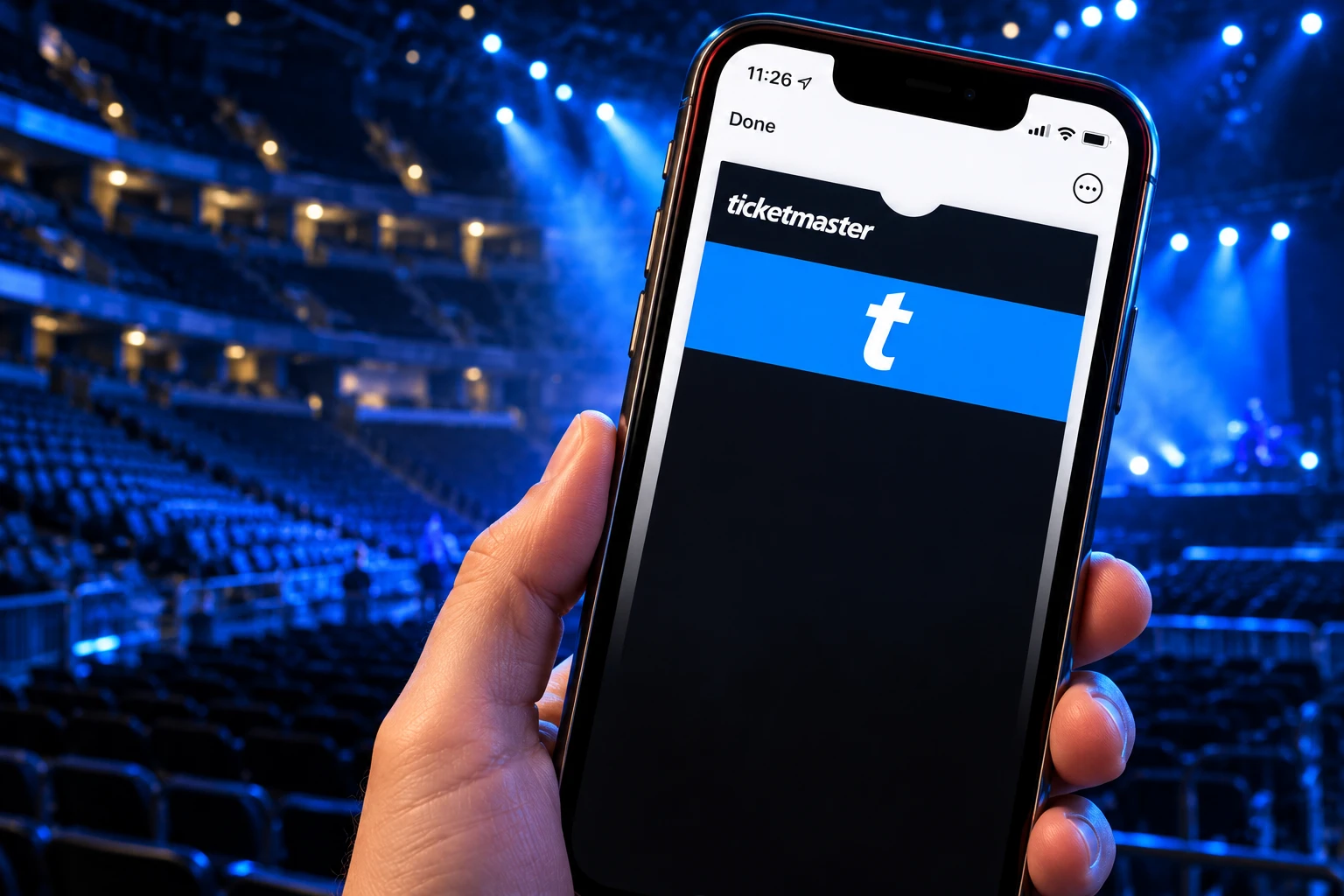
Ticketmaster’s Personalized App Is Built to Move Empty Seats
Ticketmaster’s new app pairs a Watchlist with For You and Last Minute rows so leftover shows reach fans who never heard they were on.

Ticketmaster rebuilt its mobile app around personal feeds, a Watchlist, and last-minute deals, aiming the product at fans who never heard a show was on. The iOS and Android update reached many users across 21 markets on Sept. 2, 2026, with the company saying wider access will follow.
The public pitch is discovery. The quieter job is matching leftover seats to people who already named an artist, a team, or a city, then keeping those people inside Ticketmaster when a presale opens or a row is still empty the night of the show.
Watchlist, Dark Mode, and a Home Screen That Follows You
The company’s own product page now promises personalized recommendations based on favorite artists, teams, and venues, then routes that taste data into the home feed. A 52-second walkthrough posted on Ticketmaster’s YouTube channel on Sept. 8 walks through the same idea in fan language: the home screen should feel like yours, and the more accounts you follow, the more the app bends toward you.
Saumil Mehta, Ticketmaster’s global president since October 2025, framed the rebuild as a response to a gap the company keeps measuring. Too many people find out a show existed after the lights are down. The new home screen tries to close that gap before the on-sale, and again in the hours when seats are still sitting there.
WHAT SHIPPED IN THE APP
- For You, Trending, Last Minute: The rebuilt home screen splits picks into a personal row, a popularity row, and a row of tickets still available close to showtime.
- Watchlist: Fans can park upcoming sales in one place and get updates through artist presales, venue presales, and the public on-sale.
- Favorites: Following artists, teams, performers, and venues now feeds which events rise on that person’s home screen.
- Search and location: Native search is faster, and a one-tap city switch is meant for people browsing shows while they travel.
- Display: Higher-contrast visuals, extra display controls, and Dark Mode shipped with the same release.
Watchlist is the feature built for the shows that still behave like a scramble. Last Minute is the feature built for the other kind of night, when the room is not full and the company would rather a named fan see the seat than a blank map.
About 40% of Fans Missed the Show Entirely
Ticketmaster says about 40% of fans missed an event because they did not know it was happening. That figure is the company’s own research, cited as it launched the app, and it does a lot of work in the announcement. A missed show is a sad fan story. It is also a seat that never found a buyer.
Too many fans first hear about a great show after it’s happened. That insight, and what we’ve heard directly from fans, has shaped this app update. It’s the beginning of a broader effort to build more fan-inspired experiences that make discovering, following and enjoying live events feel more personal every step of the way.
Saumil Mehta, Global President, Ticketmaster, prepared statement
Mehta came from Square, where he ran product, and he has talked since his first months on the job about putting AI through Ticketmaster “soup to nuts,” not as a side experiment. The app is the consumer face of that push. Follow enough artists and the home screen becomes a file on you. That file is useful when a stadium goes on sale at 10 a.m. It is also useful when a theater is still half empty at 6 p.m.
Empty Seats Are Still Ticketmaster’s Quiet Problem
Live Nation Entertainment, Ticketmaster’s parent, is not short of demand in the headline numbers. On July 30, 2026, it posted second-quarter results for the period ended June 30: revenue of $7.7 billion, up 9%, operating income of $522 million, up 7%, and adjusted operating income of $817 million, up 2%. Concerts brought in $6.4 billion, up 8%. About 49 million fans came through, up 10%, an add of about 5 million people. Ticket sales through mid-July had reached 143 million, over 14 million ahead of the prior year’s pace. Cancellations sat at 1.1%, against a 1.6% historical average.
Ticketing still had to do two jobs at once. Michael Rapino, Live Nation’s president and CEO, told analysts on the July 30 call that fans were buying “at record levels” across venues and geographies, with “no consumer issues to date.” Joe Berchtold, president and CFO, still treated unsold inventory as unfinished work. He said selling leftover tickets would stay an ongoing job, covering how fans find the shows, how the tickets are priced, how they are marketed, and which promotions make sense, and that AI would be used to surface more of Ticketmaster’s long-tail listings when people look for events, including inside the app.
In its second-quarter results, Live Nation reported 90 million fee-bearing tickets sold, even as that leftover-seat work stayed on the call. Concert tickets rose 11% and made up 90% of the volume growth. International markets sold 39 million tickets, up 12%, with gross transaction value in those markets up 20%.
TICKETMASTER IN THE SECOND QUARTER
| Metric | Q2 2026 | Change from Q2 2025 |
|---|---|---|
| Ticketing revenue | $852 million | Up 15% |
| Ticketing adjusted operating income | $331 million | Up 14% |
| Fee-bearing gross transaction value | Over $10 billion | Up 15% |
| Deferred ticketing GTV at quarter end | $5.2 billion | Up 16% |
| Deferred service-fee revenue | $390 million | Up 23% |
| Net new tickets added year to date | 16 million (85% international) | Venues still choosing Ticketmaster abroad |
The empty-seat problem is older than this app. At a 2024 investor presentation, Omar Al-joulani, then Live Nation’s vice president of touring, said about 95% of the company’s shows do not sell out and that those nights added up to 35 million unsold tickets worldwide. “There’s a tremendous number of tickets still to sell just in our existing show count, without adding new show count,” he said then. Two years later, Berchtold was still describing that pile as a standing assignment.
What the Last-Minute Row Is For
The Last Minute module is the plainest tell. A homepage built only for hot onsales would lead with countdown clocks and queue times. This one also leads with tickets that are still available close to the event date, ranked for a person whose Favorites and Watchlist already said what they like.
That is a different customer than the fan refreshing a Taylor Swift map. It is a person who would have gone if someone had put the listing in front of them, which is the group inside that 40% miss rate. Location switching fits the same pattern. A user who taps into a new city is a user who can fill a Tuesday club date the local market has not cleared.
Watchlist still covers the scarce side of the business. High-demand tours run stacked sales, artist presale then venue presale then the public on-sale, and fans miss those windows because the calendar is a mess. Saving the date in-app is a retention tool for the 5% of nights that actually go clean. The same account, on a slower night, becomes a target for whatever is left.
North America secondary volume was flat in the quarter, Live Nation said, with sports gross transaction value offsetting a drop in concerts, and secondary now a low-double-digit share of ticketing GTV as the company keeps squeezing scalpers and bots. If last-minute primary seats show up in a personal feed, some of that late demand never has to leave the official store.
Inside Gemini, Ticketmaster Inventory Answers in Chat
The app is not the only storefront. On Aug. 12, 2026, Ticketmaster published a fan guide to its connected app inside Google Gemini, with a parallel path in Anthropic’s Claude. U.S. users on Gemini’s web, iOS, and Android clients can attach Ticketmaster, ask for shows in ordinary language, compare seating and prices, and drop into checkout with seats already selected. Sample prompts on the company page include weekend concerts in Chicago and two football tickets under $150.
Eligible events surface from those queries with no extra work from venues, Ticketmaster told organizers. Transactions still close on Ticketmaster’s marketplace, under its terms. Google listed Ticketmaster in the same connected-app wave as Fever, the live-events firm that now owns Dice. The fight for the query “what is on tonight” is no longer only an app-icon fight.
Berchtold told analysts the company is working with AI platforms because they can open more of Ticketmaster’s long-tail listings when someone is already looking, and that the same tools are being used in Ticketmaster’s own coding and in the on-site and in-app fan experience. Mehta’s line that the app is “just the beginning” sits on top of that stack. A For You row, a Gemini answer, and a last-minute push notification are three ways to present the same unsold seat.
Dice’s Discovery App Was the Template
Ticketmaster is late to this product idea, which does not make it small. Dice spent a decade selling itself as the anti-Ticketmaster phone: all-in prices, anti-tout rules, and a home feed tied to Spotify and Apple Music taste. Fever bought Dice in June 2025, after a year in which Dice posted $27.7 million in revenue and a $60.5 million net loss, and has since used the brand to sign more U.S. rooms. Fever’s newsroom still leads with Dice’s personalised event recommendations when it talks to independent venues.
A Watchlist-plus-For-You rebuild will not, on its own, move a Brooklyn club off Dice. It does copy the reason those rooms liked Dice in the first place: the ticketer that can find a new attendee is more valuable than the ticketer that only processes the people who already meant to buy. Live Nation added 16 million net new tickets year to date, 85% of them outside the United States. Discovery is how a global client list keeps filling rooms that were never going to sell out on reputation alone.
FROM MEHTA’S ARRIVAL TO THE APP DROP
- October 2025: Saumil Mehta becomes Ticketmaster global president, succeeding Mark Yovich, after a decade at Square.
- March 9, 2026: The Justice Department and Live Nation file a March settlement term sheet that drops a breakup, sets a $280 million state fund, requires an opening for third-party primary sales off Ticketmaster’s back end, and calls for Live Nation to give up ownership or control of 13 amphitheaters, with a 15% service-fee cap at those rooms and eight years of monitoring.
- August 12, 2026: Ticketmaster turns on Gemini and Claude as conversational fronts for live inventory.
- September 2, 2026: The rebuilt consumer app begins rolling out in 21 markets, with Watchlist, Favorites, Last Minute, and a For You home screen.
The settlement is about who else can sell a ticket, not about whether Ticketmaster can recommend one. Building a tighter personal feed is still a way to hold the fan after a venue is allowed to split the on-sale. If the official app is where the Watchlist lives, some of that attention never walks over to the new primary outlet the decree is supposed to enable.
Scams and Session Timeouts Still Dominate the Feedback
The first public conversation around the Sept. 2 rollout did not linger on For You rows. Replies to the most-circulated announcement asked for a tool that stops scammers taking tickets from real fans, asked whether the app stays logged in for more than 20 minutes, and posted screenshots of checkout problems the new home screen does not touch. A Watchlist will not hold a seat if the session dies in the queue. Last Minute will not matter to someone who cannot complete a purchase.
That gap is the limit of this release. Ticketmaster has spent the past year talking about bot blocks, animated barcodes, screenshot blocking, and identity checks, including a mobile-ticket redesign it described in February. The September app is a discovery and alerting layer on top of that stack, not a rewrite of the sale itself. Fans who already distrust the checkout will treat a nicer feed as a side quest.
The company still has a clean, narrow use case if the feed works as designed. A user who follows a comedian, saves a Friday in Watchlist, and leaves location on can be shown a half-sold room that never made the local radio. Berchtold’s leftover-ticket job and Mehta’s missed-show job are the same job described from two desks. Broader access is still coming past those 21 markets, and the Last Minute row is already doing the quieter half of it.

Instagram Plus Tests a Read-Only Mode That Cuts Stories

Altman Asks the Public to Accept Some AI Harm

Google Freezes OSS VRP Product Reports After AI Flood

AI Agents Make Payment Rails the Scarce Prize

Turkey’s Crypto Boom Now Runs Through Three Banks

Fable 5 Came Back Under a Commerce On-Off Switch

Google’s SpaceX GPU Lease Has a Sept. 30 Deadline

Plasma One’s XPL Locks Face a 1.81 Billion Cliff

DGO’s Rs 549 World Cup Pass Cost Fans Sleep and Data

Moonshot AI’s $30 Billion Ask Became a $35 Billion Close
-
 AI4 months ago
Fable 5 Came Back Under a Commerce On-Off Switch
-
 AI5 months ago
Google’s SpaceX GPU Lease Has a Sept. 30 Deadline
-
 CRYPTO4 months ago
Plasma One’s XPL Locks Face a 1.81 Billion Cliff
-
 APPS5 months ago
DGO’s Rs 549 World Cup Pass Cost Fans Sleep and Data
-
 AI5 months ago
Moonshot AI’s $30 Billion Ask Became a $35 Billion Close
-

 NEWS5 months ago
ColorOS 17 Device List Spans Oppo, OnePlus and Realme
-
 GAMING4 months ago
The RTX 4050 Under Rs 70,000 Hides a Wattage Gap
-
 AI4 months ago
Boris Cherny’s Loops Still Demand a Higher Production Bar