
NEWS
Instagram Plus Tests a Read-Only Mode That Cuts Stories
Instagram Plus strings point to a read-only profile lock that blocks likes and Stories, after the paid tier already sold quieter Story previews.

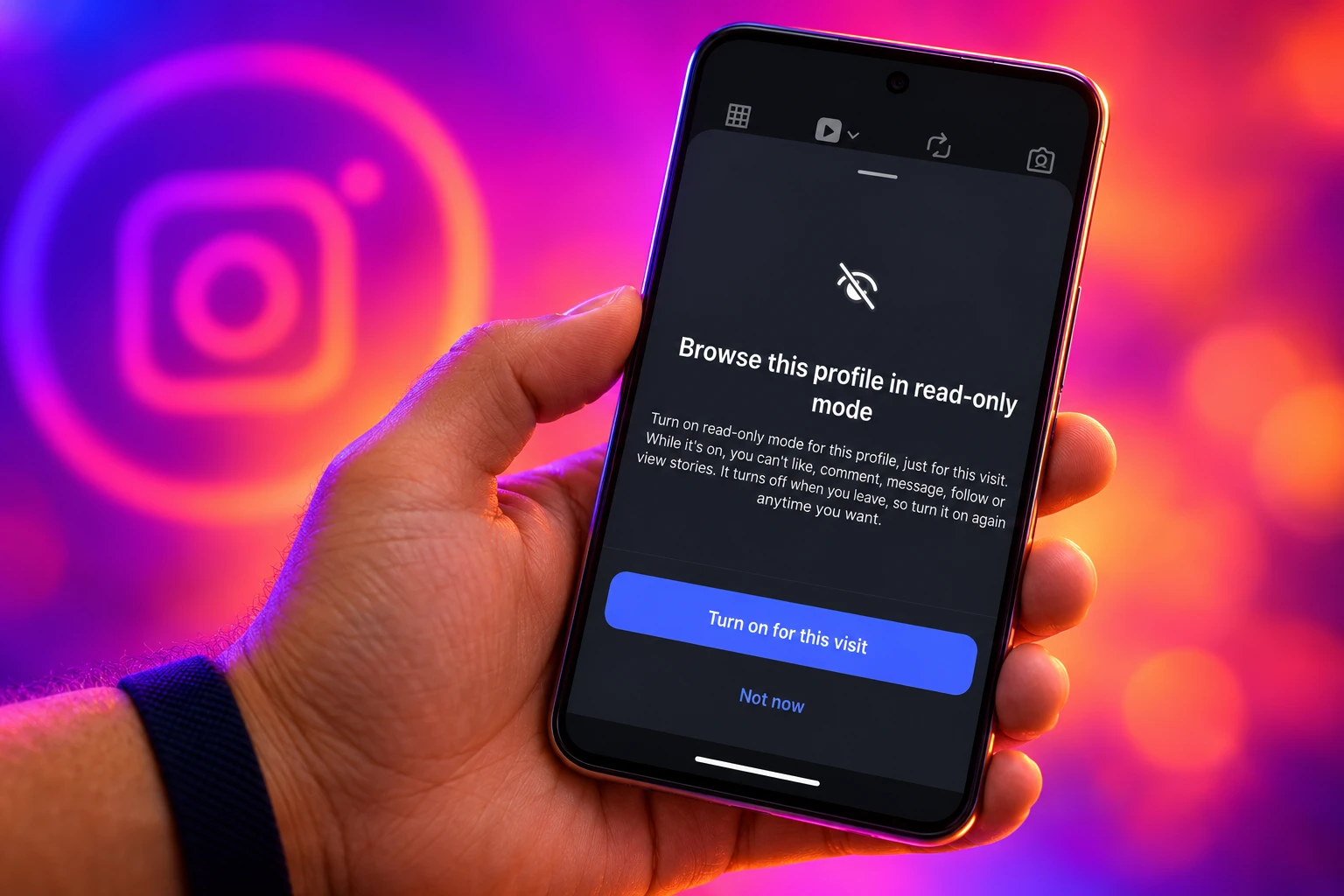
Reverse engineer Alessandro Paluzzi posted on October 3, 2026 that Instagram is building a Read-Only Mode perk for Instagram Plus. The strings he found would let someone open a profile, then freeze the actions that put a name on the visit: likes, comments, messages, follows, and story views.
Two days later, on October 5, 2026, an Instagram spokesperson said the idea “is an internal only exploration, not testing externally at all.” The scare headline is quiet stalking. The code Paluzzi showed would also take Stories off the table, which is a thinner browse than the one Plus already sells.
What Read-Only Mode Would Block?
Paluzzi’s post frames the perk as a session on one profile, not a new global privacy switch. The in-app copy he shared says you browse in read-only mode by preventing you from liking, commenting, messaging, following, or viewing stories. That is a lock on your own thumbs, aimed at the old-photo like that still haunts group chats.
FIVE ACTIONS THE STRINGS CUT
- Likes: The double-tap and the heart on a post or Reel go dead for that visit.
- Comments: The field that turns a silent scroll into a public note is closed.
- Messages: The shortcut into DMs from the profile is blocked.
- Follows: The button that sends a request or a new follower alert cannot fire.
- Stories: Active Stories are out of the session, so the live tray is not part of the lurk.
That last item is the one the “no paper trail” pitch buries. Stories are the format Instagram still attaches to a username. A mode that cannot open them is a quieter grid of old posts, not a ghost pass through someone’s day.
The Only Named Trace Left Is a Story View
Instagram has never handed anyone a list of who opened a profile. Opening the grid, reading the bio, and tapping through feed posts does not send the owner a name. Apps that promise that list are selling a number Instagram does not publish.
What does carry a name is everything Paluzzi’s lock would freeze. A like is public. A comment is public. A follow sends an alert. A DM shows up in the inbox. A story view lands on a username list the poster can open.
WHERE A NAME STILL SHOWS UP
| Action | Does the other person see you? | What Instagram actually shows |
|---|---|---|
| Opening a profile | No named list | No visitor identities on personal, creator, or business accounts |
| Watching a Story | Yes | Usernames on the poster’s viewer list, with Help Center steps to check them for up to 48 hours |
| Liking or commenting | Yes | A public mark on the post |
| Following | Yes | A follow or request the account can see |
| Sending a DM | Yes | A thread in their inbox |
| Read-only session (leaked) | Those five actions blocked | Paluzzi’s strings; Instagram says it is internal only |
Instagram’s Help Center tells posters they can see the usernames of people who viewed each photo or video in a story, and that this list is for them alone. Public accounts can also open story insights that count views, unique viewers, interactions, accounts engaged, and profile activity from that story. That is not a named walk-through of who opened the main profile.
The honest job of read-only, then, is not to hide a visit Instagram already keeps nameless. It is to stop the fat-finger that turns a nameless visit into a like, a follow, a DM, or a story view.
Plus Already Lets You Preview Stories Quietly
Instagram Plus is not a rumor sitting next to this leak. Meta launched the paid tier on June 4, 2026, after starting a global rollout of consumer plans on May 27, 2026. The company prices Instagram Plus at $3.99 a month in its later Meta One materials, the same sticker as Facebook Plus, with WhatsApp Plus at $2.99.
The June 4 launch post listed 11 perks in three buckets. Four were about reaching people (Story Spotlight, Super Hearts, multiple story audiences, Story Extend to 48 hours). Four were cosmetic or posting tools (custom app icon, custom bio font, up to 6 profile pins, posting straight to the profile or highlights). Three were about looking and measuring, including Story Preview, which Instagram describes as a way to Preview stories without the pressure to react.
INSTAGRAM PLUS ON THE BOOKS
- Price: $3.99 a month for Instagram Plus, listed beside Facebook Plus at the same rate.
- Launch list: 11 perks on June 4, 2026, most of them built around Stories.
- Story window: Story Extend holds a subscriber’s own story for 48 hours instead of 24.
- Later add: Meta said Plus also gained alerts when chosen people view your story.
On September 15, 2026, Meta bundled those single-app plans into Meta One and said the wider subscription push had 15 million subscriptions and trials. In the same post it said Instagram Plus had recently added custom DM and Story fonts, DM previews, and notifications when certain people view your Story.
That is already a two-way paid split. Subscribers get a quieter pass at other people’s Stories, and they can ask the app to ping them when chosen people watch theirs. Read-only would not extend that quieter pass. Paluzzi’s copy removes Stories from the session, so the person who wants to watch without a username still needs Story Preview, not this lock.
#Instagram is working on a new perk for Instagram Plus: Read-Only Mode. Browse a profile in read-only mode, preventing you from liking, commenting, messaging, following, or viewing stories.
Alessandro Paluzzi, reverse engineer, on X
The screenshots sat next to Instagram Plus, which is why every rewrite treated stealth as a forthcoming paid extra. The June launch post also said Instagram would keep adding features to Plus. A button lock that prevents self-sabotage fits that roadmap better than a full ghost login.
LinkedIn Sold This Kind of Quiet Years Ago
If the leak ever ships, it will still not be the first time a large network charged for a quieter look. LinkedIn already lets members hide their identity when they open someone else’s profile. In full private mode, LinkedIn Help says you appear as “LinkedIn Member – This person is viewing profiles in private mode,” with no other details passed to the person you viewed.
The professional network also sells the other half of the bargain. LinkedIn Help says Premium members can browse in private mode and still see the list of people who viewed their profile in the last 90 days, which a free account loses while private mode is on. Even Premium cannot unmask someone else who chose private mode.
Instagram is a worse copy of that deal, because the products are not the same. LinkedIn built “who viewed your profile” into the product, then rented anonymity around it. Instagram never shipped that list. Its paid quiet is already aimed at Stories, the one surface that still names a viewer. A Plus session that also blocks Stories would be a lockbox for feed photos, sold next to a separate perk for looking at the live tray.
Restrict Does Not Hide You From a Profile
Safety talk around the leak treats a nameless browse as a new gift to harassers. People who want someone gone from their account already have tools, and those tools do not all close the grid. Instagram’s own guide says Restrict lets you discreetly restrict someone without alerting them. Their comments hide from other people, they lose your activity status, and they cannot tag, mention, or remix you. They can still reach the profile, the posts, and the Stories your privacy settings otherwise allow.
Block is the cut. Instagram says a blocked account cannot search you, see your content, or message you, and that a block can cover other accounts they create. People are not notified when you block them. Mute only changes what you see. Report is anonymous. None of those controls is a substitute for a private account, Close Friends, or hiding a Story from a named person, and Restrict in particular leaves the profile readable.
WHAT WE KNOW
- The strings: Paluzzi posted two screenshots on October 3, 2026, tagging the perk to Instagram Plus and listing five frozen actions.
- The company line: An Instagram spokesperson on October 5, 2026 said the work is internal only and is not being tested with outside users.
- The paid tier: Instagram Plus is live, costs $3.99 a month in Meta’s US list, and already includes Story Preview plus later viewer alerts.
WHAT IS UNCONFIRMED
- A ship date: There is no public test, no settings path in the live app, and no promise it will leave the building.
- How a session starts: Paluzzi showed a profile-level lock, not whether it is a toggle, a timer, or a Plus-only switch.
- What Meta still logs: Cutting on-screen buttons is not the same as deleting server-side view data the other person cannot see anyway.
If the switch ever reaches paying accounts, the people being opened do not get a matching alert. They already lack a profile-visitor list. They would lose the remaining tells (a stray like, a story view, a follow) from anyone who remembered to turn the lock on, and they would keep every tell from anyone who did not pay or did not bother.
Instagram Says the Code Is Internal Only
FROM LAUNCH TO THE LEAK
- May 27, 2026: Meta starts rolling out Instagram Plus, Facebook Plus, and WhatsApp Plus as optional consumer plans.
- June 4, 2026: Instagram’s own blog lists 11 Plus perks, including Story Preview and a 48-hour story window.
- September 15, 2026: Meta One launches; Instagram Plus is listed at $3.99 a month, and Meta cites 15 million subscriptions and trials across the push.
- October 3, 2026: Paluzzi posts the Read-Only Mode strings and screenshots.
- October 5, 2026: An Instagram spokesperson says the mode is an internal-only exploration, with no external test.
Labs inside large apps light up and go dark all the time, and this one may join them. Paluzzi’s strings freeze the five actions that still put a name on a visit, and they take Stories off the table to do it. Instagram has not put that switch in anyone’s hands outside the building.

OpenAI’s 372 Math Results Force Departments to Rethink Hiring

Instagram Plus Tests a Read-Only Mode That Cuts Stories

Altman Asks the Public to Accept Some AI Harm

Google Freezes OSS VRP Product Reports After AI Flood

AI Agents Make Payment Rails the Scarce Prize

Fable 5 Came Back Under a Commerce On-Off Switch

Google’s SpaceX GPU Lease Has a Sept. 30 Deadline

Plasma One’s XPL Locks Face a 1.81 Billion Cliff

DGO’s Rs 549 World Cup Pass Cost Fans Sleep and Data

Moonshot AI’s $30 Billion Ask Became a $35 Billion Close
-
 AI4 months ago
Fable 5 Came Back Under a Commerce On-Off Switch
-
 AI5 months ago
Google’s SpaceX GPU Lease Has a Sept. 30 Deadline
-
 CRYPTO5 months ago
Plasma One’s XPL Locks Face a 1.81 Billion Cliff
-
 APPS5 months ago
DGO’s Rs 549 World Cup Pass Cost Fans Sleep and Data
-
 AI5 months ago
Moonshot AI’s $30 Billion Ask Became a $35 Billion Close
-

 NEWS5 months ago
ColorOS 17 Device List Spans Oppo, OnePlus and Realme
-

 GAMING4 months ago
The RTX 4050 Under Rs 70,000 Hides a Wattage Gap
-

 AI4 months ago
Boris Cherny’s Loops Still Demand a Higher Production Bar