
AI
Suno Turns the Warner Settlement Into Licensed v6 Models
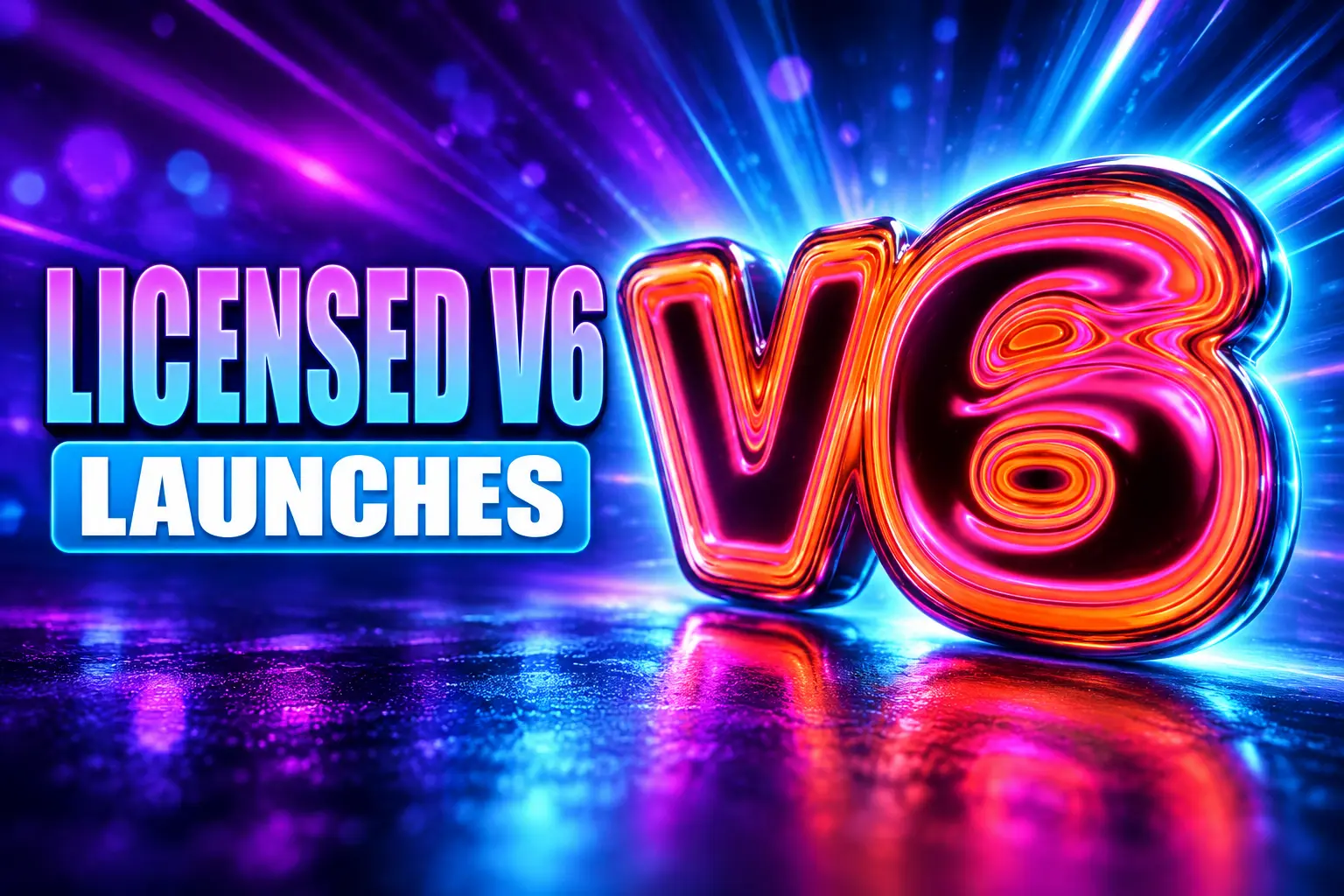
Suno launched v6 on licensed Warner, BMG and Believe catalogs, retiring older models while Universal, Sony and Round Hill remain in court.

Suno on September 9 launched v6, a new family of music models built with Warner Music Group, BMG and Believe, and said it would retire every older model the same day. Pro and Premier subscribers get the flagship v6 and the looser v6-wild; everyone else gets v6-mini at no cost.
The release is the licensed generator Warner extracted when it dropped its copyright case last November. It is also a partial reset. Universal Music Group and Sony Music are still in that case, a later opt-in product that pays named artists has not shipped, and the new weights still train on songs Suno users made with the old stack.
Three Models Take Over the Whole Platform
Mikey Shulman, Suno’s co-founder and chief executive, wrote that the company built a suite for different kinds of users rather than one replacement model. Jack Brody, the chief product officer, said v6 is faster, higher quality, and better at following detailed instructions than the models it replaces, and that those older models go dark on launch day.
V6 MODEL LINEUP
| Model | Who can run it | What Suno says it is for |
|---|---|---|
| v6 | Pro and Premier | Flagship: precise, reliable, polished across genres |
| v6-wild | Pro and Premier | Exploration: less predictable, more varied results |
| v6-mini | Every account, free | A faster, lighter model for turning an idea into a song |
U.S. pricing stays at $8 a month for Pro and $24 for Premier, the figures Suno has given in court papers. Brody said the company still blocks a prompt that asks for a song in the likeness of a known artist or an existing track. The license sits in the weights, not in a celebrity-name box on the prompt bar.
Shulman’s launch note lists three models and new editing tools that treat a finished clip as something you can rewrite in plain language, not only as a one-shot generate.
NEW CONTROLS IN V6
- Section rewrite: Change one part of a song and keep the rest, as in “Change the chorus so it’s sung by a gospel choir.”
- One-request mashup: Pull vocals from one clip and drums from another, then add new lyrics in a stated style.
- Sample to beat: Grab a riff at a timestamp, isolate an instrument, and build a beat around it in one pass.
- Vibe start: Describe a feeling rather than a genre, as in “Make a song that feels like midnight on a rooftop.”
- Mixed inputs: Start from text, a voice memo, an image, a video, or all of them together.
- Single-line lyric swap: Change one word without rebuilding the track, as in swapping “love” for “light.”
Those prompts are the product users will actually type. They also mark the limit of what launched: style, structure and mood, not an on-the-tin Madonna or Led Zeppelin mode, even though Warner’s catalog helped train the model.
The Warner Deal Built the New Weights
Warner Music Group, the smallest of the three majors and the home of Madonna, Led Zeppelin and Lizzo, sued Suno in 2024 with Universal and Sony, alleging copying at massive scale. On November 25, 2025, Warner and Suno settled previous litigation between the companies and announced a partnership that required new licensed models in 2026, with the then-current stack to be deprecated when those models arrived.
Nine months later, that clause is the launch. Brody said v6 was built from the ground up on a mix of licensed Warner recordings and Suno user data, with technical and preference lessons taken from earlier models. Music from BMG and from participating Believe and TuneCore artists is being added. He also said the partnership starts generating revenue for those partners from September 9.
AI becomes pro-artist when it adheres to our principles: committing to licensed models, reflecting the value of music on and off platform, and providing artists and songwriters with an opt-in for the use of their name, image, likeness, voice and compositions in new AI songs.
Robert Kyncl, chief executive, Warner Music Group, November 25, 2025 partnership announcement
That opt-in for name, image, likeness, voice and compositions is the second half of the Warner pact, and it is not this software. Shulman’s November note promised new creation experiences around Warner artists who choose to take part. His September 9 post still describes those experiences as “what comes next.” Suno also bought Songkick, Warner’s concert-discovery site, as part of the 2025 close, and said it would keep running it as a fan destination.
FROM LAWSUIT TO LICENSED MODEL
- November 25, 2025: Warner settles and licenses; Suno pledges licensed models in 2026 and acquires Songkick.
- June 3, 2026: Suno raises more than $400 million in Series D funding at a $5.4 billion post-money valuation, led by Bond Capital.
- August 12, 2026: BMG joins, covering recorded music and publishing for artists and writers who opt in.
- September 3, 2026: Download caps take effect on free, Pro and Premier plans.
- September 8, 2026: Believe and TuneCore sign, a day after they spent months refusing Suno files.
- September 9, 2026: v6, v6-wild and v6-mini launch; previous models retire.
When Suno struck the Warner deal it put its community at nearly 100 million music makers. The June round more than doubled the $2.45 billion valuation attached to a $250 million raise in November 2025. Investors priced a company that had turned a major-label plaintiff into a training partner, before the licensed model had shipped.
Who Is Still Outside the License?
Warner is in. BMG is in. Believe is in. The other two majors are not. Universal, Capitol Records and Sony Music remain plaintiffs in the 2024 case, which originally listed 560 works. Fact discovery is set to close on September 30, 2026, after which both sides are expected to seek summary judgment on fair use. Suno has asked the court to throw the claims out and award it fees.
Udio, Suno’s closest rival, settled with Universal in October 2025 and with Warner in November 2025, and has since added Merlin and Kobalt. Suno’s catalog map is the inverse of that: Warner plus BMG plus an independent distributor, and an open docket with Universal and Sony. Brody said more rightsholder deals are “absolutely our goal.”
Round Hill Music filed its own case on August 17, 2026, in the Northern District of California, a suit over 500 representative songs drawn from 14,364 compositions and 16,873 recordings it says it owns or controls. It wants up to $150,000 per work if infringement is found willful, a figure it says could approach or exceed $1 billion, and it has said it is not looking to settle. The American Federation of Musicians sued Universal and Warner on June 5 in the Southern District of New York, arguing the majors licensed members’ recordings to AI firms without pay or credit.
WHAT WE KNOW
- Inside v6: Warner licensed recordings, Suno user data, and incoming BMG, Believe and TuneCore catalogs for artists who take part.
- Still litigating: Universal, Capitol and Sony in the 2024 case, with a September 30 discovery close.
- New plaintiff: Round Hill’s August 17 complaint, plus the AFM’s June case against the majors over unpaid licenses.
- Day-one cash: Brody said partner revenue starts on September 9, before any named-artist remix product exists.
WHAT IS UNCONFIRMED
- Who opted in: No public roster of Warner, BMG or Believe artists who have cleared name, voice or likeness for the later product.
- The split: No published rate card for how partner revenue is divided among labels, publishers, featured artists and session players.
- The leftover data: Suno has not said whether “user data” and “preference learnings” include tracks the old, unlicensed models wrote.
A license with three partners does not quiet a docket that still includes two majors, an independent publisher that wants a trial, and a union that says the majors licensed the work and kept the check.
Old User Songs Still Feed the New Models
Brody’s training recipe is the part of the launch that does not fit the clean “licensed reset” line. v6 trains on Warner’s licensed recordings and on Suno user data, and it reuses preference learnings from earlier models. Suno’s own terms give the company a perpetual, irrevocable license to use what people submit and what the service generates, including to improve its models. The old generators are gone from the product picker. Their output can still sit in the new weights.
Ed Newton-Rex, a composer and the chief executive of Fairly Trained, put the objection in public on September 9. He called the move to licensed training a win for musicians and said it likely would not have happened without the lawsuits of the past two years. He also flagged the user-data clause.
This is a big win for musicians, and likely wouldn’t have happened without the lawsuits of the last couple of years.
Ed Newton-Rex, composer and chief executive of Fairly Trained, September 9, 2026
His follow-on point is the one the launch note leaves open. If the new model learns from songs the old model wrote, and from the clicks those songs earned, the unlicensed generation is still in the loop. Retiring a checkpoint is not the same as throwing away the data it produced. Suno has not published a training card that would settle that question, and Brody’s phrasing leaves it live.
Shulman told his own users the company had spent years on safeguards, including weekly writing camps with artists and screens for uploaded audio and lyrics. Those controls police what people feed the box. They do not, on the public record, isolate v6 from the last generation of Suno tracks.
Paid Plans Now Meter Every Off-Platform Download
The other half of the Warner deal was never a better chorus. It was a tighter pipe. From September 3, six days before v6, Suno capped how many files a user can take off the site. Free accounts get seven lifetime trial downloads for personal, non-commercial use. Pro gets 20 downloads a month. Premier gets 60 a month. Extra downloads are for sale. Listening and sharing inside Suno stay unlimited.
Premier subscribers who work in Suno Studio, the browser production suite, keep uncapped exports from that tool, including 32-bit/48 kHz stems. Studio 2.0, shipped on August 13, added MIDI, a beta chat bar and heavier stem separation. The meter hits the consumer generate-and-download loop that flooded streaming services with low-effort clips. It also hits anyone who paid $8 or $24 a month under the old “download what you make” habit.
That is the complaint that showed up under Suno’s own posts in the days around launch. People asked when v6 would land. Then they asked for unlimited downloads on songs they had already paid to create. One long-time subscriber said they would come back if that cap disappeared. The license did not restore the old export rules; it wrote them into the product.
THE MONEY AND THE METER
- Series D: More than $400 million on June 3 at a $5.4 billion post-money valuation, led by Bond Capital with IVP, Forerunner, Union Square Ventures, Alkeon and Quiet.
- U.S. plans: Pro at $8 a month and Premier at $24 a month.
- Off-site files: 7 lifetime on free, 20 a month on Pro, 60 a month on Premier, uncapped inside Studio for Premier.
- Marks: Audio watermarking and fingerprinting, announced in August, so a Suno clip can still be identified after it leaves the app.
New terms published in August also bar ripping or recording an output by any path other than Suno’s own download channel, and they reserve the right to stamp files with a fingerprint or watermark that shows the plan and whether the file was a permitted download. Those marks sit next to a separate industry system for labeling AI songs that streaming services have been slow to adopt. Suno is tagging its own files because the catalogs it just licensed do not want those files piling up, unlabeled, on Spotify and Deezer.
The Artist Payday Is a Product That Has Not Shipped
Believe and TuneCore signed on September 8. Independent artists, Shulman wrote, have always been central to Suno, and the distributor will sit inside the new models. Artists on those platforms can choose later product experiences, and tracks made with the partner model become eligible to ship through Believe and TuneCore, a path the community had asked for.
The tone of that note is a cease-fire. Earlier in 2026, Shulman wrote, Believe and TuneCore would not distribute music made with models that did not meet their standards, including Suno’s models at the time. After months of talks, the same companies are now a training partner and a distribution outlet. Denis Ladegaillerie, Believe’s founder and chief executive, said the deal gives artists a choice over how they take part, protect their rights, and share in the value.
We're proud to announce a new partnership with Believe and TuneCore 🥳
Believe works with independent artists and labels around the world, and TuneCore is their platform for self-releasing artists.
Believe will be part of the new music models we are developing with the music… pic.twitter.com/t4QEXUWqx8
— Suno (@suno) September 8, 2026
BMG’s August 12 pact is built on the same opt-in language. The companies described a global alliance covering BMG’s recorded and publishing repertoire, with compensation for artists and writers who choose to participate, while settling prior use of BMG recordings and publishing works. BMG had not sued. Celine Joshua, BMG’s executive vice president of global marketing and streaming, said choice is the guiding principle and that the deal sets protections, economics and new creative options.
Shulman’s own next-product paragraph is still a promise, not a ship date.
What comes next is a new kind of product we’re developing: opt-in experiences built around individual artists, where artists can choose to participate and get paid when they do, and fans get new ways to connect with the artists they love.
Mikey Shulman, co-founder and chief executive, Suno, September 9, 2026 launch post
Until that product exists, v6 is a better generator on a partly licensed corpus, with a download meter and a watermark, and with partner revenue starting before any fan can legally remix a named star. Spotify has been building its own licensed remix path inside the app, which would keep the clip on the service rather than handing the user a file. Suno’s bet is the opposite shape: make the song on Suno, pay for the download, and, later, pay the artist whose identity you actually wanted in the first place.
Discovery in the Universal and Sony case runs to September 30. Round Hill wants a trial. The AFM wants the majors to pay the players whose records they licensed. Brody wants more catalogs. v6 is the software Warner’s settlement required. The software that matches Kyncl’s opt-in sentence is still on the other side of “what comes next.”

Instagram Plus Tests a Read-Only Mode That Cuts Stories

Altman Asks the Public to Accept Some AI Harm

Google Freezes OSS VRP Product Reports After AI Flood

AI Agents Make Payment Rails the Scarce Prize

Turkey’s Crypto Boom Now Runs Through Three Banks

Fable 5 Came Back Under a Commerce On-Off Switch

Google’s SpaceX GPU Lease Has a Sept. 30 Deadline

Plasma One’s XPL Locks Face a 1.81 Billion Cliff

DGO’s Rs 549 World Cup Pass Cost Fans Sleep and Data

Moonshot AI’s $30 Billion Ask Became a $35 Billion Close
-
 AI4 months ago
Fable 5 Came Back Under a Commerce On-Off Switch
-
 AI4 months ago
Google’s SpaceX GPU Lease Has a Sept. 30 Deadline
-
 CRYPTO4 months ago
Plasma One’s XPL Locks Face a 1.81 Billion Cliff
-
 APPS4 months ago
DGO’s Rs 549 World Cup Pass Cost Fans Sleep and Data
-
 AI4 months ago
Moonshot AI’s $30 Billion Ask Became a $35 Billion Close
-

 NEWS4 months ago
ColorOS 17 Device List Spans Oppo, OnePlus and Realme
-
 GAMING4 months ago
Xbox Cuts 3,200 Jobs After Five Years of Thin Returns
-

 GAMING4 months ago
The RTX 4050 Under Rs 70,000 Hides a Wattage Gap