
COMPUTERS
AI Boom Makes Vintage Computers the Unexpected Thrill
Collectors restore Xerox Altos and Commodores at packed festivals while Apple-1s hit millions, craving systems they can fully understand amid black-box AI.

More than 3,500 people filled the Computer History Museum in Mountain View on August 1-2 for the Vintage Computer Festival, drawn by restored Xerox Altos, Commodore PETs and a panel with Apple co-founders as the company marked 50 years. While data centers race to train the next models, these collectors spend years coaxing 1970s and 1980s machines back to life.
The irony is sharp. The same region building black-box AI is packing halls to play Pong on original hardware and hear the beeps of childhood systems that any determined hobbyist can fully reverse-engineer.
Machines That Still Boot After Decades
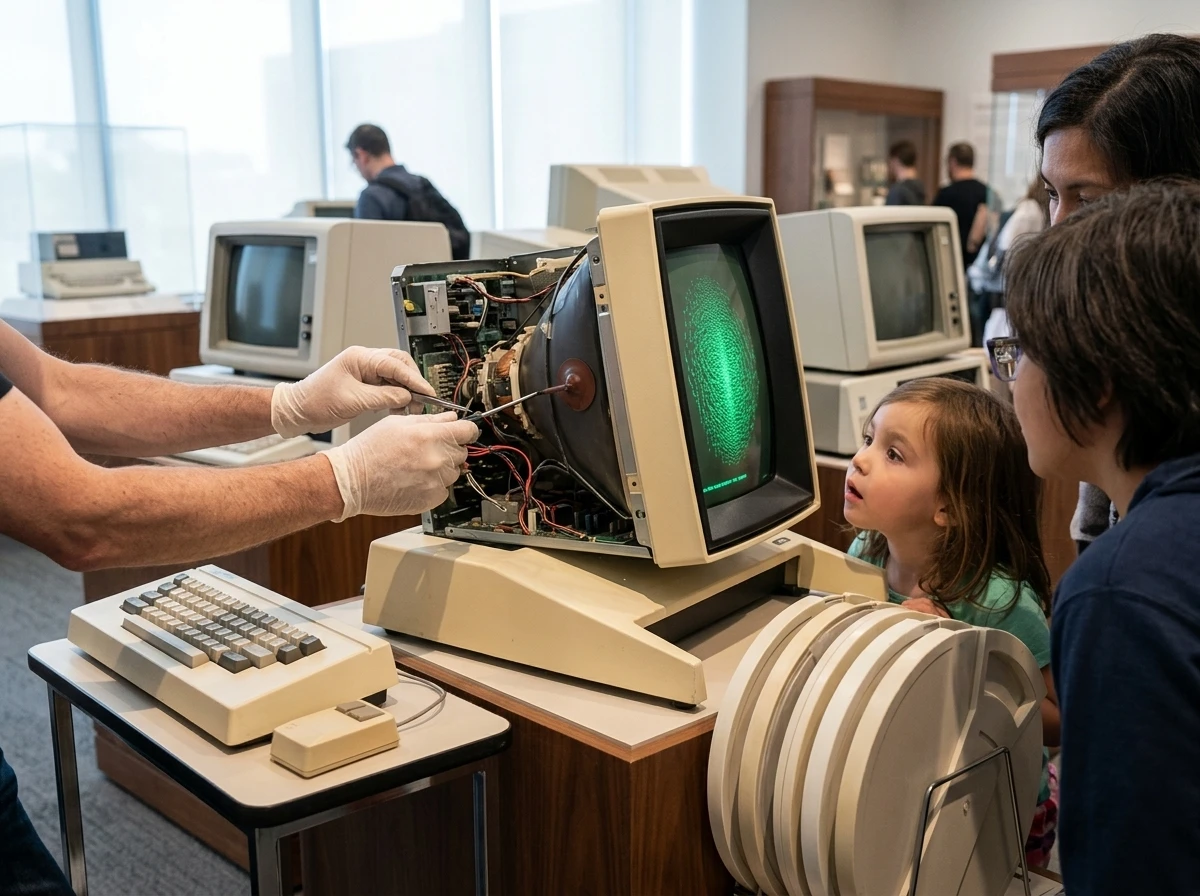
Josh Dersch, a Seattle software engineer, drove south with the pride of a collection that tops 200 machines. His star was a working Xerox Alto, the 1970s PARC system often called the grandfather of the modern computer.
The Alto introduced the mouse, windows, icons and bitmapped graphics that Steve Jobs and Bill Gates later made standard. Dersch spent years restoring one complete with its vertical monitor, chunky keyboard, three-button mouse and pizza-sized spinning disks that hold tiny amounts of data by today’s measure.
“It’s always been fascinating to me to see the origins of things,” Dersch said. “It’s a fun challenge to debug and repair. You can understand the entire system from top to bottom.”
- Xerox Alto: Early GUI pioneer from PARC, fully interactive single-user machine that inspired Macintosh and Windows.
- Apple-1: Roughly 200 built in 1976; fewer than 100 known survivors, many now in museums.
- Commodore SuperPET and C64: Home and education workhorses whose simple architecture still runs original software.
- Atari and IBM PC clones: Everyday machines that defined gaming and business for a generation.
Attendees could sit down and use the systems. That hands-on access is the point. Modern laptops and phones are sealed. These boxes open, solder, and explain themselves.
From One Bay Area Gathering to a Global Circuit
Sellam Ismail organized the first Vintage Computer Festival in 1997 east of San Francisco. About 150 hobbyists showed up. He ran it for a decade, later co-founding the Vintage Computer Federation that now stages events across the U.S. and Canada and has helped launch festivals in Argentina, Germany and Switzerland.
“The community grew up. More and more people started getting old computers, started collecting them,” Ismail said. “Next year is the 30th anniversary. And I expect this to continue and grow even bigger.”
Erik Klein, a Silicon Valley software engineering manager and current federation president, once kept 150 complete systems plus manuals and boxes until the hobby became an albatross on family life. He sold and gave most away, then poured the energy into organizing festivals, workshops and swap meets.
“The enthusiasm for the history of computers and all the stuff around it is growing,” Klein said. The federation’s mission is to preserve computing history through education, outreach, conservation and restoration with family-friendly hands-on activities.
| Year / Milestone | Scale |
|---|---|
| 1997 first festival | ~150 attendees |
| 2026 VCF West | More than 3,500 attendees |
| Current footprint | U.S., Canada, Europe, South America events |
| Apple 50th panel | Wozniak, Ronald Wayne and early team members |
This year’s Mountain View edition featured hands-on demos of historical systems from the 1960s through the 1990s, a Q&A with Apple co-founder Ronald Wayne, and the documentary screening of Osborne: The Man Who Would Be King with original engineers.
Scarcity Turns Junk Into Auction Prizes
Klein notes rising demand on online marketplaces. Rare pieces now command serious money. An original Apple-1 that sold new for $666.66 can fetch hundreds of thousands. In March 2025 one operational unit brought $375,000. The Apple-1 Registry records that in January 2026 Apple-1 sold for a new record of US$ 2,750,000.
| Sale / Period | Approximate Price |
|---|---|
| 1990s private | Around $10,000 |
| 2013-2014 auctions | $671,000 to $905,000 |
| 2024 Jobs desk unit | $945,000 |
| 2025 operational | $375,000 |
| January 2026 record | $2,750,000 |
Broader retro hardware has climbed two to three times in value since 2018 even as inventory tightens. Working condition, original packaging and provenance drive the premiums. Consignment areas at the festivals let collectors buy more “junk” to haul home and revive.
Why Fully Graspable Systems Feel Essential Now
Modern AI stacks and cloud services hide their workings. Training runs consume vast power and produce models no single person can inspect. In contrast, a Commodore or Alto lets an owner follow every signal from power supply to CRT.
That difference fuels the hobby. Dersch and others describe the satisfaction of debugging an entire machine. Crowds at the festival watched Wozniak gift an original Apple I he had assembled to computing-education pioneer Liza Loop. Daniel Kottke, Paul Terrell and Ronald Wayne shared early-company stories. One attendee posted that the weekend felt like “a living reminder that today’s AI moment sits atop decades of invention.”
- Top-to-bottom comprehension: every chip and bus is accessible.
- Nostalgia with agency: childhood games and beeps return under the owner’s control.
- Physical permanence: hardware that can outlast streaming platforms and cloud lock-in.
- Community repair culture: festivals double as workshops and parts markets.
The same Silicon Valley that celebrates Azure revenue crossing 100 billion on AI demand also hosts these gatherings. Rising Texas AI data center financing costs underscore how capital chases the immaterial future while a parallel community safeguards the material past.
The Personal Cost of Keeping History Alive
Collections expand until they fill garages and closets. Klein’s 150 systems became a burden he feared leaving to his family. Ismail once needed a warehouse. Many collectors eventually thin their holdings, donate to museums, or convert passion into organizing work.
Yet the machines keep arriving. Estate sales, thrift finds and online lots still surface working units and boxes of floppies. The federation and local groups run repair days so knowledge transfers before the original engineers retire.
It’s a living reminder that today’s AI moment sits atop decades of invention.
That line from attendee Daigo Tanaka captured the weekend’s mood after kids tried vintage Ataris and Macs alongside the Apple origin stories.
What These Festivals Protect
Beyond nostalgia, the work preserves runnable history. Software alone is not enough when the original media and controllers vanish. Restorers keep the half-century-old hardware running software of the same vintage so future students can experience the actual interface that changed everything.
- 1973: Xerox Alto debuts at PARC with mouse and GUI concepts.
- 1976: Apple-1 goes on sale; company founded in Cupertino.
- 1997: First Vintage Computer Festival draws 150 people.
- 2015: Vintage Computer Federation forms as 501(c)(3).
- 2026: VCF West exceeds 3,500 visitors and celebrates Apple’s 50th.
Ismail expects the circuit to keep expanding. New festivals appear every few years. Online forums and YouTube channels multiply the knowledge base. The junk of one decade becomes the classroom and auction highlight of the next.
In a world of sealed devices and proprietary models, the open chassis still offers a different thrill: the chance to understand the whole system and keep it running.
Frequently Asked Questions
What is the Xerox Alto and why do collectors restore it?
The Xerox Alto, developed at PARC in the early 1970s, was among the first computers to use a mouse, graphical windows, icons and bitmapped display. Collectors restore it because it directly inspired the Macintosh and Windows interfaces and remains fully interactive once repaired, letting users experience the original software environment.
How many Apple-1 computers still exist?
Apple built roughly 200 Apple-1 boards. Fewer than 100 are known to survive today, and a growing share sit permanently in museum collections, which tightens supply for private collectors and pushes auction prices higher.
When did the Vintage Computer Festival begin?
Sellam Ismail organized the first event in October 1997 near San Francisco with about 150 attendees. The Vintage Computer Federation later formalized the series and expanded it internationally.
Why are vintage computer prices rising so quickly?
Finite supply, rising collector and museum demand, documented provenance, and working condition drive values. Broader retro hardware has roughly doubled or tripled since 2018 while iconic pieces such as the Apple-1 have moved from five figures to multi-million-dollar records.
Can ordinary people still buy and repair these machines?
Yes. Festivals maintain consignment areas and swap meets. Online marketplaces and thrift sources still yield Commodore, Atari and early PC systems at accessible prices. Community workshops teach basic restoration so new owners can keep machines running without specialized labs.


South Korea Retail Investors Face Reckoning After KOSPI AI Rally Collapses

Surrey AI Maps Three Heart Attack Paths and Their Molecular Roots

Germany Locks Neutral Apple ATT Prompts Across Most of Europe

Apple’s 5% EU Fee Quietly Rewrites Alternative App Store Math

Apple’s EU Fee Truce Cuts Complexity but Leaves Rivals Fuming

Pixel 11 Pro Fold Trades Thinness for Durability and Seven-Year Stay

Mayo AI Flags HCM Obstruction From Everyday Ultrasound Videos

Indian Brands Quietly Scale Landmark Screens and Home Tech

Navin Vatsa Turns Grief Into a Lifetime of Quiet Seeing

Google Bets Pixel 11 Agentic AI Will Redefine Phones

Oracle Cuts 21,000 Jobs in a Year, Cites AI in 10-K Filing

Fable 5 and Mythos 5 Return as US Lifts Anthropic Export Controls

SpaceX’s Google Deal Turns a Rocket Company Into a Cloud Landlord

CD Projekt Red Co-CEO: Redemption Arc Isn’t Done, Witcher 4 in 2027

XPL Rallies 30% Ahead of Plasma One Card Tier Launch

Google Search Profiles Build a Follow Graph Inside Discover

DGO App Brings Rs 549 Mobile Pass for FIFA World Cup 2026 in Nepal

Moonshot AI Targets $30 Billion in China’s Fastest AI Funding Sprint

Oppo’s ColorOS 17 Eligibility List Leaves A-Series Buyers Behind

Microsoft Xbox Layoffs Start in July as Sharma Slams 3% Margin
-
 AI2 months ago
Oracle Cuts 21,000 Jobs in a Year, Cites AI in 10-K Filing
-
 AI2 months ago
Fable 5 and Mythos 5 Return as US Lifts Anthropic Export Controls
-
 AI3 months ago
SpaceX’s Google Deal Turns a Rocket Company Into a Cloud Landlord
-
 GAMING2 months ago
CD Projekt Red Co-CEO: Redemption Arc Isn’t Done, Witcher 4 in 2027
-
 CRYPTO3 months ago
XPL Rallies 30% Ahead of Plasma One Card Tier Launch
-
 NEWS3 months ago
Google Search Profiles Build a Follow Graph Inside Discover
-
 APPS3 months ago
DGO App Brings Rs 549 Mobile Pass for FIFA World Cup 2026 in Nepal
-
 AI3 months ago
Moonshot AI Targets $30 Billion in China’s Fastest AI Funding Sprint