
CRYPTO
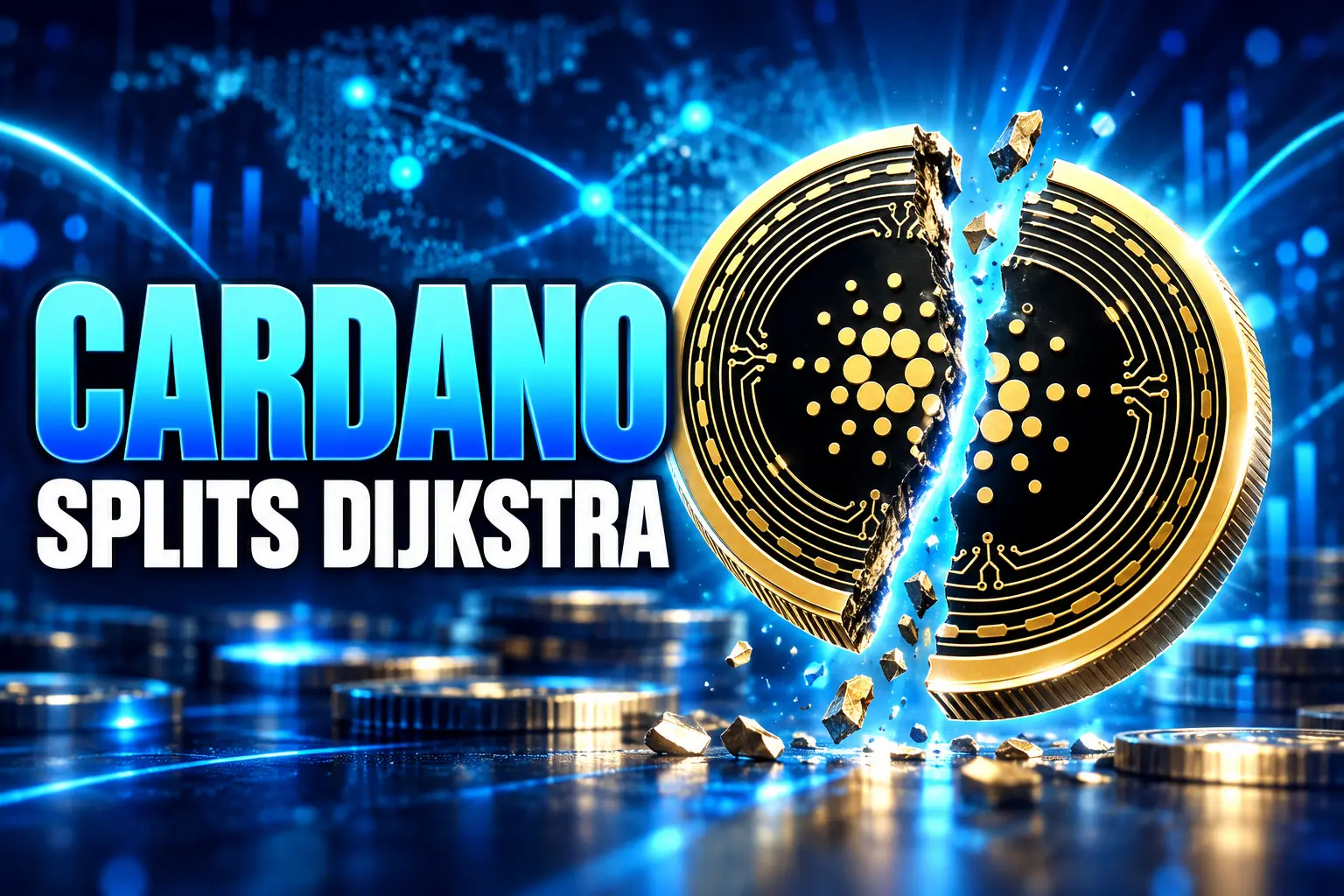
Cardano’s Dijkstra Plan Splits Leios From Peras
Cardano split Dijkstra into Linear Leios on a Q4 2026 code freeze and Peras in Q2 2027, while Intersect’s own windows already run into March.

Cardano has split its Dijkstra hard fork into two votes, with Linear Leios aimed at a Q4 2026 code freeze and Peras settlement held for Q2 2027. Intersect, the member body that coordinates the open-source work, published the split as engineering targets, not a mainnet date.
The first phase opens a new ledger era at protocol version 12. The second is a lighter version bump inside that era. That is the same two-step shape Cardano used when Chang arrived in 2024 and Plomin followed in 2025.
The First Fork Builds a New Ledger
Intersect’s two-phase Dijkstra rollout plan is blunt about what each vote can touch. A new era can change block structure, serialization, cryptography, parameters, and Plutus versions. An intra-era fork can only turn on rules that already sit in that package.
Phase 1 is the era change. It is the only place Linear Leios can land, because endorser blocks need a new body format. It is also the only place Peras codecs and parameters can be defined, even though Peras itself stays off.
THE TWO DIJKSTRA PHASES
| Phase | Mechanism | Code complete target | What turns on |
|---|---|---|---|
| Phase 1 | New era, protocol version 12 | Q4 2026 | Linear Leios, nested transactions, Peras codecs and parameters |
| Phase 2 | Intra-era hard fork | Q2 2027 | Ouroboros Peras |
Each phase still has to walk Preview, then Pre-production, then mainnet, with a governance action on every network. On mainnet, DReps, stake pool operators, and the Constitutional Committee all vote, under CIP-1694. Intersect’s own caution sits on the same page: the quarters are estimates for code completion and mainnet-ready builds, and they do not include testing or the vote.
Mainnet enactment is listed as date TBD after that vote. Q4 2026 is a freeze line, not a switch-on date.
Later Windows Behind the Q4 Target
After a recalibration of the delivery plan, Intersect published a moderate confidence enactment window of December 5, 2026 to January 4, 2027. A later high-confidence window runs February 24 to March 26, 2027.
December 5 still falls in Q4 2026. January 4 does not. The high-confidence span is entirely in the first quarter of 2027, which means Phase 1 can slip past the code-complete quarter and still be on Intersect’s own chart. Peras stays a Q2 2027 target after Phase 1 is live.
THE DATES INTERSECT IS ACTUALLY USING
- June 23, 2026: Musashi Dojo, the public Linear Leios testnet, starts running.
- July 18, 2026: van Rossem hard fork enacts protocol version 11.
- September 8, 2026: cardano-node 11.1.1 is tagged as a pre-release.
- Week commencing September 14, 2026: Intersect’s mainnet-ready aim for 11.1.1.
- October 6, 2026: node diversity workshop in Singapore.
- November 13-14, 2026: node diversity workshop in London.
- December 5, 2026 to January 4, 2027: moderate-confidence window for the Phase 1 hard fork.
- February 24 to March 26, 2027: high-confidence window for Phase 1.
- Q2 2027: code-complete target for Peras activation.
Preview is meant to give stake pools about two weeks. Pre-production is about one to two weeks. Those windows sit on top of the code date, which is why Intersect keeps saying the quarter is not a ceremony.
What Linear Leios Changes on Day One
Intersect calls Linear Leios the headline of the first fork, and it also calls it a partial cut of the broader Leios design. The original research used three block types, including input blocks. Linear Leios drops those and keeps two, so the first mainnet version can ship without rewriting how users see transactions. A fuller Leios, Intersect says, would need another era, named Euler or later.
That gap is the thing to hold onto. Research Leios and mainnet Leios are not the same product. What Dijkstra can actually turn on is the Linear Leios specification in CIP-164.
Ranking blocks are today’s Praos blocks, with optional header fields that announce and certify a second block. Endorser blocks are larger extras that carry hashes of transactions the ranking block could not hold. Transactions still move through the mempool. A slot leader may announce an endorser block, peers fetch any missing bodies, and a stake-based committee certifies the extra block. The certificate needs a 75% quorum of active stake. A later ranking block includes that certificate and applies the extra transactions. If no certificate is ready, the ranking block behaves like Praos and just includes what fits.
Throughput is not meant to jump in one parameter slam. Leios ships complete in Phase 1, then capacity is raised in steps through parameter updates. Intersect also ties the extra volume to pool economics, because transaction fees have to replace the shrinking Reserve, the same pressure mapped in how Leios throughput ties to fee economics.
PHASE 1 FEATURES BESIDE LEIOS
- Nested transactions (CIP-118): A parent transaction can carry child transactions with their own witnesses and execution context.
- Guard scripts (CIP-112): A new script type that can watch validity without running as a spend or mint, and a dependency for the PlutusV4 context.
- PlutusV4 script context: Scripts can see the new transaction and ledger shapes Dijkstra introduces.
- Reward withdrawals (CIP-181): Withdrawing staking rewards no longer requires a DRep delegation.
The live throughput bed is already MusashiNet. DijkstraNet, the public net for the rest of the era, is scheduled to appear with node 11.2, which still omits Leios.
Two Minutes Versus a 12-Hour Rule
Peras does not change how blocks are made. It changes how fast a block can be treated as irreversible. Under Praos, a node treats a block as immutable once it sits k = 2160 blocks behind the tip. At a 20-second average block time, that clock is settled after about 12 hours.
That 12-hour figure is the protocol’s high-assurance bound, not the number wallets show. Core nodes rarely see forks longer than two blocks, and more than ten confirmations is already treated as a high count in practice. Peras is the attempt to pull the formal bound down toward that practical window without giving up Praos safety if voting fails.
PERAS SETTLEMENT CLOCK
- Immutability parameter: k = 2160 blocks on today’s Praos chain.
- Protocol clock: about 12 hours at 20-second blocks.
- Peras target: two minutes under the project’s recommended parameters.
- Fallback: if voting cannot form a quorum, the chain returns to Praos settlement.
anyone seeing a transaction appearing in a block need wait no more than two minutes to be certain whether the transaction is on the preferred chain (effectively permanently, less than a one in a trillion probability even at 45% adversarial stake) versus having been discarded because of a roll back
Ouroboros Peras documentation, Cardano Scaling
Committees of pools vote on recent tips. Enough votes mint a certificate that adds weight, and chain selection then follows the heaviest chain rather than the longest one. If a round misses a quorum, the node enters a cooldown and ignores votes until it exits. Phase 1 has to ship the codec and the parameters first, which is why Peras is a second vote rather than a flag in the era package.
Node 11.1.1 already contains early Peras networking, and it is off by default behind the experimental NodeToNodeV_16 protocol. The 2026 node is not switching settlement on. It is carrying dark code for a 2027 action.
Chang and Plomin Already Used This Split
Cardano has been shipping big eras in two strokes. Chang went live on September 1, 2024, at protocol version 9, and turned on the first CIP-1694 governance batch. Plomin followed on January 29, 2025, at protocol version 10, and opened the rest of the DRep machinery. The van Rossem fork then moved the chain to protocol version 11 on July 18, 2026, at 21:44:51 UTC, as epoch 644 began.
Van Rossem was the first mainnet hard fork enacted through on-chain votes rather than a company flip. The initiation action was ratified on July 13, 2026, with DReps at 77.63% against a 60% threshold, stake pools at 52.7% against 51%, and the Constitutional Committee at six constitutional votes, with one member not voting.
Dijkstra copies that rhythm and raises the stakes. Phase 1 is a new ledger, not a cleanup inside Conway. Linear Leios changes block shape. Nested transactions change what a transaction can contain. The second vote, Peras, is closer to van Rossem in form: a version bump that turns on rules the era already defined. The pattern is not new. The payload is.
Vasil, on September 22, 2022, is the older rhyme for the calendar risk. Feature-complete code still had to pass a test loop, and the live date moved after that loop found work. Intersect is publishing confidence windows this time instead of a single ceremony date, which is a cleaner way to admit the same gap.
Why CIP-163 Never Made Dijkstra
The era package is also a vote-risk document. Intersect listed CIPs that were considered and then cut, and one cut is political rather than technical. CIP-163, time-bound delegation with dynamic rewards, saw 54.1% vote no in a community poll, the most rejected item on the shortlist. Putting it in the hard fork, Intersect wrote, would hand opponents a clear mandate to vote the whole upgrade down.
LEFT OUT OF THIS ERA
- CIP-163: Cut after a 54.1% no, so a contentious rewards change would not ride along with Leios.
- CIP-180 producer identification: Ledger capacity and disagreement among alternative node teams.
- CIP-173 net change limit: The ledger does not keep the inflow and outflow history the calculation needs.
- CIP-175 stake pool hot credentials: Too much ledger work against the Dijkstra commitments already on the table.
Other items are delayed to Euler because they need Phase 1 first, including a multi-asset treasury that wants the CIP-159 account work. CIP-50, pledge leverage, is in the era package with a default of Nothing, so rewards do not change at the fork unless DReps later set a value. Fair min fees under CIP-23 may turn on in Phase 1, or they may wait for an intra-era bump if the fee rule is not ready.
The hidden voter in this story is that three-body vote. Engineering can hit a Q4 freeze and still miss December if DReps, pools, or the committee are not ready, or if a constitutional amendment for new parameters is still in flight. Van Rossem cleared the pool bar by a thin margin. Dijkstra asks those same groups to approve a new ledger.
Four Builds Lead Into Protocol 12
The software path is four Haskell node lines. Intersect’s September 5 update set 11.1.1 for the week commencing September 7, then moved the mainnet-ready aim to the week commencing September 14 after tagging a pre-release. The 11.1.1 pre-release notes say the build is not yet recommended for mainnet. It drops the legacy tracing system, removes the V1 LedgerDB and the LMDB storage backend, and tells LMDB operators they have to switch. Intersect’s Technical Steering Committee and Product Committee both signed off on the tag.
THE NODE LADDER TO PROTOCOL 12
| Node | Timing | What it is for |
|---|---|---|
| 11.1.1 | Pre-release tagged September 8, 2026 | Tracing and LMDB removal, Dijkstra groundwork, Peras off by default |
| 11.2 | Within a month of the 11.1.1 line | Dijkstra features except Leios; public DijkstraNet |
| 11.3 | One to two months after 11.2 | Hard fork candidate, including Leios |
| 12.0 | Date not set | Canonical protocol version 12 node |
11.2 is the build that opens DijkstraNet, still without Leios, so PlutusV4, nested transactions, and CIP-50 can be tested on a public net while MusashiNet keeps the consensus work. 11.3 is the first node Intersect describes as able to cross the fork with Leios included. 12.0 is the name for the production PV12 binary, and it has no date.
Intersect’s Upgrade Bulletin 32, posted September 4, 2026, is the public note that put those node lines, the two testnets, and the workshop dates in one place.
Upgrade Bulletin 32 is here 🗞️
The highlights:🔷 Node releases to keep an eye on
🔷 Upcoming node diversity workshop dates 🇸🇬 Singapore | 🇬🇧 London
🔷 DijkstraNet to run alongside MusashiNetRead on below 👇️ https://t.co/Ub5nse43CZ
— Intersect (@IntersectMBO) September 4, 2026
Until 11.2 ships, DijkstraNet stays a plan. Until 11.3 exists, there is no hard-fork candidate. Until DReps, pools, and the committee pass a mainnet action, protocol version 12 does not exist on the chain, whatever quarter the code freeze lands in.
Disclaimer: This article is news reporting and analysis of Cardano’s published Dijkstra rollout, and it is for information only. It is not investment advice, trading advice, or a recommendation to buy, sell, stake, or vote any ADA or related token. Readers should consult a qualified financial adviser or licensed investment professional before making any decision that involves money or on-chain votes. Figures, node statuses, and target windows come from Intersect, the node release notes, and the Peras documentation as of this article and can move when testing or governance changes the calendar.

Instagram Plus Tests a Read-Only Mode That Cuts Stories

Altman Asks the Public to Accept Some AI Harm

Google Freezes OSS VRP Product Reports After AI Flood

AI Agents Make Payment Rails the Scarce Prize

Turkey’s Crypto Boom Now Runs Through Three Banks

Fable 5 Came Back Under a Commerce On-Off Switch

Google’s SpaceX GPU Lease Has a Sept. 30 Deadline

Plasma One’s XPL Locks Face a 1.81 Billion Cliff

DGO’s Rs 549 World Cup Pass Cost Fans Sleep and Data

Moonshot AI’s $30 Billion Ask Became a $35 Billion Close
-
 AI4 months ago
Fable 5 Came Back Under a Commerce On-Off Switch
-
 AI4 months ago
Google’s SpaceX GPU Lease Has a Sept. 30 Deadline
-
 CRYPTO4 months ago
Plasma One’s XPL Locks Face a 1.81 Billion Cliff
-
 APPS4 months ago
DGO’s Rs 549 World Cup Pass Cost Fans Sleep and Data
-
 AI4 months ago
Moonshot AI’s $30 Billion Ask Became a $35 Billion Close
-

 NEWS4 months ago
ColorOS 17 Device List Spans Oppo, OnePlus and Realme
-

 GAMING4 months ago
Xbox Cuts 3,200 Jobs After Five Years of Thin Returns
-

 GAMING4 months ago
The RTX 4050 Under Rs 70,000 Hides a Wattage Gap