
NEWS
Samsung Turns India R&D Into AI Feature Factory for Next Galaxy
Noida teams built an exclusive bill-payment AI reminder as Samsung pushes invisible local features, riding 2x India usage while shipments soften.

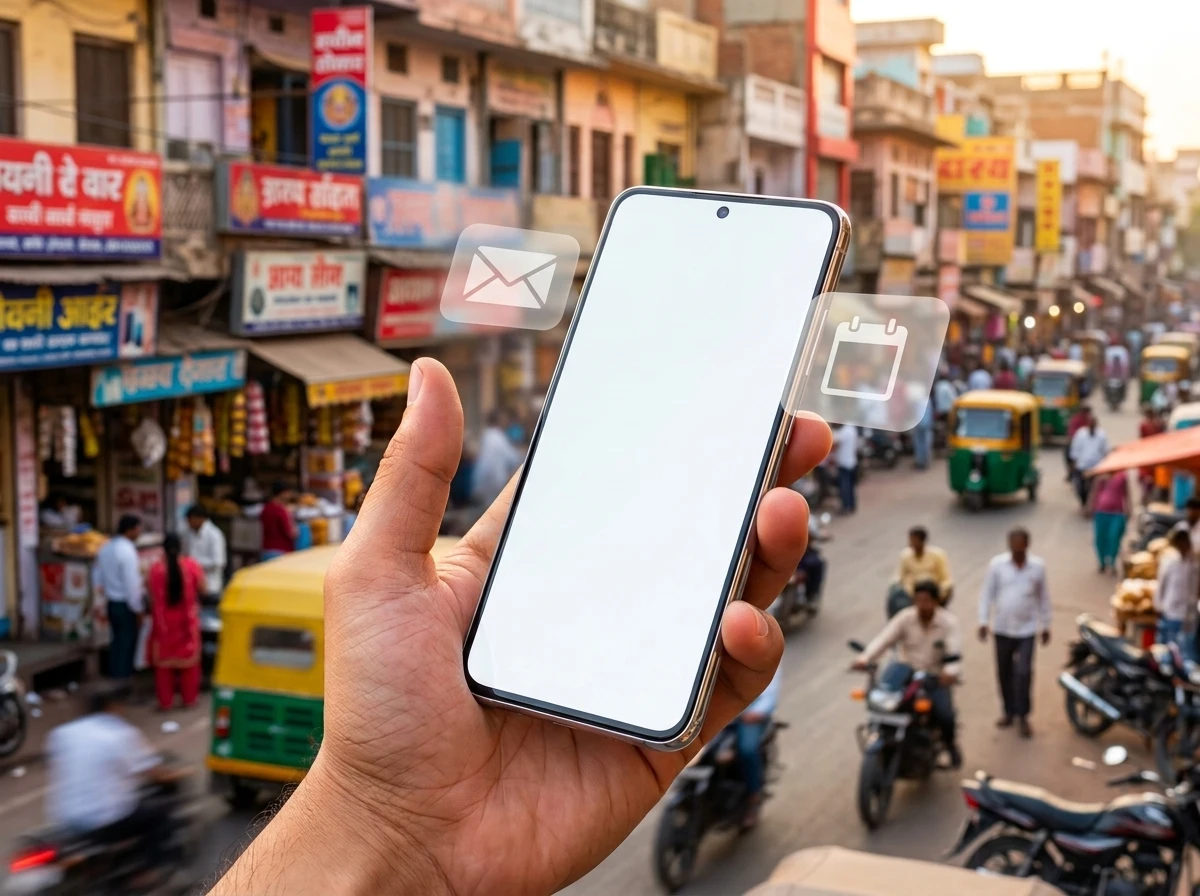
Samsung will introduce an AI-powered bill payment reminder built by its Noida R&D centre on the next Galaxy smartphone, part of a broader push to localise features for Indian users. Jay Kim, Corporate EVP and Head of the Customer Experience Office in the MX Division, said the company wants AI to sit quietly in the background so people finish tasks without thinking about the technology.
J B Park, Samsung Southwest Asia CEO and President, confirmed the feature and others tailored to Indian consumer personas will arrive with the next flagship. The move comes as Indian Galaxy AI users already run several core tools at nearly twice the global average rate.
Noida Built the Bill Reminder for Indian Routines
Park told Indian journalists in London that the India R&D teams in Noida and Bengaluru are studying local user personas to create solutions for finance, home devices and health alerts. The bill reminder is the first concrete example made public.
The AI will scan emails, spot recurring bills and nudge the user before the due date so late fees never hit. Park said the idea originated entirely at the Noida centre and was engineered exclusively for Indian consumers.
- Financial routines such as bill tracking and reminders
- Control of home devices through SmartThings links
- Health alerts for elderly family members
- Language support already live in Hindi and Gujarati
Park added that Samsung wants these centres to generate intellectual property that travels globally rather than only solve local technical problems. The company already employs more than 10,000 engineers across its Indian R&D sites and credits them with major camera and on-device AI algorithm work on recent flagships.
Why Kim Wants AI to Disappear Completely
In a post-launch roundtable after the Galaxy Z Fold8 series, Kim framed the entire programme around frictionless results rather than branded AI moments.
We don’t need our consumers to understand whether this benefit is coming from AI. They just need to understand that what they want to get done, we just make sure that they get it done.
Kim said Samsung is still in an early stage of learning how AI actually helps daily life. Feedback from markets such as India is applied gradually. Three tests have guided every feature since Galaxy AI launched on the S24 in 2024: is it meaningful, easy to reach, and safe. Circle to Search, powered by the Google partnership, ranks among the most used. Samsung’s own Photo Assist leads internal tools, followed by Creative Studio, Call Assist and Live Translate.
He noted that frequency is not the only measure. A translation tool used a few times a year at an airport can still justify its place if it solves a high-stakes moment.
Indian Users Already Run Galaxy AI Harder
Park put hard numbers on the table. Indian consumers use Photo Assist, Creative Studio and Audio Eraser at close to twice the global average. Overall Galaxy AI engagement in India also sits above the worldwide figure. That intensity gives Samsung a live laboratory for the next wave of local features.
| Metric | India figure | Context |
|---|---|---|
| Photo Assist, Creative Studio, Audio Eraser usage | ~2× global average | Park, August 2026 |
| First-half 2026 market movement (Samsung view) | ~15% degrowth | Component cost pressure |
| India smartphone shipments Q2 2026 | Down 10% YoY | Counterpoint Research |
| Samsung India revenue FY25 | ₹1.11 lakh crore | Up over 11% |
Independent trackers show a softer but still clear contraction. India smartphone shipments fell 10 percent year on year in the June quarter, the biggest decline for that period in six years. IDC earlier recorded Q1 volumes down 4.1 percent while average selling prices rose. Memory costs have climbed sharply, hitting the sub-₹15,000 segment hardest and pushing buyers upward.
Samsung’s response is to absorb as much cost as possible through zero-interest EMIs stretched to 30 months, festive discounts and upgrade bonuses rather than sticker-price hikes. The new Z Fold8 series, made in India and supported by the same R&D centres, opened for pre-booking with financing packages designed to keep premium devices reachable.
Three Generations of Galaxy AI Already Shipped
- 2024 Galaxy S24: First Galaxy AI features bolted onto specific apps and services, built with Google and focused on meaningful, easy, safe use cases.
- 2025 Galaxy S25: Agentic behaviour arrives via Gemini; more on-device processing.
- 2026 Galaxy S26: Samsung and Google call it the industry’s first AI operating system that reads context and acts ahead of requests. India R&D played a pivotal role in algorithms and camera AI.
- Next (expected early 2027): India-exclusive tools including the bill-payment reminder plus further persona-driven features.
Kim said the company is moving faster than the Android platform itself, shipping capabilities then letting the OS catch up. Silicon from Qualcomm and model updates from Google remain the hard constraints. Hybrid processing keeps a large share of work on-device while heavier reasoning can go to the cloud; users choose the balance in privacy settings. Knox Vault and the Personal Data Engine protect the local side.
Who Gains When Features Stay Local First
Everyday Indian users gain tools that match actual bills, languages and family patterns rather than generic global demos. The R&D centres gain a clearer path to create IP that Samsung can take worldwide. Samsung itself gains a differentiation layer that Chinese brands still match less tightly on high-end AI polish and long software support.
The high local usage already visible strengthens the data flywheel. More engagement produces better training signals for the next round of invisible helpers. That same flywheel sits against a market that is smaller in units yet richer in ASP. Premium and foldable devices become relatively more important, exactly the tier where Galaxy AI lives most completely.
Broader India AI efforts still face capital gaps. The India AI funding lag exposed by Paytm shows how uneven the domestic ecosystem remains. Samsung’s model of large local engineering teams plus selective startup grants through its Mobile Advance programme offers one path around pure venture shortfalls.
What the Localisation Push Unlocks Next
Park wants the Indian centres to stop working on simple technical problems and start owning creative IP that ships globally. The bill reminder is the proof-of-concept. More finance, health and home automations are already under study. Language coverage will keep expanding beyond Hindi and Gujarati.
On the device side, the same AI philosophy is spreading across the ecosystem. Galaxy AI features now live in India already cover phones, tablets, watches and buds. The Z Fold8’s My FanCam, which keeps a selected subject framed on the big inner screen, is one recent example of background intelligence that simply works. Future glasses were mentioned as a hands-free camera interface that will lean on the same stack.
Samsung’s wider India business already crossed ₹1.11 lakh crore in FY25 revenue. The company has an end-to-end AI story that ties Galaxy devices to Bespoke home appliances and Vision AI televisions through SmartThings. Local feature work strengthens every layer of that stack.
Payment friction remains a live issue in the market. After years of limits, Apple restored card payments in India for its App Store, showing how even global platforms must still adapt local rails. Samsung’s bill-reminder AI sits in the same practical category: reduce everyday friction that only local teams fully see.
The next Galaxy will carry the first public fruits of that approach. Users will notice fewer late fees and more timely nudges. They may never notice the AI doing the work. That is exactly the outcome Kim described.
For the complete current catalogue of tools, the full list of Galaxy AI tools remains the cleanest reference while India-specific additions continue to land.


South Korea Retail Investors Face Reckoning After KOSPI AI Rally Collapses

Surrey AI Maps Three Heart Attack Paths and Their Molecular Roots

Germany Locks Neutral Apple ATT Prompts Across Most of Europe

Apple’s 5% EU Fee Quietly Rewrites Alternative App Store Math

Apple’s EU Fee Truce Cuts Complexity but Leaves Rivals Fuming

Pixel 11 Pro Fold Trades Thinness for Durability and Seven-Year Stay

Mayo AI Flags HCM Obstruction From Everyday Ultrasound Videos

Indian Brands Quietly Scale Landmark Screens and Home Tech

Navin Vatsa Turns Grief Into a Lifetime of Quiet Seeing

Google Bets Pixel 11 Agentic AI Will Redefine Phones

Oracle Cuts 21,000 Jobs in a Year, Cites AI in 10-K Filing

Fable 5 and Mythos 5 Return as US Lifts Anthropic Export Controls

SpaceX’s Google Deal Turns a Rocket Company Into a Cloud Landlord

CD Projekt Red Co-CEO: Redemption Arc Isn’t Done, Witcher 4 in 2027

XPL Rallies 30% Ahead of Plasma One Card Tier Launch

Google Search Profiles Build a Follow Graph Inside Discover

DGO App Brings Rs 549 Mobile Pass for FIFA World Cup 2026 in Nepal

Moonshot AI Targets $30 Billion in China’s Fastest AI Funding Sprint

Oppo’s ColorOS 17 Eligibility List Leaves A-Series Buyers Behind

Microsoft Xbox Layoffs Start in July as Sharma Slams 3% Margin
-
 AI2 months ago
Oracle Cuts 21,000 Jobs in a Year, Cites AI in 10-K Filing
-
 AI2 months ago
Fable 5 and Mythos 5 Return as US Lifts Anthropic Export Controls
-
 AI3 months ago
SpaceX’s Google Deal Turns a Rocket Company Into a Cloud Landlord
-
 GAMING2 months ago
CD Projekt Red Co-CEO: Redemption Arc Isn’t Done, Witcher 4 in 2027
-
 CRYPTO3 months ago
XPL Rallies 30% Ahead of Plasma One Card Tier Launch
-
 NEWS3 months ago
Google Search Profiles Build a Follow Graph Inside Discover
-
 APPS3 months ago
DGO App Brings Rs 549 Mobile Pass for FIFA World Cup 2026 in Nepal
-
 AI3 months ago
Moonshot AI Targets $30 Billion in China’s Fastest AI Funding Sprint