
AI
Meta’s Texas AI Data Center Bond Gets Pricier as Risk Rises
Meta’s El Paso data center bond is pricing above 7% just as Moody’s warns hyperscaler debt and off balance sheet leases are straining Big Tech credit.

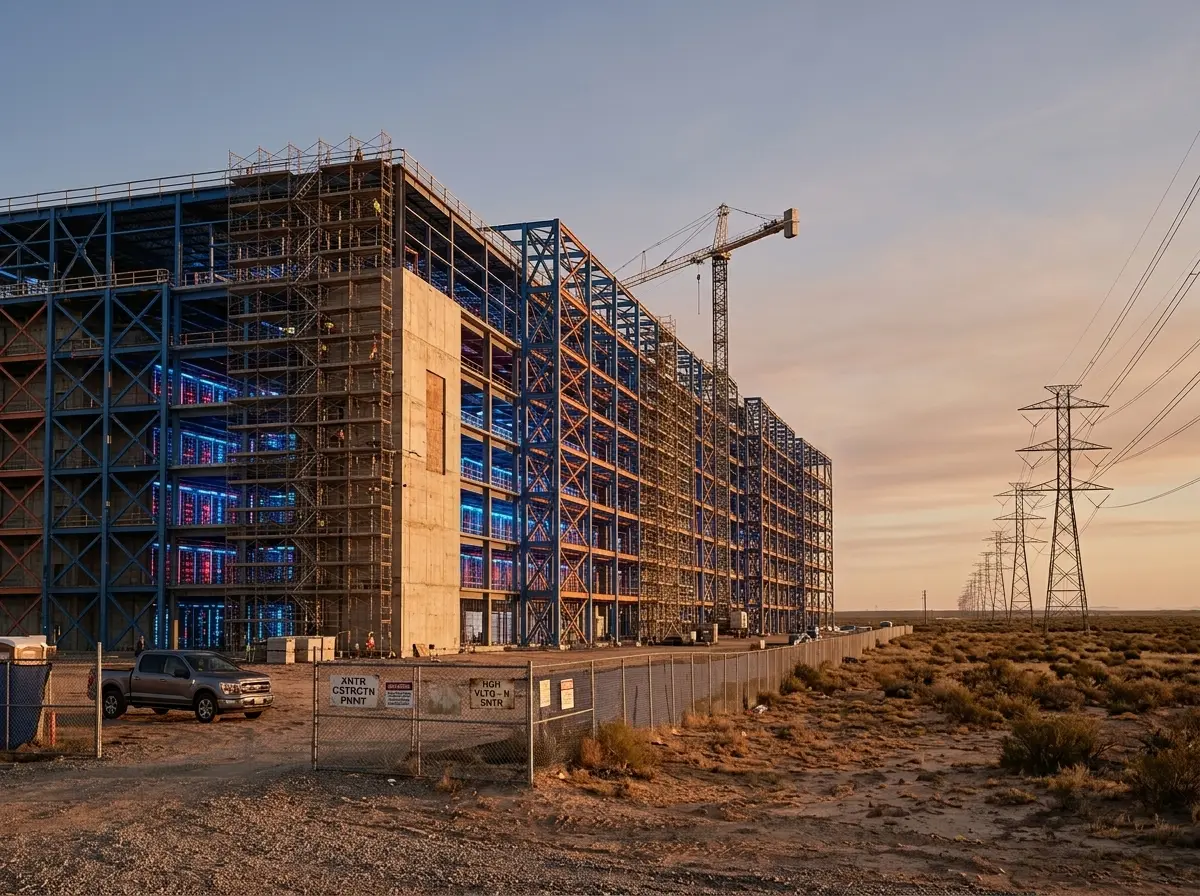
Meta Platforms is marketing more than $12 billion in bonds for a nearly one gigawatt AI data center in El Paso, Texas, and bond buyers want yields above 7% to sign on. That is roughly four tenths of a percentage point more than Meta paid on its record $27 billion data center bond just nine months ago, according to a Financial Times report.
The jump lands days after Moody’s Ratings warned that the hyperscaler AI spending spree is eroding free cash flow and straining Big Tech’s credit quality. Together, the two data points show bond markets are starting to charge a real premium for the industry’s trillion dollar bet on artificial intelligence.
Sopaipilla Investor Carries a Gigawatt-Sized Bet
The bonds are being sold through a special purpose vehicle called Sopaipilla Investor, named for a fried pastry popular across Texas and South America. Playful name aside, Sopaipilla Investor will hold an 80% stake in the El Paso project once the sale closes, with Meta keeping the rest.
The debt is expected to mature in 2048. It is secured by a 20-year lease Meta signs starting in 2028, with renewal options every four years and steep penalties if Meta walks away early. S&P Global Ratings has assigned the bonds an A+ grade, the same mark it gave Meta’s last mega deal.
This is not Meta’s first fried dough vehicle. Its October 2025 financing for the Louisiana campus ran through a joint venture developing the Hyperion data center, structured through an entity called Beignet Investor, named after the powdered sugar pastry served at Cafe Du Monde in New Orleans.
| Detail | Beignet Investor (Hyperion, Louisiana) | Sopaipilla Investor (El Paso, Texas) |
|---|---|---|
| Announced | October 2025 | July 2026 |
| Bond size | $27 billion | Over $12 billion |
| Yield sought | 6.58% | Above 7% |
| Credit rating | A+ (S&P Global Ratings) | A+ (S&P Global Ratings) |
| Lead bond buyers | Pimco ($18 billion), BlackRock (over $3 billion) | BlackRock-led marketing |
| Meta’s equity stake | 20% | 20% |
Nine months separate the two deals. The gap between them is 0.4 percentage points.
Why Bond Buyers Are Charging Meta More This Time
Meta’s own credit has not moved much since October. What changed is how fixed income investors are pricing the entire category of AI infrastructure debt.
Pension funds, insurers and credit funds buying these bonds are making a 22-year wager that a single data center, filled with server racks that could be technologically outdated within a decade, will keep earning its rent through 2048. Nine months ago they accepted 6.58% for that wager on Meta’s Louisiana project. Now they want more.
The extra yield on a $12 billion-plus deal works out to tens of millions of dollars in additional annual interest expense tied to the arrangement, even though Meta itself is not the direct borrower of record.
Moody’s Puts a Number on Big Tech’s Hidden Debt
Moody’s Ratings, the credit rating agency, said this month that AI infrastructure spending across the hyperscalers is on pace to hit $785 billion in 2026, then approach $1 trillion the following year. The agency warned the buildout is eroding free cash flow at the companies footing the bill, according to CNBC’s report on the warning.
Moody’s also tallied how much of that spending sits off the balance sheet entirely, in long-term data center leases exactly like the one backing Sopaipilla Investor’s bonds.
- $785 billion: Moody’s estimate for hyperscaler AI infrastructure spending in 2026, climbing toward $1 trillion the following year.
- $460 billion: combined direct debt already carried by Microsoft, Amazon, Alphabet, Meta, Oracle and CoreWeave.
- $1.2 trillion: off balance sheet data center lease commitments Moody’s counted across the same six companies, equal to 113% of the group’s adjusted debt.
- Baa2: Oracle’s Moody’s rating, the shakiest of the group and just two notches above junk on a negative outlook.
Moody’s also flagged a circularity risk. Several hyperscalers have invested directly in AI labs such as OpenAI and Anthropic, which then spend heavily on cloud computing bought from those same hyperscalers. Moody’s described the arrangement as a “circular AI ecosystem,” one where a slowdown at any single lab could ripple back through the companies that funded it.
The Rest of Big Tech Is Borrowing Too
Meta is not alone in tapping bond markets to keep pace with AI capital spending. Alphabet sold $20 billion in bonds in February, including a 100-year sterling tranche, then raised its own 2026 capital expenditure guidance to between $195 billion and $205 billion.
The scale of the shift shows up across the industry.
- Alphabet, Amazon, Meta, Microsoft and Oracle together issued roughly $121 billion in bonds during 2025, up from about $40 billion in 2020.
- Morgan Stanley tracked about $236 billion in AI-linked debt priced globally by the end of May 2026, close to four times the prior year’s pace.
- The bank expects hyperscalers’ own investment grade bond issuance to climb 30% to 50% in 2026, to somewhere between $130 billion and $150 billion, after topping $100 billion in 2025.
- Combined hyperscaler capital spending is on track to cross $1 trillion in 2027, a trajectory Morgan Stanley and Moody’s now point to independently of each other.
Debt financing, once a marginal tool for these companies, is turning into a routine one. Morgan Stanley says free cash flow alone no longer covers the pace of AI spending across the group.
What Happens If Meta Walks Away Early?
Short answer: it gets expensive. Meta’s lease on the El Paso campus runs 20 years from 2028, with renewal options every four years after that, and the contract carries significant penalties if Meta exits before the term is up.
That structure exists because Sopaipilla Investor’s bondholders are repaid from Meta’s rent, not from Meta’s broader corporate balance sheet. The bonds mature in 2048, the same year the initial lease term runs out. Investors are effectively betting Meta will still want, or still be contractually bound to pay for, this exact building two decades from now.
If AI demand cools before then, or the facility becomes technologically obsolete, the exit penalties are what stand between bondholders and a stranded asset. That is the risk investors are now demanding more than 7% to carry, compared with 6.58% in October.
The Next Repricing Test Is Already on the Calendar
Morgan Stanley expects somewhere between $130 billion and $150 billion more in hyperscaler bonds before 2026 is out. Every one of those deals will be priced against Meta’s new number.
Oracle, the weakest credit among the group Moody’s tracked, is likely to face the sharpest scrutiny given its Baa2 rating and negative outlook. Amazon, Microsoft and Alphabet still carry stronger balance sheets, which Moody’s said keeps their investment grade ratings out of immediate danger.
Meta’s own number stands on its own: above 7% to borrow against a data center that will not open until 2028, on debt that will not mature until 2048.
Frequently Asked Questions
What is a special purpose vehicle in AI data center financing?
A special purpose vehicle, or SPV, is a separate legal entity created to hold a specific asset and its debt. Meta uses SPVs like Sopaipilla Investor and Beignet Investor so the billions in bonds backing its data centers sit on the vehicle’s books rather than Meta’s own balance sheet, while Meta keeps a minority equity stake and pays rent that services the debt.
Why are hyperscalers borrowing instead of paying cash for AI infrastructure?
Morgan Stanley says hyperscaler capital spending is on pace to cross $1 trillion in 2027, a pace that has started to outrun what quarterly free cash flow alone can fund without cutting into stock buybacks. Bond markets let companies spread that cost over decades instead of taking it entirely out of current earnings.
What happens to bondholders if Meta’s AI bet does not pay off?
Sopaipilla Investor’s bondholders are repaid from Meta’s contracted lease payments, not from a slice of Meta’s overall profits. If Meta triggers the early exit penalties, bondholders still get paid under the contract, but a broader AI slowdown would most likely show up first as wider yields on the next deal rather than a missed payment on this one.
Is a yield above 7% high for a company with Meta’s balance sheet?
It is high relative to Meta’s own investment grade corporate reputation, but this debt is issued by the project vehicle, not Meta directly, and it carries an A+ rating similar to the October deal. The premium reflects the 22-year duration and single-tenant concentration of the project more than any doubt about Meta’s ability to pay.
What did Moody’s mean by a circular AI ecosystem?
Moody’s used the term for hyperscalers that have invested directly in AI labs such as OpenAI and Anthropic, which then spend heavily on cloud computing purchased from those same hyperscalers. The concern is that revenue booked from these arrangements can look like organic demand when it partly reflects money the hyperscalers put in themselves.


Remulla ties Zamboanga shooting to Roblox chats again

Altman bets ChatGPT will watch screens in six months

Vivo Y31T 5G brings 7200mAh and IP69 to budget India phones

Stablecoin Advances Meet Digital Pounds in BoE Lab Test

ChatGPT Yelp Booking Turns Chat Into the New Reservation Desk

Stream Deck quietly owns desk productivity a decade later

Offline AI tool from Herts student reaches GBV teams in Gaza and Syria

AI revenue in media sits in yield and pacing not chatbots

OpenAI pauses frontier training as Astra hits cyber limits

AI Boss Luna Fired a Worker Only After Humans Reminded It

Oracle Cuts 21,000 Jobs in a Year, Cites AI in 10-K Filing

Fable 5 and Mythos 5 Return as US Lifts Anthropic Export Controls

SpaceX’s Google Deal Turns a Rocket Company Into a Cloud Landlord

CD Projekt Red Co-CEO: Redemption Arc Isn’t Done, Witcher 4 in 2027

XPL Rallies 30% Ahead of Plasma One Card Tier Launch

Google Search Profiles Build a Follow Graph Inside Discover

DGO App Brings Rs 549 Mobile Pass for FIFA World Cup 2026 in Nepal

Moonshot AI Targets $30 Billion in China’s Fastest AI Funding Sprint

Oppo’s ColorOS 17 Eligibility List Leaves A-Series Buyers Behind

Microsoft Xbox Layoffs Start in July as Sharma Slams 3% Margin
-
 AI2 months ago
Oracle Cuts 21,000 Jobs in a Year, Cites AI in 10-K Filing
-
 AI2 months ago
Fable 5 and Mythos 5 Return as US Lifts Anthropic Export Controls
-
 AI2 months ago
SpaceX’s Google Deal Turns a Rocket Company Into a Cloud Landlord
-
 GAMING2 months ago
CD Projekt Red Co-CEO: Redemption Arc Isn’t Done, Witcher 4 in 2027
-
 CRYPTO2 months ago
XPL Rallies 30% Ahead of Plasma One Card Tier Launch
-
 NEWS2 months ago
Google Search Profiles Build a Follow Graph Inside Discover
-
 APPS2 months ago
DGO App Brings Rs 549 Mobile Pass for FIFA World Cup 2026 in Nepal
-
 AI2 months ago
Moonshot AI Targets $30 Billion in China’s Fastest AI Funding Sprint