
AI
Amazon Enters ChatGPT Ads as Publishers Reprice Inventory
Amazon can now buy ChatGPT ads through its DSP, while yield software, not chatbot copy tools, is the line showing up in publisher earnings.

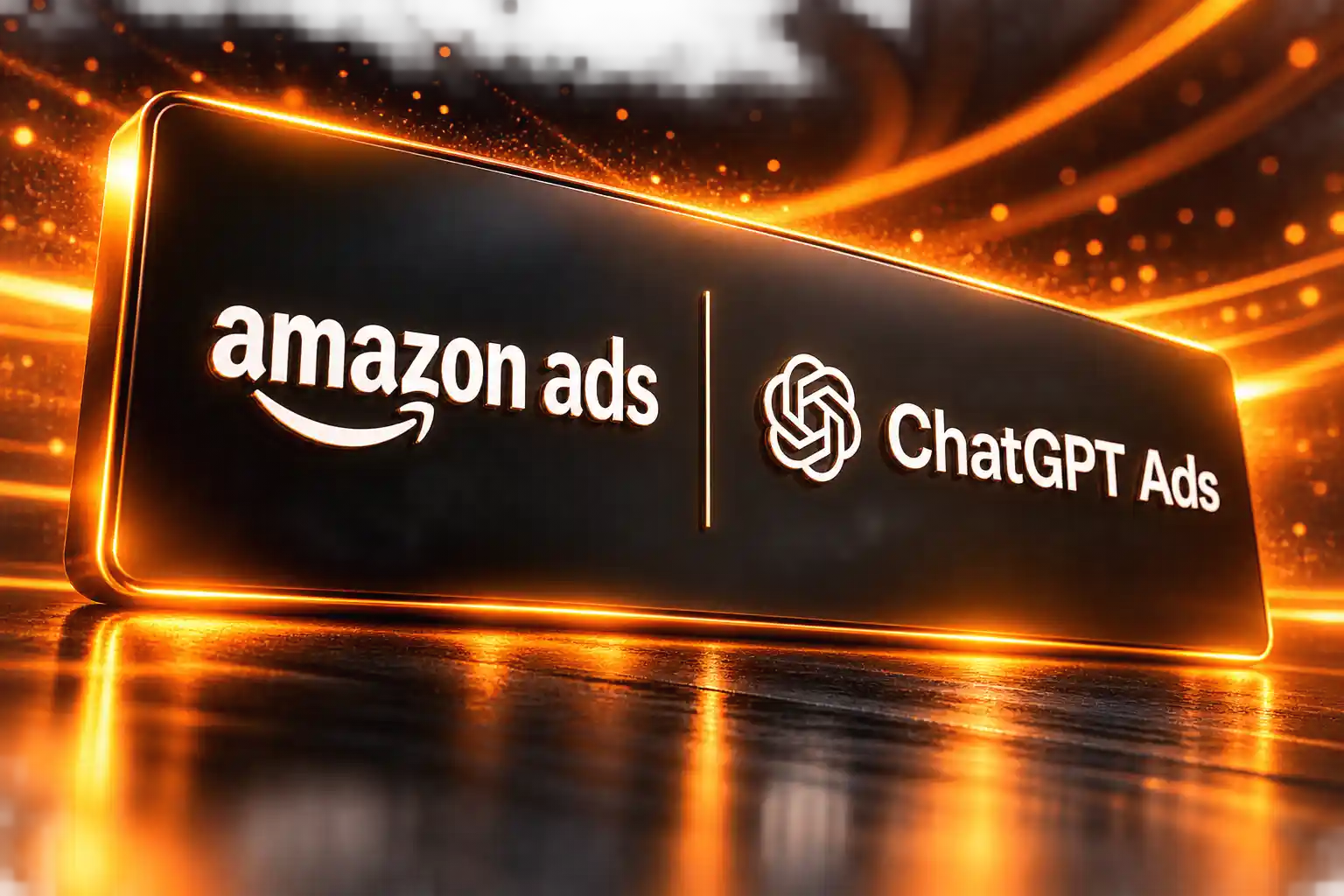
Amazon Ads opened a U.S. path into ChatGPT placements on September 10, 2026, starting with a small pilot. Delta Vacations is in that first group.
The slot now sits on a desk brands already use, while independent sell-side firms are putting yield software into earnings. Copy chatbots still make decks. They are not the line the CFO can audit.
Amazon Puts ChatGPT Ads on the DSP
Amazon Ads announced a partnership to support advertising in ChatGPT and said select U.S. advertisers are already testing the format. Brands extend campaigns they plan in Amazon Ads. OpenAI’s system still decides which ad appears under an answer.
Chris Conetta, director of omnichannel supply at Amazon DSP, put the pitch in buying language, not model language. He is selling a surface people already occupy while they compare options.
Conversational ads represent the fastest growing engagement opportunity for brands to reach new and existing audiences.
Chris Conetta, Director of Omnichannel Supply, Amazon DSP, Amazon Ads announcement
Katrin Koenig, president of Delta Vacations, said the test is about showing up while travelers plan, not about a banner on a home page. That is the product Amazon is packaging: a labeled prompt under a chat, bought through a familiar pipe.
Taranjeet Singh, a revenue operator with 25 years in media, technology and advertising, wrote on August 19, 2026 that conversational ads should still be treated as an experiment, especially for brand and discovery goals. He argued search sold a moment of intent, social sold attention, and a chat might sell context, what someone considered, rejected, and settled on. Measurement, he said, had not caught up.
Amazon did not wait for that proof. It put the inventory inside DSP workflows so a brand does not have to open a new buying stack to try the format. OpenAI keeps the delivery logic. Amazon keeps the relationship. The loser is any sales team that was going to charge a project fee to “get you into ChatGPT ads.”
A Closed Gate for Firefly and Voice Tools
OpenAI began to test ads in ChatGPT in the U.S. on February 9, 2026, for logged-in adults on the Free and Go tiers. Plus, Pro, Business, Enterprise, and Education plans do not carry ads. A Free user who wants the ads gone can opt out in exchange for fewer daily free messages.
The company says it matches a sponsored unit to the topic of the chat, past chats, and past ad clicks, then places it under the answer, labeled and visually separate. Advertisers get aggregate views and clicks. They do not get the chat, the memory, or personal details. Ads stay off accounts OpenAI believes belong to people under 18, and off threads on health, mental health, or politics.
CHATGPT AD RULES OPENAI HAS PUBLISHED
- Who sees them: Logged-in adults on Free and Go; paid and education tiers stay clear.
- Where they sit: Under the organic answer, marked sponsored, not inside the reply.
- What they cannot use: Chats, history, memories, or personal details; only aggregate results.
- What they skip: Under-18 accounts and sensitive topics such as health and politics.
- What users can do: Dismiss an ad, ask why it showed, delete ad data, and turn personalization off.
OpenAI’s public line is that ads do not influence ChatGPT answers. That sentence is the product. It also gets harder to inspect as more spend runs through the same window, because the user only sees the label, not the ranking.
THE CHATGPT ADS CALENDAR
- January 16, 2026: OpenAI publishes its ad approach and says a U.S. test is coming for Free and Go.
- February 9, 2026: The U.S. test starts for logged-in adults on those two tiers.
- March 26, 2026: OpenAI says it will expand beyond the U.S., starting with Canada, Australia, and New Zealand, and reports no hit to its trust metrics plus low ad dismissal rates.
- May 7, 2026: It plans pilots in the United Kingdom, Mexico, Brazil, Japan, and South Korea.
- August 11, 2026: Those five markets go live, with more countries promised later in the year.
- September 10, 2026: Amazon Ads opens a U.S. DSP path into the same inventory.
In the same September stretch, Adobe’s Doug Wyatt, senior director for Americas media, said ChatGPT had closed paid and organic paths for standalone image and voice tools. “Image and voice/audio are closed off. Video’s still open…for now,” he wrote after Adobe had used the pilot to push Acrobat Studio and Firefly. OpenAI has not posted a matching ban on the ads page it still updates for country rollouts, so the lockout sits as an advertiser-side notice, not a public policy rewrite.
If that hold stands, OpenAI is both the marketplace and a vendor in image and voice. A brand can buy the chat window unless it sells the same kind of generator ChatGPT just shipped. Video remains the category it has not fully claimed.
Why Perplexity Walked Away From Ads
Perplexity tested sponsored follow-ups, then reversed. In February 2026, as ChatGPT’s U.S. test went live, Perplexity executives said they would not chase new ad deals. One executive said the risk is that a user would start doubting everything, even when the paid unit is labeled.
That is a different P&L. OpenAI is using ads to fund Free and Go. Perplexity is asking people and companies to pay so the answer stays unsponsored. The first model wins distribution and a DSP partner. The second model keeps a smaller room where a citation is earned, not bought.
Singh flagged that split in August and said advertisers should not treat the chat window as a proven performance channel. Amazon’s pilot does not settle the ROAS question. It only makes the experiment easier to buy. A run-rate built on a handful of large accounts is also not the same thing as a durable self-serve market; the long tail is what turns a test into a desk that renews.
PubMatic’s Yield Line Showed Up in Earnings
The quieter shift Singh wanted, continuous pricing against live demand, is already a numbered line at PubMatic. On August 6, 2026 the company posted second-quarter results: revenue of $78.6 million, up 11% from a year earlier, after three down quarters. Emerging revenue, the bucket that holds Activate, commerce, connect, and AgenticOS, doubled year over year. AgenticOS was at 80+ fully autonomous campaigns, up from 30+ in the first quarter. Mobile app revenue rose 40 percent. Connected TV in the Americas, its largest region, rose 25 percent. Adjusted EBITDA was $19.6 million.
Today we are excited to announce PubMatic's Q2 2026 financial results: Revenue of $78.6M, ahead of guidance, with a return to double-digit YoY growth (11%). Emerging revenue doubled YoY, including AgenticOS scaling to 80+ fully autonomous campaigns now live, up from 30+ in Q1.… pic.twitter.com/2icmtSpVG9
— PubMatic (@PubMatic) August 6, 2026
Those figures are not a chatbot that writes 50 headline variants. They are take rates on auctions the firm already runs. Rajeev Goel, PubMatic’s co-founder and chief executive, has tied the agentic campaigns to holding-company buyers. The pitch is that an agent can stand up a buy in days, not in the one-to-two-month ramp a classic DSP retargeting setup often needs.
WHO MOVED WHICH NUMBER
| Party | What changed | When |
|---|---|---|
| Amazon Ads | DSP path into ChatGPT Ads, U.S. pilot, Delta Vacations in the first group | September 10, 2026 |
| OpenAI | Ads on Free and Go; Plus, Pro, Business, Enterprise, and Education stay ad-free | February 9, 2026 onward |
| PubMatic | AgenticOS at 80+ campaigns; emerging revenue doubled; quarterly sales $78.6 million | Second quarter 2026 |
| Magnite and ITN | Seller agent for local linear TV; full integration due in the fourth quarter | September 10, 2026 |
| Perplexity | Stopped pursuing ads, citing trust in the answer | February 2026 |
| Adobe | Firefly and voice-tool ads no longer approved, per Doug Wyatt | September 2026 |
On an earlier call, PubMatic said AI Insights, a yield feed for publishers, was unlocking 20%+ higher CPMs for leading connected-TV and online video sellers. Yi-Fang Yen, Realtor.com’s senior vice president of digital media and advertising, said the feed gave her team market-level visibility to spot demand shifts and change prices in the moment. That is Singh’s unit of decision, what an impression is worth right now, restated by a seller who has to make the number.
Buyer-side agents do not automatically win the same argument. DataBeat, a measurement firm, found in June 2026 that conventional programmatic buyers still held a 13.4 percent CPM advantage over AI agents in the comparison it ran. Vendor case studies and that study are not the same test. One is a publisher looking at floor and fill. The other is a buyer looking at what it paid. Anyone treating “agentic” as a single lift is mixing those books.
Local Linear TV Gets an Agent in the Auction
Magnite, the independent sell-side platform, and ITN, a local-TV ad-tech firm, said on September 10, 2026 that they will plug ITN’s seller agent into Magnite Orchestration. The companies already made local linear available programmatically. They now want agents to draft impression forecasts and media plans, then push approved buys through Magnite’s ClearLine pipe. Full integration is due in the fourth quarter of 2026.
Matt McLeggon, Magnite’s senior vice president of advanced solutions, said operational friction has capped local linear even though the airtime still reaches people. Craig Sulema, ITN’s chief investment officer, said the hookup is meant to cut weeks of back-and-forth. Magnite’s own subhead is blunt: the pair turned a local linear buying from weeks into hours process, and the agent is the next cut.
A Magnite buyer agent, the companies said, can take one RFP and budget across local linear and connected TV, forecast omnichannel reach, book, and report in one place. Digital Marketing Group’s Dano Ehler, its chief revenue officer and co-founder, called that a way to give clients premium inventory without losing digital buying speed. The people on the other side of that speed are the local sellers who used to live on insertion orders and three-week calendars.
The Weekly Floor-Price Meeting Cannot Keep Up
Singh’s operational picture is still the one most publishers will recognize. A pricing group reviews floors weekly, or monthly, and only across a few formats or markets. Human teams cannot reprice thousands of combinations of format, geo, audience, device, and placement by hand. AI yield tools can ask what an impression is worth, then ask again five minutes later.
He was also clear about the campaign that blows up in week three. Real-time pacing that flags under-delivery on day three is not a nicer dashboard. It is a renewal you do not have to beg for, because the client never had to call. The same logic applies to any leak you can see early enough that the fix is cheap.
That is why the floor-price meeting is the job most exposed, not the copywriter using an image generator. Once the price of the thing being sold moves continuously, a weekly snapshot is late by design. Buyers who used that lag as a window to shop cheap impressions lose it. Agencies that sold “optimization” as a slow human service have to compete with software that never sleeps on the same bid stream.
SINGH’S THREE QUESTIONS FOR AN AI BUY
- Which number: Revenue, yield, retention, conversion, or sales velocity, named before the tool is funded.
- How fast: A change that should show up in weeks, as yield can, is not the same bet as a chatbot that only saves hours.
- How you know it failed: A kill rule, not a demo that still looks impressive after the P&L has not moved.
Apply those questions to ChatGPT ads and the honest answers are still thin. OpenAI has published trust metrics and dismissal rates from its pilot, not advertiser return. Amazon has published a supply story and a travel brand, not a conversion study. Singh’s warning from August still holds on this surface even as the buying path got easier.
Better First Meetings, Shorter Sales Cycles
The least photogenic lever in Singh’s column is sales intelligence. Great sellers already spent a weekend learning a prospect’s category, funding, and what might be keeping a CMO up. Everyone else walked in cold. Tools that compress that briefing from hours to minutes do not create extra meetings. They make the first one good enough that the cycle shortens, and cash arrives earlier.
Yen’s Realtor.com comment sits in that bucket as much as in yield. A seller who can see demand shift the same day does not need a Monday war room to guess at floors. PubMatic also told investors that AI Insights was built so publishers could act on those shifts without waiting for a quarterly business review.
Generative tools can still cut hours. Singh’s example was a team that produces the same output with 20 percent fewer hours, which can help margin and free people for harder work. It does not, by itself, produce 20 percent more revenue. Companies that pour budget into visible copy features while starving forecasting, pricing logic, data quality, sales briefing, and measurement are buying the demo.
OpenAI now has a labeled ad under the answer, an Amazon DSP on-ramp, and at least one category where a rival’s product can no longer buy that label. PubMatic and Magnite are putting agents on inventory they already touch. Perplexity is selling the absence of that label. The companies that can say which number moved, by how much, and how they know, are the ones collecting. The rest are still showing slides of chat windows that write headlines.

Instagram Plus Tests a Read-Only Mode That Cuts Stories

Altman Asks the Public to Accept Some AI Harm

Google Freezes OSS VRP Product Reports After AI Flood

AI Agents Make Payment Rails the Scarce Prize

Turkey’s Crypto Boom Now Runs Through Three Banks

Fable 5 Came Back Under a Commerce On-Off Switch

Google’s SpaceX GPU Lease Has a Sept. 30 Deadline

Plasma One’s XPL Locks Face a 1.81 Billion Cliff

DGO’s Rs 549 World Cup Pass Cost Fans Sleep and Data

Moonshot AI’s $30 Billion Ask Became a $35 Billion Close
-
 AI4 months ago
Fable 5 Came Back Under a Commerce On-Off Switch
-
 AI5 months ago
Google’s SpaceX GPU Lease Has a Sept. 30 Deadline
-
 CRYPTO4 months ago
Plasma One’s XPL Locks Face a 1.81 Billion Cliff
-
 APPS5 months ago
DGO’s Rs 549 World Cup Pass Cost Fans Sleep and Data
-
 AI5 months ago
Moonshot AI’s $30 Billion Ask Became a $35 Billion Close
-

 NEWS5 months ago
ColorOS 17 Device List Spans Oppo, OnePlus and Realme
-
 GAMING4 months ago
The RTX 4050 Under Rs 70,000 Hides a Wattage Gap
-
 AI4 months ago
Boris Cherny’s Loops Still Demand a Higher Production Bar