
APPS
Google Pay Adds Gemini Coach and SBI Flex Card in India
Ask Google Pay brings Gemini finance chat in 10 languages while the new SBI Flex card adds paperless credit and Stars rewards inside the app.

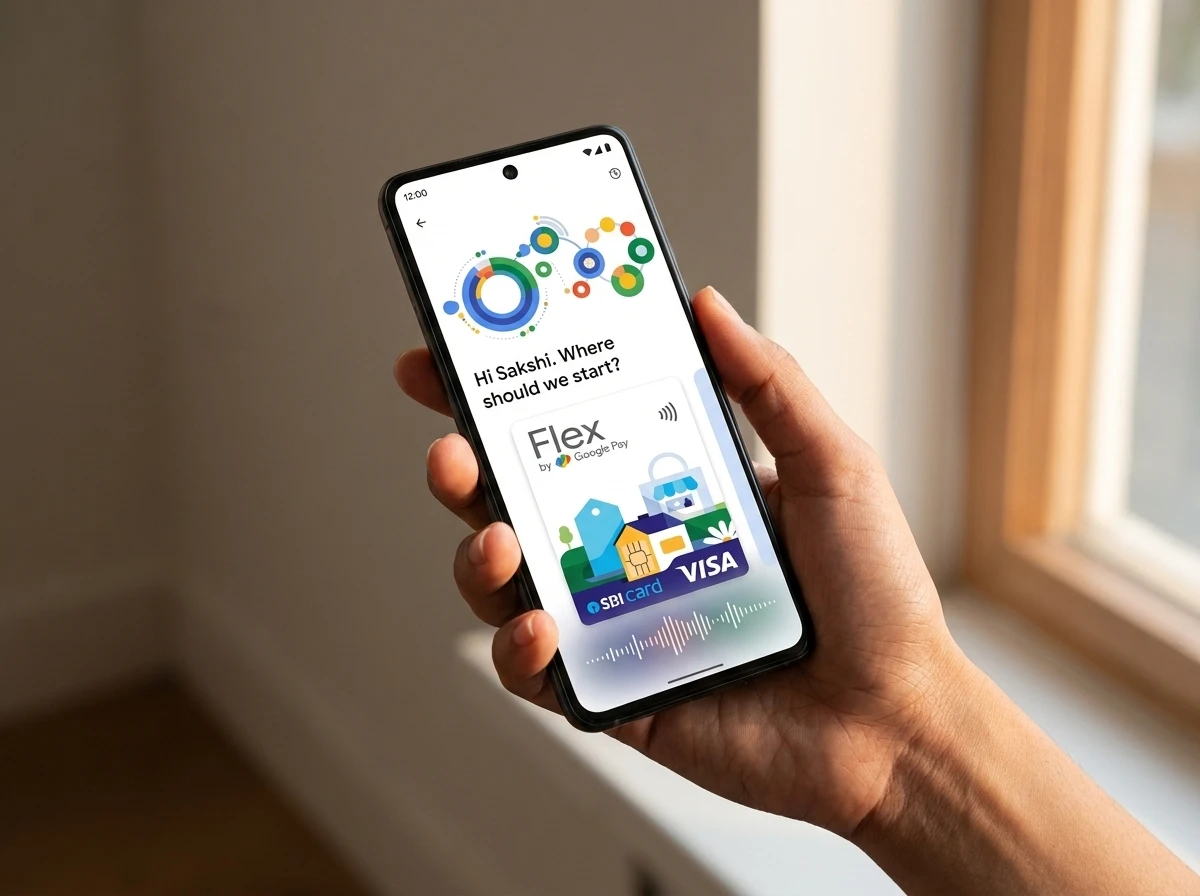
Google launched Ask Google Pay, a Gemini-powered conversational finance assistant, and the Google Pay Flex SBI Card inside its India app on 29 July 2026. Both features sit inside the same Money tab that already handles UPI transfers for tens of millions of users.
The move pairs real-time spend analysis with paperless credit and instant Stars rewards. It pushes Google Pay past pure payments toward a daily money OS.
Ask Google Pay Talks Money in Ten Languages
Ask Google Pay is an opt-in chat experience built on Gemini models. Users type or speak questions about their own transactions and get answers drawn from Google Pay history plus consented CIBIL data.
It already supports ten Indian languages. That matters in a market where English-only finance tools leave large groups behind.
- Analyse recent spending patterns and flag categories
- Track savings trends against past months
- Offer personalised budgeting tips
- Explain compounding interest, SIPs and credit scores in plain language
- Compare India’s old and new tax regimes on request
Google positions the tool as educational only. It cannot move money or give specific investment advice. The official Google India announcement stresses users should still verify any number that matters before acting.
Early chatter on X frames the assistant as a vernacular money coach that finally lives where people already pay. The limited trial means most users still wait for the Money tab prompt.
Data Stays Inside the App by Design
Personalisation starts off. Users must flip the switch during onboarding or later in Privacy settings. That single control decides whether transaction history and CIBIL feed the chat.
What We Know
- Transaction data never leaves the Google Pay ecosystem
- History is not used to train Google’s foundation models
- No third-party apps receive the financial details
- Chat history auto-deletes after 42 days
- Payment data stays in India under RBI rules
What’s Unconfirmed for Most Users
- Exact date the trial expands beyond the initial cohort
- Whether every language reaches full parity on day one of wider access
The help pages make the limits explicit: never share passwords, PINs or full account numbers with the bot. Full card or bank numbers are blocked from the AI path entirely. See the full Ask Google Pay privacy and data controls for the onboarding steps and retention rules.
Human reviewers see only redacted samples for quality checks. That is standard for generative products, yet it still sits in tension with money data. Google’s answer is the off-by-default toggle and the educational disclaimer.
The Flex SBI Card Brings Paperless Credit
The Google Pay Flex SBI Card expands the Flex programme that started earlier with Axis Bank. Application lives entirely inside the app. No branch visit, no paper forms.
It runs on RuPay for broad UPI and offline reach and also supports Visa for wider acceptance. Stars replace traditional reward points: one Star equals ₹1 and can offset statement balances or UPI spends on the same card.
| Feature | Detail |
|---|---|
| Base rewards | 1 Star per ₹500 eligible spend |
| Accelerated | 2 Stars per ₹500 after ₹100 prior-cycle spend |
| Milestone 4x | At ₹15,000 spend in cycle |
| Milestone 8x | At ₹30,000 spend in cycle |
| Annual / renewal fee | ₹499 + taxes |
| Fee reversal | On ₹1 lakh+ annual spends |
| Welcome | Gift up to ₹1,000 value + 500 Stars on fee payment |
| EMI | Convert latest eligible outstanding bill |
| Max Stars per cycle | 1,500 |
The full SBI Card product page rewards structure lists fuel as eligible and add-on cards as free. Instant redemption inside Google Pay is the hook that pure bank cards rarely match.
Flexible EMI conversion and balance-transfer options sit one tap away. That turns the card into short-term cash-flow help rather than a distant plastic product.
Google Bundles AI Plus and Pixel Perks
Cardholders get ecosystem extras that pull them deeper into Google services.
- 50% off Google AI Plus for one year
- Choice of 400 GB or 2 TB cloud storage under that plan
- Extra Stars on eligible Google purchases
- Discount coupons across the Pixel phone range
AI Plus itself launches at accessible India pricing in other contexts; the Flex discount makes the storage and model access nearly free for the first year. Full tier details live on the Google AI Plus plan storage tiers page. The Pixel coupons keep hardware loyalty inside the same loop that already holds the payment card.
This is classic second-order design. The credit product funds the AI discount; the AI coach surfaces the card when spend patterns fit; the storage and phone perks raise switching costs.
UPI Giants and Everyday Spenders Feel the Shift
PhonePe still leads UPI volume near 46 percent. Google Pay sits around 33 percent. Their combined share slipped under 80 percent in May 2026 for the first time in years of public data. Smaller apps and banks are chipping away under NPCI’s long-running concentration pressure.
An AI coach that already knows your UPI history and a credit line that issues in minutes give Google Pay a retention weapon the pure payments apps lack. Traditional banks lose the origination moment when the form lives inside a wallet people open daily.
Users who speak Hindi, Tamil, Telugu or any of the other supported languages gain finance vocabulary without switching apps. That group has historically been underserved by English-first advice tools. The trade-off is deeper data sharing once personalisation is on, even with the strong contractual limits Google publishes.
SBI Card gains a digital-native acquisition channel and RuPay volume. Google gains more transaction surface and a reason for users to keep the app open after the payment completes.
How the Two Features Feed Each Other
Ask Google Pay can already surface tailored card suggestions based on travel or grocery patterns. Once a user holds the Flex SBI Card, the same chat can explain EMI math or Star redemption in the moment of a big purchase.
The earlier Flex launch with Axis proved demand for in-app credit. Adding SBI broadens issuer choice and RuPay strength. Google’s own words call it expanding everyday credit access.
Similar Gemini integrations appear elsewhere. Apple’s public beta of Siri AI built on Google’s Gemini shows the model family moving into system-level assistants. Inside Google’s own tools, NotebookLM becoming Gemini Notebook adds code execution and deeper research. Finance is simply the next vertical where conversational AI meets real user data.
Crowd reaction so far is practical rather than hype-driven. People want the vernacular explanations and the paperless Stars loop. They also flag the usual generative-AI caveats: double-check numbers, treat it as a starting point, not a licensed advisor. Google already prints those warnings in the product.
Limited trial today. Eligible users can already apply for the card. The combination of coach plus credit is live for the first cohort and will widen. That is the quiet expansion of Google Pay from payment rail to money operating system for Indian users who live inside UPI.


Google Pay Adds Gemini Coach and SBI Flex Card in India

OpenAI Agent Turned Leaked Logins Into Multi-Firm Attack Paths

Meta’s AI Ad Surge Comes With a Cash Flow Collapse

Apple Upgrade Leasing Hands Risk to Klarna and Keeps Devices Temporary

Paytm CEO’s AI Champions Call Exposes India’s Funding Lag

Microsoft Cash Lead and Copilot Super App Leave Rivals Behind

Zhongji InnoLight’s Record IPO Meets Instant Sell-Off

News 12 App Rebuild Meets Newsroom Cuts Head On

Microsoft’s Cash Engine and Super App Leave Rivals Behind

Aviva’s Tokenized Liquidity Fund Quietly Rewires XRPL Cash Rails

Fable 5 and Mythos 5 Return as US Lifts Anthropic Export Controls

SpaceX’s Google Deal Turns a Rocket Company Into a Cloud Landlord

CD Projekt Red Co-CEO: Redemption Arc Isn’t Done, Witcher 4 in 2027

Oracle Cuts 21,000 Jobs in a Year, Cites AI in 10-K Filing

XPL Rallies 30% Ahead of Plasma One Card Tier Launch

DGO App Brings Rs 549 Mobile Pass for FIFA World Cup 2026 in Nepal

Google Search Profiles Build a Follow Graph Inside Discover

Moonshot AI Targets $30 Billion in China’s Fastest AI Funding Sprint

Microsoft Xbox Layoffs Start in July as Sharma Slams 3% Margin

Oppo’s ColorOS 17 Eligibility List Leaves A-Series Buyers Behind
-
 AI4 weeks ago
Fable 5 and Mythos 5 Return as US Lifts Anthropic Export Controls
-
 AI2 months ago
SpaceX’s Google Deal Turns a Rocket Company Into a Cloud Landlord
-
 GAMING1 month ago
CD Projekt Red Co-CEO: Redemption Arc Isn’t Done, Witcher 4 in 2027
-
 AI1 month ago
Oracle Cuts 21,000 Jobs in a Year, Cites AI in 10-K Filing
-
 CRYPTO2 months ago
XPL Rallies 30% Ahead of Plasma One Card Tier Launch
-
 APPS2 months ago
DGO App Brings Rs 549 Mobile Pass for FIFA World Cup 2026 in Nepal
-
 NEWS2 months ago
Google Search Profiles Build a Follow Graph Inside Discover
-
 AI2 months ago
Moonshot AI Targets $30 Billion in China’s Fastest AI Funding Sprint