
CRYPTO
XRP Stalls Near $1 While Ripple’s Own Stablecoin Surges
Ripple’s RLUSD stablecoin is racing toward $2 billion and outgrowing XRP itself, even as the Fed’s rate call and a stalled Clarity Act keep the token pinned near $1.

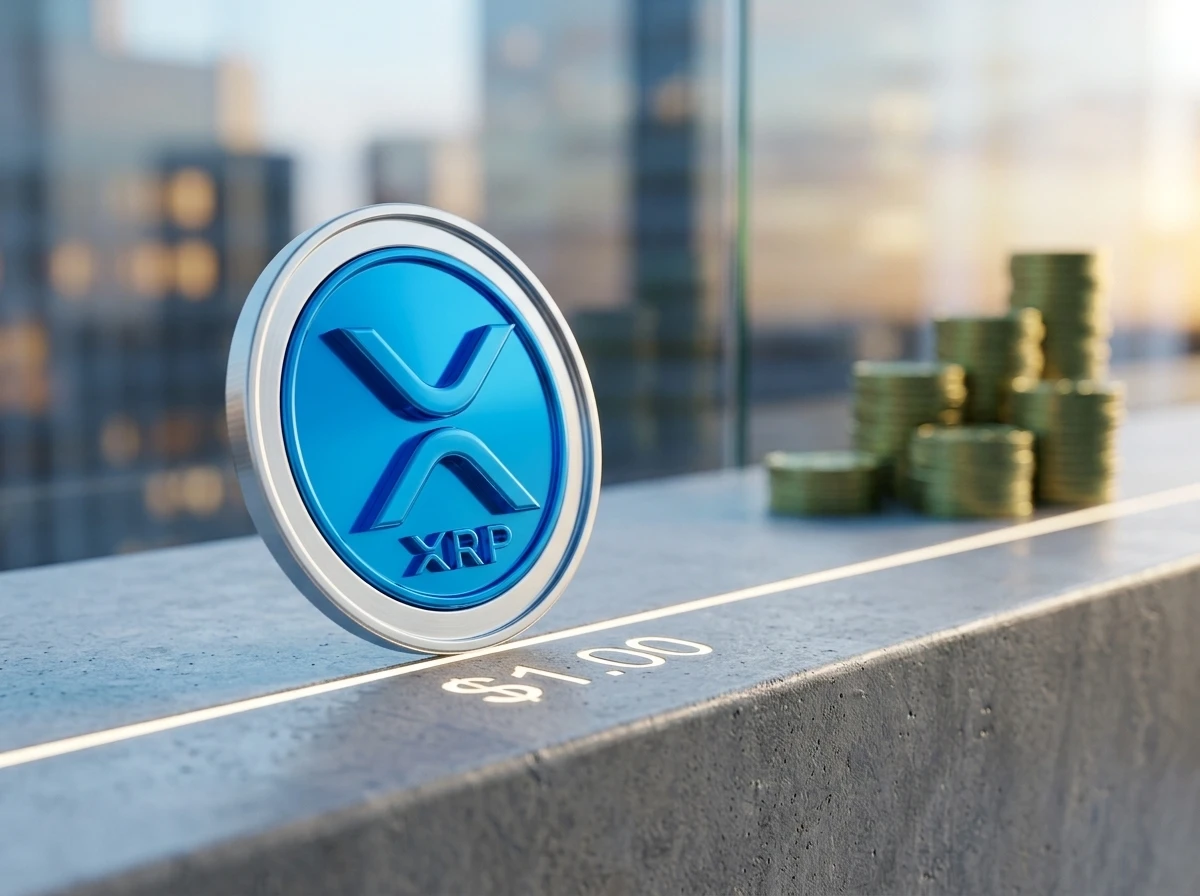
XRP is changing hands at $1.07, a few cents above the support level traders have circled for weeks, with the Federal Reserve due to announce its rate decision at 2 p.m. EDT today. The token has barely moved in days, squeezed between a Senate bill that cannot reach the floor and a Ripple-issued stablecoin that is growing faster than the coin carrying the company’s name.
None of the three forces pinning XRP near $1 are XRP-specific. A hold from the Fed, a stalled vote in Washington and a stablecoin built by XRP’s own parent company are doing more to shape the price today than anything happening on the XRP Ledger itself.
Leveraged Longs Get Flushed Out Before the Fed Even Speaks
The setup into decision day was already messy. Exchange data tracked over the past 24 hours showed Bitcoin alone accounted for $15.44 billion in liquidations as leveraged long positions unwound, part of a broader deleveraging wave that also caught Ethereum, XRP and Solana. A separate tally put combined Bitcoin and Ethereum liquidations above $25 billion, with Binance alone responsible for $1.9 billion of positions wiped out, mostly long bets gone wrong.
| Segment | Amount Liquidated | Detail |
|---|---|---|
| Bitcoin positions | $15.44 billion | Leveraged longs unwound over 24 hours |
| Binance, all assets | $1.9 billion | Largest single-exchange share, mostly long bets |
| Bitcoin and Ethereum combined | More than $25 billion | Broader wave that also hit XRP and Solana |
That kind of flush usually precedes a big macro print. XRP itself has stayed inside what one options-market tracker described as a penny-wide trading band, an options market pricing 99% odds on a narrow range holding through the event. Thin volatility pricing into a Fed day is unusual; it suggests traders expect the rate decision to be a non-event and the real fireworks to come from Congress or Ripple’s own balance sheet instead.
A Rate Hold That Still Might Not Help
The FOMC wrapped a two-day meeting today, and the consensus call was another hold at the current 3.50% to 3.75% target range. That outcome was unanimous at the June meeting too, though minutes from that gathering showed a committee split on what comes next, some officials leaning toward rate cuts as inflation cools, others wary that rising oil prices will force a hike before year-end.
Prediction markets leaned hard into the hold scenario. Bettors on Polymarket priced better than three-in-four odds on a hold heading into today’s announcement, and Wells Fargo Investment Institute’s own meeting-by-meeting rate tracker has treated a hold as the base case for months.
A hold that everyone already expects rarely moves a risk asset like XRP on its own. What moves it is the tone in Fed Chair guidance about the path ahead, and that path currently looks less certain than the vote itself. Oil-driven inflation risk is exactly the kind of wrinkle that keeps a token stuck instead of breaking out.
Congress Runs Out of Summer
The bigger overhang for XRP sits in the Senate. The Digital Asset Market Clarity Act, the bill widely expected to settle whether tokens like XRP fall under securities or commodities rules, passed the House more than a year ago and cleared the Senate Banking Committee in May. It has not gotten a floor vote since.
- July 17, 2025: The House passes the Clarity Act, 294 to 134.
- May 14, 2026: The Senate Banking Committee advances its version, 15 to 9.
- Early July 2026: Leadership fails to force a floor vote before the July 4 recess.
- July 23, 2026: Senate leadership signals the bill will miss its pre-recess window entirely.
- Early August 2026: An industry-set deadline, placed between August 7 and August 10 depending on the tracker, marks the last realistic chance at 2026 passage.
Senate Majority Leader John Thune has already told colleagues the bill will not find floor time before the chamber’s long summer break. Passage needs 60 votes, meaning seven Democrats have to cross over even with a fully united Republican caucus, and the Banking Committee vote suggests only two are currently persuadable. Unresolved fights over federal preemption and vacant seats at the SEC and CFTC have not helped. Wyoming Republican Sen. Cynthia Lummis has warned that missing the window could push comprehensive market-structure legislation off for years, potentially as far out as 2030. Latham & Watkins, the law firm that tracks the bill professionally, keeps a running log of the Clarity Act’s legislative status that has shown little movement since the committee vote.
RLUSD’s Rise Is Starting to Look Like XRP’s Problem
While Washington stalls, Ripple’s business keeps expanding, and that expansion is not obviously helping XRP. RLUSD, the company’s dollar-pegged stablecoin, has grown from roughly $130 million in market cap a year ago to more than $1.6 billion by late May, putting it on pace toward the $2 billion mark analysts flagged back in March. The stablecoin now accounts for close to 98% of all stablecoin liquidity sitting on the XRP Ledger, according to onchain trackers.
Deutsche Bank’s integration of Ripple’s payment rails and SBI Japan’s rollout of RLUSD in the first quarter both fed that growth. Ripple Prime, the company’s institutional brokerage arm, says its revenue has more than tripled since being acquired, with the unit now clearing over $3 trillion a year.
Ripple also deepened its brokerage reach through TJM, a FINRA-registered broker-dealer whose regulated entities give institutional clients access to global markets. Ripple has invested directly in TJM to expand execution and clearing services, giving the firm improved capital efficiency and balance-sheet support as it moves into digital assets.
None of that requires XRP to trade higher. RLUSD increasingly handles the settlement and liquidity role XRP was originally built for on Ripple’s network, without anyone needing to hold or trade the token itself. Three things are happening inside Ripple’s business right now that illustrate the split:
- The Fed: a hold looks locked in for this afternoon, but oil-driven inflation bets keep a later hike alive
- The Senate: the Clarity Act cannot reach the floor before lawmakers leave for summer recess
- Ripple’s own stablecoin: RLUSD now handles the settlement role XRP was built for, without needing the token itself to trade higher
Financial outlet 24/7 Wall St has flagged this pattern twice this year, first noting that RLUSD’s climb past $1.6 billion was not lifting XRP, then arguing the stablecoin’s march toward $2 billion could become the bigger risk to the token. The bull case is that a busier ledger eventually feeds XRP through fees and network effects; the numbers so far show that effect has been weak.
What Would Break XRP Out of Its Range?
XRP has broken below a symmetrical triangle pattern on the charts and is trading under its key moving averages, a setup technical traders read as a sustained downtrend rather than a pause. Selling volume has picked up as price grinds toward the $1 line, a level the token first tested roughly a year after Ripple settled its long-running case with the SEC, a fight covered in depth in XRP’s earlier test of that same support level.
A Fed pivot toward actual rate cuts later this year would likely do more for XRP’s price than anything happening inside Ripple’s corporate structure, since crypto tends to trade as a leveraged bet on broader risk appetite. That dynamic has already been documented in how a hawkish Fed squeezes crypto through several liquidity channels at once. Clarity Act passage would remove a separate overhang by finally settling XRP’s regulatory classification, something the token has lacked despite Ripple’s 2025 legal win.
Until one of those two things happens, XRP is left waiting on catalysts it does not control, while the company that issues it builds a parallel business that no longer needs the token to succeed.
Frequently Asked Questions
Why Does the Clarity Act Matter More for XRP Than for Bitcoin or Ethereum?
Bitcoin and Ethereum already have relatively settled regulatory treatment as commodities in practice. XRP spent years in active litigation with the SEC over whether it was a security, and even after Ripple’s settlement, a federal market-structure law is what would lock in commodity-style treatment permanently rather than leaving it to case-by-case enforcement.
How Is RLUSD Different From XRP?
RLUSD is a stablecoin pegged 1:1 to the US dollar and designed for payments and settlement, not price appreciation. XRP is a freely floating token whose price moves with market demand. The two serve different jobs on the same ledger, which is exactly why one can grow while the other stalls.
What Happens to Crypto Markets After a Widely Expected Fed Hold?
A hold that markets already priced in tends to produce a muted immediate reaction. The bigger driver is usually the tone of the Fed’s forward guidance, and this cycle’s wrinkle is rising oil prices, which have pushed some investors to price in a possible hike later in 2026 even after today’s pause.
What Would It Take for XRP to Break Above $1 for Good?
Traders point to two realistic catalysts: a Fed pivot toward rate cuts that lifts risk appetite broadly, or Clarity Act passage that removes XRP’s remaining regulatory overhang. Either alone could shift sentiment; both together would matter far more than any single piece of Ripple corporate news.
Is Ripple’s Institutional Growth Bad News for XRP Holders?
Not necessarily. A larger, busier XRP Ledger could eventually translate into higher transaction fees and network demand that benefit XRP indirectly. So far, though, the price correlation between RLUSD’s growth and XRP’s own performance has been weak, which is why analysts have started treating the stablecoin’s rise as a separate story from the token’s.
Disclaimer: This article is for informational purposes only and does not constitute financial advice; cryptocurrency prices are highly volatile, and readers should consult a licensed financial advisor before making investment decisions. Figures are accurate as of publication on July 29, 2026.


Workers Still Trust Judgment Over the AI Tools They Use

DigitalOcean’s $894 Million Backlog Rewrites the Old Cloud

Companies Froze Job Design and Called AI a People Problem

AI Capex Looks Unique Because the Chips Wear Out

Samsung Medison’s HERA Z10 Aims at the Sonographer Shortage

GPT-6 Astra Ships as OpenAI’s First Critical Cyber Model

Palms Sells Clean Air Without Ending Casino Smoking

OnlyFans Promo Bots on X Now Pass the Humanity Tests

Datamaran Drops the ESG Label After Winning the Argument

Xiaomi’s Own Chip Lands While Apple Argues Over Color

Oracle Cuts 21,000 Jobs in a Year, Cites AI in 10-K Filing

Fable 5 and Mythos 5 Return as US Lifts Anthropic Export Controls

SpaceX’s Google Deal Turns a Rocket Company Into a Cloud Landlord

CD Projekt Red Co-CEO: Redemption Arc Isn’t Done, Witcher 4 in 2027

XPL Rallies 30% Ahead of Plasma One Card Tier Launch

Google Search Profiles Build a Follow Graph Inside Discover

DGO App Brings Rs 549 Mobile Pass for FIFA World Cup 2026 in Nepal

Moonshot AI Targets $30 Billion in China’s Fastest AI Funding Sprint

Oppo’s ColorOS 17 Eligibility List Leaves A-Series Buyers Behind

Microsoft Xbox Layoffs Start in July as Sharma Slams 3% Margin
-
 AI3 months ago
Oracle Cuts 21,000 Jobs in a Year, Cites AI in 10-K Filing
-
 AI2 months ago
Fable 5 and Mythos 5 Return as US Lifts Anthropic Export Controls
-
 AI3 months ago
SpaceX’s Google Deal Turns a Rocket Company Into a Cloud Landlord
-
 GAMING3 months ago
CD Projekt Red Co-CEO: Redemption Arc Isn’t Done, Witcher 4 in 2027
-
 CRYPTO3 months ago
XPL Rallies 30% Ahead of Plasma One Card Tier Launch
-
 NEWS3 months ago
Google Search Profiles Build a Follow Graph Inside Discover
-
 APPS3 months ago
DGO App Brings Rs 549 Mobile Pass for FIFA World Cup 2026 in Nepal
-
 AI3 months ago
Moonshot AI Targets $30 Billion in China’s Fastest AI Funding Sprint