
NEWS
WhatsApp Rolls Out a Real Android Auto and CarPlay App
WhatsApp’s Android Auto app finally matches what CarPlay got in April, revealing a bigger Meta push to make WhatsApp work beyond a single phone.

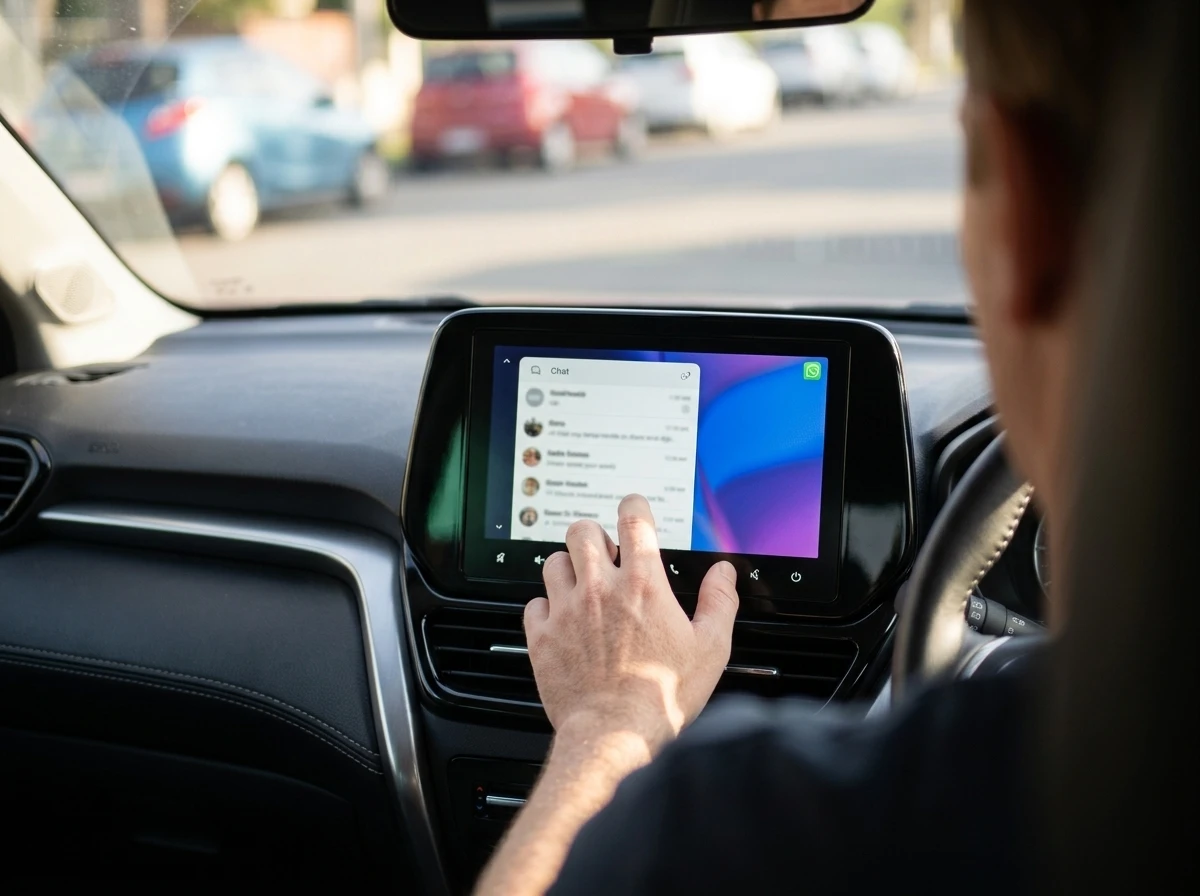
WhatsApp shipped a real Android Auto and CarPlay app on July 22, finally replacing the years-old trick of having Google Assistant or Siri read texts aloud. Drivers now get an actual screen: a chat list, a call history tab and a favorites shortcut, all still worked entirely by voice.
Android Auto owners had to wait for it, though. Apple’s CarPlay got its own dedicated app months earlier, and this week’s release turns out to be the smallest item in a much larger update Meta pushed the same day, one built around getting WhatsApp off the phone entirely.
WhatsApp Trades Its Assistant Trick for a Real Dashboard
For years, using WhatsApp behind the wheel meant leaning on whatever voice assistant your platform offered. Users could send messages and have their texts read out loud using Google Assistant on Android Auto and Siri on CarPlay, with no visual interface of its own. That changed this week.
In a post on its official blog, WhatsApp described the update plainly. completely refreshed the experience on both platforms is how the company put it, adding hands-free playback, replies, call history and one-tap access to favorite contacts, all surfaced right on the car’s own screen.
We’ve completely refreshed the experience on both.
WhatsApp said in the post announcing the update. Google Assistant and Siri integration still exist underneath, but the new app gives drivers something to actually look at, tap into and navigate, instead of just talking to a disembodied voice.
The shift is easiest to see side by side:
| Capability | Assistant Integration (Before) | Dedicated App (Now) |
|---|---|---|
| Hearing messages | Read aloud by Assistant or Siri | Read aloud from a visible chat list |
| Replying | Voice command only | Voice command only, no keyboard |
| Placing calls | Voice-triggered, no visual record | Voice-triggered, plus a dedicated call tab |
| Call history | Not available in-car | Visible on its own screen |
| Favorite contacts | Not available in-car | One-tap screen to call or message |
| Platform coverage | Both, identical and limited | Both, refreshed together on July 22 |
Nothing about the underlying rules changed. It is still a hands-free system built for glancing, not typing, and every action still routes through the car’s own speakers rather than the phone.
CarPlay Got This in April. Android Auto Waited Until Now
The July 22 rollout reads like a single clean launch. It was not. Apple’s side of this story started months earlier, and Google’s side is only catching up now.
Autoevolution itself flagged WhatsApp’s early work on a dedicated CarPlay app back in the spring, describing a service moving from Siri-powered basics toward a standalone application. By early April, that app had actually shipped for iPhone owners. MacRumors reported that the new app has a full native CarPlay interface with a list of recent chats and call history, along with a tab for favorite contacts, while ArenaEV noted that testing began in late March before the CarPlay build went live days later.
Android Auto users kept the old assistant-only setup that entire time. Digital Trends described the pre-refresh CarPlay experience as limited to composing messages or placing a call, both of which still pulled a driver’s attention away from the road, and confirmed that this week’s release finally brings Android Auto the same set of additions, turning WhatsApp’s in-car experience from a stripped-down version of the phone app into something more people will find useful while driving.
Line up WhatsApp’s own recent moves and the pattern gets clearer:
- Late March 2026: WhatsApp is spotted testing a dedicated CarPlay app for the first time.
- Early April 2026: The CarPlay app officially launches, iPhone only, with chats, calls, call history and favorites.
- Late May 2026: Meta launches a paid WhatsApp subscription unlocking profile customization, super reactions and story insights.
- June 29, 2026: WhatsApp opens username reservations, letting people message without sharing a phone number.
- July 22, 2026: Android Auto finally catches up to CarPlay, both platforms get a further refresh, and WhatsApp bundles in iPad accounts, PDF editing and music sharing the same day.
Android Auto users spent more than three months as the second platform, not the first. That gap rarely shows up in the coverage of a single day’s announcement, but it is the clearest sign of which platform WhatsApp actually built for first.
Why You Still Can’t Type a Reply at a Red Light
None of this gives drivers a keyboard, and that was never going to change no matter how long WhatsApp took. The restriction sits with the platforms, not the app.
Google’s own design documentation for Android Auto spells it out directly. Its messaging template exists specifically so text-based messages only, transforming text such as SMS and email into audio, using a single conversational voice flow that every messaging app on the platform has to follow. There is no alternate path for a keyboard because Google never built one into the template.
Built-in Android Automotive systems carry the same restriction a step further. Google’s developer documentation for in-car notifications confirms that these screens block tap-to-expand controls and swipe gestures entirely, leaving voice as close to the only option a driver has. Apple runs a comparable playbook on CarPlay, capping which app categories even qualify for the dashboard and keeping messaging apps voice-first for the same safety reasoning.
The stakes behind that caution are not abstract. The National Highway Traffic Safety Administration estimates that more than 3,000 people die each year in crashes tied to distracted driving, with texting behind the wheel among the leading causes. Every messaging app that reaches a car dashboard, WhatsApp included, gets built inside that constraint rather than around it.
The Car App Is the Smallest Line in a Bigger Bet
Read WhatsApp’s own blog post in full and the car update stops looking like the headline. It is item one on a list of four, and arguably the least strategically important.
The same July 22 post also announced:
- Standalone iPad accounts, letting users register directly on a tablet, though setup still requires a phone number for the verification code before the iPad works as its own independent device.
- In-app PDF viewing and editing on web and desktop, powered by Adobe Acrobat, so documents can be opened, highlighted and annotated without leaving a chat.
- Music sharing to Status, pulling a song directly from Apple Music or Spotify onto a user’s WhatsApp Status.
TechCrunch framed the whole package as part of the Meta-owned company’s broader push to make its app a more complete cross-device communication platform rather than one just used for mobile messaging. The outlet also noted that WhatsApp had launched usernames a few weeks earlier to let people share profiles without handing over a phone number, and that Meta introduced a paid subscription tier in late May unlocking profile customization, super reactions and story insights.
Put those pieces next to each other and the car app looks less like a destination and more like one stop on a longer route: phone number optional, device optional, subscription available, now with a screen in the car too. WhatsApp already counts well over 3 billion users worldwide, and every one of these moves chips away at the idea that a single phone number and a single phone are required to use it.
Who Actually Notices the Difference
For casual users who send the occasional message, little changes. The people who will feel this are heavy users, families spread across countries, small businesses running customer chats, anyone who already treats WhatsApp as a daily driver rather than a backup to text messages.
For them, a visible call history and a one-tap favorites screen genuinely save time compared to shouting a name at Siri and hoping for the best. That part of the upgrade is not in dispute.
Whether WhatsApp keeps building on it is a separate question. Android Auto’s recent record gives reason for caution. This site has covered Pixel owners still dealing with wireless disconnects that never got fixed months after they first appeared, and Waze drivers stuck with a cancel route bug with no fix despite repeated complaints. Even routine updates have needed workarounds, including a manual way to skip the Play Store wait when a recent Android Auto release rolled out unevenly.
Set against that history, a car interface that finally does what iPhone users got in April is welcome but modest. With an iPad app pulling more of WhatsApp’s attention and a subscription business to grow, the car screen is unlikely to be where Meta spends its next big push.
The update itself needs no action. Anyone running the latest WhatsApp build will see the new icon appear the next time their phone connects to the car, wired or wireless, on either platform.
Frequently Asked Questions
Is the new WhatsApp Android Auto and CarPlay app free?
Yes. The refreshed car interface is included with the standard WhatsApp app at no extra cost and has nothing to do with the separate paid subscription tier Meta launched in May for profile perks like super reactions and story insights.
Do I need to download a separate app for my car?
No. There is no separate car app to install. Updating WhatsApp to the latest version through the Play Store or App Store adds the new icon automatically, and it appears on the car’s screen the next time the phone connects.
Can I type a message instead of using voice commands?
No. Both Android Auto and CarPlay restrict messaging apps to voice input and playback by design, a safety rule set by Google and Apple rather than a choice WhatsApp made, so there is no keyboard option in either version.
Does the update work over a wired connection or only wirelessly?
Both. The new interface rides on the standard Android Auto and CarPlay connection layer, so it works whether the phone is plugged in with a cable or paired wirelessly.
What if the new WhatsApp icon does not show up on my car’s screen?
Confirm WhatsApp is updated to the latest version on the phone first. If the icon still does not appear, disconnecting and reconnecting the phone, or restarting the car’s infotainment system, typically forces it to refresh the app list.


Pixel 11 Trails Galaxy Phones That Last as Long

OpenAI’s Research Intern Arrives With a Warning Attached

Robinhood Prices XRP Into a Two-Cent 9 a.m. Bet

Sony’s 10 Percent Disc Drop Leaves the 2028 Cutoff Intact

Chip Allocation Sidelines the Base iPhone 18 This Fall

Miami-Dade Fights the Vice City Brand It Already Wears

IFA 2026 Awards Put Tecno Ahead of Flagship Phones

USB-C Gadgets Made the Junk Drawer Rechargeable

Pixel 11 Pro Asks $1,099 for a Light Google Locked

The iPhone Ultra Sells Two Retired Minis as One Foldable

Oracle Cuts 21,000 Jobs in a Year, Cites AI in 10-K Filing

Fable 5 and Mythos 5 Return as US Lifts Anthropic Export Controls

SpaceX’s Google Deal Turns a Rocket Company Into a Cloud Landlord

CD Projekt Red Co-CEO: Redemption Arc Isn’t Done, Witcher 4 in 2027

XPL Rallies 30% Ahead of Plasma One Card Tier Launch

Google Search Profiles Build a Follow Graph Inside Discover

DGO App Brings Rs 549 Mobile Pass for FIFA World Cup 2026 in Nepal

Moonshot AI Targets $30 Billion in China’s Fastest AI Funding Sprint

Oppo’s ColorOS 17 Eligibility List Leaves A-Series Buyers Behind

Microsoft Xbox Layoffs Start in July as Sharma Slams 3% Margin
-
 AI3 months ago
Oracle Cuts 21,000 Jobs in a Year, Cites AI in 10-K Filing
-
 AI2 months ago
Fable 5 and Mythos 5 Return as US Lifts Anthropic Export Controls
-
 AI3 months ago
SpaceX’s Google Deal Turns a Rocket Company Into a Cloud Landlord
-
 GAMING3 months ago
CD Projekt Red Co-CEO: Redemption Arc Isn’t Done, Witcher 4 in 2027
-
 CRYPTO3 months ago
XPL Rallies 30% Ahead of Plasma One Card Tier Launch
-
 NEWS3 months ago
Google Search Profiles Build a Follow Graph Inside Discover
-
 APPS3 months ago
DGO App Brings Rs 549 Mobile Pass for FIFA World Cup 2026 in Nepal
-
 AI3 months ago
Moonshot AI Targets $30 Billion in China’s Fastest AI Funding Sprint