
NEWS
Vivo’s X300 Costs $647, but No US Carrier Sells It
Vivo’s X300 carries a $647 US price in headlines, but the figure is a yuan conversion. No American carrier or retailer actually sells the phone.

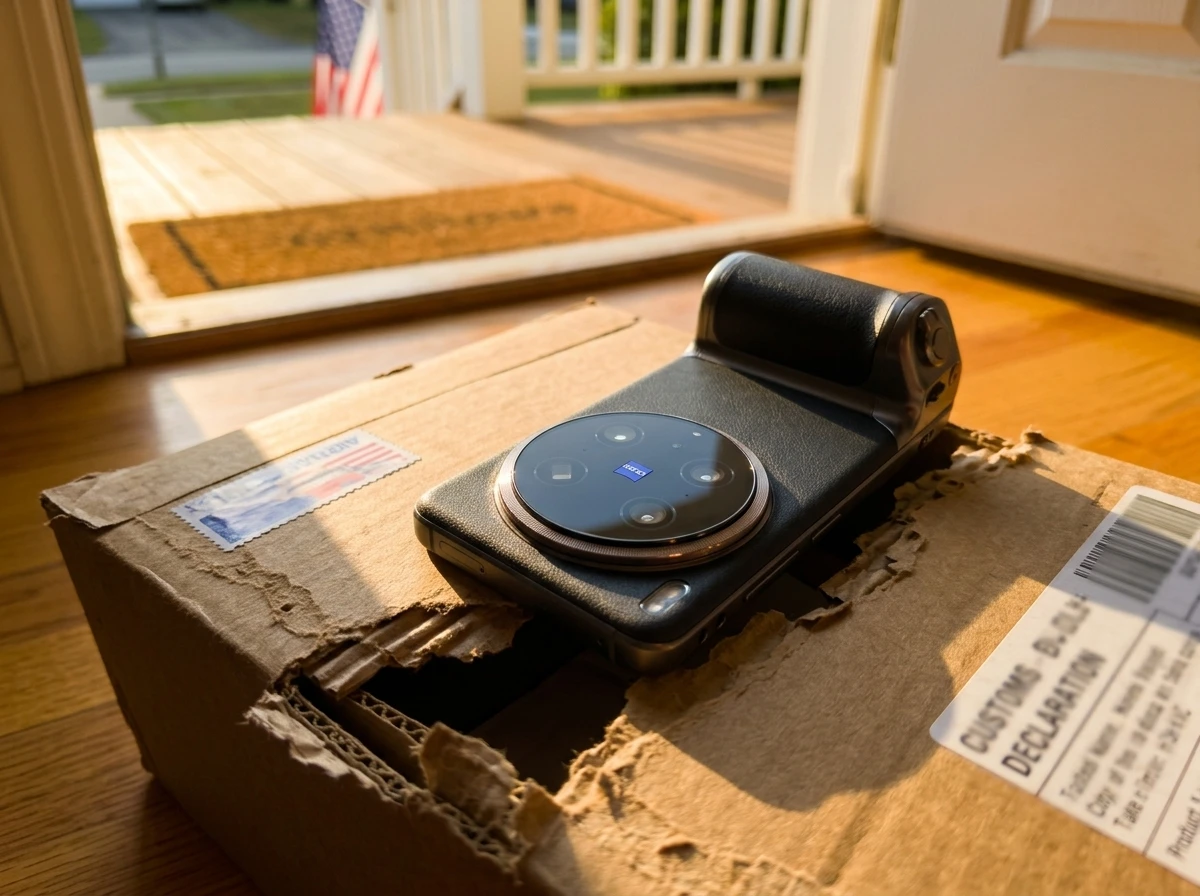
Vivo’s X300 carries a $647 price tag in headlines across US tech coverage this week. No American carrier sells it. No US retailer stocks it. Nobody at Verizon, AT&T or Best Buy has ever put a Vivo phone on a shelf.
The specs underneath that price are genuinely strong: a 200MP main camera, MediaTek’s newest flagship chip, a 6,040mAh battery. But the $647 number circulating right now traces back to Vivo’s October 2025 launch in China, not an actual American listing, and that gap says more about why Vivo stays out of the US than any spec sheet could.
A 200MP Camera and the Dimensity 9500 Chip Do the Selling
The X300 pairs a 200MP main sensor with two 50MP lenses in a triple-camera array tuned with Zeiss optics, the same partnership Vivo has leaned on across several X-series generations. The front camera is 50MP too, well above the 12MP or 32MP selfie sensors most flagship rivals still ship.
Under the hood sits MediaTek’s Dimensity 9500, paired with up to 16GB of RAM and 1TB of storage in the top configuration. The display is a 6.31-inch LTPO AMOLED panel running Android 16 under Vivo’s OriginOS 6 skin, with a 1 to 120Hz refresh range and peak brightness Vivo has pushed to 4,500 nits. A 6,040mAh battery with 90W wired charging rounds out the pitch.
Independent benchmark testing backs up the chip claims. Numbers published by tech outlets show the Dimensity 9500 running ahead of Qualcomm’s prior-generation Snapdragon 8 Elite on both raw speed and sustained scoring.
- 4,007 Geekbench 6 single-core score for the Dimensity 9500, versus 3,033 for the Snapdragon 8 Elite, per benchmark testing published by Beebom’s Gizmochina desk
- 3.57 million combined AnTuTu score for the Dimensity 9500, versus 2.81 million for the Snapdragon 8 Elite, per testing run by 91mobiles
- 6,040mAh battery paired with 90W wired charging on the standard X300
- 200MP main sensor backed by dual 50MP lenses and a 50MP front camera
That is not in dispute. The chip is fast, the camera array is unusually ambitious for the price Vivo quotes, and the battery solves the two complaints flagship buyers raise most: dying by evening, and waiting too long to charge back up.
Where That $647 Figure Comes From
Vivo launched the X300 in China on October 13, 2025, with the base 12GB and 256GB model priced at 4,399 yuan. A pre-launch leak had pointed to something close, pegging a rumored 4,699 yuan listing at roughly $660 in an early conversion published by Gizmochina. The actual launch price came in below that leak.
$647 lands almost exactly where a straight dollar conversion of that China listing would put it. That is not a coincidence. Vivo has never sold a phone through a US carrier or a major US retailer, and it has no authorized distributor in North America, according to buyer guides tracking the brand’s actual availability. Anyone in the US who wants an X300 today buys it through an independent importer or a reseller on eBay or a similar platform, without US-certified firmware or a US warranty behind it.
So the $647 headline is a real number attached to a phone nobody in the US can walk into a store and buy.
Huawei and ZTE Already Ran This Play
Chinese phone brands avoiding the US carrier system is not new, and it did not happen by accident. In November 2019, the Federal Communications Commission (FCC) voted to designate Huawei and ZTE as national security threats, cutting them off from a federal subsidy fund that rural carriers had used to buy their equipment.
We cannot and will not allow the Chinese Communist Party to exploit network vulnerabilities and compromise our critical communications infrastructure.
The FCC wrote that in the order designating Huawei and ZTE as national security threats, which took effect in 2020 after Huawei’s legal challenge failed. The commission went further in February 2024, voting to ban US sales of new devices from Huawei and ZTE entirely, implementing the Secure Equipment Act that President Biden signed in November 2021.
That history set the pattern every Chinese phone maker has operated inside ever since. Getting into US carrier stores means passing a level of political and regulatory scrutiny that Samsung and Apple never face.
Vivo Never Tried the Front Door
Vivo is not banned the way Huawei and ZTE are. It simply never applied for entry. There is no FCC national security designation attached to Vivo’s name, no revoked carrier contract, no legal fight on record. The company built its US absence through inaction, not exclusion.
Other Chinese-origin brands have tried harder and still moved slowly. OnePlus spent years selling online-only in the US before landing a single major carrier partnership. Xiaomi still has no meaningful US retail footprint despite being one of the world’s largest phone makers by volume. Vivo’s own X300e variant has cleared regional certification filings for other markets without any sign of a US filing among them.
Actually entering the US market would take more than good specs. It would mean:
- A US carrier or major retailer such as Verizon, AT&T, T-Mobile or Best Buy agreeing to stock the phone
- FCC equipment certification and support for US-specific network bands
- A domestic warranty and repair network American buyers can actually use
- Surviving the kind of political scrutiny that Huawei and ZTE did not survive
Vivo has shown no public sign of pursuing any of that. Building a great camera phone and building a distribution network are separate problems, and Vivo has only solved one of them.
The Same Phone Costs More Everywhere Vivo Sells It
Where Vivo does have retail distribution, the X300 is not the bargain the $647 headline implies. The phone launched across Europe on October 31, 2025, priced from 1,049 euros (roughly $1,150) for the entry configuration, according to coverage of the global rollout.
The European unit is not even the same hardware. Specification listings show the EU version of the X300 ships with a 5,360mAh battery, well below the 6,040mAh cell in the version Vivo calls global. The Pro model shows the same pattern: 5,440mAh in the EU against 6,510mAh elsewhere.
| Model | Price Cited as “US” | China Launch Price | Officially Sold in the US |
|---|---|---|---|
| X300 | $647 | 4,399 yuan | No |
| X300 Pro | $779 | 5,299 yuan | No |
| X300 Ultra | $1,099 and up | 6,999 to 8,999 yuan | No |
India got its own rollout on its own schedule. The X300 Ultra reached Indian shelves at Rs 1,59,999, with a lower-tier X300 FE priced from Rs 79,999, months after the China debut. Vivo is running three separate regional launches on three separate timelines, and the US is not one of them.
Why Does the X300 Ultra Skip MediaTek for Snapdragon?
The Ultra tier breaks from the chip Vivo used everywhere else in the lineup, running Qualcomm’s Snapdragon 8 Elite Gen 5 instead of the Dimensity 9500 that powers the X300 and X300 Pro. Vivo launched the Ultra in China on March 30, 2026, five months after the base models, pairing that chip with a dual 200MP Zeiss camera system and a 6,600mAh battery.
Qualcomm has been pushing its own top-tier silicon further with a fourth chip variant as production costs climb, and putting that chip in the Ultra while cheaper tiers run MediaTek suggests Vivo is managing chip costs across its lineup the same way it manages regional pricing: differently, tier by tier, market by market.
Whatever chip lands in which tier, the outcome does not change for American shoppers. No listing, no carrier deal, no certification, and a phone that exists in the US only as a headline number.
Frequently Asked Questions
Can Americans Buy the Vivo X300 Right Now?
Only through independent importers and resellers on platforms like eBay. Vivo has no carrier partnership, no retail deal and no authorized distributor in the US, and units sold this way arrive without US-certified firmware or a US warranty.
What’s Different Between the X300 and the X300 Pro?
The Pro steps up to a larger 6.78-inch display against the standard model’s 6.31 inches and starts at 5,299 yuan in China against the X300’s 4,399 yuan, alongside a larger 6,510mAh battery.
Has Vivo Ever Been Formally Restricted in the US Like Huawei?
No. Huawei and ZTE carry specific FCC national security designations dating to 2019. Vivo has no such designation. It has simply never applied for US carrier or retail distribution in the first place.
Which Other Phones Share the X300’s Chipset?
Variants of the Dimensity 9500 have shown up beyond Vivo’s lineup, including the Redmi Turbo 5 Max, which ran a Dimensity 9500s variant to a benchmark score close to 3.3 million on AnTuTu in testing published by Gizmochina.


Nintendo Already Tested These NES Remakes, With Mixed Results

South Korea’s Crypto Framework Bill Hinges on a Bank Standoff

Court of Appeal Restores Imo APP Ahead of 2027 Polls

Vivo’s X300 Costs $647, but No US Carrier Sells It

Super Micro’s Bargain Stock Price Rests on One Hidden Customer

Resident Evil’s Remake Profits Just Vindicated Capcom’s Pragmata Bet

XRP Stalls Near $1 While Ripple’s Own Stablecoin Surges

WhatsApp Web’s Free Calling Update Takes Aim at Zoom

Hiya Toys’ Fox Figure Ships the Same Year as Persona 6

ARRI Hands Honor Its First-Ever Smartphone Camera Deal

Fable 5 and Mythos 5 Return as US Lifts Anthropic Export Controls

SpaceX’s Google Deal Turns a Rocket Company Into a Cloud Landlord

CD Projekt Red Co-CEO: Redemption Arc Isn’t Done, Witcher 4 in 2027

Oracle Cuts 21,000 Jobs in a Year, Cites AI in 10-K Filing

XPL Rallies 30% Ahead of Plasma One Card Tier Launch

DGO App Brings Rs 549 Mobile Pass for FIFA World Cup 2026 in Nepal

Moonshot AI Targets $30 Billion in China’s Fastest AI Funding Sprint

Google Search Profiles Build a Follow Graph Inside Discover

Microsoft Xbox Layoffs Start in July as Sharma Slams 3% Margin

Oppo’s ColorOS 17 Eligibility List Leaves A-Series Buyers Behind
-
 AI4 weeks ago
Fable 5 and Mythos 5 Return as US Lifts Anthropic Export Controls
-
 AI2 months ago
SpaceX’s Google Deal Turns a Rocket Company Into a Cloud Landlord
-
 GAMING1 month ago
CD Projekt Red Co-CEO: Redemption Arc Isn’t Done, Witcher 4 in 2027
-
 AI1 month ago
Oracle Cuts 21,000 Jobs in a Year, Cites AI in 10-K Filing
-
 CRYPTO2 months ago
XPL Rallies 30% Ahead of Plasma One Card Tier Launch
-
 APPS2 months ago
DGO App Brings Rs 549 Mobile Pass for FIFA World Cup 2026 in Nepal
-
 AI2 months ago
Moonshot AI Targets $30 Billion in China’s Fastest AI Funding Sprint
-
 NEWS2 months ago
Google Search Profiles Build a Follow Graph Inside Discover