
NEWS
Snapdragon Price Hike Forces Premium Buyers Toward Last Year’s Phones
Qualcomm confirms double-digit Snapdragon hikes from September 1 as AI memory demand hits 50% of DRAM, shifting buyers and pressuring XR and Android margins.

Qualcomm confirmed double-digit percentage price increases on most Snapdragon chips shipping after September 1, 2026, after CEO Cristiano Amon told CNBC “Cost went up, prices are going to go up.” Handset chip revenue already fell 20% in the latest quarter as memory costs climbed and buyers shifted inside the premium tier.
The move lands just as next-wave Android flagships prepare to ship. The deeper pressure is already visible in sales mix, OEM bills of materials, and the near-monopoly Snapdragon holds in XR headsets.
What Amon and the Earnings Release Said
Bloomberg first reported on July 24 that Qualcomm had sent customers formal notice of double-digit hikes on chips shipped after September 1. Amon confirmed it on the fiscal third-quarter call and in follow-up interviews.
In a separate statement he said costs have increased so prices will increase as well, with the company raising prices for most chips starting Sept. 1 while still trying to improve supply-chain efficiency. The official earnings release put the industry context in plain language: the semiconductor industry faces a broad-based rise in input costs across wafer fabrication, assembly, test, advanced packaging, memory and other materials.
Qualcomm is taking concrete actions to reflect higher input costs in product pricing and expects those actions to benefit gross margins over time as the changes gradually take effect. Amon called the pressure temporary and short-term.
- $9.947 billion total revenue, down 4% year over year
- $5.086 billion handset chip revenue, down 20%
- $2.002 billion net income, down 25%
- Non-GAAP EPS $2.21 versus $2.77 a year earlier
Guidance for the current quarter was light on earnings even as revenue stayed roughly in line with prior expectations.
AI Servers Now Consume Half the DRAM
The trigger is not a generic chip shortage. Samsung, SK Hynix and Micron have redirected capacity toward high-bandwidth memory for AI servers, where margins run far higher than consumer DRAM.
According to Bloomberg Intelligence data cited in a detailed graphics package, data center demand for DRAM hit roughly half of global consumption in 2025, up from about a third five years earlier. That share is projected to climb past 60% by 2030.
In some cases DRAM prices have risen more than ten times January 2025 levels. NAND flash is climbing too. HP said memory now accounts for roughly 35% of laptop materials cost, up from 15-18% only months earlier. Counterpoint Research estimates higher memory prices could lift smartphone materials costs by 15% or more in coming quarters. IDC has projected the global smartphone market could shrink 12.9% in 2026, the sharpest drop on record.
Qualcomm also faces rising foundry costs. Nikkei Asia reported TSMC is preparing base price hikes range from 5% to 10% depending on customer and product, taking effect from 2027. Extra AI capacity can carry further premiums. Amon said the company has run out of room to keep absorbing the combined pressure.
Handset Revenue Dropped While Auto and IoT Grew
The Q3 numbers show where the pain concentrated and where the company is already diversifying.
| Segment | Q3 FY2026 Revenue | Year-over-Year Change |
|---|---|---|
| Handsets | $5.086 billion | -20% |
| Automotive | $1.588 billion | +61% |
| IoT | $1.830 billion | +9% |
| Total QCT | $8.504 billion | -5% |
| QTL licensing | $1.278 billion | -3% |
Combined automotive and IoT revenue grew 28%. Automotive has now posted 23 consecutive quarters of double-digit growth. Amon highlighted the non-handset path: the company still targets $5 billion in data-center revenue next year and aims for non-handset sales to reach 60% of revenue in coming years, with non-handset growth accelerating past 60% in fiscal 2027.
Even inside the premium tier where Qualcomm dominates, Amon said buyers are shifting toward the lower end of premium and toward last year’s models because memory price increases have pushed up the cost of the newest phones. That behavioral change reduces demand for the latest chipsets and feeds the revenue decline the company is trying to offset with higher ASP.
Phones and Headsets That Sit in the Path
Qualcomm silicon powers a large share of premium Android devices expected to launch or refresh after the September cutoff. That list includes Samsung’s Galaxy S26 series, OnePlus 15, Xiaomi 15 and Oppo Find X9 Ultra lines, plus later devices such as the Xiaomi 18 series and future Samsung flagships that take next-generation Snapdragon silicon.
Some reports have suggested the next flagship chipset could cost phone makers upward of $300 more than the current generation. Chipsets are typically the single largest line item in a phone’s bill of materials, so the increase has few places to hide: higher retail price or thinner OEM margin.
The impact is sharper in XR and smart glasses. Meta Quest 3 and 3S, Samsung Galaxy XR, Ray-Ban Meta glasses, Valve’s Steam Frame, and most Pico headsets all run on Snapdragon platforms. In this category Snapdragon is close to the only high-volume option. Price increases therefore pass through more directly.
- Samsung Galaxy S26 series and future flagships
- OnePlus 15, Xiaomi 15 / 18 series, Oppo Find X9 Ultra
- Meta Quest 3 / 3S and Ray-Ban Meta glasses
- Samsung Galaxy XR, Valve Steam Frame, Pico headsets
On X, the sharpest early reaction focused on the Steam Frame timing. Multiple posts noted that a double-digit chip cost rise just before a still-unpriced headset launch leaves Valve absorbing the hit or raising the final price, echoing the memory-driven overshoot already seen on the Steam Machine. That crowd concern tracks the structural reality: no alternate high-performance silicon exists at volume for these devices.
Google’s Pixel 11 series is already expected to launch higher independently of the Qualcomm move, and Pixel 11 series price expectations sit inside the same upward wave.
Apple Modem Share Shrinks at the Same Moment
Qualcomm’s relationship with Apple is contracting for a related but separate reason. Amon said supply constraints will push Qualcomm’s share of the modem inside the next iPhone well below its earlier estimate of 20% as Apple expands its in-house C2 modem. Apple-related modem revenue is expected to drop starting in the fourth quarter, with some reports citing a roughly 50% sequential decline between September and December quarters.
Amon framed the diversification as replacement: the company has essentially replaced Apple revenue with data-center opportunity. The timing still tightens the near-term handset picture while the price hikes attempt to protect margins on the remaining Snapdragon volume.
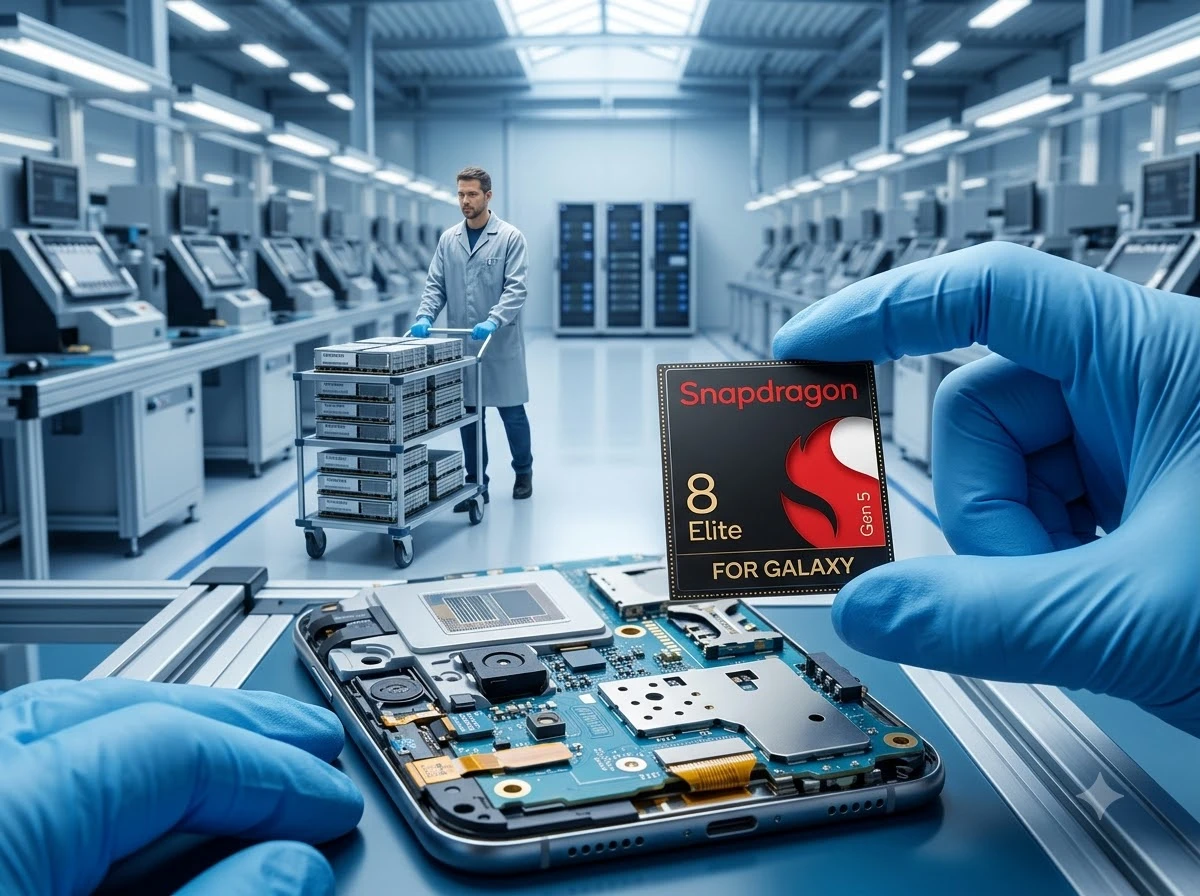
Qualcomm continues to expand the Snapdragon family itself. Work on a fourth Snapdragon 8 Elite Gen 5 variant points to an attempt to offer more price tiers even as base costs rise.
The Wider Price Wave Already Underway
Qualcomm’s notice sits inside a broader set of consumer-tech increases tied to the same memory shortage. Samsung has raised prices on parts of its foldable lineup. Google’s Pixel 11 is expected higher than its predecessor. Valve’s Steam Machine landed at $1,049 against an internal target near $750, with memory costs cited directly.
These are separate decisions by separate companies. Together they show the premium Android and broader consumer electronics market moving upward this year because AI infrastructure is claiming the memory supply that used to feed phones, laptops, consoles and headsets.
Phone makers face a narrow set of responses: raise retail prices, cut memory configurations, drop low-margin models, or accept thinner margins. Buyers are already responding by choosing last-year flagships or the cheaper edge of the premium band. That loop reduces unit demand for the newest Snapdragon parts and is exactly the dynamic Amon described on the call.
Margins Realign Only After September Shipments
Amon described the current gross-margin pressure as temporary and said price increases will realign margins to the operating model once they take effect. The earnings release echoes that the pricing changes come in gradually.
Devices already built or shipping before September 1 stay on old pricing. Everything that takes new silicon after that date carries the higher cost. For XR makers with limited alternatives the pass-through looks almost automatic. For phone OEMs the choice is retail price versus margin, against a buyer base already showing price sensitivity inside the premium segment.
Memory makers continue to prioritize HBM. Capacity expansions take years. Relief before 2028 is not visible in company comments from Micron, Intel or others. Qualcomm’s own non-handset targets accelerate in fiscal 2027 precisely because the handset side faces these structural headwinds.
The September 1 date is therefore less a single event than the moment the accumulated cost pressure becomes contractual for most of Qualcomm’s customers. Buyers who already prefer last year’s phone will find that preference reinforced. OEMs that cannot raise prices will feel the squeeze first. And the XR devices that have nowhere else to turn will carry the clearest stamp of the AI memory diversion that started the whole chain.


South Korea Retail Investors Face Reckoning After KOSPI AI Rally Collapses

Surrey AI Maps Three Heart Attack Paths and Their Molecular Roots

Germany Locks Neutral Apple ATT Prompts Across Most of Europe

Apple’s 5% EU Fee Quietly Rewrites Alternative App Store Math

Apple’s EU Fee Truce Cuts Complexity but Leaves Rivals Fuming

Pixel 11 Pro Fold Trades Thinness for Durability and Seven-Year Stay

Mayo AI Flags HCM Obstruction From Everyday Ultrasound Videos

Indian Brands Quietly Scale Landmark Screens and Home Tech

Navin Vatsa Turns Grief Into a Lifetime of Quiet Seeing

Google Bets Pixel 11 Agentic AI Will Redefine Phones

Oracle Cuts 21,000 Jobs in a Year, Cites AI in 10-K Filing

Fable 5 and Mythos 5 Return as US Lifts Anthropic Export Controls

SpaceX’s Google Deal Turns a Rocket Company Into a Cloud Landlord

CD Projekt Red Co-CEO: Redemption Arc Isn’t Done, Witcher 4 in 2027

XPL Rallies 30% Ahead of Plasma One Card Tier Launch

Google Search Profiles Build a Follow Graph Inside Discover

DGO App Brings Rs 549 Mobile Pass for FIFA World Cup 2026 in Nepal

Moonshot AI Targets $30 Billion in China’s Fastest AI Funding Sprint

Oppo’s ColorOS 17 Eligibility List Leaves A-Series Buyers Behind

Microsoft Xbox Layoffs Start in July as Sharma Slams 3% Margin
-
 AI2 months ago
Oracle Cuts 21,000 Jobs in a Year, Cites AI in 10-K Filing
-
 AI2 months ago
Fable 5 and Mythos 5 Return as US Lifts Anthropic Export Controls
-
 AI2 months ago
SpaceX’s Google Deal Turns a Rocket Company Into a Cloud Landlord
-
 GAMING2 months ago
CD Projekt Red Co-CEO: Redemption Arc Isn’t Done, Witcher 4 in 2027
-
 CRYPTO2 months ago
XPL Rallies 30% Ahead of Plasma One Card Tier Launch
-
 NEWS2 months ago
Google Search Profiles Build a Follow Graph Inside Discover
-
 APPS2 months ago
DGO App Brings Rs 549 Mobile Pass for FIFA World Cup 2026 in Nepal
-
 AI2 months ago
Moonshot AI Targets $30 Billion in China’s Fastest AI Funding Sprint