
NEWS
Qualcomm Preps a Fourth Snapdragon 8 Elite Gen 5 Chip
A fourth Snapdragon 8 Elite Gen 5 variant could power phones under CNY 4,000, reviving the same silicon-recycling playbook Qualcomm used with 2021’s Snapdragon 870.

Qualcomm is building a fourth version of its Snapdragon 8 Elite Gen 5 chip, aimed at phones costing under CNY 4,000, or roughly $590. Tipster Digital Chat Station detailed the plan on Weibo this week, giving it the model number SM8850-1-AB. It would become the fourth member of a chip family Qualcomm launched less than a year ago.
Qualcomm ran this exact play in 2021, when it stretched an aging flagship into budget phones as the Snapdragon 870. It is repeating the trick now largely because a historic DRAM shortage has made its true next-generation chip too expensive for the phones that need affordability most.
A Fourth Chip Joins an Already Crowded Family
Digital Chat Station has a long track record on Qualcomm’s chip roadmaps, and this claim followed the same pattern as past leaks. The tipster said benchmark scores on the new SM8850-1-AB should land close to the standard Snapdragon 8 Elite Gen 5, and that it keeps the same overall feature set.
Gadgets360’s own tests put that standard chip, running inside the OnePlus 15, at 3,622 points single core and 10,712 multi core on Geekbench. GSMArena separately confirmed the leak and converted the CNY 4,000 ceiling to about $590 at current exchange rates, or roughly Rs 57,000, which lands in India’s upper mid-range rather than its true budget segment.
Three versions of the chip already ship today. The SM8850-5-AC runs a seven-core CPU inside Oppo’s Find N6. The standard SM8850-AC uses an eight-core layout in the OnePlus 15 and iQOO 15. Samsung brands its own overclocked bin, the SM8850-1-AD, across the Galaxy S26 series and its newest foldables, including the Galaxy Z Fold 8’s leaked 201-gram frame, the Z Fold 8 Ultra and the Z Flip 8.
| Variant | Model Number | CPU Configuration | Known Devices |
|---|---|---|---|
| Seven-core bin | SM8850-5-AC | 7-core CPU | Oppo Find N6 |
| Standard flagship | SM8850-AC | 8-core CPU, up to 4.65GHz | OnePlus 15, iQOO 15 |
| Samsung’s overclocked bin | SM8850-1-AD | 8-core CPU, higher clocks | Galaxy S26 series, Z Fold 8, Z Fold 8 Ultra, Z Flip 8 |
| Rumored budget bin | SM8850-1-AB | 8-core CPU, near-standard scores | Unnamed phones under CNY 4,000 |
Qualcomm has done this kind of stretching before, and the last time it did, the chip got a name of its own.
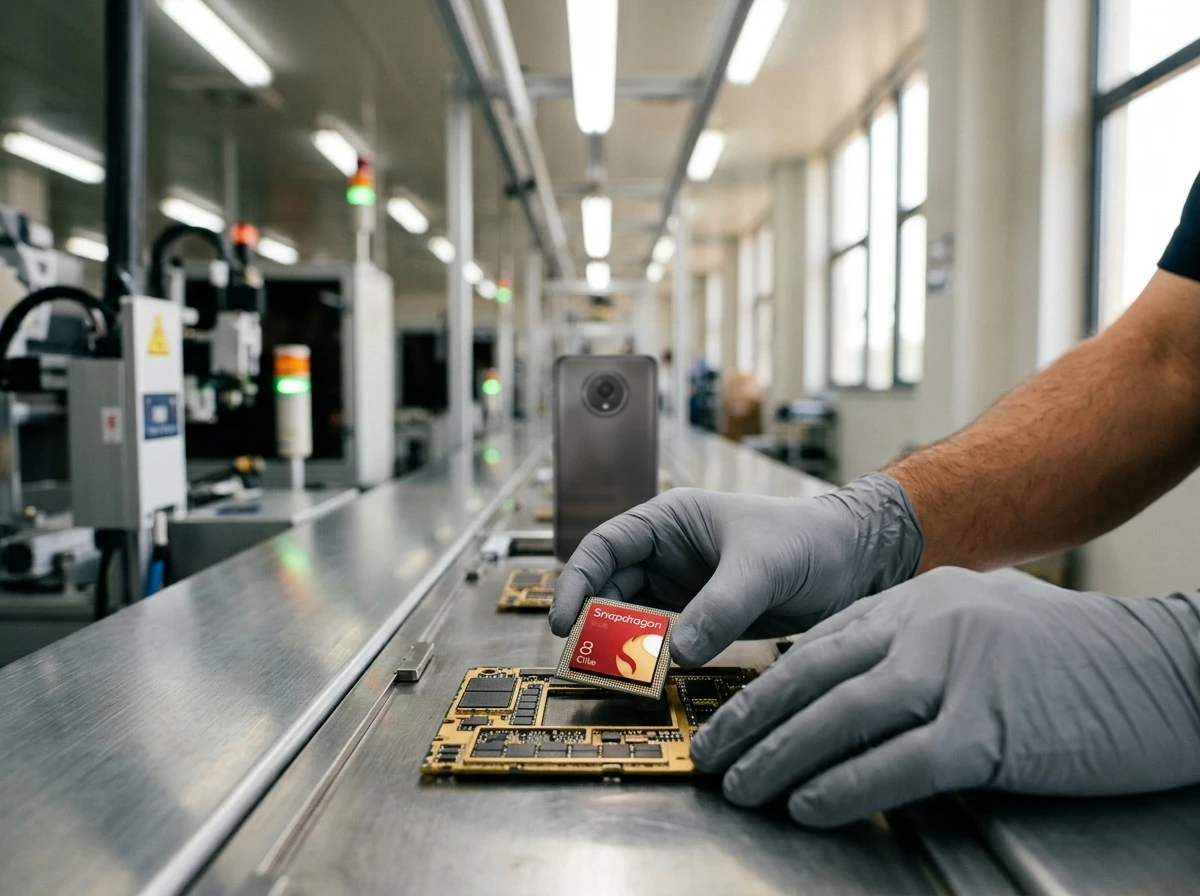
The Snapdragon 870 Playbook, Five Years Later
In January 2021, Qualcomm introduced the Snapdragon 870, which was really an overclocked Snapdragon 865 Plus wearing new branding. The chip bumped its prime CPU core to 3.2GHz, a small step up from the 865 Plus’s 3.1GHz and the original 865’s 2.84GHz.
Everything else carried over: the Adreno 650 GPU, the Hexagon 698 AI engine, the X55 modem. Qualcomm aimed the 870 at phones under $800, and Motorola, iQOO, OnePlus, Oppo and Xiaomi all built devices around it within months, led by the Motorola Edge S.
Building upon the success of Snapdragon 865 and 865 Plus, the new Snapdragon 870 was designed to address OEM and mobile industry requirements.
Kedar Kondap, Qualcomm’s vice president of product management, said that when the company unveiled the 870. The Snapdragon 8 Elite Gen 5’s fourth variant follows the identical logic: reuse silicon that is already proven and already paid for, rather than push every phone maker onto costlier new hardware.
A Memory Shortage Is Forcing Qualcomm’s Hand
The timing lines up with a memory crisis that has upended smartphone pricing all year. The Register reported that market watcher TrendForce expects DRAM prices to climb 50 percent or more in 2026, citing analyst Omdia’s estimate that memory now eats up close to 60 percent of the total bill of materials in sub-$400 phones.
- 50 percent or more: the overall DRAM price jump TrendForce forecast for 2026, as reported by The Register.
- 60 percent: the share of total bill of materials that memory now consumes in sub-$400 phones, according to Omdia.
- 78 to 83 percent: TrendForce’s projected quarter-over-quarter rise in LPDDR5X contract prices for the second quarter of 2026.
- 5 to 7 percent: the added bill-of-materials growth TrendForce expects across all of 2026, layered on top of 2025’s increases.
TrendForce’s own research backs that up. The firm said mobile LPDDR5X prices jumping 78 to 83 percent quarter over quarter would hit smartphone brands in the second quarter of 2026 alone, on top of a 58 to 63 percent jump in the first quarter.
The firm separately forecast in November that bill of materials growing 5 to 7 percent would push its 2026 global smartphone production outlook down to a 2 percent decline for the year, reversed from an earlier call for slight growth.
A 2nm Snapdragon 8 Elite Gen 6 needs pricier LPDDR6 memory right as that memory costs more than it ever has. Recycling a 3nm chip that already works with cheaper, more available LPDDR5X sidesteps that problem for OEMs entirely.
Who Wins and Who Loses in the China Chip Squeeze?
Counterpoint Research’s first-quarter 2026 count shows MediaTek and Qualcomm both losing overall chipset share as memory costs crush budget phone volumes, while Apple and Samsung’s own Exynos line gained ground because they control more of their supply chain. Smaller player Unisoc picked up scraps in Redmi’s cheapest 4G and 5G models.
MediaTek’s global chipset share fell from 38 percent in the first quarter of 2025 to 32 percent a year later, per Counterpoint Research data. Qualcomm slid too, from 27 percent to 23 percent, partly because Samsung’s late-launching Galaxy S26 spent less of the quarter on shelves and partly because some S26 models run Samsung’s own Exynos 2600 instead of Snapdragon.
- Apple gained the most room by controlling its own chip supply rather than buying memory at spot prices.
- Samsung leaned harder on in-house Exynos chips, including the Exynos 1680 and Exynos 1480, to dodge some of the same DRAM contracts.
- Unisoc picked up share in Redmi’s cheapest 4G and budget 5G phones, a niche Counterpoint flagged as still growing.
- MediaTek and Qualcomm’s own mid-range lines absorbed the worst of it, as entry-level Dimensity volumes and Snapdragon 4 and 6 series shipments both slipped.
MediaTek’s home turf in China tells a similar story. Its Dimensity chips are capturing a third of China’s premium chipset market, Counterpoint Research found, even as memory costs squeeze every tier below it. Qualcomm’s actual budget silicon, the a 77 percent GPU jump for 90fps gaming chip known as the Snapdragon 4 Gen 5, sits in that same downdraft.
Counterpoint senior analyst Soumen Mandal said the firm still expects the smartphone SoC market to deliver “double-digit revenue growth in 2026,” driven by premiumization and higher memory prices even as unit shipments fall.
A 2nm Successor Comes With a Steeper Price Tag
Qualcomm’s real next generation is still coming. Previous leaks describe the Snapdragon 8 Elite Gen 6 and a Gen 6 Pro sibling, both built on TSMC’s newer 2nm N2P process and using a 2+3+3 CPU core layout, a step up from the current chip’s third-generation Oryon design.
The Pro version, reportedly carrying the internal number SM8975, is expected to support LPDDR6 memory, UFS 5.0 storage and an Adreno 850 GPU with 18MB of graphics memory. The standard Gen 6, said to be SM8950, would keep LPDDR5x, UFS 4.1 and a smaller Adreno 845 GPU to hold the line on cost.
Leaks around the Gen 6 Pro suggest a real cost for that jump. Android Authority reported figures pegging the Gen 6 Pro at upwards of $300, a steep rise in bill-of-materials terms exactly as memory itself costs more than it ever has.
Some brands appear to be hedging already. Reports say Xiaomi’s next base model, the Xiaomi 18, may stick with a 3nm chip rather than pay the 2nm premium, at least for its standard variant.
OEMs Face a Fork Before the Snapdragon Summit
Qualcomm is expected to formally introduce the Gen 6 family at the Snapdragon Summit in September, the same event where it unveiled the current chip a year earlier.
That leaves phone makers with a real choice this fall. Pay more for a 2nm chip built around LPDDR6, or lean on a proven 3nm design that already runs on cheaper, more available memory. The rumored SM8850-1-AB exists for brands that pick the second path.
OnePlus and Oppo already appear to be hedging on where they sell their next flagships at all. Both are tipped to OnePlus 16 and Find X10 Ultra bypassing India, a market where a $300 chip premium would land hardest on price-sensitive buyers.
Frequently Asked Questions
Is the SM8850-1-AB the Same Chip as the Rumored Snapdragon 8 Gen 5?
No. The Snapdragon 8 Gen 5, tracked internally as SM8845, is a separate, lower tier chip Qualcomm has been developing since at least August 2025 for brands like Redmi, Realme and iQOO. Android Authority noted that Digital Chat Station’s own earlier reporting on the SM8845 does not fully square with this newer SM8850-1-AB leak.
What Will the Snapdragon 8 Elite Gen 6 Pro Cost?
Leaks point to a price upwards of $300 for the Gen 6 Pro, driven by its 2nm N2P manufacturing and LPDDR6 memory support. The standard Gen 6 is expected to cost less by keeping LPDDR5x and a smaller Adreno 845 GPU, though reports say it will not be inexpensive either.
Will Phones Actually Advertise the SM8850-1-AB by Name?
Unlikely. Qualcomm’s existing SM8850-5-AC and SM8850-1-AD variants both ship under the single Snapdragon 8 Elite Gen 5 name with no public reference to their internal model numbers. The Snapdragon 870 got its own distinct brand back in 2021; this generation’s budget bin has not, at least not yet.
When Could Qualcomm Confirm the New Chip?
Qualcomm has not commented publicly, and the claim currently rests on a single tipster’s Weibo post. The standard Snapdragon 8 Elite Gen 5 launched in September 2025, and with GSMArena and Android Authority both independently flagging the same SM8850-1-AB number this week, a phone launch built around it would likely arrive before the end of 2026.


Menlo’s keyboard-kill bet hits $2 billion with Wispr

OnePlus and Oppo hikes hand AI memory costs to Indian buyers

Bit Reactor bets studio future on Star Wars Zero Company

AI Price Cuts Tighten Power Demand and Rewrite Capacity Deals

Honor Robot Phone sale starts with a gimbal that cuts both ways

Ethereum’s price lag hides its growing role as finance infrastructure

Designkit turns product photos into e-commerce videos at scale

Germany Forces Neutral Apple ATT Prompts Across Most of Europe

Korea AI Job Shift Erases Youth Roles While Seniors Gain

Meta Faces States Over Child Safety Claims in Oakland Trial

Fable 5 and Mythos 5 Return as US Lifts Anthropic Export Controls

Oracle Cuts 21,000 Jobs in a Year, Cites AI in 10-K Filing

SpaceX’s Google Deal Turns a Rocket Company Into a Cloud Landlord

CD Projekt Red Co-CEO: Redemption Arc Isn’t Done, Witcher 4 in 2027

XPL Rallies 30% Ahead of Plasma One Card Tier Launch

Google Search Profiles Build a Follow Graph Inside Discover

DGO App Brings Rs 549 Mobile Pass for FIFA World Cup 2026 in Nepal

Moonshot AI Targets $30 Billion in China’s Fastest AI Funding Sprint

Oppo’s ColorOS 17 Eligibility List Leaves A-Series Buyers Behind

Microsoft Xbox Layoffs Start in July as Sharma Slams 3% Margin
-
 AI2 months ago
Fable 5 and Mythos 5 Return as US Lifts Anthropic Export Controls
-
 AI2 months ago
Oracle Cuts 21,000 Jobs in a Year, Cites AI in 10-K Filing
-
 AI2 months ago
SpaceX’s Google Deal Turns a Rocket Company Into a Cloud Landlord
-
 GAMING2 months ago
CD Projekt Red Co-CEO: Redemption Arc Isn’t Done, Witcher 4 in 2027
-
 CRYPTO2 months ago
XPL Rallies 30% Ahead of Plasma One Card Tier Launch
-
 NEWS2 months ago
Google Search Profiles Build a Follow Graph Inside Discover
-
 APPS2 months ago
DGO App Brings Rs 549 Mobile Pass for FIFA World Cup 2026 in Nepal
-
 AI2 months ago
Moonshot AI Targets $30 Billion in China’s Fastest AI Funding Sprint