
NEWS
Snapdragon 4 Gen 5 Lands With 77% GPU Jump, 90 FPS Budget Gaming

Seventy-seven percent. That’s how much faster the GPU runs inside Qualcomm’s new Snapdragon 4 Gen 5 compared with the chip it replaces, and it’s the single number that makes Thursday’s launch in New Delhi different from every other mid-cycle Snapdragon refresh of the past three years.
Qualcomm introduced the Snapdragon 6 Gen 5 and Snapdragon 4 Gen 5 Mobile Platforms on May 7, 2026, at the third edition of its Snapdragon for India event. Both run on a 4nm process. Both ship in commercial phones in the second half of 2026. But only one of them rewrites what a budget phone is allowed to do.
The 6 Gen 5 is the safe upgrade. The 4 Gen 5 is the chip that drops 90 FPS gaming, dual-active 5G, and a Release 17 modem into devices that will sell under Rs 15,000.
The Headline Numbers, And Which Of Them Actually Matter
Qualcomm’s slide deck listed two columns of percentage gains. Most coverage reprinted them straight. Strip the marketing layer off and the gap between the two chips becomes obvious: the 4 Gen 5 is doing more generational work than the 6 Gen 5 is.
The 6 Gen 5 lands a 21 percent GPU lift, 20 percent faster app launches, and 18 percent less screen stutter against the Snapdragon 6 Gen 4. Geekbench 6 single-core climbs from 994 to roughly 1,180, a 19 percent move, according to Nanoreview’s Snapdragon 6 Gen 5 specifications page. Useful, not transformational.
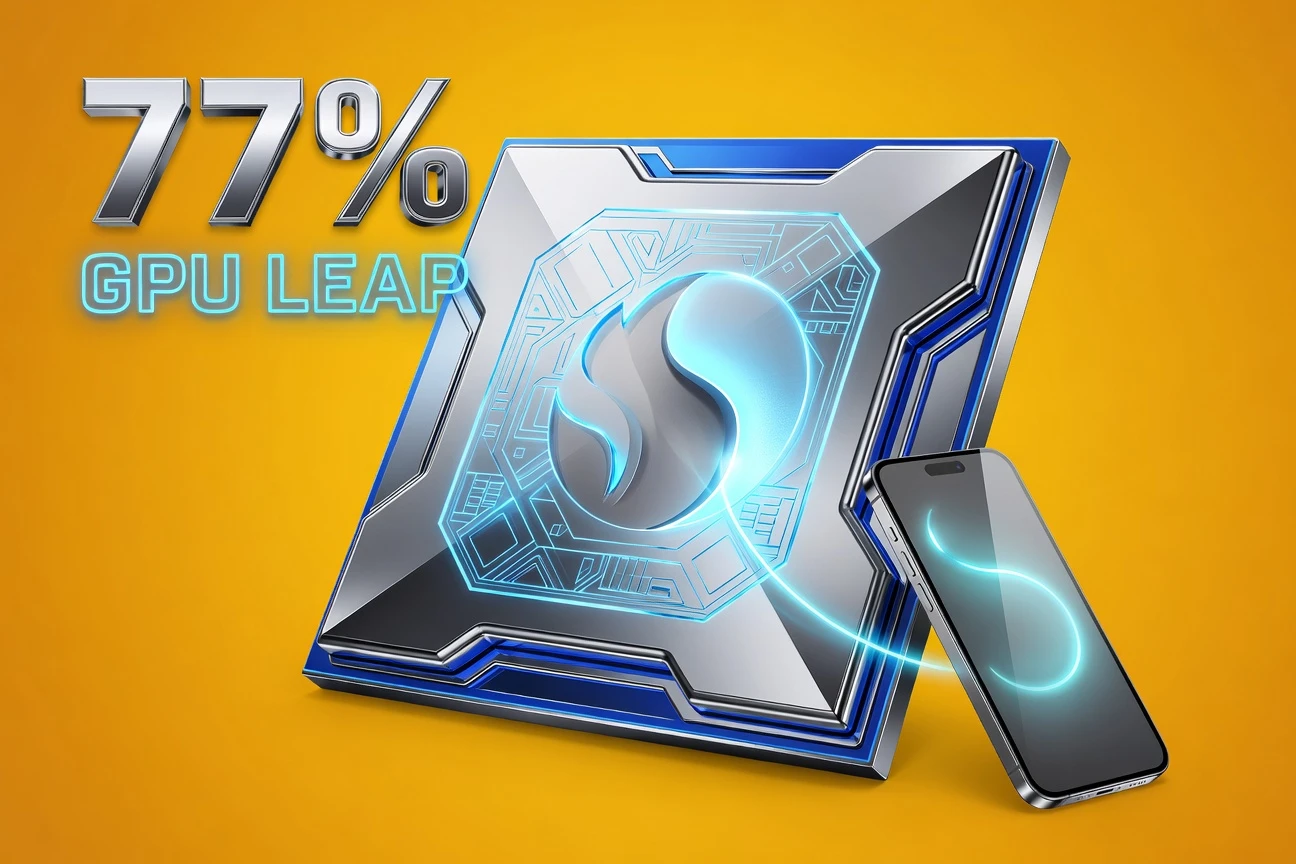
The 4 Gen 5 numbers are different. App launches run 43 percent faster. Screen stutter drops 25 percent. The Adreno GPU outperforms the Snapdragon 4 Gen 4 by 77 percent, the largest single-generation graphics jump in the 4-series since the line was rebranded from the 400-series in 2022, per VideoCardz’s reporting on the 77 percent Adreno claim.
Stats Snapshot: Snapdragon 4 Gen 5 Generational Leaps
- 77 percent faster Adreno GPU versus Snapdragon 4 Gen 4
- 43 percent faster app launches
- 25 percent reduction in screen stutter
- 10 percent better power efficiency, roughly one extra hour of streaming
- 90 FPS gaming, a Snapdragon 4-series first
The shape of those gains tells you where Qualcomm spent transistor budget. The 6 Gen 5 inherited a competent baseline and tuned it. The 4 Gen 5 was rebuilt from the floor up.
Snapdragon 6 Gen 5: A Mid-Range Chip Trying To Look Like A Flagship
The 6 Gen 5 is built around an octa-core Kryo CPU. Four Cortex-A720 performance cores hit 2.6 GHz. Four Cortex-A520 efficiency cores cap at 2.0 GHz. The new Adreno GPU adds Snapdragon Game Super Resolution and the Adaptive Performance Engine 4.0, which Qualcomm says delivers stable 120 FPS in Honor of Kings and 90 FPS in BGMI.
Camera support climbs to 200 megapixels, with triple 12-bit ISPs and 4K HDR video at 30 frames per second. Connectivity moves up to Wi-Fi 7 and Bluetooth 6.0 with Channel Sounding for high-precision device tracking. The 5G modem peaks at 2.8 Gbps download. LPDDR5 RAM runs at 3,200 MHz; storage is UFS 3.1.
Notice the trade-offs Qualcomm made to keep the bill of materials in check. The 6 Gen 5 drops mmWave 5G. It sticks with USB 2.0. The L2 GPS band is gone. These cuts barely matter to the target buyer, who lives in sub-6 GHz markets like India, Indonesia, and Brazil where the 6-series sells in volume.
Honor and Redmi are the launch partners. Both have phones in the pipeline for the second half of 2026, though neither has named models. Previous-generation 6 Gen 4 devices like the Oppo K13 and Motorola G95 retailed under Rs 25,000 in India, and the 6 Gen 5 should slot into the same bracket.
Camera Stack: Where The 200 MP Number Comes From
Qualcomm’s Spectra ISP on the 6 Gen 5 supports a single 64 MP sensor with Zero Shutter Lag, or a 200 MP sensor in still capture mode. AI-powered Night Vision and 100x AI Zoom round out the imaging suite. None of this is unique to the 6 Gen 5, but the price tier it brings them to is.
The earlier 6 Gen 4 supported up to 108 MP. The jump to 200 MP gives Honor and Redmi a marketing line for sub-Rs 25,000 phones that previously had to settle for 64 MP main sensors.
Snapdragon 4 Gen 5: The Chip That Closes The Gap
Qualcomm has spent the last four years trying to convince budget buyers that 4-series silicon is more than a placeholder. The 4 Gen 5 is the first chip in the line that backs the claim with hardware specs flagship buyers would recognize.
The CPU is unconventional for the tier: two performance cores at 2.4 GHz, six efficiency cores at 2.0 GHz, an arrangement closer to a flagship’s split than to traditional budget chips. The Adreno GPU’s 77 percent leap is what enables the 90 FPS support. Qualcomm bundles select Snapdragon Elite Gaming features, which until now were carved out as a 6-series and above privilege.
With Snapdragon 6 Gen 5 and Snapdragon 4 Gen 5, we’re expanding what users can expect from their smartphones, compelling experiences powered by robust performance and dependable battery life. This launch underscores our focus on delivering impactful solutions, with each platform intentionally designed to strike the right balance of performance, power efficiency and connectivity.
That’s Chenwei Yan, Senior Vice President of Product Management at Qualcomm Technologies, speaking at the Delhi event. The wording matters. Yan didn’t pitch the 4 Gen 5 as a budget chip. He pitched it as a balance.
Connectivity: Dual-Active 5G Is The Real Story
The 4 Gen 5’s modem supports Release 17 of the 3GPP standard, with peak speeds of 2.8 Gbps and Dual SIM Dual Active 5G + 5G/4G. DSDA matters in markets like India, where two-SIM users routinely keep one number on Jio and another on Airtel, both running 5G.
Until now, dual-active 5G on both SIMs simultaneously was a 6-series-and-up feature. Wi-Fi tops out at Wi-Fi 5, which is a real downgrade from the 6 Gen 5’s Wi-Fi 7. Bluetooth is 5.1 against the 6 Gen 5’s 6.0.
Camera And Storage: The Cuts
Camera support caps at 108 MP with dual 12-bit ISPs. Video tops out at 1080p dual capture at 30 FPS, well below the 6 Gen 5’s 4K HDR. RAM is LPDDR4x at up to 16 GB, not LPDDR5. Storage is UFS 3.1 2-Lane.
These are the cost concessions. Buyers picking up an OPPO, realme, or Redmi 4 Gen 5 device aren’t getting 4K video or Wi-Fi 7. They are getting 90 FPS gaming and dual-active 5G in a phone that should retail well under Rs 15,000, slots that previously meant settling for MediaTek Dimensity 6020 or Snapdragon 4 Gen 2 silicon.
Side By Side: How The Two Chips Stack Up
The spec sheet differences map directly to the price tiers Qualcomm is targeting. The 6 Gen 5 is for the Rs 18,000 to Rs 25,000 bracket. The 4 Gen 5 is for Rs 10,000 to Rs 15,000. Here’s how they compare on the specs that matter.
| Specification | Snapdragon 6 Gen 5 | Snapdragon 4 Gen 5 |
|---|---|---|
| Process | 4nm TSMC | 4nm |
| Performance Cores | 4 x 2.6 GHz | 2 x 2.4 GHz |
| Efficiency Cores | 4 x 2.0 GHz | 6 x 2.0 GHz |
| GPU Gain vs Predecessor | 21 percent | 77 percent |
| App Launch Improvement | 20 percent | 43 percent |
| Peak Camera | 200 MP | 108 MP |
| Video Capture | 4K HDR at 30 FPS | 1080p dual at 30 FPS |
| Display Refresh | FHD+ at 144 Hz | FHD+ at 144 Hz |
| Wi-Fi | Wi-Fi 7 | Wi-Fi 5 |
| Bluetooth | 6.0 | 5.1 |
| Max Gaming FPS | 120 | 90 |
| RAM | LPDDR5 at 3,200 MHz | LPDDR4x |
| Storage | UFS 3.1 | UFS 3.1 2-Lane |
The shared 4nm process and shared 144 Hz display ceiling are the bridge. Above them sit the camera stack, video, and connectivity – the differentiators Qualcomm uses to keep the tiers separated.
What Smooth Motion UI Actually Does
Both chips ship with Snapdragon Smooth Motion UI, a new Qualcomm software layer that the company says reduces lag during navigation and multitasking. The feature is doing the work behind the headline app-launch and stutter numbers.
Smooth Motion UI uses on-chip telemetry to predict which thread the user’s next touch will trigger and pre-allocates CPU cycles before the touch lands. It’s the same conceptual play Apple has run inside iOS scheduling since 2018, ported to Android-class silicon.
Whether the gains hold up outside Qualcomm’s reference benchmarks will depend on how OEM skins from Xiaomi, OPPO, and realme implement the API hooks. Past Qualcomm UI features, including the Adaptive Performance Engine, took two device generations to show up cleanly in shipping firmware.
The Phones, And Why H2 2026 Matters
Qualcomm confirmed the launch partners but didn’t name specific models. The Snapdragon 6 Gen 5 product page lists Honor and Redmi as commercial partners. The 4 Gen 5 lands first in OPPO, realme, and Redmi devices.
OPPO hinted at three models during the Delhi event: the Reno15 5G, the Reno15c 5G, and the F31 Pro+ 5G. Specs are unconfirmed. Xiaomi’s Vice President Jun Li, General Manager of the Smartphone Product Division, told the event audience the company would bring the new platforms to upcoming devices that enable smoother interactions, elevated performance, and dependable connectivity.
The H2 2026 window is the part worth flagging. Component supply has been volatile in 2026, and the 40 percent printed circuit board price spike following the April 2026 Saudi Arabia strike has already pushed several OEMs to delay handset launches. Qualcomm’s chip is ready. Whether the phones ship on time depends on the boards underneath them.
What Got Cut From The 6 Gen 5
Qualcomm trimmed three things from the 6 Gen 5 versus a flagship. The mmWave 5G stack is gone, which costs Verizon and AT&T users nothing in India but does close one upgrade door. USB-C runs at USB 2.0 speeds, capping wired transfer at around 480 Mbps. The L2 GPS band, used for higher-precision navigation, is also missing.
None of these cuts will matter to the target buyer. They do mean the 6 Gen 5 is locked out of any phone trying to compete with the OnePlus 13R or Pixel 9a on connectivity bragging rights.
The Bigger Picture: Qualcomm’s Volume Play
The 6 Gen 5 and 4 Gen 5 are India-first chips for a reason. The country added 35 million smartphone users in 2025 alone, and the sub-Rs 25,000 segment accounts for roughly 73 percent of unit sales, according to Counterpoint Research’s India smartphone market share data.
Qualcomm spent the last two years losing share in this bracket to MediaTek’s Dimensity 6300 and 7050, which paired competitive 5G modems with cheaper licensing. The 4 Gen 5’s 77 percent GPU jump and Release 17 dual-active 5G are the counter. The 6 Gen 5’s Wi-Fi 7 is the hedge for buyers who would otherwise upgrade to a Snapdragon 7-series device.
Frequently Asked Questions
When Will The First Snapdragon 6 Gen 5 Or 4 Gen 5 Phones Launch?
Qualcomm confirmed the second half of 2026, with no exact dates. The 6 Gen 5 ships first in Honor and Redmi devices. The 4 Gen 5 debuts in OPPO, realme, and Redmi phones. OPPO showed the Reno15 5G, Reno15c 5G, and F31 Pro+ 5G as candidates without specs. Expect launches between July and October 2026, barring component delays.
Is The Snapdragon 6 Gen 5 Better Than The Snapdragon 7s Gen 4?
No, the 7s Gen 4 still outperforms it on Geekbench multi-core and supports faster LPDDR5X memory. The 6 Gen 5 closes the gap on Wi-Fi 7 and 200 MP camera support, and it costs OEMs roughly 18 percent less per chip. If you are spending over Rs 25,000, the 7s Gen 4 remains the better silicon. Below that, the 6 Gen 5 is the upgrade.
Will Snapdragon 4 Gen 5 Phones Run PUBG Or BGMI At 90 FPS?
Yes, in supported titles, but only after game developers ship the patches that unlock the higher frame rate on 4-series silicon. BGMI currently caps at 60 FPS on most budget chips. Krafton has not published a timeline for 4 Gen 5 support. Expect a patch within three months of the first 4 Gen 5 phone shipping, based on how the studio handled the 6 Gen 4 rollout.
Does The Snapdragon 4 Gen 5 Support Wi-Fi 7?
No, the 4 Gen 5 caps at Wi-Fi 5 and Bluetooth 5.1. Only the 6 Gen 5 adds Wi-Fi 7 and Bluetooth 6.0 in this launch. If Wi-Fi 7 is a requirement, you need a 6 Gen 5 device or a Snapdragon 7-series phone. Most home routers in India still run Wi-Fi 6 or older, so the practical impact is limited for now.
How Does The Snapdragon 4 Gen 5’s Dual-Active 5G Work?
Dual SIM Dual Active 5G means both SIM slots can register on 5G networks at the same time, instead of one slot dropping to 4G when the other is on a 5G call or data session. For a Jio plus Airtel user in India, that’s the first time a sub-Rs 15,000 phone keeps both connections live. The feature requires Release 17 modem support, which the 4 Gen 5 includes.
The 6 Gen 5 is a competent generational refresh. The 4 Gen 5 is the chip that quietly resets what budget Android gets to do. When the first OPPO and Redmi phones ship in the back half of 2026, the gap between Rs 12,000 silicon and Rs 25,000 silicon will be smaller than it has been in five years. That’s the launch worth watching.


South Korea Retail Investors Face Reckoning After KOSPI AI Rally Collapses

Surrey AI Maps Three Heart Attack Paths and Their Molecular Roots

Germany Locks Neutral Apple ATT Prompts Across Most of Europe

Apple’s 5% EU Fee Quietly Rewrites Alternative App Store Math

Apple’s EU Fee Truce Cuts Complexity but Leaves Rivals Fuming

Pixel 11 Pro Fold Trades Thinness for Durability and Seven-Year Stay

Mayo AI Flags HCM Obstruction From Everyday Ultrasound Videos

Indian Brands Quietly Scale Landmark Screens and Home Tech

Navin Vatsa Turns Grief Into a Lifetime of Quiet Seeing

Google Bets Pixel 11 Agentic AI Will Redefine Phones

Oracle Cuts 21,000 Jobs in a Year, Cites AI in 10-K Filing

Fable 5 and Mythos 5 Return as US Lifts Anthropic Export Controls

SpaceX’s Google Deal Turns a Rocket Company Into a Cloud Landlord

CD Projekt Red Co-CEO: Redemption Arc Isn’t Done, Witcher 4 in 2027

XPL Rallies 30% Ahead of Plasma One Card Tier Launch

Google Search Profiles Build a Follow Graph Inside Discover

DGO App Brings Rs 549 Mobile Pass for FIFA World Cup 2026 in Nepal

Moonshot AI Targets $30 Billion in China’s Fastest AI Funding Sprint

Oppo’s ColorOS 17 Eligibility List Leaves A-Series Buyers Behind

Microsoft Xbox Layoffs Start in July as Sharma Slams 3% Margin
-
 AI2 months ago
Oracle Cuts 21,000 Jobs in a Year, Cites AI in 10-K Filing
-
 AI2 months ago
Fable 5 and Mythos 5 Return as US Lifts Anthropic Export Controls
-
 AI2 months ago
SpaceX’s Google Deal Turns a Rocket Company Into a Cloud Landlord
-
 GAMING2 months ago
CD Projekt Red Co-CEO: Redemption Arc Isn’t Done, Witcher 4 in 2027
-
 CRYPTO2 months ago
XPL Rallies 30% Ahead of Plasma One Card Tier Launch
-
 NEWS2 months ago
Google Search Profiles Build a Follow Graph Inside Discover
-
 APPS2 months ago
DGO App Brings Rs 549 Mobile Pass for FIFA World Cup 2026 in Nepal
-
 AI2 months ago
Moonshot AI Targets $30 Billion in China’s Fastest AI Funding Sprint