
AI
Citadel Clears AI Fund Overhang While Crypto Stays Flat
Citadel took the forced public book of Leopold Aschenbrenner’s leveraged AI fund; equities rebounded on the overhang clear while Bitcoin held near $64,000.

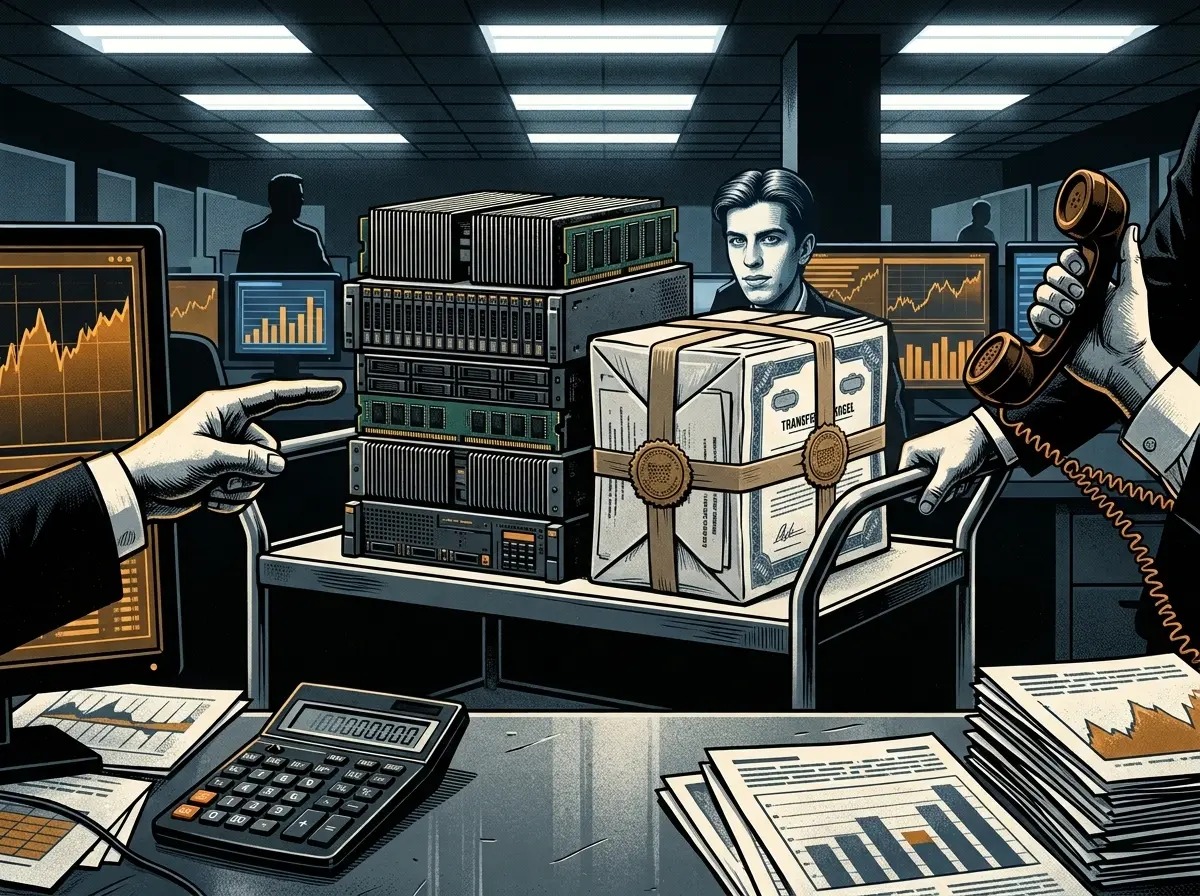
Citadel agreed to buy the entire public equity portfolio of Situational Awareness LP on July 30 after the AI-focused fund hit margin calls on roughly four times leverage. Nasdaq rose 3.30% that session while Bitcoin held near $64,155 and the total crypto market cap stayed around $2.25 trillion.
The rebound cleared a visible forced seller from a concentrated book. It did not rewrite the July fundamentals that hammered the names.
Citadel Takes the Whole Public Book
Leopold Aschenbrenner, the former OpenAI researcher who founded Situational Awareness LP in late 2024, saw his public long-and-short book transferred in one block trade before Thursday’s open. CNBC’s David Faber first reported the full public equities exit. The Wall Street Journal later identified Citadel as the buyer.
Prime brokers Goldman Sachs, JPMorgan and Bank of America had issued margin calls. Every alternative path closed before the block crossed:
- Talks with lenders produced no workable extension.
- A capital-raise letter to investors sought fresh money by August 1 and did not fill.
- Approaches to Millennium Management and Jane Street Group failed to yield a bid.
Citadel stepped in for the leveraged public portion. The sequence left little room for a slower resolution once maintenance thresholds were breached.
- July 24, 2026: Investor letter frames the drawdown as an attractive entry and seeks fresh capital by August 1.
- Late July: Core holdings fall 35-47% for the month; SOX index is already down 28.6% from its June 22 peak.
- July 29-30: Book marketed; Citadel completes the single-block purchase of the public equities.
- July 30 open: Affected AI infrastructure names rebound sharply; Nasdaq closes +3.30%.
The fund retained its private holdings, including a stake in Anthropic reported near $5 billion. Residual AUM after the transfer sat around $10 billion according to later tallies. That split between a transferred public sleeve and a retained private book shaped everything that followed on the tape.
How a 439 Percent Run Met Four Times Leverage
Situational Awareness returned 439% net through June 30, per an investor letter reviewed by the Financial Times. It had grown from roughly $225 million at launch to an estimated $20-24 billion AUM, with some peak estimates near $45 billion including leverage.
Gross exposure ran as high as 4x. At that multiple a 25% drop in the underlying book erases the equity contribution before shorts or hedges are counted. July delivered worse. Longs in second-derivative AI infrastructure fell hard. Software shorts, including Adobe, moved against the fund at the same time. The result was a classic double squeeze.
- 439% net return H1 2026 after fees
- ~4x reported gross leverage
- 35-47% July declines in core long holdings
- Top five positions more than 76% of the disclosed long book
| Factor | H1 Setup | July Outcome |
|---|---|---|
| Net performance | 439% through June 30 | Core longs down 35-47% |
| Gross leverage | As high as 4x | Margin calls from three primes |
| Book shape | Top five over 76% of longs | Correlated break across the complex |
| AUM path | $225m launch to $20-24bn | Public sleeve transferred; residual ~$10bn |
Prime brokers do not wait for zero equity. Maintenance thresholds triggered calls. The fund had exhausted other options. The same concentration that produced the 439% run left almost no buffer once the AI infrastructure complex moved as one.
The Positions That Defined the Thesis
Aschenbrenner’s public book expressed the physical-layer bottlenecks of large-scale AI: power, storage, GPU cloud and miner-turned-HPC names. The disclosed Q1 concentrated positions as of March 31 showed a $3.86 billion long book across 26 names.
| Position | Theme | % of 13F Book |
|---|---|---|
| Bloom Energy (BE) | Power | 22.8% |
| SanDisk (SNDK) | Storage / memory | 18.8% |
| CoreWeave (CRWV) | GPU cloud | 14.4% |
| IREN | Miner-turned-HPC | 10.4% |
| Core Scientific (CORZ) | Miner-turned-HPC | 10.1% |
Reporting added large stakes built after the filing date in SK Hynix and Nebius Group, plus put exposure of roughly $2 billion notional on the SMH semiconductor ETF and $1.6 billion on Nvidia. Software shorts rounded out the other side. The thesis tracked the same physical bottlenecks laid out in Aschenbrenner’s own 2024 Situational Awareness essay on AGI timelines.
Float ownership reached 8.2% of Core Scientific and 4-5% in several other names. Concentration amplified both the earlier gains and the July damage. SpotGamma’s anatomy of the margin-call unwind notes the book behaved like a correlated long-volatility package once the AI infrastructure complex broke.
Five names carried more than three-quarters of the disclosed long book. When power, storage, GPU cloud and miner-HPC sold off together, the portfolio had no internal offset large enough to slow the drawdown. The hedges on SMH and Nvidia and the software shorts were meant to balance the thesis. In July those shorts moved the wrong way at the same time the longs broke, tightening the squeeze rather than relieving it.
Stocks Snap Back Once the Seller Is Gone
Once the block crossed, the tape reversed. Bloom Energy, Nebius, IREN, SanDisk and CoreWeave posted large gains on July 30. Some tallies put individual moves in the 15-29% range. The Philadelphia Semiconductor Index rebounded sharply. The Nasdaq’s 3.30% advance reflected relief that a highly visible forced seller had exited.
A piecemeal liquidation of positions this size, including an 8% float stake, would have meant days of price-insensitive supply. A single buyer with deep risk capacity largely neutralized that flow. Citadel could warehouse, hedge or work out of the names on its own schedule. Traders on X immediately framed the news as “the unwind is over.”
That reading is technical, not fundamental. The July sell-off itself was likely amplified by the same fund’s earlier reductions. Removing the overhang does not automatically restore the prior multiple on AI infrastructure spending or reverse higher capital costs. Parallel pressure had already shown up in Korean names; the SK Hynix and Samsung volatility record earlier in the cycle illustrated how quickly concentration and local leverage can feed each other.
The session’s bounce measured the size of the forced flow more than it measured a change in AI spending plans. Dealers and other holders could reprice once the known seller was gone. The underlying questions on power demand, memory pricing and GPU cloud returns stayed open after the close.
Bitcoin Holds Steady Near Sixty-Four Thousand
Crypto markets watched from a distance. Bitcoin traded around $64,155, essentially flat on the day and down 1.60% over the prior week. Ether sat near $1,900. Total market capitalization held near $2.25 trillion.
Several of the AI infrastructure names that sold off carry dual exposure:
- Core Scientific and TeraWulf run significant crypto mining operations alongside GPU or HPC capacity.
- IREN, Riot, CleanSpark, Bitdeer and HIVE sit in the same miner-to-datacenter transition cohort that appeared in the fund’s book.
- Their equity performance links both AI compute demand and bitcoin hashprice economics.
When AI infrastructure sold off in July those mining stocks sold off too. The correlation runs through shared macro variables: dollar rates, risk appetite and the cost of capital for long-duration growth assets. It is not a direct causal chain from Aschenbrenner’s book to bitcoin spot.
Crypto simply lacked an equivalent single concentrated margin-call event that could reverse in one session. Positions are more diffuse. Markets trade continuously. Information about the block sale did not produce the same mechanical squeeze relief.
Why Equities Cleared Faster Than Crypto
Thursday’s split was a market-structure story. Equities concentrate financing through a handful of prime brokers who can force simultaneous reductions. A single large long-only thematic book at 4x creates a visible overhang that, once removed, lets dealers and other holders reprice immediately. Crypto’s holder base is broader, its leverage more fragmented across perpetual futures and lending desks, and its trading never stops. Overhangs dissipate differently.
Both asset classes were repricing the same macro inputs. The speed of the equity snap-back after the Citadel transfer shows how much of the prior dislocation was flow-driven rather than a clean fundamental re-rating. Crypto’s composure may reflect slower diffusion of the equity-specific news or a genuine reduction in shared beta. As of the session close the question stayed open.
Investors had already been rotating. The same risk-off impulse that hit concentrated AI infrastructure helped power a Wall Street rotation away from pure AI names into other large-cap technology.
Miner Names Tie Compute Demand to Hashprice
The fund’s public book put miner-turned-HPC equities near the center of the thesis. IREN and Core Scientific alone were more than 20% of the disclosed 13F long book. Those names do not price pure AI demand. They price a blend of GPU and HPC contracts on one side and bitcoin mining economics on the other.
That blend matters for how the July break and the July 30 rebound transmitted. When AI infrastructure sold off, the miner cohort sold off with it. Shared macro inputs (rates, risk appetite, cost of capital) moved both sleeves. The fund’s concentrated ownership, including 8.2% of Core Scientific’s float, added a mechanical channel on top of the macro link.
Bitcoin itself held near $64,155 with the broader crypto market near $2.25 trillion. Spot crypto had no single prime-broker margin call and no block-trade relief print. The equities tied to both stories did. The divergence on July 30 underscored that the forced seller was an equity-market event with only indirect reach into continuous crypto markets.
For holders of the dual-exposure names, the Citadel transfer removed one source of price-insensitive supply. It did not rewrite hashprice, power costs or the pace of HPC contract wins. Those drivers still set the medium-term path even after the overhang cleared.
What the Failed Raise Revealed About Timing
The July 24 investor letter framed the drawdown as an entry point and set an August 1 capital deadline. By then the SOX index was already down 28.6% from its June 22 peak, and core holdings were deep into 35-47% monthly declines. The letter bought days, not a solution.
Lenders, outside multi-strategy firms and the existing investor base all passed in the same window. That pattern usually means the book’s mark-to-market path and the concentration profile outweighed the long-horizon AGI thesis for anyone writing a check on short notice. Citadel’s bid arrived as a portfolio purchase, not as fund capital. It solved the prime brokers’ exposure problem without restoring the vehicle’s public-market AUM.
Early investors who entered near the $225 million launch still held large multiple gains on paper through the private residual. Capital that arrived near the $20-24 billion estimates, or near peak figures that included leverage, absorbed the public-sleeve damage at far worse levels. The raise’s failure froze that split in place: the private book survived, the public book left, and the fund’s headline AUM stepped down to the residual tallies near $10 billion.
The Private Book That Survived
Situational Awareness is not liquidated. The public equities are gone. The private portfolio, anchored by the Anthropic stake and other unlisted AI infrastructure and model bets, remains. Early investors who entered near the $225 million start still sit on large multiple returns even after the July damage. Later capital that arrived near peak AUM faces steeper losses on the public sleeve.
Citadel acquires distressed thematic books when the price is right; it has done versions of this before. The fund that preached long-horizon awareness of AGI scaling discovered that four-times leverage on a 76% top-five book leaves no room for a 30%+ correlated drawdown. The second-order effect landed in the market plumbing: equities could clear the forced flow in hours, crypto could not, and the divergence itself became the signal.
Whether the AI infrastructure complex has found a durable floor or merely lost one seller is the next test. The private residual gives Aschenbrenner time. The public tape no longer has his overhang.


Lunit Turns Routine H&E Slides Into a Lung Pre-Screen

Meta’s Muse Agent Wants Your Inbox and Your Card

Police Chase Mules as AI Chatbots Run Romance Scams

Ticketmaster’s Personalized App Is Built to Move Empty Seats

Software Deals Now Hinge on Filing Accuracy, Not Beats

Iowa Counties Warn Workers That ChatGPT Keeps Their Files

Shaalan Beg’s Oncology AI Hits an Enrollment Wall

Exowatt Warns Gas-Fired AI Campuses May Not Last a Decade

Philips Splits Innovation and Hands AI to Partovi

Chrome 153 Puts the Whole Web on a Two-Week Clock

Oracle Cuts 21,000 Jobs in a Year, Cites AI in 10-K Filing

Fable 5 and Mythos 5 Return as US Lifts Anthropic Export Controls

SpaceX’s Google Deal Turns a Rocket Company Into a Cloud Landlord

CD Projekt Red Co-CEO: Redemption Arc Isn’t Done, Witcher 4 in 2027

XPL Rallies 30% Ahead of Plasma One Card Tier Launch

Google Search Profiles Build a Follow Graph Inside Discover

DGO App Brings Rs 549 Mobile Pass for FIFA World Cup 2026 in Nepal

Moonshot AI Targets $30 Billion in China’s Fastest AI Funding Sprint

Oppo’s ColorOS 17 Eligibility List Leaves A-Series Buyers Behind

Microsoft Xbox Layoffs Start in July as Sharma Slams 3% Margin
-
 AI3 months ago
Oracle Cuts 21,000 Jobs in a Year, Cites AI in 10-K Filing
-
 AI2 months ago
Fable 5 and Mythos 5 Return as US Lifts Anthropic Export Controls
-
 AI3 months ago
SpaceX’s Google Deal Turns a Rocket Company Into a Cloud Landlord
-
 GAMING3 months ago
CD Projekt Red Co-CEO: Redemption Arc Isn’t Done, Witcher 4 in 2027
-
 CRYPTO3 months ago
XPL Rallies 30% Ahead of Plasma One Card Tier Launch
-
 NEWS3 months ago
Google Search Profiles Build a Follow Graph Inside Discover
-
 APPS3 months ago
DGO App Brings Rs 549 Mobile Pass for FIFA World Cup 2026 in Nepal
-
 AI3 months ago
Moonshot AI Targets $30 Billion in China’s Fastest AI Funding Sprint