
GADGETS
Apple’s Record Quarter Meets the AI Chip Crunch Head-On
Strong iPhone and Mac sales delivered Apple’s best June quarter, yet the same AI demand wave forced price hikes and tighter guidance that hit the stock.

Apple reported fiscal third-quarter revenue of $109.4 billion, up 16 percent year over year, and diluted earnings per share of $2.02, clearing Wall Street’s roughly $109 billion consensus on the back of record iPhone and Mac sales. The June quarter set company records for total revenue, EPS, iPhone, Mac and Services.
The same AI-driven demand that filled those records also produced the memory-chip shortage that forced Mac and iPad price increases last month and is now limiting supply, producing softer September-quarter guidance and an after-hours stock drop even as Tim Cook closed his final earnings call as CEO.
The Numbers Behind the Record June
Apple’s official results for the quarter ended June 27, 2026, showed products at $78.7 billion and Services at $30.7 billion. Gross margin hit 50.1 percent, helped by roughly two percentage points from tariff refunds that also added about $0.11 to EPS. Net income reached $29.8 billion. Operating cash flow set a June record.
Geographic growth was broad: Europe and Greater China each rose more than 22 percent, Americas 11 percent, Japan 13 percent. The installed base of active devices climbed past 2.5 billion, a new high across categories.
| Category | Q3 2026 Revenue | YoY Change |
|---|---|---|
| iPhone | $54.3 billion | +21.7% |
| Mac | $10.4 billion | +28.7% |
| Services | $30.7 billion | +12% |
| Wearables, Home & Accessories | $7.9 billion | +6.5% |
| iPad | $6.2 billion | -5.9% |
| Total | $109.4 billion | +16% |
Apple called the period its strongest June quarter ever, with double-digit gains in every geographic segment.
iPhone and Mac Carried the Beat
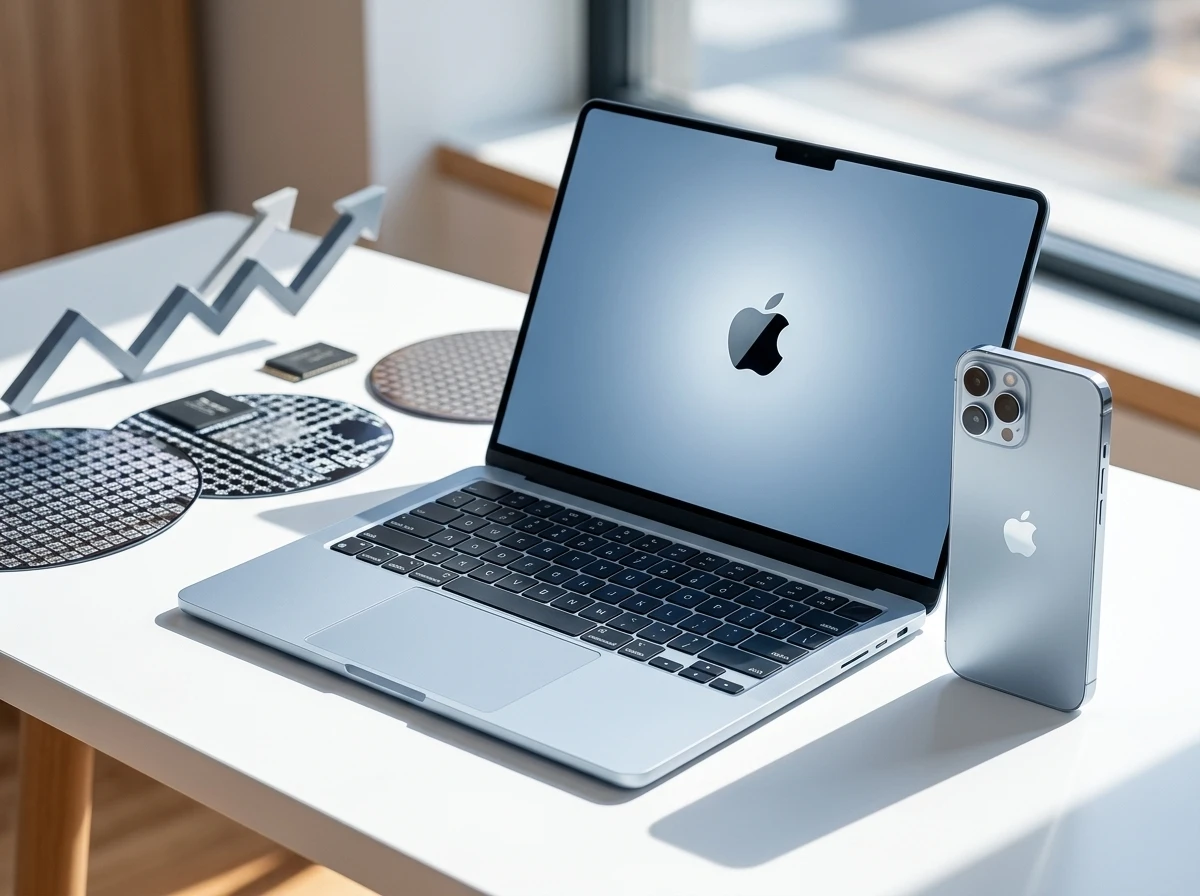
iPhone revenue reached $54.3 billion, a June-quarter record in every region and a high for upgraders. Management said it was the most popular lineup ever and that Apple gained global share per IDC data. iPhone was the top seller in the US, urban China, UK, France, Australia and Japan.
Mac revenue hit $10.4 billion despite “significant supply constraints.” Growth came from MacBook Pro and the new MacBook Neo, which drew strong reception for design and value. Mac set June records in developed markets and all-time highs in emerging ones, with particular strength in Greater China. More than half of MacBook Neo education purchases in the US replaced Windows or Chromebook devices.
- iPhone: June record across geographies, record upgraders, share gains.
- Mac: Best June ever, best quarter for new-to-Mac customers and upgraders.
- Services: 12th straight double-digit growth quarter despite FX headwinds.
- Install base: New all-time high above 2.5 billion devices.
Wearables rose modestly. iPad was the lone decline, facing a tough compare, though more than half of buyers were new to the product.
Where the AI Boom Exacted Its Price
Last month Apple raised Mac and iPad prices, citing a memory-chip shortage fueled by the AI boom. It had earlier described the demand spike as an “unprecedented challenge” for the industry. Entry-level MacBook Neo moved to $699 from $599; other MacBook and iPad configurations rose by $100 to several hundred dollars. iPhone prices stayed put for now, though analysts expect increases later.
Those MacBook price hikes from the chip squeeze landed just as the strong product cycle was delivering the Q3 records. On the call, executives repeatedly tied supply limits to demand that exceeded expectations rather than supplier shortfalls. R&D spending jumped as the company poured money into AI silicon and features.
The irony is direct: the AI capabilities Apple is promoting in Siri, Apple Intelligence and its Mac silicon are the same forces bidding up the memory and storage chips that constrain how many devices it can ship and at what cost. Memory suppliers seeing raised targets illustrate the other side of the same squeeze.
Today, Apple is proud to report our strongest June quarter ever, with double-digit revenue growth across iPhone, Mac and Services, and in every geographic segment.
Tim Cook said that in the prepared remarks, while also highlighting the new Siri AI unveiled at WWDC26 and strong early user feedback.
Cook’s Final Call and the Ternus Hand-Off
This was Tim Cook’s last quarterly earnings call as CEO. John Ternus, the longtime hardware chief who championed the MacBook Neo, is set to take the CEO role on September 1, with Cook moving to executive chairman. Ternus joined the call for the first time in that capacity.
Cook thanked long-term shareholders and analysts, then expressed full confidence in Ternus and the team. “I couldn’t be more excited to watch our phenomenal story of innovation continue to unfold, and I’ve never been more confident that the best is yet to come,” he said. The transition arrives at the peak of a product cycle that Ternus’s hardware choices helped create.
Apple also pointed to US investments: a Broadcom deal expected to exceed $30 billion in US spending for custom silicon and wireless, plus Mac mini production at the Advanced Manufacturing Center in Houston, funded in part by reinvesting tariff refunds.
Softer Guidance Met a Swift Market Reaction
For the September quarter Apple guided total revenue growth of 9 to 11 percent year over year. That includes an expected 2.5-point sequential FX headwind and “significant” supply constraints on iPhone, Mac and iPad. iPhone growth is still expected in the mid-teens. Gross margin is pegged at 47 to 48 percent, including about one point from remaining tariff refunds. Operating expenses are seen at $19.1 to $19.4 billion.
Shares, already down about 1.4 percent in regular trading, fell further in after-hours action, with some tallies showing declines of 4 to 7 percent as investors focused on the deceleration and constraints. Services also drew notes of a modest miss versus some estimates even while setting a June record. An earlier Apple stock high on AI rotation left less room for anything short of perfect forward numbers.
On X and in analyst chatter the framing was consistent: the company whose biggest near-term problem is demand outrunning supply still got punished because the market had priced continuous acceleration. Cook’s insistence that constraints stem from “very high levels of demand” and an “incredibly strong” product cycle did not reverse the tape.
What the Demand Tax Leaves in Place
Apple exits Cook’s CEO tenure with record June results, a massive installed base, double-digit Services growth, and clear momentum in AI-ready hardware. The MacBook Neo and current iPhone lineup proved the cycle has legs. Tariff refunds provided a one-time margin boost that will fade.
The memory shortage and resulting price and supply pressure are the visible cost of the same AI wave Apple is riding. September guidance already bakes in those limits. Ternus inherits both the strongest recent product momentum and the practical task of navigating constrained components while rolling out deeper Siri AI features that customers and Wall Street will judge quickly.
The quarter proved demand is real. The reaction proved that, for now, the market will treat that demand’s side effects as the larger story.


Workers Still Trust Judgment Over the AI Tools They Use

DigitalOcean’s $894 Million Backlog Rewrites the Old Cloud

Companies Froze Job Design and Called AI a People Problem

AI Capex Looks Unique Because the Chips Wear Out

Samsung Medison’s HERA Z10 Aims at the Sonographer Shortage

GPT-6 Astra Ships as OpenAI’s First Critical Cyber Model

Palms Sells Clean Air Without Ending Casino Smoking

OnlyFans Promo Bots on X Now Pass the Humanity Tests

Datamaran Drops the ESG Label After Winning the Argument

Xiaomi’s Own Chip Lands While Apple Argues Over Color

Oracle Cuts 21,000 Jobs in a Year, Cites AI in 10-K Filing

Fable 5 and Mythos 5 Return as US Lifts Anthropic Export Controls

SpaceX’s Google Deal Turns a Rocket Company Into a Cloud Landlord

CD Projekt Red Co-CEO: Redemption Arc Isn’t Done, Witcher 4 in 2027

XPL Rallies 30% Ahead of Plasma One Card Tier Launch

Google Search Profiles Build a Follow Graph Inside Discover

DGO App Brings Rs 549 Mobile Pass for FIFA World Cup 2026 in Nepal

Moonshot AI Targets $30 Billion in China’s Fastest AI Funding Sprint

Oppo’s ColorOS 17 Eligibility List Leaves A-Series Buyers Behind

Microsoft Xbox Layoffs Start in July as Sharma Slams 3% Margin
-
 AI3 months ago
Oracle Cuts 21,000 Jobs in a Year, Cites AI in 10-K Filing
-
 AI2 months ago
Fable 5 and Mythos 5 Return as US Lifts Anthropic Export Controls
-
 AI3 months ago
SpaceX’s Google Deal Turns a Rocket Company Into a Cloud Landlord
-
 GAMING3 months ago
CD Projekt Red Co-CEO: Redemption Arc Isn’t Done, Witcher 4 in 2027
-
 CRYPTO3 months ago
XPL Rallies 30% Ahead of Plasma One Card Tier Launch
-
 NEWS3 months ago
Google Search Profiles Build a Follow Graph Inside Discover
-
 APPS3 months ago
DGO App Brings Rs 549 Mobile Pass for FIFA World Cup 2026 in Nepal
-
 AI3 months ago
Moonshot AI Targets $30 Billion in China’s Fastest AI Funding Sprint