
NEWS
Huawei’s Active Cooling Plan Could Quietly Reset Mid-Range Phones
A Weibo leak says Huawei will move MEMS fan cooling from Mate 90 flagships into cheaper phones next year.

Huawei is preparing to move active cooling technology from its top flagships into mid-range phones, according to a fresh Weibo leak, potentially starting after the Mate 90 series and reaching cheaper models next year. Leaker @SmartPikachu said the company could expand the hardware beyond premium handsets for the first time in a meaningful way.
The accuracy remains unconfirmed, yet the direction fits a clear pattern. Huawei already shipped a built-in fan on the Mate 80 Pro Max Wind Edition. Mate 90 is tipped for a thinner MEMS version. Mid-range buyers who game, shoot video or run on-device AI would feel the difference most.
What Active Cooling Changes
Passive systems still dominate most phones. Vapor chambers, graphite sheets and graphene layers soak up heat and spread it across the chassis. They work until the load stays high. Then the chip throttles to protect itself and your hand.
Active cooling adds moving parts that force heat out. A tiny fan or micro-pump creates airflow instead of relying on conduction alone. The phone stays cooler longer under gaming, 4K recording or heavy multitasking.
Huawei’s mid-range lineup has stuck with passive parts until now. An upgrade would let those chips hold peak clocks farther into a long session.
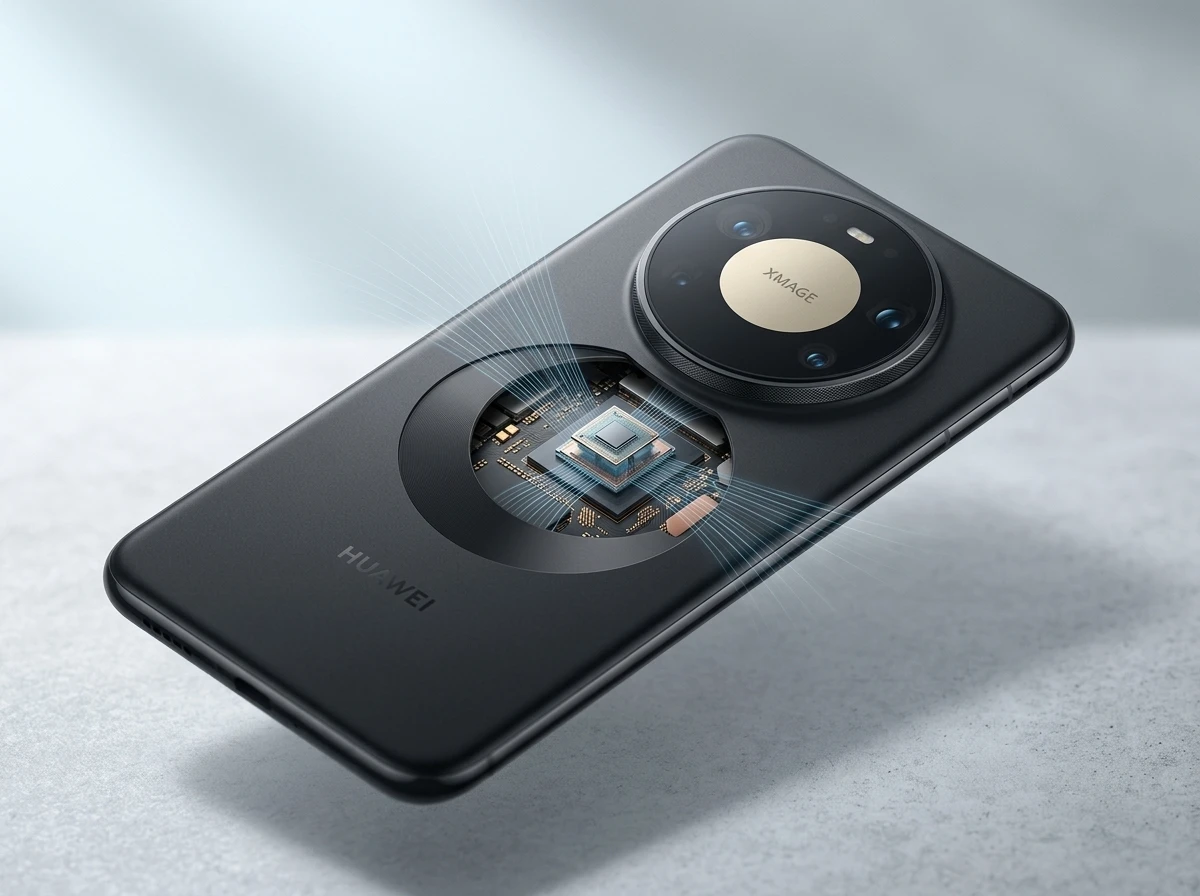
The Mate 80 Wind Edition Already Proved the Point
Huawei launched the Mate 80 Pro Max Wind Edition in March 2026 as its first phone with a built-in cooling fan. The device uses a biomimetic wing-shaped turbofan and Wind Chaser modes that shift between Intelligent and Extreme Speed settings.
Intelligent mode balances heat, battery and smoothness. Extreme Speed prioritizes maximum dissipation and performance. Official materials claim the full package lifts overall device performance by 45% and frame-rate stability by 50% in supported titles, while enabling 90 fps plus ray tracing at the same time.
- Turbofan design: staggered blade lengths raise pressure and intake volume
- Hidden vents: airflow stays quiet and the grip stays cool
- Price premium: CNY 8,499 for 16 GB + 512 GB versus CNY 7,999 for the standard Pro Max
- Trade-off: one fewer rear camera lens and a distinctive camera island with air ducts
The Wind Edition showed that a fan can deliver measurable gains without turning the phone into a dedicated gaming brick. Buyers paid more for it. Mid-range versions would remove that premium barrier.
Mate 90 Eyes a Quieter, Thinner MEMS Leap
For the Mate 90 series, tipster DigitalChatStation and Huawei Central report a chip-level MEMS active cooling solution. MEMS stands for Micro-Electro-Mechanical System. The design uses a roughly 1 mm thin silicon cooling chip with vibrating membranes that move air at ultrasonic frequencies.
No traditional spinning blades or bulky motor. Benefits listed include near-silent operation, higher conduction efficiency and easier integration beside the processor. Full chip-level MEMS cooling details for Mate 90 describe the tech as industry-leading and already under component gathering.
This approach mirrors commercial efforts such as xMEMS’ all-silicon fan-on-a-chip measuring 1 mm thick. That part weighs about 150 mg, moves air via piezoelectric cantilevers hundreds of thousands of times per second, and can sit lid-to-lid on a system-on-chip. It targets the exact problem on-device AI creates: sustained heat without room for old mechanical fans.
| Cooling Type | Moving Parts | Typical Thickness Impact | Noise Profile | Best For |
|---|---|---|---|---|
| Passive (vapor chamber / graphene) | None | Minimal | Silent | Everyday loads, thin designs |
| Conventional micro-fan (Wind-style) | Blades / motor | Noticeable island or ducts | Low but audible at high RPM | Flagship gaming / sustained peaks |
| MEMS fan-on-chip | Vibrating silicon membranes | ~1 mm chip | Near silent (ultrasonic) | Thin phones, AI + gaming mix |
MEMS removes the bulk and drone that once limited active cooling to thick gaming handsets. That is why a mid-range rollout becomes realistic.
Why Mid-Range Models Matter Most
Flagships already pack large vapor chambers and sometimes fans. Mid-range chips still generate plenty of heat when pushed by modern games, multi-cam video or local AI features. Throttling shows up sooner and lasts longer.
If Huawei follows the leak timeline, Mate 90 gets the MEMS treatment first. Cost-effective handsets, likely in the Nova or Enjoy families, follow in 2027. One does not need a flagship price for sustained high-frame gaming or long recording sessions.
The company has already shown chip progress on more affordable lines. The Nova 16 SE Kirin chip and battery focus points to the same strategy of packing stronger silicon into lower tiers. Cooling is the missing half of that equation.
Competitors Are Already Moving
Huawei would not be first into mid-range fans. Oppo’s K15 series, including the standard K15, ships with a built-in active cooling fan, large batteries around 8,000 mAh and mid-tier Dimensity silicon. RedMagic and other gaming brands have used fans for years. Realme has shown concept Chill Fan designs with thermoelectric and dual-fan ideas.
What sets the Huawei path apart is the MEMS step and the plan to put it into regular mid-range rather than only “gaming” sub-brands. That blurs the line. Everyday phones start holding performance the way dedicated gaming devices once monopolized.
Crowd reaction on X largely treated the leak as a natural next step after the Wind Edition, with some noting that quieter MEMS designs solve the noise and thickness complaints that dogged earlier fans. Others pointed out that any moving part still raises long-term reliability questions, though ultrasonic silicon membranes have no traditional bearings to wear.
Who Gains When the Heat Leaves Mid-Range Phones
Power users who refuse flagship prices stand to gain first. Long Genshin or COD sessions stay smoother. Live streamers keep beauty filters and high bitrates without thermal walls. Creators editing short video on-device finish faster. On-device AI features that once throttled mid chips become practical for longer stretches.
Huawei itself gains differentiation in a crowded Chinese mid-range market. The Mate 80 series sales strength in early 2026 already showed demand for the brand’s silicon and software. Extending thermal headroom downward protects that momentum and pressures rivals to match or exceed the cooling floor.
Battery life and dust resistance remain open questions. Fans need vents. MEMS still moves air. Designers will have to keep IP ratings high while routing airflow. Software modes like Wind Chaser’s Intelligent setting will matter as much as the hardware.
The Quiet Reset Already Underway
Active cooling is leaving the gaming-phone ghetto. MEMS and micro-fan designs are thin and quiet enough for mainstream chassis. Huawei’s reported plan simply accelerates the trend by aiming the tech at volume mid-range models rather than niche editions.
If the leak holds, next year’s affordable Huawei phones will sustain more of their paper specs for longer. That single change raises the performance floor for millions of buyers who never open a flagship product page. The heat that once defined mid-range limits starts to leave the conversation.


Lunit Turns Routine H&E Slides Into a Lung Pre-Screen

Meta’s Muse Agent Wants Your Inbox and Your Card

Police Chase Mules as AI Chatbots Run Romance Scams

Ticketmaster’s Personalized App Is Built to Move Empty Seats

Software Deals Now Hinge on Filing Accuracy, Not Beats

Iowa Counties Warn Workers That ChatGPT Keeps Their Files

Shaalan Beg’s Oncology AI Hits an Enrollment Wall

Exowatt Warns Gas-Fired AI Campuses May Not Last a Decade

Philips Splits Innovation and Hands AI to Partovi

Chrome 153 Puts the Whole Web on a Two-Week Clock

Oracle Cuts 21,000 Jobs in a Year, Cites AI in 10-K Filing

Fable 5 and Mythos 5 Return as US Lifts Anthropic Export Controls

SpaceX’s Google Deal Turns a Rocket Company Into a Cloud Landlord

CD Projekt Red Co-CEO: Redemption Arc Isn’t Done, Witcher 4 in 2027

XPL Rallies 30% Ahead of Plasma One Card Tier Launch

Google Search Profiles Build a Follow Graph Inside Discover

DGO App Brings Rs 549 Mobile Pass for FIFA World Cup 2026 in Nepal

Moonshot AI Targets $30 Billion in China’s Fastest AI Funding Sprint

Oppo’s ColorOS 17 Eligibility List Leaves A-Series Buyers Behind

Microsoft Xbox Layoffs Start in July as Sharma Slams 3% Margin
-
 AI3 months ago
Oracle Cuts 21,000 Jobs in a Year, Cites AI in 10-K Filing
-
 AI2 months ago
Fable 5 and Mythos 5 Return as US Lifts Anthropic Export Controls
-
 AI3 months ago
SpaceX’s Google Deal Turns a Rocket Company Into a Cloud Landlord
-
 GAMING3 months ago
CD Projekt Red Co-CEO: Redemption Arc Isn’t Done, Witcher 4 in 2027
-
 CRYPTO3 months ago
XPL Rallies 30% Ahead of Plasma One Card Tier Launch
-
 NEWS3 months ago
Google Search Profiles Build a Follow Graph Inside Discover
-
 APPS3 months ago
DGO App Brings Rs 549 Mobile Pass for FIFA World Cup 2026 in Nepal
-
 AI3 months ago
Moonshot AI Targets $30 Billion in China’s Fastest AI Funding Sprint