
AI
NPCI Chief Asbe Outlines an AI Path Past a Billion UPI Users
NPCI chief Dilip Asbe says AI will power UPI’s next phase: fraud detection, AI-issued credit, and voice onboarding for the next 500 million users.

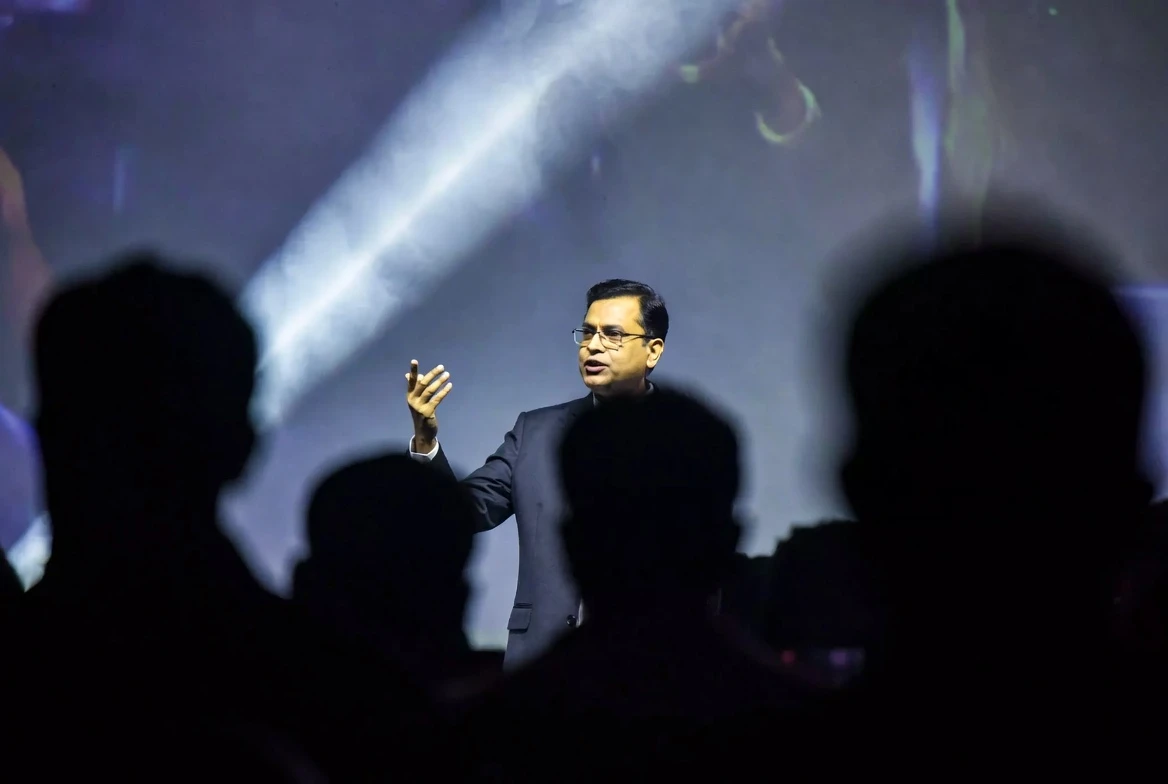
Dilip Asbe, MD and CEO of the National Payments Corporation of India, says the next phase of UPI will be AI-led. He made the case in Dilip Asbe’s interview at Mumbai Tech Week 2026, arguing that AI has to carry the network past its current scale of over 750 million daily transactions and on toward one billion.
Asbe’s pitch covers three fronts at once: voice and multilingual onboarding for new users, network-wide fraud detection, and AI-issued credit for users with digital footprints. The same conversation put the constraints on the table. A 30% market share cap is set to take effect at the end of this year, and the Reserve Bank of India has just released draft rules that would require every bank-deployed AI model to carry override, suspension, or deactivation mechanisms.
Where UPI Stands Today
UPI crossed over 750 million daily transactions a day. The bridge to one billion is, in Dilip Asbe’s telling, an AI problem.
Asbe, who runs the National Payments Corporation of India, sketched the path at Mumbai Tech Week 2026 in an interview with TechCrunch. He framed AI as the tool that has to carry UPI into its next phase of growth, naming three concrete lanes. Those lanes are voice and multilingual onboarding for new users, fraud detection at the network layer, and AI-issued credit for users and merchants with digital footprints. He pegged the user growth at the next half a billion users, a stretch NPCI, India’s central bank, and the government would have to clear together. The roadmap will also have to clear the regulatory test the central bank is writing at the same time.
Asbe’s Three AI Bets
Asbe’s blueprint splits the work across three lanes. Each lane is tied to a different model and a different dataset. Two of them already have live tests inside NPCI, and the third is the new one.
The first lane is voice-led. Asbe wants AI to make signing up for UPI as simple as speaking in any of India’s languages, with the model handling the multilingual layer in the background.
The credit lane is the most ambitious and the least live of the three. Asbe described a future in which an AI system sanctions a loan for a user or merchant based on digital footprints alone. He pointed at the dispute-resolution system NPCI already runs as proof the underlying data is rich enough to feed such a model.
The three lanes Asbe laid out:
- Voice and multilingual onboarding for new users
- Fraud detection and mule tracing at the network layer
- AI-issued credit for users and merchants with digital footprints
Voice, Multilingual, and the Onboarding Gap
Onboarding is the lane where the gap between vision and reality is widest. NPCI launched a voice assistant-based interactive system in 2023. Adoption has yet to take off.
Asbe attributed the slow uptake to accuracy. Voice models still need to be more accurate before users will trust them with money, and adoption of any AI-led interface is gated on that accuracy. He framed the gap as an engineering problem rather than a strategic dead end. “With the right use case, voice can become a critical component in the payment ecosystem,” he told TechCrunch.
FIMI as the Early Test Case
The dispute-resolution model NPCI launched last year is the closest thing to a live deployment of Asbe’s strategy. FIMI handles transaction disputes and mandate cancellations. Asbe described it as the proof point for the kind of AI he wants to scale across UPI.
FIMI is also the proof point for Asbe’s broader argument about how AI should be built in Indian finance. He said the Indian ecosystem has a rich enough dataset to train small, focused models rather than depending on large general-purpose systems. The model that resolves a UPI dispute, in his framing, is a different kind of animal from a general-purpose LLM. Asbe wants the models that touch UPI to be sharp, specific, and as deterministic as possible, the direction set by NPCI’s February 2026 launch of the FiMI model as an in-house domain-specific language model built for UPI workflows.
That conviction lines up with what US fintechs are already shipping. Coinbase and Robinhood now allow agents to trade on users’ behalf, and OpenAI lets users load personal account data into ChatGPT for financial advice. Asbe tied any wider rollout in India to robust regulation and a clear framework around user consent.
FIMI in numbers:
- FIMI users served: over 1 million and scaling (NPCI, per TechCrunch)
- FIMI full name: Finance Model for India (NPCI, per MediaNama)
- FIMI languages supported: English, Hindi, Telugu, Bengali (NPCI, per MediaNama)
- FIMI additional languages planned: within 6 to 8 months (NPCI, per MediaNama)
The Concentration Problem Beside the Vision
The duopoly Asbe is steering UPI past also sets the ceiling on his own strategy. Walmart-owned PhonePe and Google Pay together hold more than 80% of UPI market share, a concentration that has survived every NPCI attempt to break it up over the years. The regulator’s response is a hard cap on any single app’s share, set to take effect on December 31, 2026, unless NPCI defers the deadline date again. Whether that date holds is unclear.
Asbe sees the cap working in tandem with a different lever: a viable commercial model for newer apps. “I believe that there are multiple issues why we see this concentration risk exist, and one of the important reasons is the availability of a viable commercial model,” he told TechCrunch. The moment newer apps find a way to make money, he argued, they will start investing very heavily. Newer apps, in his view, do not need a 30% rule to gain ground; they need a way to be paid for the transactions they handle at scale.
NPCI tried one route already. In 2024, the body spun off its own BHIM UPI app as a sovereign and secure alternative to the duopoly.
Transaction volume on BHIM has grown since the 2024 spin-off, and NPCI continues to position it as a sovereign and secure option. Its share of the UPI market is around 1%. Asbe told TechCrunch there is no specific share target for BHIM, only the goal of keeping a public, sovereign option in the field as a counterweight to the duopoly.
UPI market structure today:
| Category | Share |
|---|---|
| PhonePe + Google Pay combined | over 80% |
| BHIM UPI (NPCI) | around 1% |
| 30% market cap deadline | December 31, 2026 |
RBI’s Kill-Switch Draft and What It Caps
AI will be used very effectively when we look at the next wave of UPI, and that includes all aspects, including reaching new users.
Dilip Asbe is the MD and CEO of NPCI. The interview was conducted with TechCrunch at Mumbai Tech Week 2026.
On June 24, 2026, the Reserve Bank of India released the RBI draft on AI kill switches for banks, requiring every regulated entity to fit AI models with override, suspension, or deactivation mechanisms. Banks would also have to keep a human in the loop on automated decisions, disclose AI use to customers, and put risk governance at the board level. The draft also flagged automation bias and required risk-based tiering of every model in use, from simple calculators to frontier AI systems. Asbe acknowledged that layer of oversight as necessary, telling TechCrunch there should be enough protection for users and mitigation for risk. Credit issuance by AI, agentic commerce, autonomous onboarding, every lane he sketched would have to clear a regulatory test before any bank could deploy it, and the frame around all of it is still being drawn by the central bank.


South Korea Retail Investors Face Reckoning After KOSPI AI Rally Collapses

Surrey AI Maps Three Heart Attack Paths and Their Molecular Roots

Germany Locks Neutral Apple ATT Prompts Across Most of Europe

Apple’s 5% EU Fee Quietly Rewrites Alternative App Store Math

Apple’s EU Fee Truce Cuts Complexity but Leaves Rivals Fuming

Pixel 11 Pro Fold Trades Thinness for Durability and Seven-Year Stay

Mayo AI Flags HCM Obstruction From Everyday Ultrasound Videos

Indian Brands Quietly Scale Landmark Screens and Home Tech

Navin Vatsa Turns Grief Into a Lifetime of Quiet Seeing

Google Bets Pixel 11 Agentic AI Will Redefine Phones

Oracle Cuts 21,000 Jobs in a Year, Cites AI in 10-K Filing

Fable 5 and Mythos 5 Return as US Lifts Anthropic Export Controls

SpaceX’s Google Deal Turns a Rocket Company Into a Cloud Landlord

CD Projekt Red Co-CEO: Redemption Arc Isn’t Done, Witcher 4 in 2027

XPL Rallies 30% Ahead of Plasma One Card Tier Launch

Google Search Profiles Build a Follow Graph Inside Discover

DGO App Brings Rs 549 Mobile Pass for FIFA World Cup 2026 in Nepal

Moonshot AI Targets $30 Billion in China’s Fastest AI Funding Sprint

Oppo’s ColorOS 17 Eligibility List Leaves A-Series Buyers Behind

Microsoft Xbox Layoffs Start in July as Sharma Slams 3% Margin
-
 AI2 months ago
Oracle Cuts 21,000 Jobs in a Year, Cites AI in 10-K Filing
-
 AI2 months ago
Fable 5 and Mythos 5 Return as US Lifts Anthropic Export Controls
-
 AI3 months ago
SpaceX’s Google Deal Turns a Rocket Company Into a Cloud Landlord
-
 GAMING2 months ago
CD Projekt Red Co-CEO: Redemption Arc Isn’t Done, Witcher 4 in 2027
-
 CRYPTO3 months ago
XPL Rallies 30% Ahead of Plasma One Card Tier Launch
-
 NEWS3 months ago
Google Search Profiles Build a Follow Graph Inside Discover
-
 APPS3 months ago
DGO App Brings Rs 549 Mobile Pass for FIFA World Cup 2026 in Nepal
-
 AI3 months ago
Moonshot AI Targets $30 Billion in China’s Fastest AI Funding Sprint