
APPS
India’s 10-Minute Prescription Delivery Is Outrunning Its Safeguards
Quick-commerce apps now deliver prescription drugs in 10 minutes in India. Doctors warn of weak checks, regulatory gaps and antimicrobial resistance risks.

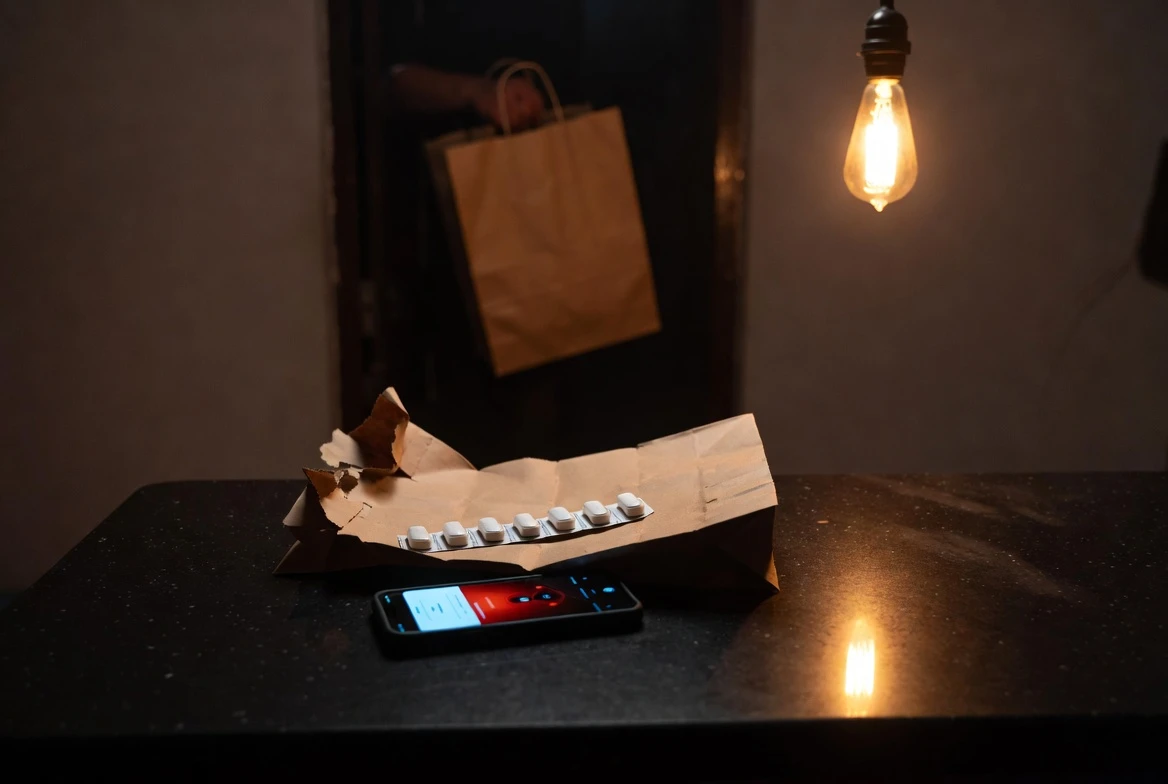
A Delhi teacher ran out of his blood pressure pills on a weekday and, with no prescription in hand, ordered a strip of Telma 40 through a popular quick-commerce app. The app promised a call from an “in-house doctor” who arrived, asked his age and how long he had been on the medicine, and approved the order in seconds. The strip landed at his door in under ten minutes.
The episode lays bare what doctors, regulators and India’s chemist lobby say is the missing scaffolding under a fast-growing corner of e-commerce: 10-minute prescription drug delivery. Blinkit, Zepto and Swiggy Instamart now dispatch Schedule H medicines, including antibiotics, in select Indian cities, and the regulatory framework was written for a world where such purchases meant a walk to a licensed pharmacy counter.
A Ten-Minute Order And A Telephone-Sized Check
Times Now Digital asked physicians and internal-medicine specialists what a brief verification call actually checks. The answer, almost uniformly, is not enough. The protagonist in the Telma 40 episode was Ratish Sharma, who ran out of his blood pressure pills and ordered refills through a popular quick-commerce app. The platform told Sharma an in-house doctor would call to verify the order and that he should keep his prescription handy.
He did not have one. The “doctor” asked Sharma his age and how long he had been taking the medicine, the order was approved within seconds, and a strip of Telma 40 arrived in good condition in less than ten minutes. Telmisartan is a prescription-only drug because the right dose depends on the patient’s blood pressure, kidney function, medical history and what else they are taking. Doctors who treat hypertension rarely pick a dose without labs. The full account of that verification call sits in the prescription order that delivered in under ten minutes.
“Prescription regulations exist primarily to protect patients by ensuring medicines are used safely and appropriately,” Dr Amit Prakash Singh, consultant in internal medicine at CK Birla Hospital in Delhi, told Times Now Digital. His point is that the regulation is the safeguard; the brief telephone call is not.
What Doctors Warn Could Go Wrong
Mismatch is the most obvious risk. A bystander who can guess age and duration on a phone call can clear the system and walk away with a drug that interacts with something they already take. Dr Khazi Javeed Irfan, senior consultant in internal medicine at SPARSH Hospital in Bengaluru, told Times Now Digital that a prescription is much more than a formality, since chronic-condition medicines often need ongoing monitoring, which a short call cannot supply.
Self-medication runs alongside it. Dr Ishwar Gilada, a Mumbai-based physician and infectious diseases specialist, told Times Now Digital that easy online access can mask serious illnesses, delay diagnosis and trigger harmful drug interactions and allergic reactions. He flagged two specific downstream dangers: antibiotics feeding antimicrobial resistance, and unsupervised long-term use of sleeping pills, anti-anxiety drugs and opioid painkillers leading to dependence.
What arrives in the bag is the third concern. Quick-commerce orders are packed and dispatched without giving the buyer a chance to inspect the strip, the seal or the expiry before paying. That gap moves the point of failure from the pharmacy counter to the doorstep, where the consumer’s only real safeguard is a careful check when the package opens.
The Regulatory Map That Never Made It Onto The Wall
India’s rules on prescription drug sales predate the smartphone by decades. The Drugs and Cosmetics Act, 1940 and the Pharmacy Act, 1948 require prescription medicines to be dispensed from a licensed pharmacy under the supervision of a registered pharmacist. None of those statutes envisaged a dark store, a 10-minute dispatch or a video-based prescription generated after the order was paid for.
Draft e-pharmacy rules floated in 2018 would have required licensed premises, pharmacist verification and prescription uploads, but they were never notified. Quick commerce has filled that vacuum. According to the regulatory gap under India’s 10-minute drug delivery boom, the chemist lobby, the All India Organisation of Chemists and Druggists (AIOCD), wrote to the home affairs ministry asking for an “immediate ban on online sale and 10-minute delivery of prescription medicines”. AIOCD general secretary Rajiv Singhal told Mint: “Medicines are not groceries that should be delivered within 10 minutes. These are highly regulated and need utmost care while handling, something that can’t always be assured in a dark-store model.”
A short chronology captures how the regulatory system has tried and failed to keep up:
- 2018: Delhi High Court imposes an interim ban on unlicensed e-pharmacy operations.
- 2018: Draft e-pharmacy rules propose a single licence, a registered pharmacist and prescription uploads; never finalised.
- February 2023: Central Drugs Standard Control Organisation issues show-cause notices to 20 e-pharmacies, including Tata 1mg, Amazon, Flipkart and Netmeds, over licences and prescriptions.
- March 2024: Delhi High Court directs the health ministry to finalise an online drug sale policy.
- August 2024: Swiggy’s Instamart begins carrying medicines in Bengaluru through a partnership with PharmEasy.
- July 2025: Blinkit pilots prescription medicine delivery, including antibiotics, eyedrops and antihistamines, in select Bengaluru pin codes.
- August 2025: AIOCD warns of a 55% surge in drug abuse linked to unchecked online channels and asks the home minister to act; the same day, Zepto announces its own pharmacy launch.
The draft from 2018 is still a draft, the marketplace loophole remains a loophole, and a generation of dark stores has been built in the gap between them.
Why Antimicrobial Resistance Is The Bigger Bet
The loudest alarm from doctors is reserved for antibiotics. Quick-commerce prescriptions that put a strip of azithromycin or amoxicillin in a buyer’s bag in under ten minutes invert the principle of antibiotic stewardship, which asks clinicians to prescribe these drugs only when they are sure they will help.
The numbers behind that alarm are unusually blunt. A multicentre study published in the Lancet eClinical Medicine journal on the first day of the World Health Organization’s World AMR Awareness Week found that 83% of Indian patients in the cohort carried multidrug-resistant organisms, the highest rate of the four countries studied. The comparison: Italy 31.5%, the United States 20.1%, the Netherlands 10.8%. The same study found ESBL-producing organisms in 70.2% of Indian participants and carbapenem-resistant bacteria in 23.5%. The authors, from AIG Hospitals in Hyderabad, called antimicrobial resistance a national health emergency and pointed to nearly 58,000 newborn deaths each year in India linked to resistant infections. The full superbug breakdown sits in what the multicentre superbug study found in Indian patients.
Where The Doorstep Delivery Still Earns Its Place
Strip the regulatory questions out and there is a real use case underneath. Patients managing chronic conditions, the elderly, and anyone who finds it hard to reach a pharmacy counter genuinely benefit from a refills service that runs at the speed of a grocery app. India’s e-pharmacy networks already serve more than 20,000 pincodes, and quick-commerce pharmacy networks have spread to 100-plus cities, according to management consultancy Primus Partners.
That value does not justify a verification call that can be cleared by anyone who answers a few questions convincingly. The path doctors and patient-safety advocates point to is not slower delivery; it is a longer scaffold behind it. E-prescriptions signed by registered medical practitioners, automatic checks against the National Medical Register, and a registered pharmacist on the line before any Schedule H, H1 or X drug leaves a dark store.
For an ageing India, where 10.5% of the population is 60 or older and projected to reach 20.8% by 2050, the convenience argument cannot simply be set aside. The regulatory case has to grow at the same pace as the logistics case, or the gap becomes the product.
Six Checks To Run On Every Online Medicine Order
Inspecting the package is the one safeguard the buyer controls. Dr Sufi Roomi, medical spokesperson for Jolly Healthcare, told Times Now Digital that consumers should always check what arrives.
- Expiry date and the time left on it before consumption.
- Batch number on the strip, matched against the bill.
- Tamper-evident seal on the outer packaging.
- Medicine name, strength and manufacturer, checked against the prescription.
- Bill or invoice, retained for any future complaint.
- Packaging condition at handover, since strips that arrive warm, dented or unsealed should be flagged before use.
Dr Amit Prakash Singh added that expiry dates only guarantee a medicine’s safety and potency if it has been stored correctly. Tablets and capsules usually lose potency gradually past expiry; insulin, vaccines, biologics, eye drops, nitroglycerin preparations and reconstituted liquid antibiotics deteriorate faster and should never be used beyond their date.
Who Is Pushing Back, And How Far They Have Gotten
Most of the loudest opposition to the new model is institutional rather than consumer-facing. AIOCD, the chemists’ body that represents about 12.4 lakh chemist outlets across India, has been escalating its campaign through 2025.
In August it wrote to Union Home Minister Amit Shah seeking an immediate ban on online sale and 10-minute delivery of prescription drugs by Blinkit and Zepto. Its August 11 letter cited Schedule H, H1 and X medicines, ghost prescriptions, prescriptions issued late at night for distant patients, and what it called the 55% surge in drug abuse linked to unchecked online channels. The full text of that letter sits in AIOCD’s letter to the home minister seeking a quick-commerce ban.
Doctors on the platforms are pushing from a different angle. NDTV reported that physicians on X, including hepatologist Dr Cyriac Abby Philips, publicly criticised Blinkit for delivering antibiotics after a phone consultation that lasted under a minute. The wider pushback, captured in the doctors who criticised ten-minute prescription delivery, has moved from individual threads into a warning that pharmacists and physicians both say is overdue. The Delhi High Court has not closed the file, the government’s e-pharmacy rulebook is still draft, and the chemists are preparing their next step if the silence continues.
Frequently Asked Questions
Is it legal to buy prescription medicines through Blinkit or Zepto in India?
The Drugs and Cosmetics Act, 1940 and the Pharmacy Act, 1948 require prescription medicines to be dispensed from a licensed pharmacy under a registered pharmacist. Quick-commerce platforms operate under older statutes; e-pharmacy rules drafted in 2018 were never notified, leaving enforcement fragmented. Buys that route through a “marketplace” of registered pharmacies sit in a grey zone, and AIOCD has asked the government to close it.
Which prescription drugs can actually be ordered through quick-commerce apps today?
Blinkit’s pilot in Bengaluru offers antibiotics, eyedrops, antihistamines and a wider range of prescription respiratory, cardiac, neurocare and dermatology medicines, per YourStory reporting. Zepto and Swiggy Instamart have launched similar lines. Schedule H, H1 and X medicines sit at the centre of the controversy; many of those categories are exactly what quick-commerce pilots now aim to deliver.
What happens if I take an expired medicine by accident?
“By taking an expired medicine, you do not expire,” Dr Ishwar Gilada told Times Now Digital. The actual risk depends on the medicine, how long ago it expired and how it was stored. Tablets and capsules generally lose potency gradually past expiry; insulin, vaccines, biologics, eye drops, nitroglycerin and reconstituted liquid antibiotics can deteriorate much faster and should never be used past their date.
How does easy antibiotic access fuel antimicrobial resistance?
A Lancet eClinical Medicine study found that 83% of Indian patients in a multicentre cohort carried multidrug-resistant organisms, the highest of four countries examined. Easier access to antibiotics, especially when a phone call replaces a clinical exam, raises the volume of prescriptions that are inappropriate, incomplete or for the wrong condition. The result is more resistant strains, fewer drugs that work, and harder-to-treat infections.
Why are traditional chemists protesting quick-commerce medicine delivery?
AIOCD, representing 12.4 lakh chemist outlets, has cited ghost prescriptions, misuse of telemedicine guidelines and a 55% surge in drug abuse. Its August 2025 letter to the home affairs ministry asked for an immediate ban on 10-minute prescription delivery. The pushback is partly regulatory and partly commercial; chemists say offline sales face strict oversight that online players do not.
Disclaimer: This article reports public medical advice drawn from named physicians and published reporting. It is informational and not a substitute for a qualified medical opinion. Always consult a licensed doctor before starting, stopping or changing any prescription medicine, and inspect expiry, batch number and seal on every delivery. Figures and named regulatory actions are accurate as of publication.


OpenAI Ultrafast Puts GPT-5.6 Sol on Live Workloads

Apple’s 15% External Fee Bid Admits Its Own Zero Floor

JBL Beats Bose and Sony on Value for 2026 Soundbars

iPhone Users Pull 40 Percent More From Microdrama Apps

Nebius Q2 Turns AI Cloud Demand Into Prepaid Growth Machine

One UI 9.5 App Lock Ends Years of Samsung Delays

Shiprocket IPO Premium Hides ESOP Costs and Flat Merchant Base

Google Halves Gemini 3.7 Flash Price to Fuel Agent Swarms

Dawnwalker Time Clock Cracks Open-World RPG Habits

Gemini 3.7 Flash Cuts Agent Costs While Pro Stays Delayed

Fable 5 and Mythos 5 Return as US Lifts Anthropic Export Controls

Oracle Cuts 21,000 Jobs in a Year, Cites AI in 10-K Filing

SpaceX’s Google Deal Turns a Rocket Company Into a Cloud Landlord

CD Projekt Red Co-CEO: Redemption Arc Isn’t Done, Witcher 4 in 2027

XPL Rallies 30% Ahead of Plasma One Card Tier Launch

Google Search Profiles Build a Follow Graph Inside Discover

DGO App Brings Rs 549 Mobile Pass for FIFA World Cup 2026 in Nepal

Moonshot AI Targets $30 Billion in China’s Fastest AI Funding Sprint

Microsoft Xbox Layoffs Start in July as Sharma Slams 3% Margin

Oppo’s ColorOS 17 Eligibility List Leaves A-Series Buyers Behind
-
 AI1 month ago
Fable 5 and Mythos 5 Return as US Lifts Anthropic Export Controls
-
 AI2 months ago
Oracle Cuts 21,000 Jobs in a Year, Cites AI in 10-K Filing
-
 AI2 months ago
SpaceX’s Google Deal Turns a Rocket Company Into a Cloud Landlord
-
 GAMING2 months ago
CD Projekt Red Co-CEO: Redemption Arc Isn’t Done, Witcher 4 in 2027
-
 CRYPTO2 months ago
XPL Rallies 30% Ahead of Plasma One Card Tier Launch
-
 NEWS2 months ago
Google Search Profiles Build a Follow Graph Inside Discover
-
 APPS2 months ago
DGO App Brings Rs 549 Mobile Pass for FIFA World Cup 2026 in Nepal
-
 AI2 months ago
Moonshot AI Targets $30 Billion in China’s Fastest AI Funding Sprint