
APPS
OCBC Lets Retail Buy Platinum and Palladium From 0.01 Ounce
OCBC opens fractional platinum and palladium trading on its app today, extending gold-silver access into industrial metals tied to autos and hydrogen.

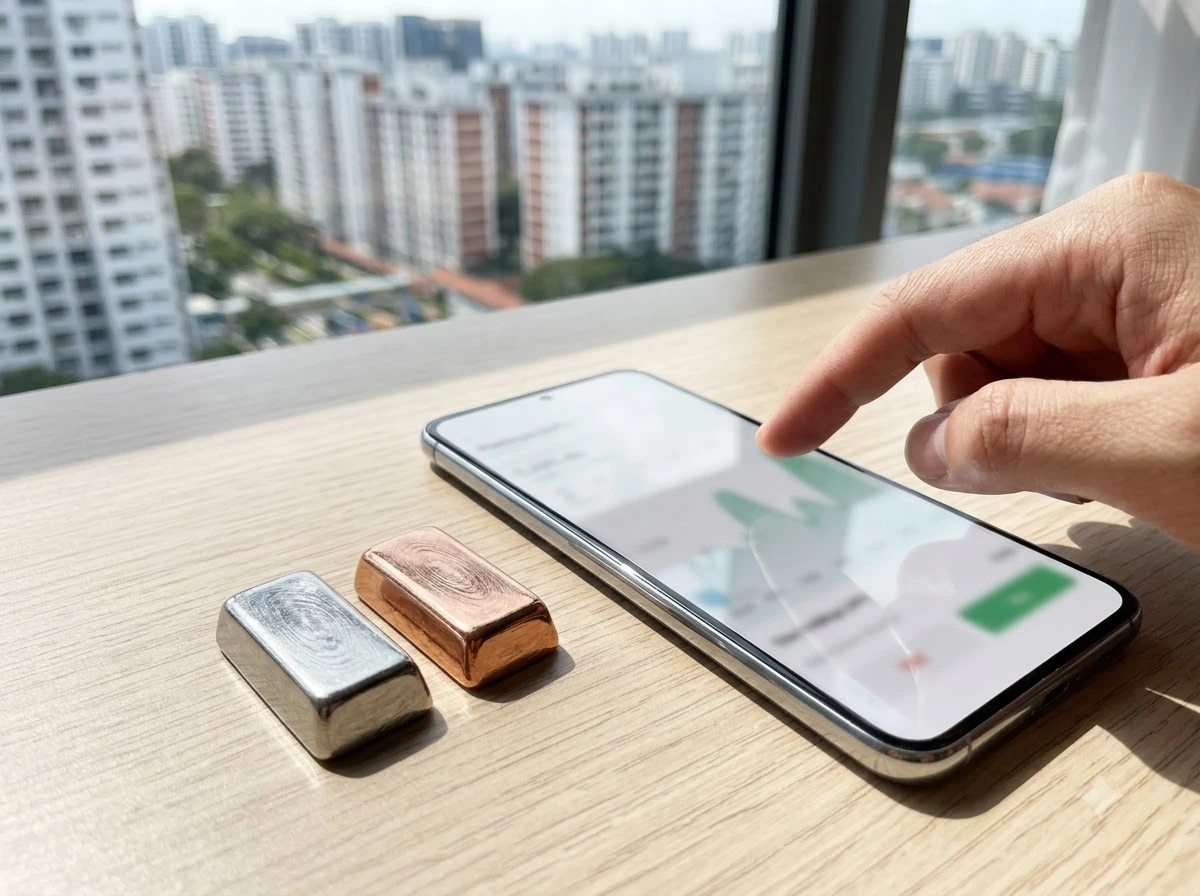
OCBC opened platinum and palladium paper-bullion trading on its mobile app to mass retail customers on 11 August 2026, with a minimum of just 0.01 ounce. At prices from 7-8 August that threshold sat near SGD23 for platinum and SGD18 for palladium.
The addition sits on top of the bank’s digital gold and silver features launched in October 2021 and extends fractional precious-metals access into metals whose prices track industrial demand far more than monetary flows.
For ordinary retail accounts the change is practical rather than cosmetic. The same app path that already handled gold and silver now covers two metals whose day-to-day moves answer to factories, vehicle fleets and emissions rules.
Fractional Doors Open on the OCBC App
Until now local banks largely reserved platinum and palladium for affluent clients. OCBC has removed that gate for ordinary retail accounts. Customers log into the app, select Investments then Precious Metals, view live pricing, choose quantity and funding account, and confirm.
- Minimum size: 0.01 ounce for both metals
- Indicative cost (early August): about SGD23 platinum, SGD18 palladium
- Format: paper bullion held in a Precious Metals Account
- Service fees: zero SGD to buy, hold or sell on the platform
Tan Siew Lee, head of group wealth management at OCBC, said the combination of fractional size and digital interface lowers the barrier for all customers while the bank aims to be “the go-to bank for precious metals.”
Premier Banking and Premier Private clients keep relationship-manager access. The mass-retail channel now offers the same paper products at the micro size already familiar from gold and silver.
These Metals Move on Factories and Cars
Gold draws central-bank buying and safe-haven flows. Platinum and palladium draw factories. Platinum goes into automotive catalysts, industrial processes and hydrogen fuel-cell technologies. Palladium is critical for vehicle emissions-control systems, especially on petrol engines.
- Automotive catalytic converters remain the largest demand channel for both
- Hybrids and the still-large internal-combustion fleet cushion near-term demand even as battery electric vehicles rise
- Platinum carries extra industrial and jewellery demand plus longer-term hydrogen optionality
- Palladium demand is more concentrated on gasoline autocatalysts and faces higher recycling supply growth
Global mine supply is highly concentrated. South Africa dominates platinum output. Palladium is more exposed to Russia and South Africa. That concentration, plus slow mine response times, produces sharper price swings than gold when power, labour or logistics hiccups appear.
| Metal | Main industrial use | OCBC end-June 2026 spot | OCBC H1 2027 outlook |
|---|---|---|---|
| Platinum | Diesel catalysts, industry, hydrogen fuel cells | US$1,833/oz | Exceed US$2,000 |
| Palladium | Petrol emissions systems | US$1,389/oz | Top US$1,500 |
Because the drivers differ, platinum and palladium often diverge from gold and silver. Retail investors who only know the monetary metals now receive direct exposure to auto production, emissions rules and clean-energy build-out.
The split in end-use also shapes how each metal absorbs shocks. A soft patch in petrol-vehicle output hits palladium faster. Platinum can lean on industrial and jewellery channels when auto demand pauses, and it keeps a longer-dated hydrogen call option that palladium does not share in the same way.
Gold and Silver Already Proved the Model
OCBC introduced real-time fractional gold and silver paper bullion in October 2021 at the same 0.01-ounce minimum. Adoption accelerated. In 2025 the number of customers investing in gold and silver via the app rose 2.5 times rise in gold and silver investors year on year. Two in three new retail investing customers that year chose gold or silver as their first product, overtaking equities and unit trusts.
Investors under 40 doubled and made up half the base. Those in their twenties showed the fastest growth. Demand stayed resilient through 2026 volatility and sharp corrections. The same digital rails and low ticket size now carry the higher-beta industrial cousins.
That track record sits alongside other low-entry digital wealth tools the bank has rolled out, including OCBC digital wealth tools for premier clients and regular-investment plans starting at SGD100.
The gold and silver chapter therefore did more than prove demand for fractional paper metal. It built a customer base already comfortable with the Precious Metals Account, live app pricing and sub-SGD25 tickets. Extending that shell to platinum and palladium reuses habits rather than asking first-time users to learn a new product type from scratch.
What OCBC Research Expects on Price
OCBC Group Research remains constructive. In its May 2026 ESG-FX note the desk set end-2026 forecasts at US$2,237 for platinum and US$1,511 for palladium. The bank’s public launch materials project both metals above US$2,000 and US$1,500 respectively by the first half of 2027, up from end-June levels of US$1,833 and US$1,389.
The research view treats platinum as better supported on dips because of tighter balances, lower stock buffers and broader demand channels. Palladium is described as more tactical: it can spike on supply or positioning shocks, yet sustained rallies need stronger end-demand. Full detail appears in the OCBC Group Research platinum palladium forecasts PDF.
| Horizon | Platinum (US$/oz) | Palladium (US$/oz) |
|---|---|---|
| End-June 2026 actual | 1,833 | 1,389 |
| OCBC end-2026 forecast (May) | 2,237 | 1,511 |
| OCBC H1 2027 target | >2,000 | >1,500 |
Recent spot prints in early August sat somewhat below the June platinum mark and near the palladium figure, underscoring the volatility Tan flagged.
Read side by side, the May forecasts and the H1 2027 launch targets describe a constructive path without promising a straight line. Platinum’s projected move from the end-June spot toward and through US$2,000 rests on the tighter-balance case. Palladium’s climb toward and above US$1,500 is framed as more dependent on end-demand holding up after any positioning-driven spikes fade.
High-Beta Metals Carry a Clear Warning
It is nonetheless important to recognise that platinum and palladium are high-beta metals. Investors who are willing to tolerate higher volatility may find in them a unique way to gain exposure to themes that sit at the intersection of industrial activity, resource scarcity and the evolving global energy transition.
Tan Siew Lee made that point in the launch statement. The metals can participate in broad precious-metals rallies yet also correct quickly when growth fears, dollar strength or auto-sector softness dominate. Correlations with silver and auto equities run higher than gold’s; realised volatility has tracked closer to industrial cycles than to pure monetary metals.
For first-time investors who arrived via gold or silver, the new pair therefore functions as a deliberate step-up in risk rather than a like-for-like substitute. Measured position sizing remains the bank’s own earlier advice on precious metals overall.
The warning is not a reason to avoid the products. It is a sizing rule. A client who treats a 0.01-ounce platinum ticket as identical in behaviour to the same size in gold may be surprised when auto news or a supply headline moves the industrial metal faster than the monetary one.
Supply Choke Points That Can Move Prices Overnight
Mine supply is inelastic and geographically tight. South African power and labour issues hit platinum hardest. Russia-linked flows matter more for palladium. Recycling, especially of spent autocatalysts, supplies a growing buffer for palladium and can flip its market balance faster than platinum’s.
China’s GFEX launch of RMB-denominated platinum and palladium futures added a new liquidity and price-discovery channel for the world’s largest physical consumer, though early activity mixed industrial hedging with speculative intensity. These structural facts explain why price paths can diverge sharply from gold even when broader commodity sentiment is strong.
Because mines respond slowly, a single power or logistics disruption can tighten physical availability before new supply arrives. Recycling works in the opposite direction for palladium: a wave of spent catalyst recovery can loosen balances more quickly than primary production can adjust. Retail holders of paper bullion feel those swings through the live app price even though they never take delivery.
How a Retail Trade Works
The process mirrors the existing gold and silver flow and takes minutes once the Precious Metals Account is open:
- Log in to the OCBC app and select Investments, then Precious Metals
- View real-time pricing for platinum or palladium
- Select Buy, specify the quantity (minimum 0.01 oz) and funding account
- Confirm the details; the position appears in the Precious Metals Account
Premier Banking and Premier Private clients retain relationship-manager access to the same metals, previously the main route. The mass-retail app now matches that product set at micro size. Similar low-friction rails have appeared elsewhere in digital assets, including fractional digital asset access rails that also target everyday investors.
OCBC’s move therefore completes a multi-year arc: first gold and silver for the mass market, then structured deposits and robo portfolios at low tickets, now industrial PGMs. Young clients who began with paper silver at roughly SGD1 per 0.01 oz can now add exposure to the same auto and hydrogen themes that institutional desks already trade, without leaving the banking app. The high-beta label stays attached, but the door is open.
Paper Bullion Keeps the Trade Inside the App
The product is paper bullion held in a Precious Metals Account, not a vaulted bar shipped to the customer. That design choice is what makes the 0.01-ounce minimum workable at everyday ticket sizes near SGD18 to SGD23.
Buy, hold and sell all clear on the platform with zero SGD service fees, matching the gold and silver treatment. Live pricing is visible before the customer commits quantity and funding account. Once confirmed, the position simply appears in the same account shell already used for the monetary metals.
- No need to arrange physical storage or bar delivery for a starter ticket
- Same Precious Metals Account already familiar from gold and silver
- Funding drawn from an account the customer already holds at the bank
- Exit path is a sell on the same screen rather than a physical resale chain
The format still leaves the holder exposed to the full price path of the metal. Paper does not mute the high-beta character Tan described. It only removes the logistics friction that once kept small tickets impractical for mass retail.
From First Silver Ticket to Industrial Metals
The August 2026 launch is easier to read as a sequence than as a one-off product drop. The same minimum size, account type and app path recur at each step.
- October 2021: real-time fractional gold and silver paper bullion opens at 0.01 ounce
- 2025: gold and silver app investors rise 2.5 times year on year; two in three new retail investing customers start with those metals
- Through 2026: demand holds through volatility; investors under 40 reach half the base
- 11 August 2026: platinum and palladium join on the identical rails and minimum
Clients who first touched paper silver at roughly SGD1 per 0.01 ounce now meet industrial metals whose early-August starter tickets sit near SGD18 and SGD23. The dollar amounts stay small. The risk character does not.
That is the practical implication of the multi-year arc. The bank lowered the entry gate once for monetary metals, watched younger cohorts adopt them as a first investing product, then reused the same gate for metals tied to autocatalysts, recycling flows and hydrogen optionality. Measured sizing remains the filter between a useful diversifier and an oversized high-beta bet.
Frequently Asked Questions
What is the minimum investment for platinum or palladium on the OCBC app?
Customers can buy from 0.01 ounce of either metal. Using early-August 2026 pricing that equalled roughly SGD23 for platinum and SGD18 for palladium, well below the ticket sizes once required for physical bars or affluent-channel paper products.
How do platinum and palladium differ from gold for retail investors?
Gold is driven mainly by central-bank reserves and store-of-value demand. Platinum and palladium derive most demand from industrial uses, especially automotive catalysts and, for platinum, hydrogen technologies, so their prices often move with manufacturing and energy-transition news rather than pure monetary flows.
What price targets has OCBC published for these metals?
OCBC Group Research’s May 2026 forecasts put end-2026 platinum at US$2,237 and palladium at US$1,511. Launch materials project both above US$2,000 and US$1,500 by the first half of 2027 from end-June 2026 spots of US$1,833 and US$1,389.
Could ordinary retail clients access platinum and palladium at local banks before this launch?
Access through Singapore banks was largely limited to affluent and premier clients via relationship managers. OCBC’s app now opens the same paper-bullion products to mass retail at the 0.01-ounce minimum that already applied to gold and silver.
Are there service fees on OCBC’s digital precious-metals trades?
The bank states zero SGD service fees apply when customers buy, hold or sell paper precious metals through the platform, matching the gold and silver treatment and the Premier Banking precious metals offerings.


South Korea Retail Investors Face Reckoning After KOSPI AI Rally Collapses

Surrey AI Maps Three Heart Attack Paths and Their Molecular Roots

Germany Locks Neutral Apple ATT Prompts Across Most of Europe

Apple’s 5% EU Fee Quietly Rewrites Alternative App Store Math

Apple’s EU Fee Truce Cuts Complexity but Leaves Rivals Fuming

Pixel 11 Pro Fold Trades Thinness for Durability and Seven-Year Stay

Mayo AI Flags HCM Obstruction From Everyday Ultrasound Videos

Indian Brands Quietly Scale Landmark Screens and Home Tech

Navin Vatsa Turns Grief Into a Lifetime of Quiet Seeing

Google Bets Pixel 11 Agentic AI Will Redefine Phones

Oracle Cuts 21,000 Jobs in a Year, Cites AI in 10-K Filing

Fable 5 and Mythos 5 Return as US Lifts Anthropic Export Controls

SpaceX’s Google Deal Turns a Rocket Company Into a Cloud Landlord

CD Projekt Red Co-CEO: Redemption Arc Isn’t Done, Witcher 4 in 2027

XPL Rallies 30% Ahead of Plasma One Card Tier Launch

Google Search Profiles Build a Follow Graph Inside Discover

DGO App Brings Rs 549 Mobile Pass for FIFA World Cup 2026 in Nepal

Moonshot AI Targets $30 Billion in China’s Fastest AI Funding Sprint

Oppo’s ColorOS 17 Eligibility List Leaves A-Series Buyers Behind

Microsoft Xbox Layoffs Start in July as Sharma Slams 3% Margin
-
 AI2 months ago
Oracle Cuts 21,000 Jobs in a Year, Cites AI in 10-K Filing
-
 AI2 months ago
Fable 5 and Mythos 5 Return as US Lifts Anthropic Export Controls
-
 AI3 months ago
SpaceX’s Google Deal Turns a Rocket Company Into a Cloud Landlord
-
 GAMING2 months ago
CD Projekt Red Co-CEO: Redemption Arc Isn’t Done, Witcher 4 in 2027
-
 CRYPTO3 months ago
XPL Rallies 30% Ahead of Plasma One Card Tier Launch
-
 NEWS3 months ago
Google Search Profiles Build a Follow Graph Inside Discover
-
 APPS3 months ago
DGO App Brings Rs 549 Mobile Pass for FIFA World Cup 2026 in Nepal
-
 AI3 months ago
Moonshot AI Targets $30 Billion in China’s Fastest AI Funding Sprint