
NEWS
Shiprocket IPO Premium Hides ESOP Costs and Flat Merchant Base
Day 3 Shiprocket IPO shows 3.16x subscription and 38% GMP, yet forensic review of RHP metrics and lock-ins argues caution beyond the listing pop.

Shiprocket enters the final day of its ₹1,617.59 crore IPO on August 14 with the issue already 3.16 times subscribed after Day 2 and a grey-market premium of ₹37, or about 38% over the ₹97 upper band. That math points to a theoretical listing near ₹134 on August 19 if the premium holds. Aditya Birla Money, BP Wealth and Geojit all say Subscribe.
The numbers look clean on the surface. Dig one layer deeper into the RHP and the picture changes.
Where the Bids Stand After Two Days
Retail drove the book. Against 1.73 crore shares reserved for RIIs, Day 2 bids hit 9.77 times. NII demand reached 4.84 times on 2.60 crore shares. QIBs (ex-anchor) sat at just 0.03 times on their 5.09 crore portion, typical for the early window. Overall bids covered 29.82 crore shares versus 9.44 crore on offer.
| Category | Day 1 | Day 2 | Shares Offered (approx) |
|---|---|---|---|
| QIB (ex-anchor) | 0.02x | 0.03x | 5.09 crore |
| NII | 1.23x | 4.84x | 2.60 crore |
| Retail | 3.34x | 9.77x | 1.73 crore |
| Total | 0.97x | 3.16x | 9.44 crore |
Anchor investors already took 7.50 crore shares at ₹97 for ₹727.41 crore. Domestic mutual funds through 31 schemes grabbed 66.76% of that pot, or 5 crore shares. Minimum retail ticket is 154 shares, or ₹14,938 at the top of the band. Allotment is due August 17; listing on NSE and BSE is set for August 19. Fresh issue is 9.13 crore shares (₹885.60 crore); OFS is 7.55 crore shares (₹731.98 crore).
The Adjusted Number That Carries the Story
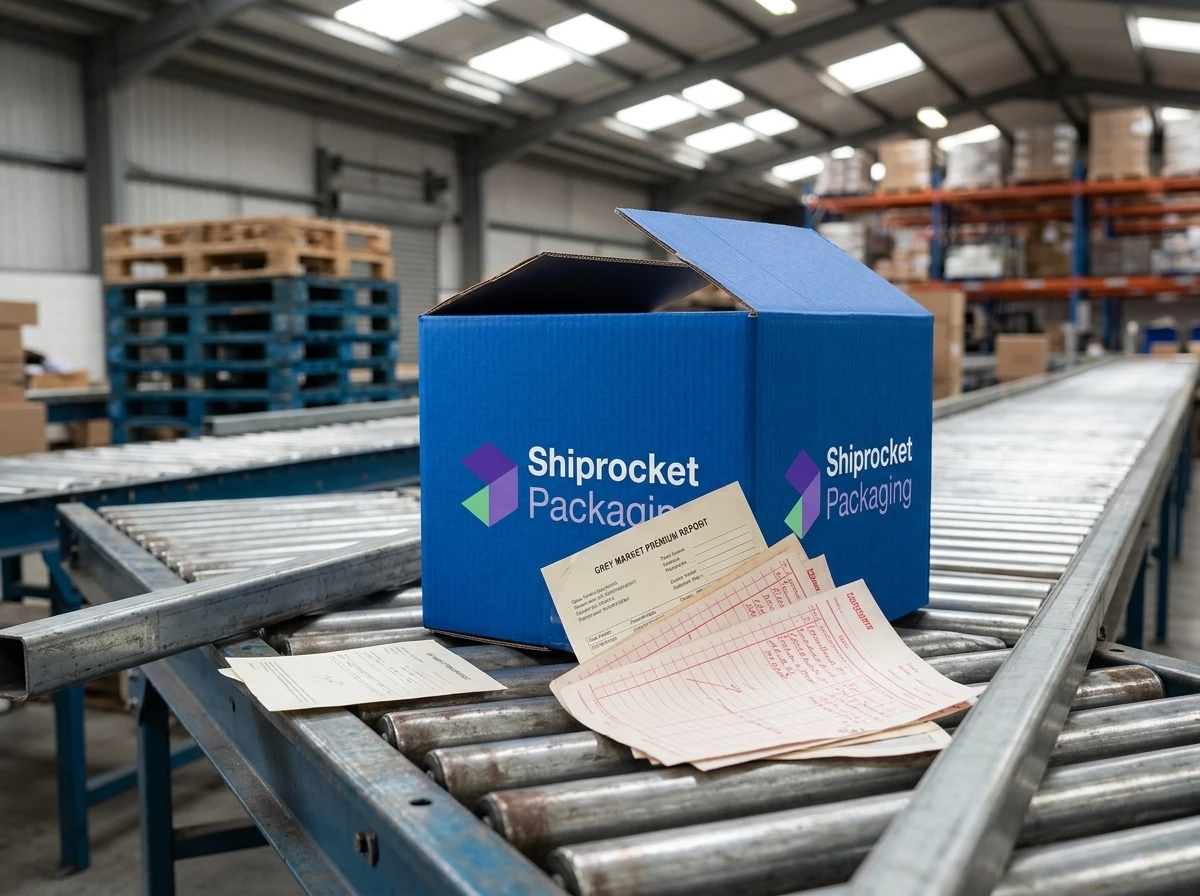
Shiprocket reported its first positive Adjusted EBITDA of ₹17.6 crore in FY26. Revenue hit roughly ₹2,024 crore, up 24% from FY25. Reported PAT loss widened slightly to ₹79.25 crore from ₹74.45 crore. Those are the figures broker notes lean on.
The adjustment is the entire point. Share-based payment expense of ₹112.3 crore was excluded from that Adjusted EBITDA. The cost is 6.4 times the reported profit figure and 5.6% of revenue. It appeared every year in the disclosure period. Treat the ESOP expense as the recurring compensation it is and FY26 EBITDA swings to a ₹94.7 crore loss. On the same basis FY25 was a ₹84.2 crore loss. The year got worse, not better.
Receivables tell a parallel story. Trade receivables jumped 60.9% in FY26 while revenue grew 24%. Debtor days rose from 32.9 to 42.6. Expected credit loss charges fell sharply as a percentage of receivables. Run provisions at the prior year’s intensity and another ₹10-plus crore disappears from the profit-and-loss account.
- FY26 revenue: ~₹2,024 crore (24% CAGR FY24-26)
- Reported PAT: -₹79.25 crore
- Adjusted EBITDA as defined: +₹17.6 crore
- Post-ESOP EBITDA view: -₹94.7 crore
Core domestic shipping and apps still look solid. That segment delivered ₹1,485 crore revenue and a 12.56% Adjusted EBITDA margin. Emerging businesses (cross-border, checkout, marketing, hyperlocal, credit) grew faster at a 52.6% CAGR but still burned ₹169 crore at the Adjusted EBITDA line, an absolute increase in losses.
Power Merchants Barely Moved
The platform’s high-volume base is where Core revenue actually lives. Power Merchants (those doing more than 100 transactions a month) rose from 10,005 in FY25 to 10,090 in FY26, net growth of 0.85%. ARPU climbed 23.6% to ₹17.8 lakh, so monetisation of the existing base carried the growth. Network-effect pitches usually need merchant count expansion. This one is running on wallet share.
As of the six months ended September 30, 2025 the company served more than 1,45,000 active merchants who processed over 97 million transactions and reached more than 42 million customers, with a 64.56% repeat rate. Full-year FY26 active merchant counts reported elsewhere run higher, but the Power Merchant stall is the sharper signal.
Who Is Selling and the Float Cliff Ahead
Nearly 45% of the issue is OFS. LR India Fund I is the largest seller, expected to realise around ₹258 crore (full exit in some tallies). Arvind Ltd. is set for about ₹161 crore. Co-founders Gautam Kapoor and Saahil Goel each stand to receive roughly ₹144 crore (about 20% of their stakes). Tribe Capital III Series 1 is estimated at ₹120 crore. Larger holders including Bertelsmann, Eternal (Zomato) and Temasek are not selling.
The company has no identifiable promoter. That means no minimum promoter contribution and no 18-month lock-in. Everything faces only the standard six-month lock under the regulations. Free float at listing will be about 22.9% of post-issue capital. At the six-month mark roughly 77% of the capital unlocks. Tradable stock can rise 4.4 times around mid-February 2027 with no promoter block standing behind it.
On X, one widely noted reaction captured the dissonance: sellers accepting 30-40% losses to last marks while GMP sits near 38% leaves a gut feeling that something does not add up. Crowds mostly still push “apply for listing gains,” but the sceptical thread is live.
How the Money Is Meant to Be Spent
Net proceeds target technology, marketing and debt. One detailed breakdown earmarks substantial sums for marketing (especially Emerging Business), technology infrastructure, and ₹210 crore for repayment or prepayment of borrowings. Remaining funds go to unidentified acquisitions and general corporate purposes. Debt reduction should cut interest drag. Marketing for the loss-making Emerging segment is the larger bet.
The business itself is an asset-light e-commerce enablement stack. It started in shipping (automated pickups, tracking, COD settlements) and expanded into fulfilment, cargo, omnichannel via Omuni, cross-border with customs help, advertising, checkout, payments, financing and hyperlocal. Shiprocket investor relations platform overview describes it as purpose-built for MSMEs and D2C brands selling on their own sites or social channels. Usage-based pricing ties revenue to shipments and transactions.
Broker Notes Versus the Forensic Read
Aditya Birla Money likes the leadership position, scalable base, operating leverage and 3.6x FY26 EV/Sales relative to peers. BP Wealth flags the 24% revenue CAGR and improving leverage but calls profitability a key monitorable; the ₹53 crore positive operating cash flow in FY26 got help from non-cash ESOP and working-capital swings. Geojit calls it a Subscribe for medium- to long-term holders and notes the same 3.6x multiple as a discount to a listed peer.
A detailed forensic RHP review of Adjusted EBITDA by Inflection Point Research reaches a different conclusion: wait for a listing dip. The Core is genuinely good and the filing is cleaner than most (Big Four auditor, unmodified opinion, nil contingent liabilities, falling customer concentration). Valuation at ₹97 implies roughly ₹7,057 crore post-issue market cap, or about 3.1-3.6x EV/Sales. Delhivery, five times larger and profitable, trades near similar multiples. The IPO is also a clear down-round versus the last primary at ₹163.14.
Reported Adjusted EBITDA is positive only because a ₹112.3 crore recurring cost is defined out of it. The Core’s merchant base has flatlined. Fresh capital is directed at a segment whose absolute losses are widening. And 77% of the capital unlocks at month six into a 23% float with no promoter lock behind it.
Karnik Shah of Inflection Point Research wrote that assessment and set the call at “WAIT FOR LISTING DIP,” not Avoid. The entry price is the problem, not the underlying platform.
The full SEBI-filed Shiprocket Red Herring Prospectus and the detailed IPO timetable and financial tables are the primary documents any applicant should read side-by-side with the broker one-pagers.
Listing Math and the Six-Month Test
If GMP holds near 38%, day-one gains look real for those who get allotment. Grey-market premiums are unregulated and can evaporate. QIB participation remains thin until the final hours. Post-listing the stock will trade with a thin free float until February 2027. Then supply multiplies. Emerging-business losses need to start shrinking in absolute rupees, not just as a percentage of rising revenue. Power Merchant count has to move again. Debtor days need to reverse.
Shiprocket sits at the centre of India’s MSME and D2C digitisation wave. The Core shipping engine works. The IPO price already embeds a large part of that future while still requiring faith that the adjusted numbers become un-adjusted profits. Retail investors chasing the 38% signal are underwriting that faith for a minimum of ₹14,938 per lot. The forensic file says the safer entry is after the lock-in wall appears, not before it.


Sony’s 10 Percent Disc Drop Leaves the 2028 Cutoff Intact

Chip Allocation Sidelines the Base iPhone 18 This Fall

Miami-Dade Fights the Vice City Brand It Already Wears

IFA 2026 Awards Put Tecno Ahead of Flagship Phones

USB-C Gadgets Made the Junk Drawer Rechargeable

Pixel 11 Pro Asks $1,099 for a Light Google Locked

The iPhone Ultra Sells Two Retired Minis as One Foldable

Google Opens Gmail to Voice and Gates Docs Live

Lenovo Prices the IdeaPad Vibe Against Apple’s $699 Neo

Xbox Caps Game Pass Cloud Gaming at 15 Hours

Oracle Cuts 21,000 Jobs in a Year, Cites AI in 10-K Filing

Fable 5 and Mythos 5 Return as US Lifts Anthropic Export Controls

SpaceX’s Google Deal Turns a Rocket Company Into a Cloud Landlord

CD Projekt Red Co-CEO: Redemption Arc Isn’t Done, Witcher 4 in 2027

XPL Rallies 30% Ahead of Plasma One Card Tier Launch

Google Search Profiles Build a Follow Graph Inside Discover

DGO App Brings Rs 549 Mobile Pass for FIFA World Cup 2026 in Nepal

Moonshot AI Targets $30 Billion in China’s Fastest AI Funding Sprint

Oppo’s ColorOS 17 Eligibility List Leaves A-Series Buyers Behind

Microsoft Xbox Layoffs Start in July as Sharma Slams 3% Margin
-
 AI2 months ago
Oracle Cuts 21,000 Jobs in a Year, Cites AI in 10-K Filing
-
 AI2 months ago
Fable 5 and Mythos 5 Return as US Lifts Anthropic Export Controls
-
 AI3 months ago
SpaceX’s Google Deal Turns a Rocket Company Into a Cloud Landlord
-
 GAMING3 months ago
CD Projekt Red Co-CEO: Redemption Arc Isn’t Done, Witcher 4 in 2027
-
 CRYPTO3 months ago
XPL Rallies 30% Ahead of Plasma One Card Tier Launch
-
 NEWS3 months ago
Google Search Profiles Build a Follow Graph Inside Discover
-
 APPS3 months ago
DGO App Brings Rs 549 Mobile Pass for FIFA World Cup 2026 in Nepal
-
 AI3 months ago
Moonshot AI Targets $30 Billion in China’s Fastest AI Funding Sprint