
AI
ICPR 2026 Brings 1,432 Submissions and Four Keynotes to Lyon
ICPR 2026 runs August 17-22 at the Lyon Convention Centre in France with 1,432 submissions, four global AI keynotes, and a 41-country competition.

The 28th International Conference on Pattern Recognition (ICPR 2026) runs from August 17 through August 22, 2026, at the Lyon Convention Centre inside the Cité Internationale in Lyon, France. ICPR is the biennial research flagship of the International Association for Pattern Recognition (IAPR), recognized by the conference itself as the leading event of the association and a top conference in the field. Across six days, 710 accepted papers, four keynotes, and a 41-country competition sit on the program.
The main conference has not published a delegate headcount yet. What it has published are the numbers that determine who shows up: a record submission pool of 1,432 papers, of which 710 cleared review, and a single satellite competition that drew 269 teams from 41 countries. The detailed program goes live on Monday, July 6, 2026, per the conference’s own published notice, and the full the ICPR 2026 conference site is the source of record for any change between now and the August opening.
The Submissions Pool and the Geographic Spread
The 1,432 submissions figure comes from the accepted papers list at ICPR 2026. Reviewers went through the full set before notifications went out on March 31, 2026, a date the organizers had pushed back after extending the submission deadline. Of the 1,432 submissions, exactly 710 papers cleared the bar and have been uploaded to the conference’s Springer Nature proceedings, per the same page.
Travel funding tells a second story. The IAPR Executive Committee set aside up to 25 waived registration fees under its stipend program for authors with limited resources, and 219 stipend applications came in from 44 countries, according to the ICPR 2026 news feed dated April 13, 2026. The spread of those requests shows where the research base sits: heavy in Asia and Europe, present in Latin America and Africa, thin in North America for this particular program.
The single most striking geographic number belongs to a competition rather than the main track. The ICPR 2026 Competition on Low-Resolution License Plate Recognition, organized by a team led by the Federal University of Paraná in Brazil, drew 269 teams from 41 countries, according to the competition summary on arXiv. The largest contingents came from Vietnam, India, mainland China, Taiwan, and the Republic of Korea. Of the 269 registered teams, 99 submitted valid entries in the Blind Test Phase. The winning team posted a recognition rate of 82.13%; four teams cleared the 80% bar.
- 1,432 paper submissions to the main track
- 710 papers accepted and uploaded to Springer Nature
- 219 IAPR stipend applications from 44 countries
- 269 teams from 41 countries registered for the LRLPR competition
- 36 workshop proposals submitted as satellite events
The Four Keynote Speakers
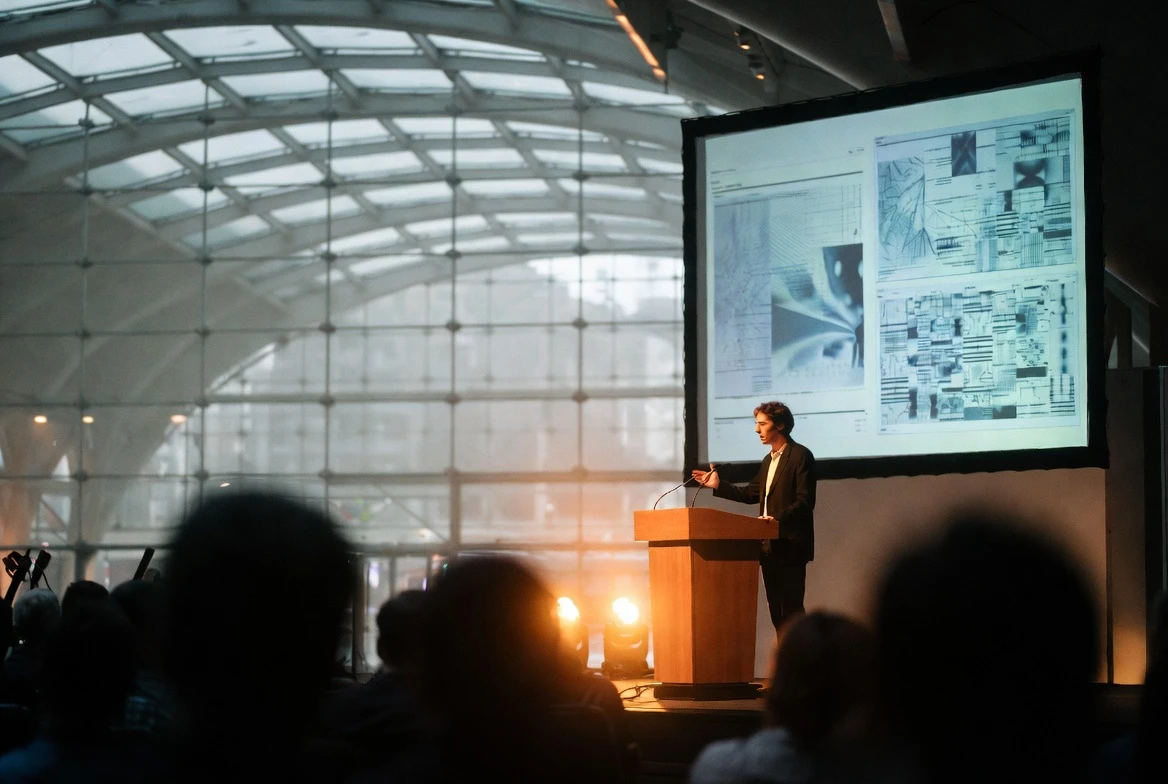
ICPR 2026 closed out its keynote lineup on June 8, 2026, with the addition of Zhu Jun of Tsinghua University. The conference describes the four speakers as representatives of globally recognized research institutions, a phrase drawn from its own speaker pages. Their talks span robotics, document image analysis, brain-computer interfaces, and general world models.
| Speaker | Affiliation | Talk title | Research focus |
|---|---|---|---|
| Henrik I. Christensen | UC San Diego | Building a perception stack for autonomous driving | Micro-mobility perception, hybrid pattern recognition, robotics |
| Alicia Fornés | Universitat Autònoma de Barcelona | TBA | Document image analysis, handwriting recognition, optical music recognition |
| Cuntai Guan | Nanyang Technological University, Singapore | Building a Foundation Model for EEG-based Brain-Computer Interfaces | BCI, motor imagery, deep learning for clinical BCI systems |
| Zhu Jun | Tsinghua University | Towards Building General World Models | Machine learning, large models, embodied intelligence |
Henrik I. Christensen is a distinguished professor of computer science and the director of robotics at UC San Diego, a fellow of IEEE and AAAS, and a co-founder of six companies, per his ICPR 2026 speaker bio. His talk, “Building a perception stack for autonomous driving,” argues that micro-mobility needs a perception stack built from a mix of traditional recognition methods and deep learning techniques. Alicia Fornés is an associate professor at the Universitat Autònoma de Barcelona and an affiliated researcher at the Computer Vision Center; she has more than 100 scientific publications and won the IAPR/ICDAR Young Investigator Award in 2017. Her work spans document image analysis, handwriting recognition, and optical music recognition, with a focus on historical documents. Cuntai Guan is President’s Chair Professor in Computer Science and Engineering at Nanyang Technological University, where he also directs the Centre for Brain-Computing Research; his talk, “Building a Foundation Model for EEG-based Brain-Computer Interfaces,” targets the same kind of large-model shift that has swept language AI, applied to clinical brain-computer interfaces. He is a fellow of IEEE, AIMBE, the US National Academy of Inventors, and the Academy of Engineering Singapore. Zhu Jun is a Bosch AI Professor at Tsinghua University, an Associate Dean of the Wuqiong (AI) College, and a fellow of ACM, IEEE, and AAAI; his talk, “Towards Building General World Models,” lays out pre-trained, tens-of-billions-of-parameters models that handle perception, prediction, and action for embodied intelligence, per Zhu Jun’s speaker page. His team built the open-source platforms Zhusuan and Tianshu and the large model Vidu.
What the Research Program Covers
ICPR describes itself as covering pattern recognition methods applied to computer vision, machine learning, image processing, speech and natural language processing, and sensor pattern processing, per the conference’s own description on its homepage. The Springer Nature proceedings for the 2026 edition group accepted work into Artificial Intelligence, Pattern Recognition and Machine Learning, Computer and Robot Vision, Biometrics and HCI, and related fields.
A scan of the published paper titles on the ICPR 2026 accepted-papers page shows how wide the spread is in practice. The list includes prompt injection attacks on LLM-generated reviews, federated domain generalization with normalizing flows, YOLOv8-CBAM for wind-turbine blade defect segmentation, signature verification, hyperspectral anomaly detection in corks, and a paper titled “Seeing Red, Thinking Bad: Color Bias in Vision Language Models.” The LRLPR competition, judged separately from the main track, fed its results back into a summary paper accepted to the proceedings.
Medical imaging draws a heavy contingent: a dual-encoder network for coronary artery segmentation, semi-supervised ovarian tumor segmentation, and a visual instruction-finetuned language model for brain MRI tasks. Autonomy shows up too: a Gaussian-splatting method for static-dynamic separation in urban driving scenes, and a paper titled “DrivingWorld: Constructing World Model for Autonomous Driving Via Video GPT.” A few titles track the community’s concern with generative AI misuse, including work on detecting diffusion-generated images and a paper on uncovering “Logit Suppression Vulnerabilities in LLM Safety Alignment.”
- Computer Vision and Robot Vision
- Biometrics and Human-Computer Interaction
- Document Image Analysis and Pattern Recognition
- Machine Learning and Deep Learning Foundations
- Medical Imaging and Healthcare AI
- Speech and Natural Language Processing
- Sensor Pattern Processing and Autonomy
Why This Is Not a Tech Expo
ICPR is academic, not commercial. The published accepted-papers list is open, the proceedings are with Springer Nature (which is itself a sponsor), and there is no commercial exhibitor directory. The closest thing to an exhibition floor is a row of sponsor logos on the conference website: IMDS, Yooz, Springer Nature, Elsevier, and the Université Lumière Lyon 2.
IMDS and Yooz were the two most recent additions, confirmed on the ICPR 2026 news page on June 20, 2026. Elsevier has supported the Piero Zamperoni Student Award since November 2025. The Université Lumière Lyon 2 came on board as an academic sponsor in December 2025. Springer Nature, which publishes the proceedings, joined in March 2026. None of the listed sponsors run a booth in the sense a CES attendee would recognize.
The format leans on paper sessions, tutorials, workshops, competitions, and a doctoral consortium. For a reader weighing attendance, ICPR 2026 is a place to see research months before it shows up in commercial products, not a place to compare vendor offerings. Researchers register to present; the listed sponsors show up to support the field, per the conference’s own framing.
Where the Conference Lands: Cité Internationale
ICPR 2026 takes over the Lyon Convention Centre, the meeting facility inside the Cité Internationale, a roughly 15-hectare urban district between the Rhône river and the Parc de la Tête d’Or, designed by the Italian architect Renzo Piano. The site is at 50 quai Charles de Gaulle. Piano’s master plan for the Cité Internationale, designed across the late twentieth century and completed in the early 2000s, has the convention centre as one of its anchor buildings.
Lyon is reachable by high-speed rail from Paris, sits inside a metro system that links the convention district to the historic centre, and has hosted major scientific meetings for decades. For an academic conference, the venue choice matters: a city that already runs large international meetings carries less friction for organizers and attendees than a smaller host city does.
The Next Six Weeks Before the Conference
The detailed conference program goes live on Monday, July 6, 2026, per the conference’s own notice (“no later than six weeks before the conference start, that is, on Monday 6 July”). Until then, the public version of the program remains the news feed and the accepted-papers list.
Several deadlines landed in late June. The workshop early-registration deadline was extended to June 24, 2026. The doctoral consortium deadline was extended to June 30, 2026. Accepted paper authors uploaded camera-ready manuscripts to Springer Nature between April 20 and May 4, 2026. Notification of acceptance or rejection went out March 31, 2026. The pattern across the year: organizers extended deadlines twice for paper submissions, twice for the doctoral consortium, and once for workshop early registration.
The full conference website is the canonical source for any change. The official social media channels on X and LinkedIn carry the same announcements in shorter form, per the November 2025 launch notice for those channels. Anyone tracking the run-up to August 17 should pin the ICPR 2026 news page as the source of record.
Frequently Asked Questions
When and where is ICPR 2026?
ICPR 2026 runs August 17 through August 22, 2026, at the Lyon Convention Centre inside the Cité Internationale in Lyon, France. The site sits at 50 quai Charles de Gaulle, between the Rhône and the Parc de la Tête d’Or.
Who are the ICPR 2026 keynote speakers?
The four invited speakers are Henrik I. Christensen of UC San Diego, Alicia Fornés of the Universitat Autònoma de Barcelona, Cuntai Guan of Nanyang Technological University, and Zhu Jun of Tsinghua University. Their talks cover autonomous driving perception, document image analysis, foundation models for EEG-based brain-computer interfaces, and general world models, respectively.
How many papers were submitted and accepted?
The conference received 1,432 paper submissions and accepted 710 of them. Notifications went out March 31, 2026, and camera-ready manuscripts were uploaded to Springer Nature between April 20 and May 4, 2026.
Is ICPR 2026 a trade show?
No. ICPR is an academic conference run under the International Association for Pattern Recognition. The format is paper sessions, tutorials, workshops, competitions, and a doctoral consortium. The conference does not publish an exhibitor directory. Sponsors listed on the ICPR 2026 website as of June 30, 2026, include IMDS, Yooz, Springer Nature, Elsevier, and Université Lumière Lyon 2.
Can researchers still register or submit work?
The detailed program goes live on Monday, July 6, 2026. The workshop early-registration deadline was extended to June 24, 2026. The doctoral consortium deadline was extended to June 30, 2026. Researchers should consult the official ICPR 2026 website for current rates and dates.


South Korea Retail Investors Face Reckoning After KOSPI AI Rally Collapses

Surrey AI Maps Three Heart Attack Paths and Their Molecular Roots

Germany Locks Neutral Apple ATT Prompts Across Most of Europe

Apple’s 5% EU Fee Quietly Rewrites Alternative App Store Math

Apple’s EU Fee Truce Cuts Complexity but Leaves Rivals Fuming

Pixel 11 Pro Fold Trades Thinness for Durability and Seven-Year Stay

Mayo AI Flags HCM Obstruction From Everyday Ultrasound Videos

Indian Brands Quietly Scale Landmark Screens and Home Tech

Navin Vatsa Turns Grief Into a Lifetime of Quiet Seeing

Google Bets Pixel 11 Agentic AI Will Redefine Phones

Oracle Cuts 21,000 Jobs in a Year, Cites AI in 10-K Filing

Fable 5 and Mythos 5 Return as US Lifts Anthropic Export Controls

SpaceX’s Google Deal Turns a Rocket Company Into a Cloud Landlord

CD Projekt Red Co-CEO: Redemption Arc Isn’t Done, Witcher 4 in 2027

XPL Rallies 30% Ahead of Plasma One Card Tier Launch

Google Search Profiles Build a Follow Graph Inside Discover

DGO App Brings Rs 549 Mobile Pass for FIFA World Cup 2026 in Nepal

Moonshot AI Targets $30 Billion in China’s Fastest AI Funding Sprint

Oppo’s ColorOS 17 Eligibility List Leaves A-Series Buyers Behind

Microsoft Xbox Layoffs Start in July as Sharma Slams 3% Margin
-
 AI2 months ago
Oracle Cuts 21,000 Jobs in a Year, Cites AI in 10-K Filing
-
 AI2 months ago
Fable 5 and Mythos 5 Return as US Lifts Anthropic Export Controls
-
 AI2 months ago
SpaceX’s Google Deal Turns a Rocket Company Into a Cloud Landlord
-
 GAMING2 months ago
CD Projekt Red Co-CEO: Redemption Arc Isn’t Done, Witcher 4 in 2027
-
 CRYPTO2 months ago
XPL Rallies 30% Ahead of Plasma One Card Tier Launch
-
 NEWS3 months ago
Google Search Profiles Build a Follow Graph Inside Discover
-
 APPS2 months ago
DGO App Brings Rs 549 Mobile Pass for FIFA World Cup 2026 in Nepal
-
 AI2 months ago
Moonshot AI Targets $30 Billion in China’s Fastest AI Funding Sprint