
NEWS
BofA Lifts Enovix Target To $7 As Honor Drops Killer Battery Test

BofA Securities lifted its price target on Enovix Corporation to $7 from $6 on Tuesday, May 5, 2026, after the silicon-anode battery maker filed an 8-K saying it had reached alignment with Honor on a new qualification framework for its AI-1 smartphone cell. The rating stayed at Neutral. Enovix shares trade near $6.29, giving it a market cap around $1.34 billion.
The short version: Honor agreed to drop the 0.7C accelerated cycle-life test that Enovix could not pass, and to use a silicon-specific protocol instead. BofA reads that as confirmation Enovix won’t have to reformulate its battery to keep the deal alive, with details expected on the May 13 earnings call.
What BofA Actually Changed, And Why It Matters Now
The new $7 target is a 16.7% bump. It still sits at the low end of the Street, where the average 12-month target runs near $14.45 and the high call reaches $25, per Enovix consensus data on StockAnalysis. BofA kept its underlying estimates unchanged. The move is sentiment, not numbers.
Analyst Bill Peterson at JPMorgan went the other way the same week. He pulled his $6 December 2026 target and cut Enovix to Underweight from Neutral, arguing the volume ramp will keep slipping and that Enovix’s energy-density lead is narrowing faster than the market thinks.
So the two desks looked at the same 8-K and reached opposite conclusions. BofA sees an unblocked path. JPMorgan sees a delayed ramp into a market where silicon-carbon incumbents are catching up.
The Test That Was Killing The Deal
For most of 2025, one specific test kept Enovix’s smartphone story stuck. Honor uses a 0.7C accelerated cycle-life protocol, an industry-standard proxy that runs cells hard to estimate long-term life in weeks rather than years. Enovix’s AI-1 cells passed nearly every requirement, but not that one.
CEO Raj Talluri described the physics on the Q4 2025 earnings call. “When you change technology from graphite batteries to silicon anode batteries, silicon anode batteries behave differently when you discharge them very fast, in this 0.7C,” Talluri said, per the Motley Fool transcript of the Enovix Q4 2025 call. “Honor and other smartphone customers understand that. They realize that this test is a proxy and an accelerated test and not a true test.”
Internal Enovix data showed AI-1 cells exceed 1,000 cycles at 0.2C, the slower rate closer to how phones actually charge. Management had floated three exits: get the customer to accept 0.2C, agree on a new accelerated protocol, or change the chemistry. The 8-K confirms door number two.
Honor Is Not Just A Customer. It Is The Competition.
Here is the part most coverage skipped. Honor already builds its own silicon battery, and it is winning awards for it.
At MWC 2026 in Barcelona, Honor took home the GLOMO for Best Disruptive Device Innovation for the silicon-carbon Blade Battery in the Magic V6. The chemistry uses 25% silicon mixed into a carbon matrix, with a next-generation cell shown at the same event pushing silicon content to 32% and energy density to 985 Wh/L. Enovix’s headline number on AI-1 is 935 Wh/L, validated by a third party as the highest commercial figure for a 100% silicon anode.
On paper, Honor’s roadmap cell is denser. The catch is durability and form factor. Silicon-carbon hits a ceiling around 700 to 985 Wh/L because the silicon load is capped by swelling. Enovix’s 3D architecture mechanically constrains a pure silicon anode and limits cell-thickness swell to under 2%, which is why the company can sell a 7,350 mAh cell with fast-charge headroom for on-device AI.
Honor’s silicon-carbon Blade is an evolutionary win on density. Enovix’s AI-1 is a structural bet that 100% silicon scales further, charges harder, and survives more cycles once OEM testing catches up to the new chemistry.
That framing changes how you read the qualification deal. Honor is not adopting Enovix because it lacks a battery. Honor wants a second source with a different physics envelope, one that pure silicon-carbon cannot match for AI workloads that hammer the cell at high discharge rates.
The Numbers Heading Into May 13
Enovix reports first-quarter 2026 results after the close on Wednesday, May 13. The Q4 2025 print, posted in late February, set the baseline.
- $11.3 million in Q4 2025 revenue, up 16% year over year and above the $10.5 million top of guidance.
- $31.8 million in full-year 2025 revenue, a 38% increase, driven by defense and industrial shipments out of Enovix’s full-year 2025 results release from its Korean subsidiary Routejade.
- 23% non-GAAP gross margin for the full year, with Q4 hitting 26%.
- $621 million in cash, equivalents and marketable securities at year-end, with a $75 million buyback authorized.
For the first quarter the company guided revenue of $6.5 million to $7.5 million, a sharp sequential drop the company tied to seasonal defense program timing rather than a smartphone signal. Non-GAAP operating loss guidance runs $29 million to $32 million.
BofA said it will be listening for one thing above all else: whether the new test framework changes expected revenue for fiscal 2026 or fiscal 2027. Analysts polled by InvestingPro still see 28% revenue growth this year, layered on top of last year’s 38%, but profitability is not in the model.
The Hire Buried In The Same 8-K
The same filing that announced the Honor framework also disclosed a new sales chief. Enovix appointed Steve Bakos as Senior Vice President of Worldwide Sales, a newly created role reporting to Chief Business Officer Samira Naraghi. Bakos arrives from Infineon Technologies, where he ran corporate account sales for global accounts including Apple.
Read that hire next to the customer list. Enovix already says it is engaged with seven of the top eight global smartphone OEMs. The Apple-account pedigree on Bakos’s resume is not a coincidence on a week when management is trying to convince Wall Street that the qualification door is now open beyond Honor.
The Real Risk Is The Factory, Not The Lab
Even if the May 13 call confirms a clean path through Honor’s new test, the harder constraint is in Penang, Malaysia. Enovix’s Fab2 line runs nine process steps. Eight of them yield above 80%. The ninth, laser dicing of the electrode ribbons, runs slower than the rest of the line and gates throughput.
Talluri laid it out plainly on the Q4 call. The line is functional. The dicing step is the rate limiter. Engineers are testing multiple laser types, and there is a Plan B involving a custom mechanical punching tool. The smartphone qualification process with Honor includes an explicit contingency for an optimization path that would shift production ramp into the second half of 2026.
What Could Go Right
If the new silicon-specific protocol holds, AI-1 cells start shipping into Honor handsets in the back half of 2026, with the smart-eyewear opportunity, where qualification thresholds are lower, ramping in parallel. Enovix has already sampled multiple major eyewear OEMs and laid out a $400 million eyewear battery TAM by 2030 in Seeking Alpha’s coverage of Enovix’s smart eyewear pipeline.
What Could Go Wrong
The new test takes longer to run by design. BofA flagged that explicitly. If results come in flat against the longer protocol, or if Penang dicing yields stay stuck, Enovix burns more of its $621 million cushion before a single dollar of smartphone revenue books. Defense shipments will keep the lights on. They will not justify a $1.34 billion market cap.
How The Stock Sets Up Into Earnings
Shares are flat year to date at the $6.29 level, well off the 2024 highs. The setup into Wednesday’s print is asymmetric. A clean walk-through of the Honor framework, plus any color suggesting fiscal 2026 revenue does not slide further, would close the gap between BofA’s $7 floor and the $14.45 Street average. A deferred ramp, or hedged language on the new test timeline, would give JPMorgan’s downgrade thesis the data it needs.
Notice what is not in any analyst note this week: a price target tied to smart eyewear or defense alone. The entire equity story is still keyed to one Chinese smartphone OEM signing off on a battery format that has never shipped before in a phone.
Frequently Asked Questions
What did BofA actually do to Enovix’s price target?
BofA Securities raised its price target on Enovix from $6 to $7 on May 5, 2026, while keeping a Neutral rating. The bump was 16.7%. BofA did not raise its underlying earnings or revenue estimates. The move was driven entirely by the 8-K disclosing a new qualification framework with Honor. BofA says it will reassess the model after Enovix’s Q1 2026 earnings call on May 13.
Why was the 0.7C cycle-life test such a big deal?
The 0.7C accelerated test runs a battery hard to estimate long-term cycle life quickly. Enovix’s pure silicon-anode AI-1 cells exceed 1,000 cycles at the slower 0.2C rate but were missing the 0.7C target. Without an alternate protocol, Honor could not formally qualify the cell, which would have blocked any 2026 smartphone revenue. The new silicon-specific test framework removes that block without forcing Enovix to change its chemistry.
Is Honor not already using silicon batteries?
Honor uses silicon-carbon batteries, which blend roughly 25 to 32% silicon into a carbon matrix. The Magic V6 won a GLOMO at MWC 2026 for that design. Enovix’s AI-1 uses a 100% active silicon anode in a patented 3D architecture. The two technologies are not interchangeable. Honor wants Enovix as a second source for AI-class workloads where silicon-carbon hits a density and discharge ceiling.
When does Enovix report Q1 2026 earnings?
Enovix reports first-quarter 2026 results after the market close on Wednesday, May 13, 2026, with a conference call to follow. Guidance issued in February calls for Q1 revenue of $6.5 million to $7.5 million and a non-GAAP operating loss of $29 million to $32 million. BofA, JPMorgan, and Oppenheimer have all said they will be listening specifically for updates on the new Honor test framework and any change to fiscal 2026 and fiscal 2027 revenue assumptions.
Should I treat this as a buy signal on ENVX?
No. BofA explicitly kept a Neutral rating, citing manufacturing hurdles, qualification timing, and expected negative margins and cash flow for several years. JPMorgan moved the other direction with an Underweight downgrade. Wall Street’s range on the stock spans $6 to $25, which signals genuine disagreement about commercial timing. Wait for the May 13 call before drawing conclusions, and read the full risk profile in the company’s most recent 10-K.
The lab story is closer to a resolution than it has been in two years. The factory story is not. Enovix shareholders have spent most of 2026 watching the same gap between technology validation and commercial scale, and Wednesday’s call is the next chance to find out which side wins. BofA’s $7 print is a vote that the gap is closing. JPMorgan’s downgrade is a vote that it is not closing fast enough.
Disclaimer: This article reports on analyst price targets, company filings, and earnings guidance and does not constitute investment advice. Equities in early-commercialization battery companies carry significant risk, including manufacturing delays, qualification failures, and substantial cash burn. Price targets cited are accurate as of publication on May 9, 2026, and may change without notice. Readers should consult a licensed financial advisor and review Enovix’s most recent SEC filings before making any investment decision.

Twenty thousand US dollars. That is the maximum administrative fine Korean regulators can issue against an AI company that breaks the country’s first national AI law, which entered force on 22 January 2026.
The AI Basic Act, formally the Act on the Development of Artificial Intelligence and Establishment of Trust, makes South Korea the second jurisdiction after the European Union to publish a comprehensive risk-based AI statute. Korea’s Ministry of Science and ICT (MSIT) will run a one-year fine grace period through January 2027, deferring penalties while operators line up compliance. The law covers AI developers and AI-using business operators in Korea, plus foreign firms whose systems reach Korean users above set thresholds. Frontier models trained on 10^26 floating-point operations or more sit in a separate safety bucket almost no domestic player can hit.
That last detail is the part most foreign coverage skipped. Strip out the cumulative-compute language and a regulatory wall remains that almost every Korean lab walks under.
Who Falls Inside the Net
The Act applies to anyone the law calls an AI business operator, and MSIT’s January decree splits that into two categories. AI developers build, train or sell AI models. AI-using business operators deploy AI inside their own products or services for Korean users. Both face obligations, though the heavier ones cluster on developers.
MSIT’s decree extends jurisdiction to foreign companies whose AI services reach Korean residents. There is no carve-out for offshore-only firms. If a US-based generative model serves chat queries to Korean accounts, the operator is on the hook the moment it crosses the local-presence thresholds.
What the Act does not do, according to Omdia’s January 2026 regulatory note on the Korean AI Basic Act, is reach the end-user. The EU’s law touches deployers and users alike. Korea’s stops at the developer and the business deploying the model. End consumers stay outside the framework.
The MSIT English-language summary of the Basic Act defines the regulated entity as any operator engaged in business “related to the AI industry,” a phrasing wide enough to bring in cloud platforms, model fine-tuners and chatbot integrators in a single sweep.
Three Tracks, Different Rules
The Act runs three parallel obligation regimes, and the decree clarifies which class of system catches which set of duties. Generative AI systems must label outputs and notify users they are interacting with AI. High-impact systems deployed in critical sectors must document risk, log decisions and provide human oversight. Frontier high-performance models must file safety plans with MSIT and report life-cycle risk outcomes.
| Track | Trigger | Core Duty |
|---|---|---|
| Generative AI | Output reaches Korean users | AI-use disclosure, output labeling |
| High-Impact AI | Healthcare, energy, transport, public services, hiring, education, finance | Risk assessment, human oversight, documentation |
| High-Performance AI | Cumulative training compute at or above 10^26 FLOPs | Safety plan, MSIT reporting, user-protection measures |
Sector lists for the high-impact track will sit inside ministerial sub-rules due over the next several months. Cooley’s 27 January client alert on the AI Basic Act warned operators not to assume their sector is safe until the relevant ministry publishes its specific guidance.
The Compute Wall That Excludes Most of Korea
The 10^26 FLOPs threshold is the Act’s headline number, and almost no Korean firm is anywhere near it. Frontier US labs cleared that ceiling around 2024. Naver’s HyperCLOVA X family and LG’s EXAONE series, the country’s two biggest domestic foundation models, sit at least one order of magnitude below.
That gap matters. The decree’s safety regime, the most stringent of the three tracks, only fires when a model crosses both 10^26 FLOPs and a significant impact on life, physical safety, public safety, or fundamental rights. Both conditions, not either. ITIF’s September 2025 report on Korean AI policy, written by analysts Hodan Omaar and Daniel Castro, argued the safety bar is high enough in practice that domestic enforcement falls almost entirely on US frontier developers serving Korean users.
The ITIF brief made one point that local commentary has avoided: Korea’s safety regime is configured against compute scale rather than deployment context. A small model fine-tuned for a sensitive medical use can hide under the threshold. A much larger general-purpose model with no clinical exposure trips it.
Compute thresholds are a design choice the EU made too, with its 10^25 FLOPs trigger for general-purpose models with systemic risk. Korea pushed the bar an order of magnitude higher. Whether that gap reflects domestic frontier capability or a quiet decision to keep Korean labs outside the safety perimeter is the live policy question.
Foreign vendors should expect the threshold to draw the most attention from MSIT inspectors during the grace period. The ministry has every incentive to show the safety regime has teeth, and US labs are the only realistic test subject.
The Domestic Representative Trigger
Foreign AI operators without a Korean address must appoint a domestic representative once they cross any one of three quantitative thresholds. The decree fixes those thresholds in clear numbers.
- KRW 1 trillion in total annual revenue in the previous year, roughly $720 million at May 2026 exchange rates.
- KRW 10 billion in AI-services revenue in the previous year, about $7.2 million.
- One million daily active Korean users averaged over the three months before year-end.
The local agent must hold a registered Korean address and respond to MSIT inquiries on the foreign operator’s behalf, including safety-measure submissions for frontier models and high-impact-status confirmations. The US Department of Commerce trade.gov market briefing on the Korean AI Basic Act flagged the third trigger as the one most likely to catch US generative-AI vendors with consumer footprints.
Fines That Cap at KRW30 Million
The penalty ceiling is the single largest gap between Korean and EU enforcement. KRW30 million, about $20,300 at current rates, is the maximum administrative fine. It applies to failure to disclose AI use, failure to appoint a domestic representative, and refusal of MSIT inspections.
Compare that to the EU AI Act’s 7% global-turnover ceiling, which can reach roughly $38 million for prohibited-practice violations. A single Korean fine would not buy a frontier developer one day of training compute.
MSIT has signaled enforcement will lean on corrective orders rather than fines for the first 12 months. Where a service threatens safety, the ministry can order suspension under the Act’s enforcement decree, a power that bites even when the cash penalty does not.
Critics inside the Korean bar have called the fine ceiling symbolic. Supporters say a soft launch builds compliance muscle without choking a domestic AI sector still chasing US and Chinese rivals on capital and talent.
Where Seoul Broke From Brussels
The Basic Act borrows the EU’s risk-based architecture but breaks from it on three structural choices. Korea publishes no list of banned AI uses. The EU bans eight outright, including social scoring and untargeted facial-recognition scraping. Korea also writes no general-purpose AI category and no copyright-compliance language for training data.
Innovation-led, not rights-led. That is how the Future of Privacy Forum’s analysis of the Korean AI Framework Act framed the difference. The EU starts from a fundamental-rights baseline. Korea starts from an industrial-policy baseline and adds risk controls on top.
Korea’s broader strategy pairs regulation with KRW100 trillion in announced AI infrastructure spending through 2027, the Library of Congress Global Legal Monitor entry on the Korean AI legal framework noted. Read together, the message to operators is straightforward: build here, ship here, and the regulatory cost will stay light enough to absorb.
Frequently Asked Questions
Do I Have to Appoint a Korean Representative if My AI Service Has Korean Users?
Only if you cross one of three thresholds. Total annual revenue above KRW1 trillion, AI-services revenue above KRW10 billion, or one million daily Korean users averaged over the three months before year-end. If you sit below all three, no domestic representative is required, though MSIT may still ask for safety information through other channels. Threshold questions go through the official AI Basic Act portal.
When Will MSIT Start Issuing Actual Fines?
Not before 22 January 2027. MSIT confirmed a one-year grace period during which the ministry will use corrective orders and guidance instead of financial penalties. Suspension orders for safety-threatening services remain available immediately. Operators should treat 2026 as a remediation year, document compliance work in writing, and budget for active fine exposure starting in early 2027.
Does the Act Apply to My Open-Source Model?
Probably yes, if the model is offered to Korean users in any commercial form, including hosted APIs and paid fine-tuning services. The law defines covered entities by business activity, not licensing model. Pure non-commercial research releases may sit outside the scope, but the decree does not carve them out explicitly. Track MSIT’s sector guidance and watch for upcoming open-source clarifications expected in mid-2026.
What Counts as a High-Impact System?
AI deployed in healthcare diagnostics, energy and utilities operations, transport-safety functions, public-service delivery, hiring decisions, educational evaluation, and finance-related credit and risk scoring. The full sector list is being finalized through ministerial sub-rules across 2026. If your system touches any of those areas, assume it is high-impact and start documenting risk-management procedures now rather than waiting for the final list.
How Much Compute Triggers the Frontier Safety Track?
Cumulative training compute of 10^26 floating-point operations or more, combined with a system that materially affects life, safety, or fundamental rights. Both conditions must apply. As of May 2026, no Korean foundation model is publicly known to clear 10^26 FLOPs. The threshold mostly catches large US frontier labs serving Korean accounts, not domestic developers.
MSIT’s decree clarifies the law more than the law clarifies itself, and that pattern will hold through 2026 as the ministry publishes sector-by-sector sub-rules. Operators that wait for full text to lock before starting compliance work will burn the grace period.
The bigger question for foreign capitals watching Seoul is whether Korea’s lighter-touch model becomes a template for other Asian markets. Japan, Singapore and Indonesia have all signaled they want a regulatory floor that does not strangle domestic AI sectors before those sectors grow. Korea has just shown them what that floor looks like.
Disclaimer: This article reports on South Korea’s AI Basic Act and accompanying presidential decree as of May 2026 and does not constitute legal advice. Regulatory thresholds, sector definitions, and ministerial sub-rules remain subject to revision throughout the 2026 implementation period. Operators with potential Korean exposure should consult licensed Korean counsel before relying on any specific threshold, fine ceiling, or compliance interpretation cited here. Currency conversions reflect rates accurate at publication and may shift.
Apple has pushed its camera-equipped AirPods into the final development stage before mass production, according to a Bloomberg report by Mark Gurman published May 7. Engineers inside Cupertino are now testing prototypes at the design validation testing phase, known internally as DVT. That’s the second-to-last gate before production validation, and it usually runs three to six months.
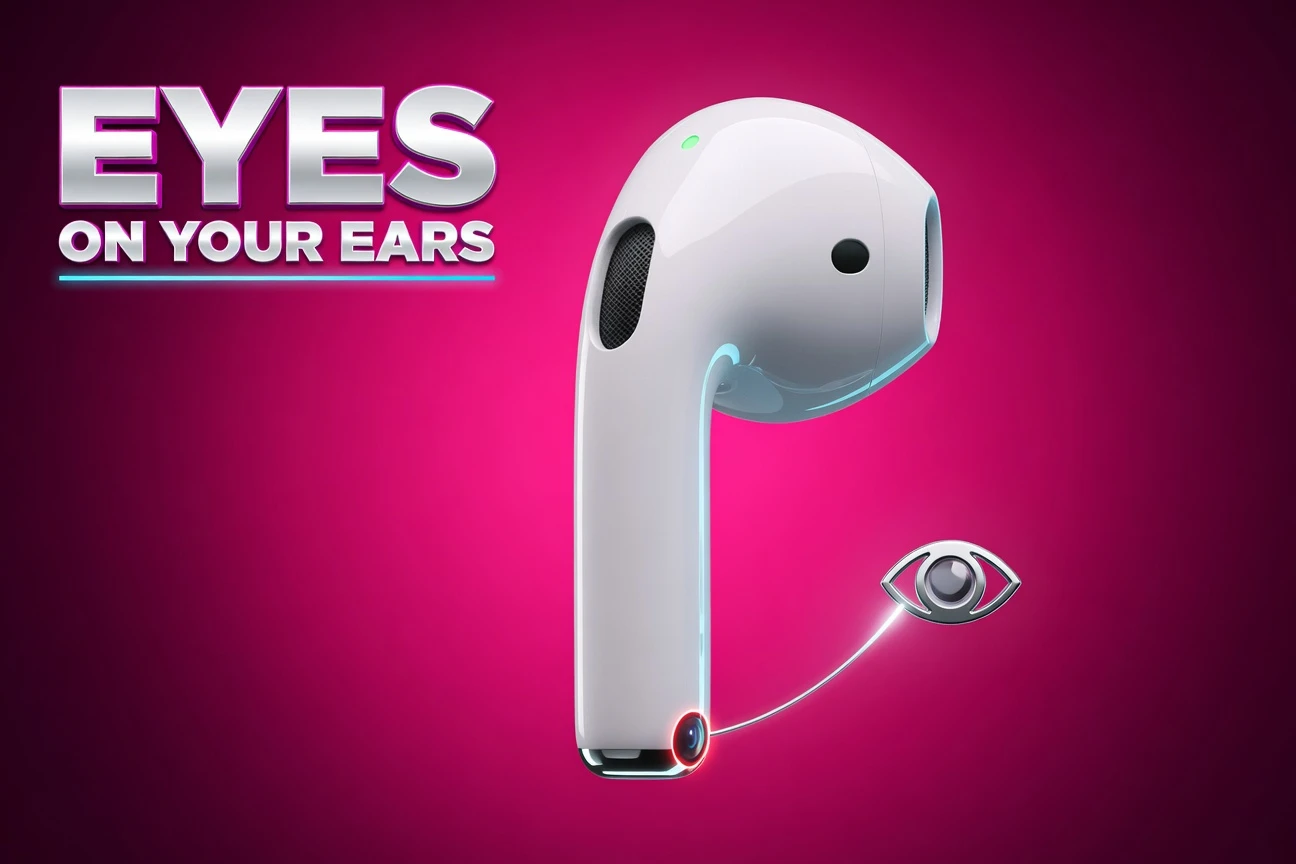
The earbuds carry low-resolution cameras in both stems. They aren’t built to shoot photos or video. They’re built to feed a visual stream to Siri so the assistant can see what the wearer sees, identify objects, read environments, and answer questions about them. Gurman’s sources say Apple may brand the device AirPods Ultra and price it above the $249 AirPods Pro 3.
And here’s the catch. The hardware is nearly done. The software isn’t. Apple wanted to ship these earbuds in the first half of 2026. That window is gone, and the reason has nothing to do with the cameras.
Why The Hardware Is Ready But The Launch Isn’t
DVT is a specific milestone. Apple’s prototypes at this stage carry near-final industrial design, near-final internal components, and near-final firmware. The next step is PVT, where contract manufacturers like Luxshare or Foxconn run small batches on the actual production line to expose tolerance issues. After that, mass production starts.
So the engineering side is on schedule. The blocker is Siri. 9to5Mac’s coverage of the Bloomberg scoop notes Apple’s overhauled, LLM-powered Siri is now slated for September alongside iOS 27, macOS 27, and iPadOS 27. Without that Siri, the cameras have nothing intelligent to talk to. A pair of earbuds that can see your kitchen counter is useless if the voice assistant attached to it can’t tell a tomato from a tangerine.
Gurman’s sources put it bluntly: concerns about the AI features could push the launch further if Apple isn’t satisfied with the visual intelligence layer. That phrasing matters. It’s the same phrasing Apple used internally before delaying the personalized Siri features announced at WWDC 2024.
The Four-Year Backstory
The project started inside Apple in 2022. Ming-Chi Kuo’s May 2025 supply chain note first laid out the production timeline, calling for mass production in 2026 with a possible slip to 2027 if battery life or thermal constraints proved harder than expected. Kuo also flagged a custom chip codenamed Glennie meant to handle the visual processing on-device.
Bloomberg first reported the camera AirPods existed in February 2024. Kuo confirmed the project four months later. Then Apple killed a parallel project: an Apple Watch with a built-in camera, scrapped quietly last year. The Watch camera died. The AirPods camera survived. That tells you where Apple thinks the AI wearable category lives.
What The Cameras Actually Do
The cameras feed Siri. That’s the entire pitch. Ask Siri what’s in your fridge while wearing the earbuds, and the visual stream goes to Apple’s servers, gets parsed, and comes back as a recipe suggestion. Walk past a building, ask what it is, and the camera handles the lookup. Get turn-by-turn directions that update based on what’s actually in front of you, not just GPS coordinates.
- Object recognition for groceries, books, packaging, signage, plants, and household items.
- Contextual reminders triggered by what the camera sees, like medication on a counter or keys on a hook.
- Enhanced navigation that supplements GPS with visual landmarks, pulled live from the user’s surroundings.
- Vision Pro pairing, where head-direction data sharpens spatial audio inside Apple’s headset.
An LED indicator lights up when the cameras are active. That’s Apple’s headline privacy feature. How visible the LED actually is on a stem-mounted earbud, and how many strangers will notice it, remains the open question. The Mac’s green webcam light works because you stare at the screen. An LED tucked under your earlobe is a different physics problem.
Apple Walks Into A Market Meta Already Owns
The competitive picture is brutal. Meta’s Ray-Ban smart glasses captured between 75 and 80 percent of the smart-eyewear market in 2025, with more than seven million units sold. The TechBuzz analysis of Meta’s wearables performance reports the company plans to double smart-glasses production capacity by the end of 2026 while cutting its VR budget. The glasses are working. The headsets aren’t.
OpenAI is pushing into the same lane. Sam Altman’s company paid $6.4 billion last year for Jony Ive’s design startup io and is now building a screenless, voice-first AI device targeting initial production of 40 to 50 million units through Foxconn. Court filings cited by Adweek’s review of the OpenAI hardware litigation indicate the first device won’t be wearable, but earbud-style and pen-style follow-ups are in development under codenames Sweetpea and Gumdrop.
The Three-Way Race In One Table
| Player | Form factor | AI assistant | Status |
|---|---|---|---|
| Meta | Ray-Ban and Oakley smart glasses | Meta AI | Shipping, 7M+ units sold |
| Apple | AirPods with stem cameras | Next-gen Siri (Sept 2026) | Late testing (DVT) |
| OpenAI / Jony Ive | Screenless device, then earbuds | ChatGPT | H2 2026 target, delays reported |
| Motorola | AI pendant (concept) | Moto AI | CES 2026 reveal |
| Amazon | Bee wearable (acquired 2025) | Alexa+ | Wrist and lapel form factors |
The pendant category itself is a graveyard. Humane’s AI Pin launched to brutal reviews in 2024 and was discontinued within a year. Friend, the AI necklace startup, became the punchline of New York subway graffiti, with riders writing Go make some real friends across its ads. Apple is entering a category that has burned every company that came before it.
The Privacy Problem Apple Is About To Inherit
Camera-equipped wearables have already created legal exposure. TechCrunch reported in March on a class action filed against Meta after a Swedish newspaper investigation found that workers at a Kenya-based subcontractor were reviewing customer footage. The reviewed material included nudity, sex, and footage of people using the toilet. The U.K. Information Commissioner’s Office opened its own investigation. Meta said faces were blurred. Sources told reporters the blurring didn’t always work.
Consumer expectations regarding privacy haven’t gone away entirely, but they are shifting. We’re already being surveilled by billions of smartphones, city camera networks and smart devices that we willingly placed in our homes.
That’s Avi Greengart, lead analyst at Techsponential, on why Meta keeps selling glasses despite the lawsuits. Greengart told reporters he doesn’t expect AI wearables to replace smartphones soon, but does expect them to land alongside watches, rings, and glasses as standard kit. His framing matters because it’s the bull case. The bear case is the Kenyan subcontractor.
Apple’s privacy track record is genuinely better than Meta’s. The company processes most Siri requests on-device, encrypts the rest, and runs cloud workloads through Private Cloud Compute. But the moment cameras enter the picture, the data profile changes. Visual data is harder to anonymize than text. A blurred face is still a body, a tattoo, a uniform, a setting. Apple will have to explain, in detail, what gets sent to the cloud, what stays on the device, what gets deleted, and who reviews edge cases.
Why Google Glass Still Matters
The 2013 backlash against Google Glass set the template. Bars banned wearers. The word Glasshole entered the dictionary. The product died. Meta’s Ray-Bans survived where Glass didn’t because they look like sunglasses, not goggles, and because Meta marketed them as a Ray-Ban product first and a camera second.
Apple’s bet is similar. AirPods are already in the wild on hundreds of millions of ears. Adding cameras to a familiar object is less alien than strapping a screen to someone’s face. Whether that’s enough cover when the cameras are pointed at strangers in coffee shops is the question every reviewer will ask in the first week.
Pricing And Branding Signal Where Apple Is Aiming
Gurman’s sources say the device will sit above $249. The AppleInsider read of Bloomberg’s pricing intelligence notes that AirPods Ultra branding would let Apple introduce a new tier without disrupting the AirPods Pro 3 lineup. Apple last spun out an Ultra brand for the Apple Watch Ultra in 2022, where the Ultra commands a roughly two-times premium over the standard Watch.
Applied to AirPods, that math suggests a price band somewhere between $349 and $449. Bloomberg hasn’t confirmed a specific figure. But the Ultra naming convention and the cost of adding cameras, IR sensors, and a custom processing chip make a $249 price untenable.
Stats That Frame The Bet
- 4 years of internal development before reaching DVT.
- $249 floor price for current AirPods Pro 3, the launchpad for Ultra pricing.
- 75-80% of the smart-glasses market currently held by Meta.
- 40-50 million units targeted by OpenAI for its first AI device.
- September 2026 earliest realistic launch window if Siri ships on time.
- 7 million+ Meta smart glasses sold in 2025, the comparison set Apple has to beat.
The Timeline From Here
- May 2026: DVT prototypes confirmed in Bloomberg report.
- Summer 2026: PVT batches expected at contract manufacturers.
- September 2026: iOS 27 launch with new Siri, the earliest plausible AirPods Ultra debut.
- Late 2026 or H1 2027: Realistic ship date if Siri features pass internal review.
- 2027: Lighter AirPods Max refresh, separately, per Kuo’s roadmap for Apple’s audio lineup through 2027.
One detail worth flagging for Apple Vision Pro owners: Kuo previously reported that the camera AirPods would integrate with Vision Pro to enhance spatial audio. Turn your head toward a sound source in a video, and the audio profile shifts to emphasize that direction. That’s a feature pair, not a coincidence. Apple is building hardware that compounds across its product line, the same way the H2 chip ties the Watch and AirPods together for hearing-aid features.
For broader context on how on-device biometric sensing is migrating across product categories, see our coverage of Samsung’s Sensor OLED panel that reads pulse and blood pressure through the display. The thread is the same: sensors disappear into devices people already own.
Frequently Asked Questions
When will AirPods with cameras actually go on sale?
The earliest realistic window is September 2026, alongside iOS 27 and the new Siri. Bloomberg reports the hardware is in design validation testing, which typically runs three to six months before production. But Apple has tied the launch to its overhauled Siri, and any delay to that software project pushes the AirPods Ultra into late 2026 or the first half of 2027.
How much will AirPods Ultra cost?
Above $249. Apple hasn’t confirmed a price, but Gurman reports Ultra branding and a premium positioning over the AirPods Pro 3. Based on how Apple priced the Apple Watch Ultra at roughly two times the standard Watch, a $349 to $449 range is the most credible estimate. Final pricing won’t be public until Apple’s official launch event.
Can the cameras take photos or record video?
No. The cameras are low-resolution modules that feed visual data to Siri for object recognition, contextual reminders, and navigation. They cannot capture or store photos or video for the user. An LED indicator on each earbud lights up when the cameras are active, similar to the green light on a Mac webcam.
Will AirPods Ultra work with non-Apple phones?
The visual features are tied to Siri and Apple Intelligence, which only run on iPhones, iPads, and Macs. Standard Bluetooth audio playback should work with Android phones, as it does with current AirPods, but the camera features and AI integrations will not. If you’re on Android, you’re getting expensive earbuds without the headline feature.
Are camera-equipped earbuds a privacy risk for people around me?
The cameras don’t record video, but they do capture environment data and send it to Apple’s servers for processing. Apple’s privacy stance is stronger than Meta’s, and the LED indicator signals when cameras are active. Still, anyone uncomfortable being scanned by a stranger’s earbuds has a legitimate concern. Local laws on consent recording vary, and Apple has not yet detailed its data retention policies for visual data.
What happens if Apple’s new Siri isn’t ready?
The launch slips. Bloomberg’s sources explicitly tied the AirPods Ultra release to the AI Siri rebuild, and Apple has already pushed personalized Siri features once. If Siri 2.0 misses September 2026, expect AirPods Ultra to follow it into 2027. The earbuds without the assistant are just expensive AirPods with extra hardware nobody can use.
The story to watch over the next six months isn’t the earbuds. It’s Siri. Apple has built the body. The brain has to ship for any of this to matter, and Cupertino has missed that deadline before.
Embark Studios just told its Linux players to hold their breath. In a May 7, 2026 developer update titled “Ensuring Fair Play”, the studio behind Arc Raiders confirmed it is testing a new kernel-level anti-cheat solution to layer on top of Easy Anti-Cheat. The post never says the word Linux. That silence is the story.
Arc Raiders currently sits at Platinum on ProtonDB, one of a tiny handful of semi-competitive shooters with that rating and a six-figure player base. The reason it earned that badge is the same reason its Linux future is now in question: Embark left EAC running in user-space mode, the only mode Proton can translate. A second kernel-level layer threatens to break the compromise that made the game playable on SteamOS in the first place.
What Embark Actually Said And What It Didn’t
The blog post, timed to the Riven Tides update going live April 28, lays out a three-part stack. Easy Anti-Cheat handles the kernel layer. Machine-learning models built with Portuguese AI firm Anybrain’s behavioral detection platform chew through input telemetry. Several other systems sit underneath, undisclosed for operational security.
Then comes the line that set the ProtonDB threads on fire. “Kernel-level detection is a necessity because most commercial cheats operate within that space,” Embark wrote. “Without it, we’d have little to no visibility into the tools doing the most damage.” The studio said it is currently testing a fresh kernel-level solution it expects will sharpen detection across Speranza and the Rust Belt.
Notice what the post leaves out. There is no commitment to keep EAC’s Linux user-space mode active alongside the new layer. There is no acknowledgement of the Steam Deck install base. There is no “we will continue supporting Proton.” The omission is doing heavy lifting.
Why The Platinum Rating Was A Tightrope, Not A Promise
Easy Anti-Cheat has a Linux build. It has had one since 2021, when Epic shipped Proton support. The catch is that the Linux version runs in user space, not the kernel. That is fundamentally less invasive and fundamentally less powerful than the Windows build.
Embark is one of the rare developers that flipped the toggle. Counterpoint: most won’t. Of the 1,136 games on Steam that require anti-cheat software, 682 of them do not work on SteamOS, according to crowd-sourced compatibility data tracked by AreWeAntiCheatYet and surfaced in GamingOnLinux’s November 2025 Steam Machine analysis. That is roughly 60 percent of anti-cheat games locked out.
The friction is policy, not technology. Facepunch CEO Garry Newman put it plainly when explaining why Rust dropped Linux support. “It’s a vector for cheat developers, and one that would be poorly maintained by both us and EAC due to the low user base. When we stopped support for Linux, we saw more cheat users exploiting Linux than actual legitimate users,” Newman said in a statement republished across Linux forums. Riot’s anti-cheat lead Phillip Koskinas told The Verge in 2024, “You can freely manipulate the kernel, and there’s no user mode calls to attest that it’s even genuine. You could make a Linux distribution that’s purpose-built for cheating and we’d be smoked.”
The Cheating Crisis That Forced Embark’s Hand
The kernel-layer test isn’t happening in a vacuum. Arc Raiders is bleeding players, and the cheaters are the loudest reason why.
The numbers are brutal:
- 481,966 all-time concurrent peak on Steam, hit November 16, 2025 per SteamDB’s Arc Raiders concurrent-player chart.
- 466,372 concurrent on January 4, 2026, the post-launch second wind.
- 95,642 concurrent in mid-April 2026, an 80 percent drop from the New Year peak.
- 15th most-played game on Steam even after the collapse, ahead of Overwatch and Marvel Rivals.
The cheating drumbeat got louder every week. Tyler “Ninja” Blevins, one of the highest-profile streamers to pick up the game at launch, called it “unplayable” before stepping back from streams. TheBurntPeanut, the largest creator in the Arc Raiders community, throttled his hours despite watching his viewership take the hit. Embark’s earlier response, a three-strike system that mostly issued 30-day suspensions instead of permanent bans, drew accusations of catch-and-release.
The Anybrain Layer, And Why It Isn’t Enough
Embark’s bet on machine learning is real money on the table. Anybrain’s pitch is that aim-bots, trigger-bots, and recoil scripts produce input patterns no human hand can mimic, and a model trained on enough telemetry can flag them in real time. The vendor describes its system as lightweight enough to run alongside gameplay without measurable overhead.
Input telemetry analysis has become one of our most effective tools. We’ve trained and deployed a set of models dedicated to this, and have been working with Anybrain on this research since the start.
That’s Embark’s own framing in the May 7 post. The studio also confirmed every ban appeal is reviewed by a human, not an algorithm, and that input-pattern analysis is the technique it leans on hardest to separate accessibility-device users from cheaters. The hard cases are the ones where someone is using a niche adaptive controller that mimics the macro patterns a cheat tool produces. Embark says it analyzes telemetry plus communication patterns to read intent.
Behavioral ML is good. It is not, by Embark’s own admission, sufficient. The studio said the new kernel test is happening because most commercial cheats live in ring zero, and the only way to see them is to operate there too. That logic is the entire industry’s logic. It is also the logic that has shut Linux out of every Riot, Activision, and EA shooter on the market.
What “Sits Alongside” Could Mean For Steam Deck Owners
The most consequential phrasing in the blog is that the new kernel-level solution will “sit alongside or on top of” the existing EAC implementation. Three scenarios are possible. Each carries a different verdict for Linux.
- Scenario one, soft layer. The new component runs only on Windows clients while EAC continues handling Linux in user space. Linux play continues unaffected. This is the best case and the least likely, because cheat developers will simply migrate to Linux to dodge the new layer.
- Scenario two, parity flag. The new component requires kernel access on every supported platform, and Embark turns Linux off as a result. Steam Deck owners get a refund window and a launch error. This is what happened to Apex Legends in 2024.
- Scenario three, sandboxed Linux mode. Embark keeps Linux on a separate matchmaking pool with weaker anti-cheat coverage, an idea Valve has reportedly pitched to studios. Linux players keep the game but at the cost of being quietly segregated.
Embark hasn’t picked, and that’s why the blog reads as a soft warning. The studio is known for caring about Linux. The Finals, its other live shooter, is still playable on SteamOS nearly two years after launch, and patches that break Linux compatibility usually get fixed within a day. That goodwill is real. It is also unilateral, which means it can be revoked without negotiation.
The Steam Machine Wildcard
Embark is making this call at the exact moment Valve is trying to change the math. The newly announced Steam Machine living-room PC ships with SteamOS, the same Linux-based platform as the Steam Deck. Valve has told Eurogamer it expects more multiplayer play on the Machine than on the Deck, which would in theory raise the commercial incentive for studios to enable Linux anti-cheat support.
The arithmetic still doesn’t add up. PC World pegged Steam Deck unit sales at four to six million through early 2025, with another two million expected by year-end. Best case eight million Decks plus an unknown but small initial Steam Machine pool against 84 million PS5 consoles. For a developer choosing where to put anti-cheat engineering hours, the Linux audience is still rounding error.
What Linux Players Should Do This Week
Until Embark says more, Arc Raiders runs fine on Proton Experimental with the Bleeding-edge beta toggled on, or on GE-Proton 10-22 or 10-24. Players who hit the recent vkCreateRayTracingPipelinesKHR assertion failure after the February 2026 patch can clear the shader cache or disable Vulkan ray tracing as a workaround. The community’s read on Embark’s track record is that breakage usually gets fixed within 24 hours.
The harder question isn’t this week’s launcher. It’s whether the kernel test, once it ends, expands to all platforms. The blog post offered no timeline. Embark told players the system is being trialed across Speranza and the Rust Belt, the two zones that cover all live PvE and PvP modes, which suggests the test is broad rather than confined to a small percentage rollout.
Frequently Asked Questions
Does Arc Raiders Still Work On Steam Deck And Linux Right Now?
Yes. As of May 9, 2026, Arc Raiders runs on Linux through Easy Anti-Cheat’s user-space mode and holds a Platinum rating on ProtonDB. Use Proton Experimental with the Bleeding-edge beta enabled, or GE-Proton 10-24, and force that compatibility tool in the game’s Steam properties. Performance reports are positive on both AMD and Nvidia hardware.
Will The New Kernel-Level Anti-Cheat Break Linux Support?
Embark hasn’t said. The May 7 blog post confirms a new kernel-level solution is in testing alongside Easy Anti-Cheat but does not commit to Linux compatibility for that new layer. Watch the official Arc Raiders news feed and Embark’s status page for the rollout announcement. Until then, no patch has shipped that disables Linux play.
What Is Anybrain And How Does Its AI Detect Cheaters?
Anybrain is a Lisbon-based AI firm Embark partnered with from the start of Arc Raiders development. Its system reads mouse and keyboard input telemetry and trains models to flag patterns no human can produce, like perfect recoil compensation or sub-100-millisecond reaction chains. It runs lightweight on the client and feeds detection signals back to Embark’s review team.
Can I Get Banned For Playing Arc Raiders On Linux?
No reports indicate Embark bans for Linux play itself. The accidental bans being discussed in the community involve players using accessibility controllers whose input patterns occasionally trigger ML detection. Embark says every ban appeal is reviewed by a human reviewer, and the studio has restored items to players who could prove a hacker killed them through its Abnormal Match Compensation system.
If Arc Raiders Drops Linux Support, Can I Get A Refund?
Yes, in most cases. Steam’s standard refund policy covers fewer than two hours of playtime within 14 days of purchase, but Valve has historically extended refunds beyond that window when a game removes a previously supported platform. File the request through Steam Support and cite the platform-removal change in the ticket.
For now, Linux Arc Raiders players are stuck in the same posture as everyone else watching this story: waiting on the next Embark patch note to see whether the kernel layer is a Windows-only experiment or a stack-wide upgrade. The studio earned a lot of credit by shipping the game with Linux support intact when it didn’t have to. That credit is about to be tested. The cheaters forced this conversation, but the answer Embark gives in the next few weeks will set the tone for how every other live-service shooter handles SteamOS for the rest of the decade.


BofA Lifts Enovix Target To $7 As Honor Drops Killer Battery Test

Korea’s AI Basic Act Goes Live With $20K Fine Cap and 10^26 Wall

Apple AirPods With Cameras Hit Final Test Stage, Siri Holds Up Launch

Andreessen Horowitz Bets $2.2B on Crypto’s Quiet Cycle

Google’s Buried Page Reveals 500 Niche Websites Still Making Cash

Asha Sharma Reshuffles Xbox Leadership In Race To Project Helix
-
 CRYPTO4 days ago
Andreessen Horowitz Bets $2.2B on Crypto’s Quiet Cycle
-
APPS4 days ago
Google’s Buried Page Reveals 500 Niche Websites Still Making Cash
-
 GAMING4 days ago
Asha Sharma Reshuffles Xbox Leadership In Race To Project Helix
-

 COMPUTERS3 days ago
PCB Shortage Hits China After Saudi Strike Sends Prices Up 40%
-
 NEWS3 days ago
SEBI Names Claude Mythos, Sets Up cyber-suraksha.ai Task Force
-

 AI4 days ago
Subquadratic Launches A 12-Million-Token AI Model And Says The Wall Is Gone
-

 NEWS3 days ago
Samsung’s 500 PPI Sensor OLED Reads Pulse And Blocks Snoopers
-

 CRYPTO4 days ago
Wells Fargo Says Circle Is Crypto’s Underappreciated Winner