
GADGETS
Apple AirPods With Cameras Hit Final Test Stage, Siri Holds Up Launch

Apple has pushed its camera-equipped AirPods into the final development stage before mass production, according to a Bloomberg report by Mark Gurman published May 7. Engineers inside Cupertino are now testing prototypes at the design validation testing phase, known internally as DVT. That’s the second-to-last gate before production validation, and it usually runs three to six months.
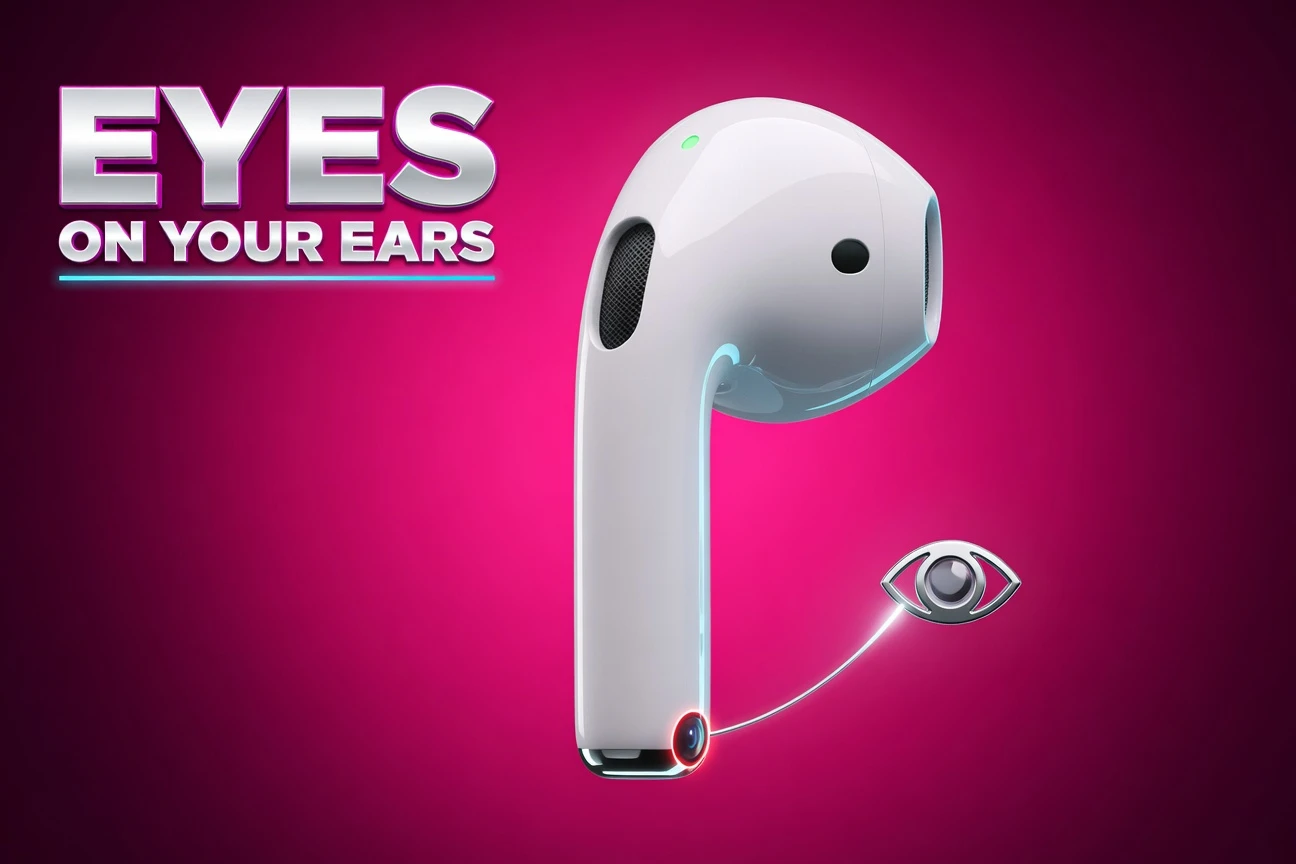
The earbuds carry low-resolution cameras in both stems. They aren’t built to shoot photos or video. They’re built to feed a visual stream to Siri so the assistant can see what the wearer sees, identify objects, read environments, and answer questions about them. Gurman’s sources say Apple may brand the device AirPods Ultra and price it above the $249 AirPods Pro 3.
And here’s the catch. The hardware is nearly done. The software isn’t. Apple wanted to ship these earbuds in the first half of 2026. That window is gone, and the reason has nothing to do with the cameras.
Why The Hardware Is Ready But The Launch Isn’t
DVT is a specific milestone. Apple’s prototypes at this stage carry near-final industrial design, near-final internal components, and near-final firmware. The next step is PVT, where contract manufacturers like Luxshare or Foxconn run small batches on the actual production line to expose tolerance issues. After that, mass production starts.
So the engineering side is on schedule. The blocker is Siri. 9to5Mac’s coverage of the Bloomberg scoop notes Apple’s overhauled, LLM-powered Siri is now slated for September alongside iOS 27, macOS 27, and iPadOS 27. Without that Siri, the cameras have nothing intelligent to talk to. A pair of earbuds that can see your kitchen counter is useless if the voice assistant attached to it can’t tell a tomato from a tangerine.
Gurman’s sources put it bluntly: concerns about the AI features could push the launch further if Apple isn’t satisfied with the visual intelligence layer. That phrasing matters. It’s the same phrasing Apple used internally before delaying the personalized Siri features announced at WWDC 2024.
The Four-Year Backstory
The project started inside Apple in 2022. Ming-Chi Kuo’s May 2025 supply chain note first laid out the production timeline, calling for mass production in 2026 with a possible slip to 2027 if battery life or thermal constraints proved harder than expected. Kuo also flagged a custom chip codenamed Glennie meant to handle the visual processing on-device.
Bloomberg first reported the camera AirPods existed in February 2024. Kuo confirmed the project four months later. Then Apple killed a parallel project: an Apple Watch with a built-in camera, scrapped quietly last year. The Watch camera died. The AirPods camera survived. That tells you where Apple thinks the AI wearable category lives.
What The Cameras Actually Do
The cameras feed Siri. That’s the entire pitch. Ask Siri what’s in your fridge while wearing the earbuds, and the visual stream goes to Apple’s servers, gets parsed, and comes back as a recipe suggestion. Walk past a building, ask what it is, and the camera handles the lookup. Get turn-by-turn directions that update based on what’s actually in front of you, not just GPS coordinates.
- Object recognition for groceries, books, packaging, signage, plants, and household items.
- Contextual reminders triggered by what the camera sees, like medication on a counter or keys on a hook.
- Enhanced navigation that supplements GPS with visual landmarks, pulled live from the user’s surroundings.
- Vision Pro pairing, where head-direction data sharpens spatial audio inside Apple’s headset.
An LED indicator lights up when the cameras are active. That’s Apple’s headline privacy feature. How visible the LED actually is on a stem-mounted earbud, and how many strangers will notice it, remains the open question. The Mac’s green webcam light works because you stare at the screen. An LED tucked under your earlobe is a different physics problem.
Apple Walks Into A Market Meta Already Owns
The competitive picture is brutal. Meta’s Ray-Ban smart glasses captured between 75 and 80 percent of the smart-eyewear market in 2025, with more than seven million units sold. The TechBuzz analysis of Meta’s wearables performance reports the company plans to double smart-glasses production capacity by the end of 2026 while cutting its VR budget. The glasses are working. The headsets aren’t.
OpenAI is pushing into the same lane. Sam Altman’s company paid $6.4 billion last year for Jony Ive’s design startup io and is now building a screenless, voice-first AI device targeting initial production of 40 to 50 million units through Foxconn. Court filings cited by Adweek’s review of the OpenAI hardware litigation indicate the first device won’t be wearable, but earbud-style and pen-style follow-ups are in development under codenames Sweetpea and Gumdrop.
The Three-Way Race In One Table
| Player | Form factor | AI assistant | Status |
|---|---|---|---|
| Meta | Ray-Ban and Oakley smart glasses | Meta AI | Shipping, 7M+ units sold |
| Apple | AirPods with stem cameras | Next-gen Siri (Sept 2026) | Late testing (DVT) |
| OpenAI / Jony Ive | Screenless device, then earbuds | ChatGPT | H2 2026 target, delays reported |
| Motorola | AI pendant (concept) | Moto AI | CES 2026 reveal |
| Amazon | Bee wearable (acquired 2025) | Alexa+ | Wrist and lapel form factors |
The pendant category itself is a graveyard. Humane’s AI Pin launched to brutal reviews in 2024 and was discontinued within a year. Friend, the AI necklace startup, became the punchline of New York subway graffiti, with riders writing Go make some real friends across its ads. Apple is entering a category that has burned every company that came before it.
The Privacy Problem Apple Is About To Inherit
Camera-equipped wearables have already created legal exposure. TechCrunch reported in March on a class action filed against Meta after a Swedish newspaper investigation found that workers at a Kenya-based subcontractor were reviewing customer footage. The reviewed material included nudity, sex, and footage of people using the toilet. The U.K. Information Commissioner’s Office opened its own investigation. Meta said faces were blurred. Sources told reporters the blurring didn’t always work.
Consumer expectations regarding privacy haven’t gone away entirely, but they are shifting. We’re already being surveilled by billions of smartphones, city camera networks and smart devices that we willingly placed in our homes.
That’s Avi Greengart, lead analyst at Techsponential, on why Meta keeps selling glasses despite the lawsuits. Greengart told reporters he doesn’t expect AI wearables to replace smartphones soon, but does expect them to land alongside watches, rings, and glasses as standard kit. His framing matters because it’s the bull case. The bear case is the Kenyan subcontractor.
Apple’s privacy track record is genuinely better than Meta’s. The company processes most Siri requests on-device, encrypts the rest, and runs cloud workloads through Private Cloud Compute. But the moment cameras enter the picture, the data profile changes. Visual data is harder to anonymize than text. A blurred face is still a body, a tattoo, a uniform, a setting. Apple will have to explain, in detail, what gets sent to the cloud, what stays on the device, what gets deleted, and who reviews edge cases.
Why Google Glass Still Matters
The 2013 backlash against Google Glass set the template. Bars banned wearers. The word Glasshole entered the dictionary. The product died. Meta’s Ray-Bans survived where Glass didn’t because they look like sunglasses, not goggles, and because Meta marketed them as a Ray-Ban product first and a camera second.
Apple’s bet is similar. AirPods are already in the wild on hundreds of millions of ears. Adding cameras to a familiar object is less alien than strapping a screen to someone’s face. Whether that’s enough cover when the cameras are pointed at strangers in coffee shops is the question every reviewer will ask in the first week.
Pricing And Branding Signal Where Apple Is Aiming
Gurman’s sources say the device will sit above $249. The AppleInsider read of Bloomberg’s pricing intelligence notes that AirPods Ultra branding would let Apple introduce a new tier without disrupting the AirPods Pro 3 lineup. Apple last spun out an Ultra brand for the Apple Watch Ultra in 2022, where the Ultra commands a roughly two-times premium over the standard Watch.
Applied to AirPods, that math suggests a price band somewhere between $349 and $449. Bloomberg hasn’t confirmed a specific figure. But the Ultra naming convention and the cost of adding cameras, IR sensors, and a custom processing chip make a $249 price untenable.
Stats That Frame The Bet
- 4 years of internal development before reaching DVT.
- $249 floor price for current AirPods Pro 3, the launchpad for Ultra pricing.
- 75-80% of the smart-glasses market currently held by Meta.
- 40-50 million units targeted by OpenAI for its first AI device.
- September 2026 earliest realistic launch window if Siri ships on time.
- 7 million+ Meta smart glasses sold in 2025, the comparison set Apple has to beat.
The Timeline From Here
- May 2026: DVT prototypes confirmed in Bloomberg report.
- Summer 2026: PVT batches expected at contract manufacturers.
- September 2026: iOS 27 launch with new Siri, the earliest plausible AirPods Ultra debut.
- Late 2026 or H1 2027: Realistic ship date if Siri features pass internal review.
- 2027: Lighter AirPods Max refresh, separately, per Kuo’s roadmap for Apple’s audio lineup through 2027.
One detail worth flagging for Apple Vision Pro owners: Kuo previously reported that the camera AirPods would integrate with Vision Pro to enhance spatial audio. Turn your head toward a sound source in a video, and the audio profile shifts to emphasize that direction. That’s a feature pair, not a coincidence. Apple is building hardware that compounds across its product line, the same way the H2 chip ties the Watch and AirPods together for hearing-aid features.
For broader context on how on-device biometric sensing is migrating across product categories, see our coverage of Samsung’s Sensor OLED panel that reads pulse and blood pressure through the display. The thread is the same: sensors disappear into devices people already own.
Frequently Asked Questions
When will AirPods with cameras actually go on sale?
The earliest realistic window is September 2026, alongside iOS 27 and the new Siri. Bloomberg reports the hardware is in design validation testing, which typically runs three to six months before production. But Apple has tied the launch to its overhauled Siri, and any delay to that software project pushes the AirPods Ultra into late 2026 or the first half of 2027.
How much will AirPods Ultra cost?
Above $249. Apple hasn’t confirmed a price, but Gurman reports Ultra branding and a premium positioning over the AirPods Pro 3. Based on how Apple priced the Apple Watch Ultra at roughly two times the standard Watch, a $349 to $449 range is the most credible estimate. Final pricing won’t be public until Apple’s official launch event.
Can the cameras take photos or record video?
No. The cameras are low-resolution modules that feed visual data to Siri for object recognition, contextual reminders, and navigation. They cannot capture or store photos or video for the user. An LED indicator on each earbud lights up when the cameras are active, similar to the green light on a Mac webcam.
Will AirPods Ultra work with non-Apple phones?
The visual features are tied to Siri and Apple Intelligence, which only run on iPhones, iPads, and Macs. Standard Bluetooth audio playback should work with Android phones, as it does with current AirPods, but the camera features and AI integrations will not. If you’re on Android, you’re getting expensive earbuds without the headline feature.
Are camera-equipped earbuds a privacy risk for people around me?
The cameras don’t record video, but they do capture environment data and send it to Apple’s servers for processing. Apple’s privacy stance is stronger than Meta’s, and the LED indicator signals when cameras are active. Still, anyone uncomfortable being scanned by a stranger’s earbuds has a legitimate concern. Local laws on consent recording vary, and Apple has not yet detailed its data retention policies for visual data.
What happens if Apple’s new Siri isn’t ready?
The launch slips. Bloomberg’s sources explicitly tied the AirPods Ultra release to the AI Siri rebuild, and Apple has already pushed personalized Siri features once. If Siri 2.0 misses September 2026, expect AirPods Ultra to follow it into 2027. The earbuds without the assistant are just expensive AirPods with extra hardware nobody can use.
The story to watch over the next six months isn’t the earbuds. It’s Siri. Apple has built the body. The brain has to ship for any of this to matter, and Cupertino has missed that deadline before.


South Korea Retail Investors Face Reckoning After KOSPI AI Rally Collapses

Surrey AI Maps Three Heart Attack Paths and Their Molecular Roots

Germany Locks Neutral Apple ATT Prompts Across Most of Europe

Apple’s 5% EU Fee Quietly Rewrites Alternative App Store Math

Apple’s EU Fee Truce Cuts Complexity but Leaves Rivals Fuming

Pixel 11 Pro Fold Trades Thinness for Durability and Seven-Year Stay

Mayo AI Flags HCM Obstruction From Everyday Ultrasound Videos

Indian Brands Quietly Scale Landmark Screens and Home Tech

Navin Vatsa Turns Grief Into a Lifetime of Quiet Seeing

Google Bets Pixel 11 Agentic AI Will Redefine Phones

Oracle Cuts 21,000 Jobs in a Year, Cites AI in 10-K Filing

Fable 5 and Mythos 5 Return as US Lifts Anthropic Export Controls

SpaceX’s Google Deal Turns a Rocket Company Into a Cloud Landlord

CD Projekt Red Co-CEO: Redemption Arc Isn’t Done, Witcher 4 in 2027

XPL Rallies 30% Ahead of Plasma One Card Tier Launch

Google Search Profiles Build a Follow Graph Inside Discover

DGO App Brings Rs 549 Mobile Pass for FIFA World Cup 2026 in Nepal

Moonshot AI Targets $30 Billion in China’s Fastest AI Funding Sprint

Oppo’s ColorOS 17 Eligibility List Leaves A-Series Buyers Behind

Microsoft Xbox Layoffs Start in July as Sharma Slams 3% Margin
-
 AI2 months ago
Oracle Cuts 21,000 Jobs in a Year, Cites AI in 10-K Filing
-
 AI2 months ago
Fable 5 and Mythos 5 Return as US Lifts Anthropic Export Controls
-
 AI2 months ago
SpaceX’s Google Deal Turns a Rocket Company Into a Cloud Landlord
-
 GAMING2 months ago
CD Projekt Red Co-CEO: Redemption Arc Isn’t Done, Witcher 4 in 2027
-
 CRYPTO2 months ago
XPL Rallies 30% Ahead of Plasma One Card Tier Launch
-
 NEWS2 months ago
Google Search Profiles Build a Follow Graph Inside Discover
-
 APPS2 months ago
DGO App Brings Rs 549 Mobile Pass for FIFA World Cup 2026 in Nepal
-
 AI2 months ago
Moonshot AI Targets $30 Billion in China’s Fastest AI Funding Sprint