
AI
Meta’s Hatch And Google’s Remy Open The Agentic AI Wars

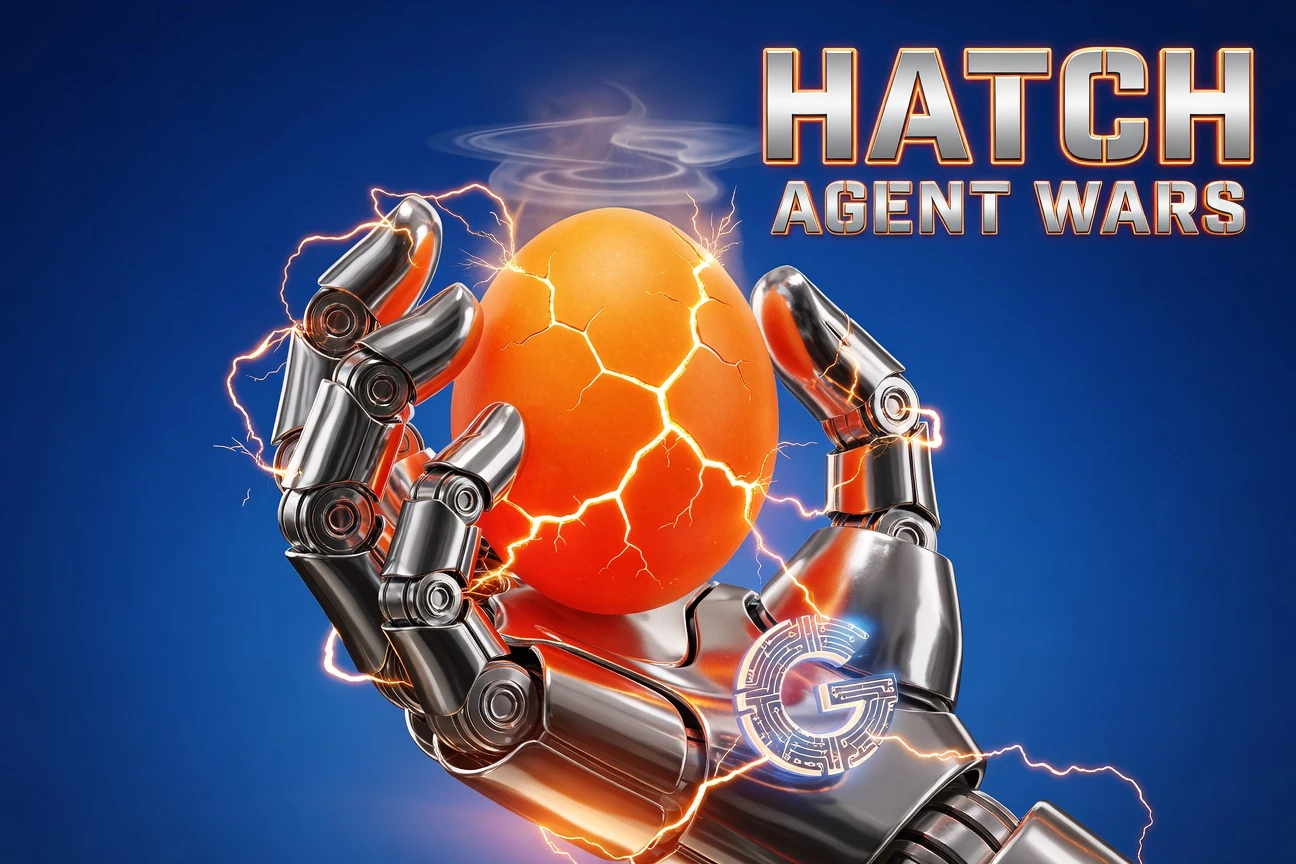
Meta is training its new consumer AI agent on a rival’s models. The company’s internal agent, codenamed Hatch, currently runs on Anthropic’s Claude Opus 4.6 and Claude Sonnet 4.6 before a planned switch to Meta’s own Muse Spark at launch, according to The Information’s reporting on the Hatch project. That detail, buried in this week’s reporting, says more about the agentic AI race than any of the breathless press cycles around it.
Mark Zuckerberg’s company is sprinting to ship a tool that can act for its 3 billion-plus users, and it is willing to lean on a competitor’s brain to get there. Google is doing something similar with a Gemini-powered agent called Remy. OpenAI is doubling down on OpenClaw. The fight everyone is calling the agentic wars is now in the open.
The Three Big Tech Agents Coming This Quarter
Meta confirmed nothing on the record. The Financial Times first reported on May 5 that Meta is building a highly personalized AI assistant for everyday tasks, citing people familiar with the matter. The next day, Business Insider reported Google is preparing Remy, billed inside the company as a 24/7 personal agent for work, school, and daily life, powered by Gemini.
Both efforts trace back to the same catalyst. OpenClaw, the open-source agent created by Austrian developer Peter Steinberger, went viral over the winter. Nvidia chief Jensen Huang called it the next ChatGPT. By February, Steinberger had joined OpenAI, with Sam Altman writing on X that he was joining to drive the next generation of personal agents. TechCrunch’s account of the Steinberger hire notes Meta tried to recruit him first.
It lost. So it built its own.
What Hatch Actually Does
Hatch is being trained inside what Meta engineers call sandboxed web environments. These are closed mock versions of real websites, including DoorDash, Etsy, Reddit, Yelp, and Outlook. The agent learns to click, type, scroll, and complete checkout flows on simulations before it touches the real web.
Meta wants the agent to decide when to act on its own rather than wait for instructions. It is also building a memory function that retains details across conversations. The internal target is to finish closed testing by the end of June.
A separate agentic shopping tool is on a faster track. Meta wants to slot it into Instagram before the fourth quarter, letting users tap a product in a Reel and complete a purchase inside the app, no external checkout required. EMARKETER’s analysis of the Instagram shopping push frames it as a direct shot at TikTok Shop.
Google’s Remy and the Personal Intelligence Layer
Google’s Remy sits on top of work the company has been quietly stacking for months. In January, Google launched Personal Intelligence, a feature that lets Gemini reason across Gmail, Photos, Search, and YouTube history. By March it had rolled out to AI Mode in Search, Gemini in Chrome, and the Gemini app across the United States.
Remy goes a step further. Internal documents seen by reporters describe it as deeply integrated across Google, able to monitor for things that matter to a user, handle complex tasks proactively, and learn preferences over time. The greeting line in the latest Google app beta reads, What can I get done for you today?
Why Big Tech Suddenly Cares About Agents
The honest answer is money, and the path is short.
Today, AI assistants on Meta’s and Google’s platforms are largely cost centers. They cost a fortune in compute and produce no direct revenue. Agents flip that arithmetic. An agent that books a flight earns a commission. An agent that buys a product earns a referral. An agent that schedules an appointment captures intent data that is more valuable than any keyword query.
Nick Patience, AI lead at the Futurum Group, put the shift bluntly. “Agents represent the point at which AI platforms shift from cost centres to revenue infrastructure, whether through commerce, advertising or enterprise productivity,” he told CNBC.
The numbers behind that thesis are now hard to ignore. Gartner’s August 2025 enterprise application forecast expects 40% of enterprise apps to feature task-specific AI agents by the end of 2026, up from less than 5% in 2025. Spending on AI agent software alone is projected to hit $206.5 billion in 2026 and $376.3 billion in 2027.
For Google and Meta, both still defined by ad-supported businesses, the timing is uncomfortable. If a user asks an agent to find the best running shoes and the agent buys a pair on Amazon, Google’s search ad doesn’t load. The agent ate the funnel. The only counter is to own the agent.
Malik Ahmed Khan, senior analyst at Morningstar, told CNBC that agents that conduct transactions could be a major value driver for both companies. Gartner analyst Arun Chandrasekaran went further, telling the same outlet that agents create stickiness because they keep learning user context over time.
The Numbers That Drove This Week’s Rally
The market already priced in the shift. Three data points stood out:
- $120 billion: AMD CEO Lisa Su’s new server CPU market forecast for 2030, more than double her November 2025 number, driven by agentic AI demand for inference and orchestration compute.
- 1:1 ratio: Su’s projected new ratio of CPUs to GPUs in agentic data centers, up from one CPU per four to eight GPUs today.
- 18.4%: SoftBank’s single-day stock surge on May 7, its best day since 2020, on its OpenAI and Arm exposure.
CNBC’s interview with Lisa Su on the doubled CPU forecast captured the structural argument: agents spawn far more CPU tasks than chat models do. “Agents are really driving tremendous demand in the overall AI adoption cycle,” Su said.
Hatch Versus Remy Versus OpenClaw, Side By Side
The three frontrunners look similar on paper and very different in distribution.
| Agent | Owner | Underlying Model | Distribution Surface | Target Window |
|---|---|---|---|---|
| OpenClaw | OpenAI / open-source foundation | OpenAI agentic models | Standalone, messaging-first | Live since November 2025 |
| Hatch | Meta | Claude 4.6 (training), Muse Spark (launch) | Instagram, Facebook, WhatsApp | Internal test by end of June 2026 |
| Remy / Gemini Agent | Gemini 2.x | Search, Chrome, Gemini app, Android | Beta strings already in Google app 17.20 |
Meta’s distribution edge is brute force. The company reaches roughly 3 billion daily users across its family of apps. Google’s edge is data depth. Personal Intelligence already has rights to read across a user’s Gmail, calendar, and search history. OpenAI’s edge is being first and being open source.
The Trust Problem Nobody Has Solved
An agent that does the wrong thing is not a chatbot that says the wrong thing. The shift is qualitative.
In February, a Meta employee went viral after posting that OpenClaw deleted a large amount of her emails on its own. Summer Yue, director of safety and alignment at Meta’s Superintelligence Lab, wrote that the agent kept going while she begged it to stop. The episode became a case study inside Meta itself.
The shift from AI systems that say the wrong thing to AI systems that do the wrong thing is a qualitatively different risk management challenge. Most enterprises, and arguably most vendors, are not yet equipped to handle it at scale.
That is Patience again, speaking to CNBC last week. The framing matters because the security failures already showing up in production agents are not the cinematic kind. They are mundane.
The OWASP Top 10 for Agentic Applications, released in December 2025, ranks Agent Goal Hijacking as the number one risk. Researchers running a public red-team competition fired 1.8 million prompt injection attempts at deployed agents. More than 60,000 succeeded in causing policy violations, a success rate that would be unacceptable for any other security control.
In March, Oasis Security demonstrated a complete attack pipeline against a default Claude session, dubbed Claudy Day, that chained invisible prompt injection with data exfiltration to steal conversation history. The same month, security researchers showed hidden instructions could be indexed by Gemini Enterprise’s retrieval system, then triggered when any employee ran a routine search.
The defensive playbook is still being written. Gartner’s May 5 note on autonomous business returns warns that more than 40% of agentic AI projects could be canceled by 2027 due to unclear value, rising costs, and weak governance.
Forrester analyst Craig Le Clair, who covers AI agent platforms, put it in a research note this spring: “A lot of the engineering in the next few years is going to be around how do I build and embed guardrails into these systems to prevent it from having non-deterministic outcomes.”
The Money Trail Behind The Race
Spending tells you who believes what. Meta raised its 2026 capital expenditure forecast in late April, adding billions in additional AI infrastructure spend on top of an already record number. Google has not pulled back either.
SoftBank, often a leading indicator of where capital concentrates, kept buying. The Japanese conglomerate said in February it would add $30 billion to OpenAI through Vision Fund 2, taking its expected cumulative investment to roughly $64.6 billion and ownership to about 13%. CNBC’s report on the Nikkei record noted SoftBank had already booked a $19.8 billion paper gain on the OpenAI position by year-end 2025.
Arjun Bhatia, co-head of tech equity research at William Blair, told CNBC the agentic wars are well under way. He sees competition between Big Tech, frontier model labs, incumbent software vendors, and a new wave of startups all racing to ship money-making agent tools before the window closes.
Where The Story Goes Next
Three deadlines now matter. Meta wants Hatch through internal testing by the end of June. The Instagram shopping agent has a target launch before October. Google’s I/O keynote later this month is widely expected to formally introduce Remy or its successor name.
SoftBank reports full-year earnings on May 13, the first hard data point on whether the AI capex narrative survives investor scrutiny. AMD’s 70%+ guided server CPU growth for the second quarter is the closest thing to a real-time agent demand indicator. If that number stays intact when results land in August, the structural argument for agents holds.
Frequently Asked Questions
When Can I Actually Use Meta’s Hatch Agent?
Not yet, and not on a confirmed public date. Meta is targeting end of June 2026 to finish internal testing of Hatch with its own staff. The consumer-facing rollout has not been announced, and Meta has not commented publicly on Hatch at all. The Instagram shopping agent, which is a separate tool, is targeted for launch before the fourth quarter of 2026, meaning a late summer or September window if Meta hits its plan.
Is Google’s Remy Available Right Now?
Not as a finished product, but pieces are live. Google’s Personal Intelligence layer, which Remy builds on, rolled out to U.S. users in March 2026 inside AI Mode in Search, Gemini in Chrome, and the Gemini app, and requires a Google AI Pro subscription at $19.99 per month. Remy itself appears in beta strings inside Google app 17.20. A formal announcement is widely expected at Google I/O later this month.
How Is Hatch Different From OpenClaw?
Hatch is consumer-first and closed-source. OpenClaw is open-source and developer-first, distributed through messaging platforms. The Information reports Meta is currently training Hatch on Anthropic’s Claude Opus 4.6 and Sonnet 4.6 models, then plans to swap in Meta’s own Muse Spark at launch. OpenClaw runs on OpenAI’s agentic stack and lives inside an independent foundation that OpenAI funds. The two will compete for the same users.
What Are The Real Security Risks Of Using A Personal AI Agent?
The big one is prompt injection, where an attacker hides instructions inside content the agent reads, like an email, a webpage, or a calendar invite. The agent then follows those instructions as if they came from the user. Researchers ran 1.8 million such attacks against deployed agents, and over 60,000 succeeded. If you give an agent access to email, files, or payments, treat it like a privileged account and review what it has done at the end of each day.
Will Agents Replace Search Engines?
Not entirely, but they will eat the transactional middle. Forrester’s Craig Le Clair calls the shift a pivot from search to action. Searches that end in a purchase, a booking, or a form submission are the most exposed because an agent can complete the whole flow in one step. Informational queries, local discovery, and image search are likely to stay with traditional search for now. Google itself is hedging by building Remy directly into Search rather than around it.
The agentic wars will be decided by distribution, not by demos. Meta has the install base. Google has the data depth. OpenAI has the head start. The next 90 days, ending with Google I/O, Meta’s June test gate, and SoftBank’s May 13 earnings, will set the order of finish. Whoever wins gets the most valuable thing in software, the right to act on a user’s behalf without being asked twice.


Google Opens Gmail to Voice and Gates Docs Live

Lenovo Prices the IdeaPad Vibe Against Apple’s $699 Neo

Xbox Caps Game Pass Cloud Gaming at 15 Hours

GTA 6 DualSense Controllers Follow Sony’s Usual $84.99 Script

South Korea Retail Investors Face Reckoning After KOSPI AI Rally Collapses

Surrey AI Maps Three Heart Attack Paths and Their Molecular Roots

Germany Locks Neutral Apple ATT Prompts Across Most of Europe

Apple’s 5% EU Fee Quietly Rewrites Alternative App Store Math

Apple’s EU Fee Truce Cuts Complexity but Leaves Rivals Fuming

Pixel 11 Pro Fold Trades Thinness for Durability and Seven-Year Stay

Oracle Cuts 21,000 Jobs in a Year, Cites AI in 10-K Filing

Fable 5 and Mythos 5 Return as US Lifts Anthropic Export Controls

SpaceX’s Google Deal Turns a Rocket Company Into a Cloud Landlord

CD Projekt Red Co-CEO: Redemption Arc Isn’t Done, Witcher 4 in 2027

XPL Rallies 30% Ahead of Plasma One Card Tier Launch

Google Search Profiles Build a Follow Graph Inside Discover

DGO App Brings Rs 549 Mobile Pass for FIFA World Cup 2026 in Nepal

Moonshot AI Targets $30 Billion in China’s Fastest AI Funding Sprint

Oppo’s ColorOS 17 Eligibility List Leaves A-Series Buyers Behind

Microsoft Xbox Layoffs Start in July as Sharma Slams 3% Margin
-
 AI2 months ago
Oracle Cuts 21,000 Jobs in a Year, Cites AI in 10-K Filing
-
 AI2 months ago
Fable 5 and Mythos 5 Return as US Lifts Anthropic Export Controls
-
 AI3 months ago
SpaceX’s Google Deal Turns a Rocket Company Into a Cloud Landlord
-
 GAMING2 months ago
CD Projekt Red Co-CEO: Redemption Arc Isn’t Done, Witcher 4 in 2027
-
 CRYPTO3 months ago
XPL Rallies 30% Ahead of Plasma One Card Tier Launch
-
 NEWS3 months ago
Google Search Profiles Build a Follow Graph Inside Discover
-
 APPS3 months ago
DGO App Brings Rs 549 Mobile Pass for FIFA World Cup 2026 in Nepal
-
 AI3 months ago
Moonshot AI Targets $30 Billion in China’s Fastest AI Funding Sprint