
Connect with us

GAMING

Dying Light Boss Tymon Smektała Quits Techland At Series Peak

Published

on

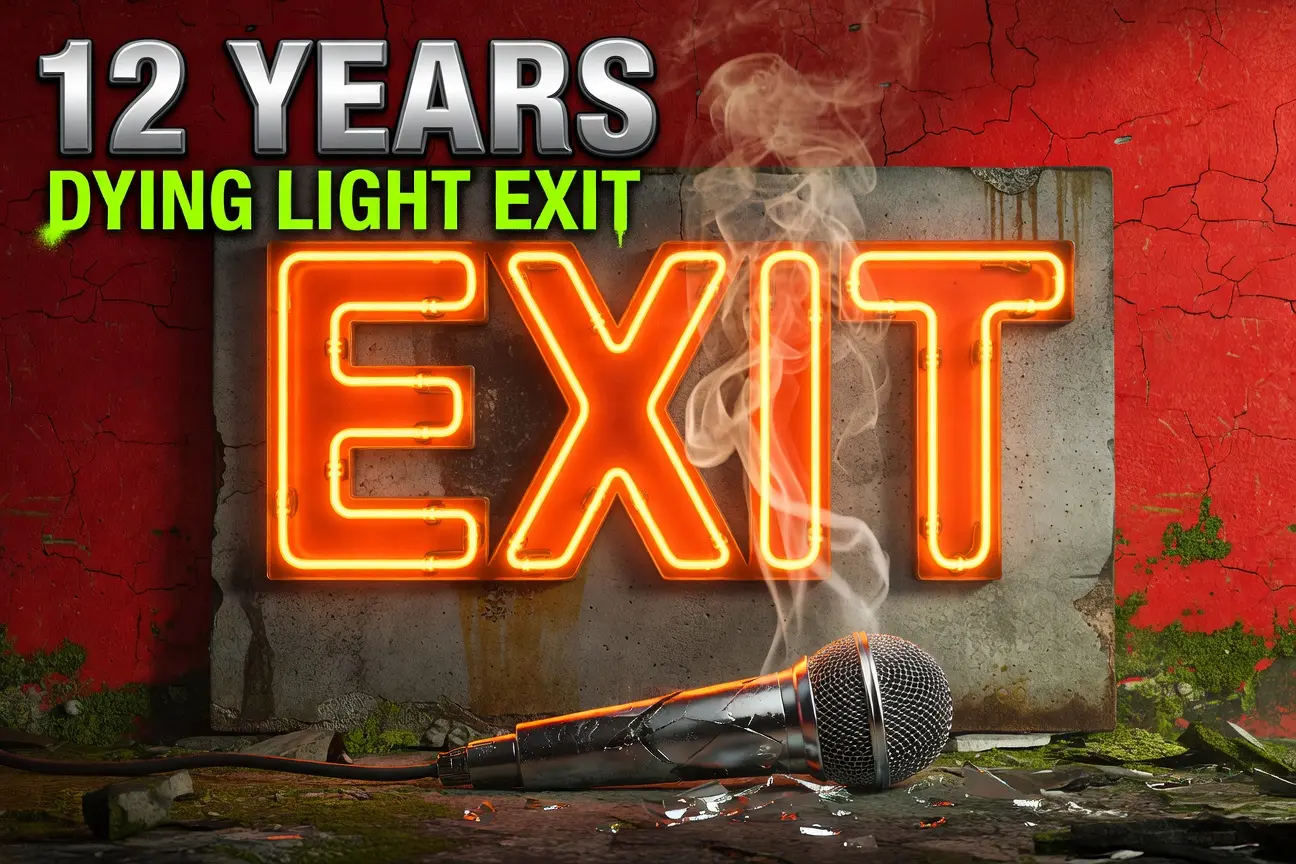
Tymon Smektała is leaving Techland. The franchise director who built Dying Light into one of the few zombie series anyone still talks about announced his exit on Tuesday, May 5, 2026, in a short post shared across his social channels. He’s walking away from the studio he joined in 2013, eight months after Dying Light: The Beast turned into the biggest commercial moment of his career.

His departure lands at a strange time for Techland. The Beast cleared 1.5 million copies in its first week. Tencent now owns the studio. And the company is openly hiring designers to build a live-service Dying Light experience that none of the existing games are. Smektała is leaving the franchise just as it is being rewritten under him.

The Goodbye Post And What It Actually Says

Smektała’s farewell is short, warm, and notably forward-looking. He thanks the team, thanks the players, and frames the exit as the start of “a new chapter” without naming the next destination.

There’s no easy way to say it, so let me just say it: After years with Dying Light, I’m moving into a new chapter. It’s been an incredible journey, and I’m proud of what we’ve built. The franchise is in great hands, and I’m excited to see it grow even further. I can’t wait to experience its next chapter as a player. I’ll always root for Dying Light. Good night, and good luck.

The phrasing matters. “In great hands” is the language of a planned transition, not a dispute. There’s no mention of a new studio, no LinkedIn update yet, and no timeline for the handover. Techland has not named a successor publicly.
Twelve Years On The Same Franchise

Smektała joined Techland in May 2013 as a producer on the original Dying Light. He moved up to lead designer on Dying Light 2 Stay Human, briefly held a deputy director role, and was promoted to franchise director in November 2022. By the time The Beast launched in September 2025, he was the public face of every keynote, every Dying 2 Know stream, every roadmap reveal.

That visibility is unusual in Polish development, where studios traditionally let the work speak. Smektała pushed the other direction. He answered comments, sat for hour-long interviews, and absorbed criticism on stream when expansions slipped. Players came to associate the brand with his face the way they associate CD Projekt Red with Adam Badowski.

Here is the career arc compressed:

  1. May 2013: Joins Techland as a designer and producer on the original Dying Light.
  2. January 2015: Original Dying Light ships and becomes the studio’s defining title.
  3. February 2022: Lead designer credit on Dying Light 2 Stay Human at launch.
  4. November 2022: Promoted to franchise director with authority over the entire series.
  5. September 2025: Dying Light: The Beast ships and quickly outsells expectations.
  6. May 2026: Announces his departure from Techland.

Twelve years on one IP is rare in modern AAA. It’s also the kind of tenure that gets cashed in for a creative director job at a competitor or a founder-CEO role at a new studio. Smektała has not said which.

The Beast Is Still Selling, And That Changes The Stakes

Smektała is not exiting a sinking project. The Beast hit roughly 90,000 concurrent Steam players at launch in September 2025 and shipped 1.5 million units in its first week across all platforms. Steam reviews currently sit at “Very Positive,” with 87% approval. Metacritic averaged it at 78.

The audience cross-over is the other useful number. Roughly 82% of The Beast’s Steam population had logged time in the original Dying Light, and about 77% had played Dying Light 2. That’s a returning fanbase, not a discovery hit. You can track the title’s live concurrent player counts on Steambase’s Dying Light: The Beast charts, which still show the game holding a steady tail eight months after launch.

The launch math, in one glance:

  • 1.5 million copies sold across all platforms in week one, per Techland’s own figures cited by industry trades.
  • ~90,000 concurrent Steam players at peak on launch day in September 2025.
  • 87% positive review score on Steam from verified buyer reactions.
  • 78 Metacritic average across professional outlets, the highest in the franchise since 2015.

Why Techland Is Hiring A Live-Service Designer Right Now

The exit lines up with a clear pivot in Techland’s hiring. The studio’s careers page is currently advertising for a Lead Online Game Designer who will, in the company’s words, “define the framework and structure for a new online experience in the Dying Light franchise.” The role demands senior-level experience in live-service and Games-as-a-Service titles, not the single-player open-world skillset Techland has historically prized.

You can read the requirements on Techland’s official Lead Game Designer job posting. The listing asks for a candidate who can lead a team “from conception and prototyping through implementation, release and continuous support after launch.” That last clause is the giveaway. Continuous support after launch is GaaS language, not premium box-product language.

This is not Dying Light 3 in the traditional sense. The Beast was internally treated as the third mainline game even though it kept the subtitle. Smektała said as much in a pre-launch interview, calling The Beast “really Dying Light 3 for Techland.” Whatever the new online project is, it’s a separate effort, and the leadership profile Techland needs to build it is different from the one that shipped The Beast.

That gap between past and future leadership is the most plausible read on the timing. A franchise director whose career was built on tightly scripted single-player parkour campaigns is a poor fit to oversee a live-service zombie sandbox. The smarter exit is the one Smektała just took.

Techland is also working on an unrelated open-world fantasy action RPG, staffed in part by former CD Projekt Red developers. That project is a second pull on internal resources and another reason the studio’s structure is shifting beneath the franchise director role.

Tencent Owns The Studio Now, And That Matters

The corporate frame around all of this is Tencent. The Chinese conglomerate completed its majority acquisition of Techland in January 2024 in a deal estimated at roughly $1.6 billion. Game Developer’s report on Tencent’s completed majority ownership of Techland notes the studio retained full control of its IP, including Dying Light and the dormant Call of Juarez series.

Tencent’s playbook with Western studios it owns is consistent. Riot, Supercell, Funcom, and Sharkmob all run live-service or persistent-world products. The hiring pattern at Techland fits that pattern. A live-service Dying Light spin-off is exactly what a Tencent portfolio studio gets asked to build.

Who’s Left To Carry The Franchise

Techland co-founder and CEO Pawel Marchewka still runs the company. Studio head Adrian Ciszewski is still the senior creative voice on game direction. The Beast’s design and narrative leads are still in place. The franchise director chair is the only confirmed vacancy.

The bigger unknown is whether Techland appoints internally or hires externally. Smektała’s profile, half producer and half public spokesperson, was unusual for the studio. Replacing him with a like-for-like franchise director would mean grooming an existing producer into a public role they may not want. Splitting the role into a quiet creative lead plus a separate communications lead is the other obvious path.

You can follow Smektała’s next move on his LinkedIn profile listing his Techland tenure, where the most recent role is still listed as Franchise Director at Techland. No update yet on what comes after.

Frequently Asked Questions

Is Dying Light 3 Officially In Development?

No, not under that name. Techland’s currently advertised Lead Online Game Designer role describes a “new online experience in the Dying Light franchise,” which suggests a live-service spin-off rather than a numbered sequel. Franchise director Tymon Smektała has previously said The Beast functioned as the studio’s Dying Light 3, so a numbered DL3 is unlikely in the near term.

Will Dying Light 2 Keep Getting Updates?

Yes. Techland publicly committed to supporting Dying Light 2 Stay Human through 2027 with content drops, including the Tower Settlement update line. Smektała’s exit does not change that roadmap, since the support team operates separately from franchise leadership. Owners can expect continued patch updates and seasonal events throughout this year and next.

Where Is Tymon Smektała Going Next?

He has not said. His farewell post on May 5, 2026 mentions only “a new chapter” with no destination. His LinkedIn still lists Techland as his current employer as of publication. Industry watchers expect either a creative director role at another European studio or a founder position at a new studio, but neither is confirmed.

Does The Beast Still Get New Content After This?

Yes. Techland’s post-launch roadmap for Dying Light: The Beast runs through at least late 2026 and includes a free expansion zone plus weapon and parkour additions. The franchise director departure does not affect already-funded content, which is handled by The Beast’s standing live ops and design teams in Wrocław.

The exit caps an unusual run. One designer turned into the public face of a Polish studio, shipped three mainline zombie games over twelve years, and walked off the stage during a sales peak. The next person in the chair will inherit a healthy franchise, a Tencent-shaped owner, and a brief to build something Dying Light has never tried to be. That brief is harder than it looks.

Logan Pierce is a writer and web publisher with over seven years of experience covering consumer technology. He has published work on independent tech blogs and freelance bylines covering Android devices, privacy focused software, and budget gadgets. Logan founded Oton Technology to publish clear, no nonsense tech news and reviews based on real hands on testing. He has personally tested and reviewed dozens of mid range and budget Android phones, written extensively about app privacy, and built and managed multiple WordPress publications over the past decade. Logan holds a bachelor's degree in English and studied digital marketing at a certificate level.

Continue Reading
Click to comment

Leave a Reply

Your email address will not be published. Required fields are marked *

GAMING

Arc Raiders Tests Kernel Anti-Cheat, Putting Linux Support At Risk

Published

on

Embark Studios just told its Linux players to hold their breath. In a May 7, 2026 developer update titled “Ensuring Fair Play”, the studio behind Arc Raiders confirmed it is testing a new kernel-level anti-cheat solution to layer on top of Easy Anti-Cheat. The post never says the word Linux. That silence is the story.

Arc Raiders currently sits at Platinum on ProtonDB, one of a tiny handful of semi-competitive shooters with that rating and a six-figure player base. The reason it earned that badge is the same reason its Linux future is now in question: Embark left EAC running in user-space mode, the only mode Proton can translate. A second kernel-level layer threatens to break the compromise that made the game playable on SteamOS in the first place.

What Embark Actually Said And What It Didn’t

The blog post, timed to the Riven Tides update going live April 28, lays out a three-part stack. Easy Anti-Cheat handles the kernel layer. Machine-learning models built with Portuguese AI firm Anybrain’s behavioral detection platform chew through input telemetry. Several other systems sit underneath, undisclosed for operational security.

Then comes the line that set the ProtonDB threads on fire. “Kernel-level detection is a necessity because most commercial cheats operate within that space,” Embark wrote. “Without it, we’d have little to no visibility into the tools doing the most damage.” The studio said it is currently testing a fresh kernel-level solution it expects will sharpen detection across Speranza and the Rust Belt.

Notice what the post leaves out. There is no commitment to keep EAC’s Linux user-space mode active alongside the new layer. There is no acknowledgement of the Steam Deck install base. There is no “we will continue supporting Proton.” The omission is doing heavy lifting.

Why The Platinum Rating Was A Tightrope, Not A Promise

Easy Anti-Cheat has a Linux build. It has had one since 2021, when Epic shipped Proton support. The catch is that the Linux version runs in user space, not the kernel. That is fundamentally less invasive and fundamentally less powerful than the Windows build.

Embark is one of the rare developers that flipped the toggle. Counterpoint: most won’t. Of the 1,136 games on Steam that require anti-cheat software, 682 of them do not work on SteamOS, according to crowd-sourced compatibility data tracked by AreWeAntiCheatYet and surfaced in GamingOnLinux’s November 2025 Steam Machine analysis. That is roughly 60 percent of anti-cheat games locked out.

The friction is policy, not technology. Facepunch CEO Garry Newman put it plainly when explaining why Rust dropped Linux support. “It’s a vector for cheat developers, and one that would be poorly maintained by both us and EAC due to the low user base. When we stopped support for Linux, we saw more cheat users exploiting Linux than actual legitimate users,” Newman said in a statement republished across Linux forums. Riot’s anti-cheat lead Phillip Koskinas told The Verge in 2024, “You can freely manipulate the kernel, and there’s no user mode calls to attest that it’s even genuine. You could make a Linux distribution that’s purpose-built for cheating and we’d be smoked.”

The Cheating Crisis That Forced Embark’s Hand

The kernel-layer test isn’t happening in a vacuum. Arc Raiders is bleeding players, and the cheaters are the loudest reason why.

The numbers are brutal:

  • 481,966 all-time concurrent peak on Steam, hit November 16, 2025 per SteamDB’s Arc Raiders concurrent-player chart.
  • 466,372 concurrent on January 4, 2026, the post-launch second wind.
  • 95,642 concurrent in mid-April 2026, an 80 percent drop from the New Year peak.
  • 15th most-played game on Steam even after the collapse, ahead of Overwatch and Marvel Rivals.

The cheating drumbeat got louder every week. Tyler “Ninja” Blevins, one of the highest-profile streamers to pick up the game at launch, called it “unplayable” before stepping back from streams. TheBurntPeanut, the largest creator in the Arc Raiders community, throttled his hours despite watching his viewership take the hit. Embark’s earlier response, a three-strike system that mostly issued 30-day suspensions instead of permanent bans, drew accusations of catch-and-release.

The Anybrain Layer, And Why It Isn’t Enough

Embark’s bet on machine learning is real money on the table. Anybrain’s pitch is that aim-bots, trigger-bots, and recoil scripts produce input patterns no human hand can mimic, and a model trained on enough telemetry can flag them in real time. The vendor describes its system as lightweight enough to run alongside gameplay without measurable overhead.

Input telemetry analysis has become one of our most effective tools. We’ve trained and deployed a set of models dedicated to this, and have been working with Anybrain on this research since the start.

That’s Embark’s own framing in the May 7 post. The studio also confirmed every ban appeal is reviewed by a human, not an algorithm, and that input-pattern analysis is the technique it leans on hardest to separate accessibility-device users from cheaters. The hard cases are the ones where someone is using a niche adaptive controller that mimics the macro patterns a cheat tool produces. Embark says it analyzes telemetry plus communication patterns to read intent.

Behavioral ML is good. It is not, by Embark’s own admission, sufficient. The studio said the new kernel test is happening because most commercial cheats live in ring zero, and the only way to see them is to operate there too. That logic is the entire industry’s logic. It is also the logic that has shut Linux out of every Riot, Activision, and EA shooter on the market.

What “Sits Alongside” Could Mean For Steam Deck Owners

The most consequential phrasing in the blog is that the new kernel-level solution will “sit alongside or on top of” the existing EAC implementation. Three scenarios are possible. Each carries a different verdict for Linux.

  1. Scenario one, soft layer. The new component runs only on Windows clients while EAC continues handling Linux in user space. Linux play continues unaffected. This is the best case and the least likely, because cheat developers will simply migrate to Linux to dodge the new layer.
  2. Scenario two, parity flag. The new component requires kernel access on every supported platform, and Embark turns Linux off as a result. Steam Deck owners get a refund window and a launch error. This is what happened to Apex Legends in 2024.
  3. Scenario three, sandboxed Linux mode. Embark keeps Linux on a separate matchmaking pool with weaker anti-cheat coverage, an idea Valve has reportedly pitched to studios. Linux players keep the game but at the cost of being quietly segregated.

Embark hasn’t picked, and that’s why the blog reads as a soft warning. The studio is known for caring about Linux. The Finals, its other live shooter, is still playable on SteamOS nearly two years after launch, and patches that break Linux compatibility usually get fixed within a day. That goodwill is real. It is also unilateral, which means it can be revoked without negotiation.

The Steam Machine Wildcard

Embark is making this call at the exact moment Valve is trying to change the math. The newly announced Steam Machine living-room PC ships with SteamOS, the same Linux-based platform as the Steam Deck. Valve has told Eurogamer it expects more multiplayer play on the Machine than on the Deck, which would in theory raise the commercial incentive for studios to enable Linux anti-cheat support.

The arithmetic still doesn’t add up. PC World pegged Steam Deck unit sales at four to six million through early 2025, with another two million expected by year-end. Best case eight million Decks plus an unknown but small initial Steam Machine pool against 84 million PS5 consoles. For a developer choosing where to put anti-cheat engineering hours, the Linux audience is still rounding error.

What Linux Players Should Do This Week

Until Embark says more, Arc Raiders runs fine on Proton Experimental with the Bleeding-edge beta toggled on, or on GE-Proton 10-22 or 10-24. Players who hit the recent vkCreateRayTracingPipelinesKHR assertion failure after the February 2026 patch can clear the shader cache or disable Vulkan ray tracing as a workaround. The community’s read on Embark’s track record is that breakage usually gets fixed within 24 hours.

The harder question isn’t this week’s launcher. It’s whether the kernel test, once it ends, expands to all platforms. The blog post offered no timeline. Embark told players the system is being trialed across Speranza and the Rust Belt, the two zones that cover all live PvE and PvP modes, which suggests the test is broad rather than confined to a small percentage rollout.

Frequently Asked Questions

Does Arc Raiders Still Work On Steam Deck And Linux Right Now?

Yes. As of May 9, 2026, Arc Raiders runs on Linux through Easy Anti-Cheat’s user-space mode and holds a Platinum rating on ProtonDB. Use Proton Experimental with the Bleeding-edge beta enabled, or GE-Proton 10-24, and force that compatibility tool in the game’s Steam properties. Performance reports are positive on both AMD and Nvidia hardware.

Will The New Kernel-Level Anti-Cheat Break Linux Support?

Embark hasn’t said. The May 7 blog post confirms a new kernel-level solution is in testing alongside Easy Anti-Cheat but does not commit to Linux compatibility for that new layer. Watch the official Arc Raiders news feed and Embark’s status page for the rollout announcement. Until then, no patch has shipped that disables Linux play.

What Is Anybrain And How Does Its AI Detect Cheaters?

Anybrain is a Lisbon-based AI firm Embark partnered with from the start of Arc Raiders development. Its system reads mouse and keyboard input telemetry and trains models to flag patterns no human can produce, like perfect recoil compensation or sub-100-millisecond reaction chains. It runs lightweight on the client and feeds detection signals back to Embark’s review team.

Can I Get Banned For Playing Arc Raiders On Linux?

No reports indicate Embark bans for Linux play itself. The accidental bans being discussed in the community involve players using accessibility controllers whose input patterns occasionally trigger ML detection. Embark says every ban appeal is reviewed by a human reviewer, and the studio has restored items to players who could prove a hacker killed them through its Abnormal Match Compensation system.

If Arc Raiders Drops Linux Support, Can I Get A Refund?

Yes, in most cases. Steam’s standard refund policy covers fewer than two hours of playtime within 14 days of purchase, but Valve has historically extended refunds beyond that window when a game removes a previously supported platform. File the request through Steam Support and cite the platform-removal change in the ticket.

For now, Linux Arc Raiders players are stuck in the same posture as everyone else watching this story: waiting on the next Embark patch note to see whether the kernel layer is a Windows-only experiment or a stack-wide upgrade. The studio earned a lot of credit by shipping the game with Linux support intact when it didn’t have to. That credit is about to be tested. The cheaters forced this conversation, but the answer Embark gives in the next few weeks will set the tone for how every other live-service shooter handles SteamOS for the rest of the decade.

Continue Reading

GAMING

Sony Faces £2 Billion Verdict As PlayStation Store Trial Closes

Published

on

Sony Interactive Entertainment will hear closing arguments this week in a £2 billion class action accusing the PlayStation maker of running an unlawful monopoly on digital game sales. The case lands at the Competition Appeal Tribunal in London just days after a California judge gave preliminary approval to a $7.85 million settlement covering U.S. PSN buyers. Two cases. Two countries. One business model under fire.

The London trial began on March 2, 2026 and was set down for ten weeks. Closing submissions wrap on Friday, May 8. The verdict could take anywhere from three months to a year and a half.

London Trial Wraps As The 30% Cut Goes Under The Microscope

The Competition Appeal Tribunal began hearing Alex Neill Class Representative Limited v Sony Interactive Entertainment on March 2, 2026. Alex Neill, the consumer campaigner leading the claim, represents an estimated 8.9 million UK PlayStation buyers who purchased digital games or add-on content between August 2016 and February 2026.

The lawsuit is bankrolled by litigation funder Woodsford’s UK consumer claim filing and led by Milberg London. It targets the 30% commission Sony charges on every digital sale through the PlayStation Store, money the claim says has been passed straight through to gamers as inflated retail prices.

Sony tried to kill the case at the certification stage in 2023 and lost. The Tribunal cleared the action to proceed on January 19, 2024, and the appeal that followed went nowhere. Three years and three procedural defeats later, Sony’s lawyers are arguing the merits.

How £2 Billion Becomes £182 Per Gamer

The damages headline has shifted as the case has matured. Initial filings flagged up to £5 billion in potential overcharging across six years. Court documents now estimate the figure at roughly £2 billion including interest, a number that breaks down into surprisingly specific per-person sums.

Per the PlayStation You Owe Us claim FAQ published by the class representative, the math looks like this:

  • £137 per individual class member, excluding interest
  • £182 per individual class member, including interest
  • £2 billion in total claimed damages
  • 8.9 million UK consumers covered by the action

UK group claims of this kind are opt-out, so any qualifying buyer is automatically swept in unless they actively withdraw. That structural quirk is why the headline number is so big. It is also why Sony cannot quietly settle out the loudest plaintiffs and walk away.

Alex Neill, who previously ran consumer charity Which?, has framed the case as a cost-of-living issue. She has said publicly that loyalty to a platform should not become a tool for overcharging, language she repeated when the proceedings were certified in early 2024.

Sony has not put a counter-figure on the record. Its filings argue the entire premise is faulty.

Sony’s Two-Pronged Defense And Its Holes

Sony’s defense rests on two arguments. First, that the PlayStation Store competes vigorously with Xbox, Steam, Nintendo, and mobile, so prices stay honest by themselves. Second, that the 30% take subsidises hardware, which would otherwise cost more.

Both arguments have soft spots. The cross-platform competition story works for multiplatform titles, but it does not touch first-party PlayStation exclusives, which only ship on Sony hardware. The hardware-subsidy story has aged badly given Sony pushed the PS5 Pro to $749.99 last year and lifted PS5 prices in multiple regions in early 2026, well after the company started collecting that 30% cut.

The Tribunal certifying judgment found there was a real prospect that Sony’s commission structure constitutes an abuse of dominance under the Competition Act 1998, with damages flowing through to consumers.

The California Settlement Is Pocket Change Compared To London

The U.S. half of the story closed with a whimper, not a verdict. On April 30, 2026, Judge Richard Seeborg in the Northern District of California gave preliminary approval to a $7.85 million settlement in Caccuri v. Sony Interactive Entertainment. The case targeted Sony’s 2019 decision to stop letting third-party retailers sell game-specific download codes, a move plaintiffs said erased one of the only sources of price competition for PSN titles.

The two cases are not the same shape. Here is how they line up:

Detail UK case US case
Forum Competition Appeal Tribunal, London N.D. California
Damages £2 billion claimed $7.85 million settlement
Class size 8.9 million UK accounts 4.4 to 4.5 million US accounts
Class period Aug 2016 to Feb 2026 April 1, 2019 to Dec 31, 2023
Theory 30% commission inflates digital prices Killing third-party vouchers raised digital prices
Status Closing arguments May 8, 2026 Final fairness hearing Oct 15, 2026

Eligible U.S. buyers will receive automatic PSN wallet credits estimated at $1 to $3 per qualifying purchase, distributed to the email tied to the PlayStation account. The opt-out and objection deadline is July 2, 2026.

The UK exposure dwarfs the U.S. settlement by more than two orders of magnitude. That is the part that should make Sony’s finance team uncomfortable. This kind of consumer rights playbook is increasingly common after the Audible nationwide class action over expiring credits showed how digital subscription mechanics can land platforms in court.

Why The Apple Comparison Cuts Both Ways

Sony’s lawyers are watching Apple’s UK loss closely, and so are the Tribunal members. Apple was ordered last year to pay £1.5 billion to UK customers in a parallel App Store class action over its own 30% commission. The reasoning was straightforward. iOS users had nowhere else to buy iPhone apps, so Apple’s cut got marked up into the sticker price.

Sony will argue its garden walls are lower. A gamer can play Call of Duty on Xbox or PC, so Microsoft’s storefront acts as a price ceiling. The argument has merit on multiplatform titles, although every PlayStation exclusive cracks it. Saros launched in March at £79 in the UK with no other legal storefront option for PS5 buyers.

Epic Games’ parallel cases against Apple and Google in the U.S. and Australia ended with mixed but mostly bad outcomes for the platform holders. The arc favors plaintiffs. The same pressure now sits on Sony’s storefront mechanics, the same way it sits on every other gaming gatekeeper, including Microsoft as it tries to lock down its Project Helix Xbox successor roadmap.

When A Verdict Actually Lands

UK Competition Appeal Tribunal rulings on this scale rarely arrive fast. The bench typically delivers between three and 18 months after closing arguments. A best case for Sony’s accusers puts a judgment around August 2026. The realistic window stretches into 2027.

If the Tribunal rules for the class, possible remedies include damages distribution to UK PSN account holders, a forced reduction in the 30% commission, or an order requiring Sony to allow alternative digital storefronts on PlayStation. Each outcome reshapes the economics of console exclusives differently.

Frequently Asked Questions

Am I Automatically Included In The UK PlayStation Lawsuit?

Yes, if you bought any digital PS4 or PS5 game or in-game content from the PlayStation Store between August 2016 and February 2026 while resident in the UK. The case is opt-out, so you do not need to register. You can verify or actively withdraw on the official claim site at playstationyouoweus.co.uk. The class representative estimates 8.9 million UK accounts qualify, including dormant ones.

How Much Money Could I Get From The UK Case?

The current per-member estimate is £137 excluding interest and £182 including interest, but only if Sony loses on liability and damages. Payouts would arrive after a successful Tribunal ruling and any appeals, likely in 2027 or later. The amount may shift based on the final damages award, the precise size of the certified class, and how distribution costs come out of the settlement pool.

What Happens In The US Case If I Bought PS Games During 2019-2023?

You will receive automatic PSN wallet credits, estimated at $1 to $3 per eligible game purchased between April 1, 2019 and December 31, 2023. There is no claim form. Sony will email the address tied to your PSN account if your purchases qualify. The Northern District of California’s final fairness hearing is October 15, 2026, and the opt-out deadline is July 2, 2026.

When Will The London Court Actually Rule?

Closing arguments end Friday, May 8, 2026. The Competition Appeal Tribunal usually delivers judgments three to 18 months after closings, putting the realistic decision window between August 2026 and late 2027. Either side can appeal, which can add another 12 to 18 months. Damages distribution, if Sony loses, would follow only after appeals are exhausted.

Could This Lower PlayStation Store Prices?

Possibly, but not quickly. If the Tribunal forces Sony to cut its 30% commission or admit competing stores onto PS5, publishers would keep more revenue per sale and could in theory price more aggressively. Sony’s recent hardware price hikes suggest the company would absorb pressure elsewhere first. Watch the post-judgment remedies hearing, where the actual market structure changes get decided.

Sony is the second platform giant in two years to face a UK consumer class action over a 30% take. The Tribunal does not move fast, but it has ruled against bigger companies on thinner facts. Whatever happens this week in London is going to ripple through every console storefront still charging that same number.

Continue Reading

GAMING

PlayStation Teases Backwards Compatibility Push To Outflank Xbox

Published

on

Sony’s silence on backwards compatibility just got loud. PlayStation’s preservation team confirmed this week that its long-term project to keep classic titles playable is, in the words of producer Garrett Fredley, “not looking to stop anytime soon” — landing days after a leaked AMD slide deck named PS4 and PS5 backward compatibility as an active engineering workstream for the next-generation Orion console.

The two signals point at the same target. Sony is preparing a preservation pitch big enough to challenge Xbox on the one front Microsoft has owned for a decade. If the leaked roadmap holds, the PlayStation 6 would be the first Sony console to natively run two prior generations of software, opening a library north of 12,000 combined PS4 and PS5 titles at launch.

The Tease That Shifted The Conversation

The shift started inside Sony’s own walls. According to a May 2026 update from PlayStation’s preservation team lead Garrett Fredley, the group recently briefed Sony leadership on a multi-year roadmap covering legacy IPs, development materials, and complete game builds going back generations. Fredley framed the meeting as a turning point. The work, he wrote, is moving “toward something we can share more openly” with players.

That phrasing matters. Sony has historically refused to commit publicly to native backward compatibility on hardware not yet announced. Saying the team plans to share “more openly” reads less like a status update and more like a calendar marker.

The timing is not coincidence. Hideaki Nishino, now sole CEO of Sony Interactive Entertainment, told Variety’s May 2026 briefing on Sony’s AI and platform strategy that “our platform’s role will be critical in ensuring players find the right content in an increasingly crowded landscape.” Curation language. Library language. Not the language of a company planning to leave its catalogue stranded one generation back.

What The Leaked AMD Deck Actually Says

The hardware case for a PS6 backwards-compatible push comes from leaker Tom of Moore’s Law Is Dead, who walked through an internal AMD presentation slide on the Broken Silicon podcast in late 2025 and updated the breakdown again this spring. The slide, according to TechSpot’s reporting on the Orion APU leak, lists four explicit workstreams for Sony’s next chip family: AI-driven super resolution at the platform level, RDNA5 die-area optimisation, a low-power media path for handheld battery life, and PS4 and PS5 backward compatibility on RDNA5.

That last line is the one that turned heads. RDNA2, the architecture inside the PS5, was chosen partly because GCN-based PS4 software could be coaxed into running on it. RDNA5 is several generations removed, and the slide treats compatibility as an engineering deliverable rather than a marketing aspiration.

Three Models, One Codename Family

The same leaked deck describes three distinct shipping configurations. None of these are confirmed by Sony. All three are being treated by suppliers as live programs.

  • PS6 (Orion APU): Eight Zen 6c gaming cores plus two Zen 6 LP OS cores, 40 to 48 RDNA5 compute units, 30GB of GDDR7, 160-bit bus, 640GB/s bandwidth, target TBP around 160 watts.
  • PS6 Handheld (Canis APU): Four Zen 6c cores, 16 RDNA5 compute units, 24GB to 36GB memory, 1.20GHz portable clock and 1.65GHz docked. MLID estimates the Canis APU costs Sony roughly $46.80 to manufacture, against $81.50 for the die-shrunk PS5 chip.
  • PS6 S (Canis APU in a box): Same handheld silicon repurposed into a small-form-factor home console at a projected $299 to $399 price band, aimed at the slot Microsoft used to own with the Series S.

The cost gap is the part nobody is reading carefully enough. A handheld chip that beats PS5 performance for under fifty dollars in BOM terms gives Sony pricing flexibility no rival can match — and the only way that flexibility matters to existing owners is if their current libraries come along for the ride.

The Mark Cerny Patent Sitting Underneath

Sony’s engineering case for compatibility is not new, even if the public messaging is. Lead architect Mark Cerny has been filing patents on hardware-level legacy emulation since 2015. The most recent, surfaced last year and titled the spoof-clock and fine-grain frequency control grant assigned to Sony Interactive Entertainment, describes a method for tricking modern silicon into mimicking the exact timing behaviour of legacy chips. Run an old game, and the CPU and GPU adjust frequencies, command-counts-per-cycle, and clock synchronisation to the original spec.

That approach scales. It is also the only known path that has any chance of cleanly handling the PlayStation 3’s Cell processor, the asymmetric architecture that has defeated software emulators for fifteen years. A 2026 follow-up filing, attributed to Cerny and surfaced through Brazilian outlet Mix Vale, mentions Cell-style execution explicitly.

An application designed for the current version of a system runs at a standard clock frequency, with the processor synchronized to that frequency. An application designed for a different version runs at a second clock frequency that is different than the standard.

The quoted abstract is dry, but the implication is sharp. Sony is no longer trying to translate legacy software into modern instructions. It is trying to make the modern hardware pretend to be the legacy hardware on demand.

Xbox’s Library, By The Numbers

The reason this fight matters is Microsoft’s catalogue, and the catalogue is finite. Pure Xbox’s coverage of Jason Ronald’s GDC 2026 keynote confirmed that Microsoft’s program has been frozen since November 2021. Ronald, vice president of Next Generation at Xbox, teased a revival timed to Xbox’s 25th anniversary later this year, but stopped short of promising new licensed additions.

Here is where the libraries actually stand right now.

Platform Catalogue size Status (May 2026)
Original Xbox titles playable on Series X/S 63 Frozen since Nov 2021
Xbox 360 titles playable on Series X/S 632 Frozen since Nov 2021
Total pre-Xbox One classics on Series X/S 695 Final list, no new additions
PS4 titles playable on PS5 ~4,000 (over 99% of catalogue) Active
PS5 Pro enhancement-mode catalogue 8,500+ Active and growing

Microsoft’s 695 pre-Xbox One games are still a deeper retro vault than Sony has ever offered on a current console. But that vault is closed. Sony’s potential PS6 footprint, by contrast, opens up roughly twelve and a half thousand titles on day one if PS4 and PS5 native compatibility ships intact, with the PS5 Pro enhancement layer presumably travelling forward.

The Revival Question

Ronald’s tease is not nothing. He pointed to Auto HDR and FPS Boost as the philosophical model — taking a 2007 game and giving it modern presentation without changing the design. “It almost feels like a remaster for a lot of players,” he said at GDC. The catch is licensing. Every title Microsoft tried to add after 2021 hit a wall on rights clearance, and the wall has not moved.

What Microsoft can do is re-release things it already controls in new wrappers. PC ports, ROG Xbox Ally builds, cloud streams. What it apparently cannot do is grow the licensed-on-console list any further. That is the gap Sony is positioning to exploit.

Why The Memory Crunch Changes Everything

None of this happens in a vacuum. Bloomberg reported in February that Sony is weighing a PS6 launch slip from 2027 to 2028 or 2029 because of GDDR7 supply pressure from AI accelerators. Memory makers are allocating wafers to Nvidia and the hyperscalers, and a console requiring 30GB of fresh GDDR7 has to bid against companies with infinite balance sheets.

The pricing math gets ugly fast. Wccftech’s breakdown of the leaked Sony document on the Broken Silicon podcast suggests the flagship Orion model could land between $699 and $999. A baseline $499 PS6 may not be physically possible at launch.

And that is exactly why backwards compatibility stops being a nice-to-have. If Sony has to charge eight hundred dollars for a console, it cannot also ask buyers to repurchase their digital library. The compatibility story becomes the value story. It is the only way the spreadsheet works.

What Sony Actually Owes Players

Three concrete deliverables are now on the company’s docket, whether or not it admits the timeline publicly.

  1. A native PS4 and PS5 compatibility commitment for PS6. The leaked AMD slide treats this as an engineering deliverable. The Cerny patent provides the method. Players need a public confirmation tied to hardware reveal.
  2. A handheld plan that does not orphan the PS5 library. Steam Deck has shown that portable players will not tolerate a clean break from their existing collections. The Canis-based handheld must run PS5 games or it dies on the shelf.
  3. A PS3 path, eventually. The Cell-processor patent language is the giveaway. Sony has been quietly working this problem for a decade. Even cloud-only would beat the current situation, where buying the same game three times across PS Plus tiers is the norm.

The third item is the longest shot. PS3 native compatibility on PS6 hardware would be the largest preservation moment in console history. Even partial coverage, focused on first-party catalogues like the Uncharted trilogy, Resistance, MotorStorm, and the original Demon’s Souls, would reset the conversation overnight.

The Risk Sony Has Not Yet Solved

The skeptics have a real case. Sony files thousands of patents that never ship. The MLID slide is, by his own admission, two and a half years old. Bloomberg’s memory-pricing reporting may push the entire program past the point where backward-compatibility marketing matters in 2027. And Sony’s preservation team, while genuine, is small, with a public-facing presence built mostly on community goodwill and a few PlayStation Plus Premium drops.

There is also the Xbox counter-move. If Microsoft’s 25th-anniversary revival turns out to be more than HDR re-passes — if Project Helix, the hybrid console-and-cloud platform whose alpha dev kits are tied to the leadership reshuffle Asha Sharma announced this month, ships with a credible legacy library — Sony’s window narrows fast.

Frequently Asked Questions

Will my PS5 games work on PS6?

Yes, if the leaked AMD roadmap holds. The presentation slide surfaced by Moore’s Law Is Dead lists PS4 and PS5 backwards compatibility as an active engineering workstream for the Orion APU on RDNA5 architecture. Sony has not officially confirmed this. If you bought a PS5 game digitally, it will travel with your PSN account regardless. Disc-based PS5 titles should work on a disc-equipped PS6, though Sony has not announced disc support yet.

When does the PlayStation 6 actually launch?

Most credible leaks point to late 2027 or early 2028, with Bloomberg reporting in February that Sony is considering a slip to 2028 or 2029 due to GDDR7 memory shortages driven by AI demand. Mark official confirmation as the only reliable signal, which typically comes 9 to 12 months before launch through a Sony showcase event.

How much will the PlayStation 6 cost?

Industry leaks suggest a tiered lineup. The flagship Orion model is projected at $699 to $999, a smaller-form-factor PS6 S using Canis silicon at $299 to $399, and a dockable handheld at $399 to $499. Memory pricing is the wildcard. A baseline $499 launch price, matching PS5, looks unlikely under current GDDR7 conditions.

Can the PS6 play PlayStation 3 games?

Not confirmed, but the latest Mark Cerny patent specifically addresses the PS3’s Cell processor architecture, which has historically defeated emulation. Even if PS3 native support arrives, expect it to be partial, focused on first-party Sony titles like Uncharted, Resistance, and the original Demon’s Souls. PS Plus Premium streaming remains the official PS3 path on PS5 today.

What is Xbox doing in response?

Microsoft’s existing 695-game catalogue covering Original Xbox and Xbox 360 has been frozen since November 2021. Jason Ronald confirmed at GDC 2026 that Xbox will revive the program for its 25th anniversary later this year, with “new ways to play” iconic games. Specifics on whether this means new licensed additions or repackaged existing titles have not been disclosed.

The next concrete signal will come from Sony itself. A summer 2026 State of Play, a CES 2027 hardware tease, or a developer briefing leaked through supply-chain channels. Until then, the strongest indicator remains the work happening quietly inside the preservation team and the AMD engineering pipeline. Both are now pointed at the same finish line, and the finish line is a console that finally treats player libraries as a promise instead of a sales reset.

Continue Reading

Trending





