
APPS
Google Keep Tries Lock Screen Notes For The Third Time In 28 Months
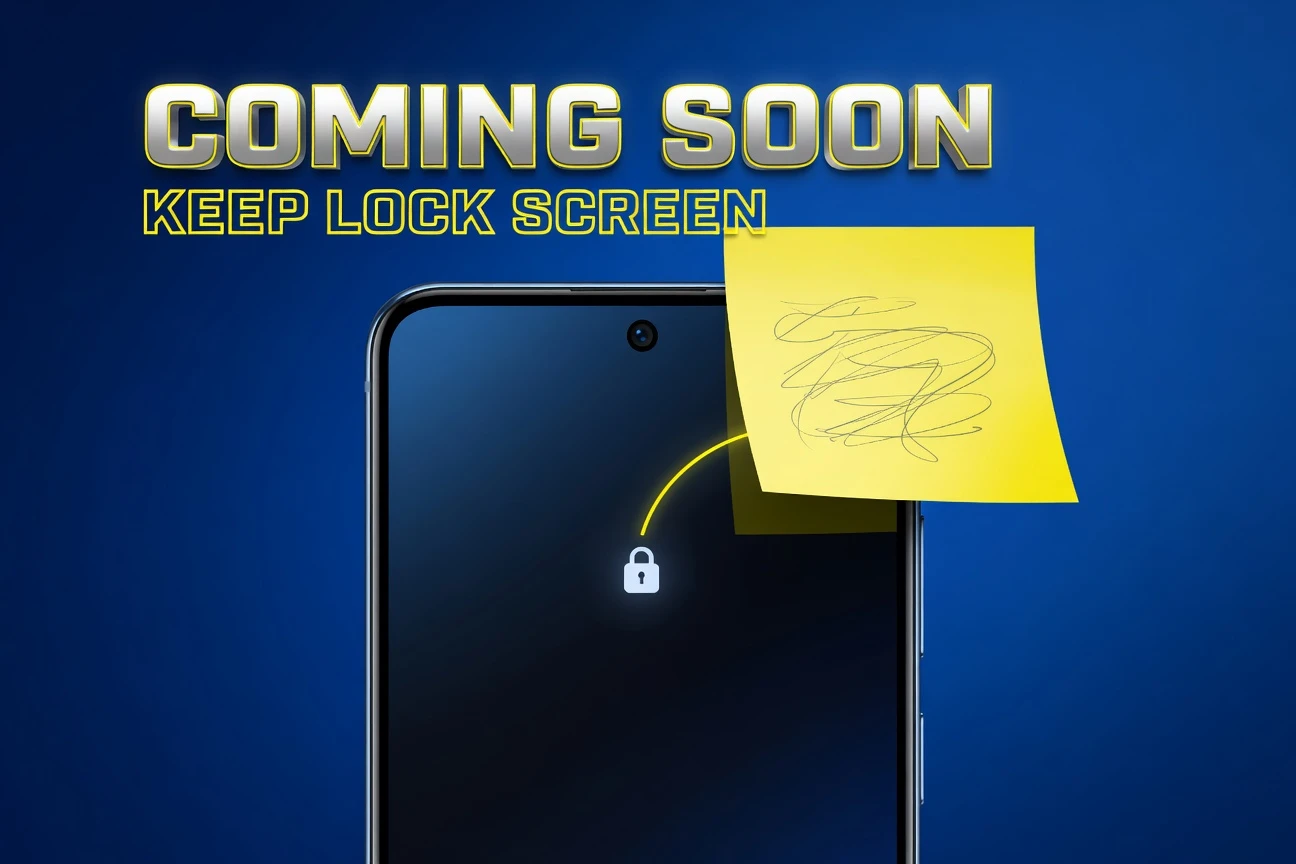
Google Keep is trying to ship lock screen notes for the third time. The first attempt arrived alongside Android 14 in late 2023. The second surfaced in February 2024 with a polished “Coming soon” splash. The third just appeared in Keep build 5.26.181.01.90, this time with onboarding copy and granular session controls that read like a feature ready for release. Whether it actually ships, after more than two years of teasing, is the question Android users keep asking.
An Android Authority APK teardown of Keep version 5.26.181.01.90 uncovered the new strings this week. The settings can be activated only on Android 17 QPR1 Beta 1 by enabling the Notes role for Keep through developer options. For everyone else, tapping the toggle still produces a “Coming soon” screen. The infrastructure is there. The release date is not.
What the New Code Actually Reveals
The most telling change is the consumer-facing copy. Two new strings read “New! Lock screen notes with Google Keep” and “Instantly capture your thoughts right on your lock screen.” That sounds like onboarding text shown to a user the first time they enable a feature, not internal scaffolding from a dev branch. Compare it to the 2023 build, which exposed only platform-level developer toggles with no consumer pitch attached.
The second tell is granular session control. Users will be able to choose whether the lock screen launches a fresh note each time, or returns to the same note for five minutes, two hours, the entire day, or always. That’s behavioral configuration designed around two distinct workflows: rapid one-off capture, and an ongoing scratchpad you keep returning to between meetings or during a commute.
Build 5.26.181.01.90 is also narrower than the 2023 framework. The earlier Android 14 implementation included an option to launch the default notes app by pressing the tail button on a paired stylus. That stylus pathway does not appear in the current Keep build. The scope has shrunk from a platform-level system any qualifying app could plug into, to what reads like a Keep-native feature with no third-party hooks visible yet.
Three Attempts, One Splash Screen
The repeating pattern is what makes this newsworthy. Google has had the platform piece working since Android 14 introduced the Notes role in October 2023. Keep has been eligible to claim that role since Keep version 5.23.482.04 in December 2023. The integration that actually delivers a usable note-taking screen on top of the lock has now been promised, in code, for over 28 months.
- October 2023: Android 14 ships the system-wide Notes role, a hidden ninth lock screen shortcut, and a screenshot capture API reserved for the default notes app.
- December 2023: Keep 5.23.482.04 makes the app eligible to be set as Android’s default notes app.
- February 2024: 9to5Google reports that Keep updates its lock screen launch message to “coming soon,” suggesting an imminent rollout that never arrives.
- April 2026: Android 17 QPR1 Beta 1 ships with the Notes role still toggleable through developer options, but no production-ready Keep integration.
- May 2026: Keep 5.26.181.01.90 surfaces consumer-facing strings, session-duration controls, and the same “Coming soon” splash.
The pattern is hard to read as anything other than an internal product team that keeps building this feature, parking it, and then resurfacing it under a new build number. The platform is ready. The third-party API is documented. Samsung has shipped the equivalent on Galaxy hardware for years. Yet the most-used note app on Android, with over 3.9 billion lifetime installs, still hasn’t crossed the line.
Samsung Has Done This Since 2014
The competitive context matters. Samsung’s Screen Off Memo has let Galaxy Note and Galaxy S Ultra owners scribble on the lock screen with an S Pen since the Note 5 in 2015. Pull the stylus, tap a button, write. The notes save into Samsung Notes automatically. No PIN, no app launch, no second tap.
Compatible hardware includes the Galaxy Note line, the S22 Ultra, S23 Ultra, S24 Ultra, S25 Ultra, the Galaxy Tab S6 through Tab S9, and the S Pen Pro. Samsung also lets users pin a handwritten memo directly to the lock screen as a persistent reminder, which Google has not announced any equivalent of.
How the Three Approaches Compare
Google’s framework, Samsung’s veteran feature, and the current Keep build differ on activation, scope, and who controls what.
| Capability | Samsung Screen Off Memo | Android 14 Notes Role | Keep 5.26.181 Build |
|---|---|---|---|
| Available since | 2015 (Galaxy Note 5) | October 2023 | Not yet shipped |
| Activation | Pull S Pen, tap dark screen | Lock screen shortcut or stylus tail button | Lock screen shortcut only |
| Stylus required | Yes | Optional | Not visible in current build |
| Third-party app support | No, Samsung Notes only | Any qualifying app | Keep only, currently |
| Pin note to lock screen | Yes | Not specified | Not specified |
The narrower scope of the current Keep build is the part most likely to disappoint power users. The 2023 Android 14 framework was designed so that Obsidian, Notion, Joplin, or any other note app targeting SDK 34 could request the Notes role and gain the same lock screen privileges as Keep. The strings in 5.26.181.01.90 reference Keep specifically. Whether the broader role-based system survives or quietly defaults to Keep-only is the question developers of competing apps are watching closely.
The Plumbing Was Built. Then Nothing Happened.
Android’s Notes role is a real piece of platform engineering, not a marketing label. The Capture Content for Notes API documented in the Android Open Source Project grants the default notes app a privilege no other app on the device gets. The system can hand it a screenshot of whatever is on screen so the user can paste it into a note. That’s an OS-level permission carve-out, not a UI tweak.
Only one app can possess the notes role.
That line, lifted directly from Google’s developer documentation for note-taking apps, captures the design intent. The Notes role is single-occupancy. Whichever app the user picks, that app gets the lock screen shortcut, the stylus tail button hook on supported devices, and the screenshot capture permission. Everything else loses access. That’s why the Keep team’s two-year delay reads less like missing code and more like missing organizational priority. The privilege is sitting there, unclaimed, on every Android 14 phone shipped since October 2023.
Why Privacy Made This Harder Than It Looks
One reason for the slow rollout: Google’s own developer guidance instructs note apps not to display historical notes when launched from the lock screen, unless the user has explicitly opted in to that behavior. The app is supposed to call KeyguardManager.isKeyguardLocked(), detect that it was launched from the lock, and show only the new note canvas.
For a service like Keep, where notes can include passwords, addresses, work documents, and dictated voice memos, that’s a non-trivial UI partition. The session-duration options in 5.26.181.01.90 are likely the answer. Choosing “five minutes” or “two hours” lets a user resume the same note across multiple lock screen sessions without exposing every other note in their archive. That design choice tracks the privacy guidance Google itself published.
Keep’s 2025 Was Loud. This Feature Wasn’t In It.
Lock screen notes were conspicuously absent from 9to5Google’s January 2026 recap of Keep’s 2025 changes. The app got plenty of attention last year. None of it touched the lock screen.
The 2025 changes that did ship:
- April 2025: A redesigned Quick Capture widget that fills its grid bounds, with a vertical pill for the plus button and rounded rectangles for the others.
- April 2025: The “Create text notes by default” setting that returned single-tap note creation after the November 2024 FAB change made it a two-step process.
- May 2025: Rich text formatting on the Keep web app, two years after Android got the same feature.
- July to August 2025: A Material 3 Expressive redesign rolling out to Android, with rounded buttons, a thicker search bar, and the M3 hamburger and profile switcher.
- Late 2025: The migration of Keep reminders to Google Tasks, plus the discontinuation of location-based reminders.
None of that addressed the feature most often requested by Keep’s heaviest Android users. The Apple Watch Keep app was pulled. The Wear OS app stayed. The lock screen integration that has “Coming soon” labels visible in production builds remained, predictably, coming soon.
Why Android 17 QPR1 Matters Here
The new code is gated behind Android 17 QPR1 Beta 1, which Google released to Pixel devices on April 22, 2026, with build number CP31.260403.005.A1. The September 2026 Pixel Feature Drop is the most likely launch window if Google means to ship this on schedule.
That timing aligns with the Pixel 11 launch, expected in late August or early September. Google has historically used Pixel Feature Drops to debut software hooks that depend on a specific Android version. Lock screen notes via Keep would be a natural fit: a small, demo-friendly feature that needs Android 14 or later to function and a default notes app picker the user has already filled in.
For users on Android 14 and 15 with Keep installed, the Notes role is already assignable through Settings, Apps, Default apps. It just doesn’t do anything useful yet on stock Android. On Android 17 QPR1 Beta, with developer options unlocked and the role enabled, Keep finally accepts the lock screen handoff. Even there, the company has only granted itself a private preview.
Our coverage of Google’s broader Android strategy is in our Google I/O 2026 preview of Android 17 features and the Gemini push, where lock screen integrations are one of several Pixel Feature Drop candidates being staged for the September release.
The Bigger Question About Keep’s Future
Lock screen notes is a small feature with a big symbolic weight. It’s the smallest possible test of whether Google will invest in Keep as a serious product, or treat it as a maintenance app that occasionally gets a coat of Material 3 paint. Google’s own Workspace product page for Keep still markets it as a tool for shopping lists and brainstorms, framing it explicitly below Docs and Sheets in the productivity stack.
Three numbers describe Keep’s position right now:
- 3.9 billion: Lifetime downloads on the Google Play Store, per AppBrain data through May 2026.
- 1.2 million: Average daily Android downloads over the past 30 days.
- 28 months: Time elapsed since the Android 14 Notes role first made lock screen notes possible for Keep.
That third number is the one that should bother Google. Samsung shipped the equivalent feature on the Note 5 in 2015. Apple pinned a Notes lock screen widget by default in iOS 16 in 2022. Google built the Android system framework, documented the API, and then watched its own first-party app sit on the sidelines for over two years.
Build 5.26.181.01.90 is the strongest signal yet that the wait is ending. The session controls, the consumer onboarding strings, the gated Android 17 QPR1 access, every piece of the rollout pattern Google typically uses before a Feature Drop debut is now visible in the code. The only thing missing is the date. After two false starts, Keep users are right to want one before they believe it.
APPS
Prime Video Launches Clips Vertical Feed With Rent and Buy Built In
Amazon’s Prime Video on Friday switched on Clips, a full-screen vertical video feed inside its iPhone, Android and Fire tablet apps, becoming the third major subscription service to bolt a TikTok-shaped feature onto its mobile experience since March. Disney+ went first with Verts on March 12. Netflix followed on April 30 with its own feed, also called Clips. Now Amazon has launched a feature with the identical name, the identical 9:16 shape, and a familiar bet: that the way to keep a phone-first viewer from drifting to ByteDance is to put short-form swiping inside the streaming app itself.
What’s different about Amazon’s version is what sits under each clip. Disney lets you add a title to your watchlist. Netflix lets you tap into the full show. Prime Video lets you rent it, buy it, or subscribe to a third-party channel from the same swipe, turning the feed into a transactional shelf, not just a discovery tool. That distinction matters more than the shared name.
What Prime Video Clips Actually Does on Your Phone
Open the Prime Video app, scroll past the hero banner, and tap any tile inside a new horizontal Clips carousel on the home page. The app drops you into a full-screen vertical feed, swipeable in either direction, with personalized clips pulled from movies, series and the NBA collection.
From any clip, the player surfaces a stack of action buttons. Per Amazon’s official Clips announcement on the Prime Video press center, viewers can:
- Watch the full title in one tap
- Rent or buy the title from the Prime Video Store
- Subscribe to a Prime Video Channel that unlocks it
- Save it to a Watchlist
- Like the clip and share it with a friend
Every visit serves a different mix based on viewing history. Amazon says the rollout is gradual and limited at launch to select customers in the United States on iOS, Android and Fire tablets, with full availability across those devices arriving this summer. If your app does not show the carousel yet, the company recommends updating to the latest build.

The Numbers Behind Why Every Streamer Is Copying TikTok
The vertical pivot is not vibes. The performance gap between vertical and horizontal short video is wide enough that ignoring it has become the more expensive option for any platform with an ad-supported tier.
- 9x the completion rate for vertical video over horizontal, according to mobile-format research compiled in industry benchmarks for 2026
- 94% of mobile users hold their phones upright when watching, per the same body of research
- 73% of U.S. consumers watch short-form video several times a day, a habit that now eats hours that used to go to long-form
- 315 million monthly viewers reach Prime Video’s ad-supported tier across 16 global markets, the largest ad-supported streaming audience in the world per unBoxed disclosures on Prime Video’s ad reach
Stack those four numbers together and the strategic logic snaps into focus. Prime Video already monetizes a base larger than Netflix’s ad audience. Each additional minute spent inside the app shows another impression. A vertical feed that auto-plays is the highest-completion-rate format the platform can run.
The question is not why Amazon launched Clips. The question is why Amazon waited until May.
How Verts, Netflix Clips and Prime Video Clips Compare
The three feeds look almost identical from a product-design distance. The differences live in what they let you do once a clip catches your eye.
| Feature | Disney+ Verts | Netflix Clips | Prime Video Clips |
|---|---|---|---|
| Launch date | March 12, 2026 | April 30, 2026 | May 8, 2026 |
| Devices at launch | U.S. mobile (iOS, Android) | iOS and Android in 9 markets | U.S. iOS, Android, Fire tablets |
| In-feed actions | Watchlist, Play full title | My List, Share, Play full title | Watch, Rent, Buy, Subscribe, Watchlist, Share |
| Content sources | Disney+ catalog | Netflix originals and licensed catalog | Prime catalog plus NBA, with channel-store hooks |
| Personalization layer | Recommendation algorithm | Per-moment preference (action vs emotional) | Viewing-history personalization |
Notice the rightmost column. Prime Video is the only one of the three that turns the swipe feed into a checkout aisle. A clip from a film Amazon does not stream natively can still send the viewer to a rental, a purchase or a channel signup. That ties the feed to revenue lines outside the Prime base subscription, which in turn explains why Amazon would build it after launching the Prime Video Ultra ad-free upgrade tier in April.
How Eight Weeks Reshaped the Streaming Home Screen
The chronology is unusually compressed. From the first launch to the third, the entire premium-streaming category adopted vertical short-form in less than two months.
- March 12, 2026: Disney rolls out Verts on Disney+ for U.S. mobile subscribers, after testing the format on ESPN beginning August 2025
- April 17, 2026: Netflix confirms its plans for a vertical feed and broader generative-AI use in recommendations
- April 30, 2026: Netflix launches Clips inside a redesigned mobile app across the U.S., U.K., Canada, Australia, India, Malaysia, Pakistan, the Philippines and South Africa
- May 8, 2026: Prime Video flips Clips on for select U.S. customers, with broader availability planned for summer
The naming collision is the part nobody cleared with legal. Netflix and Amazon both ship a feature called Clips inside the same eight-day window. Disney went with Verts in March. Search for “Clips” in any app store now and the results page is its own usability problem.
What Netflix Said Out Loud That Amazon Will Not
Netflix’s leadership has been unusually direct about why this format mattered enough to overhaul a mobile app that already worked. Elizabeth Stone, the company’s chief product and technology officer, framed the launch as a permanent reset of how mobile fits into the service.
Mobile is an important part of how Netflix members stay connected to the entertainment they love. With our enhanced navigation and Clips, our new vertical video feed, we’re building on past learnings to deliver an experience designed for the way members want to enjoy Netflix on their phones: for the moments in between, to discover a new title, or a quick laugh. Our vision is to make our mobile experience as entertaining as what you watch. This is just the beginning.
Stone made that statement in Netflix’s official mobile-redesign announcement on April 30. Amazon’s press release, by contrast, frames Clips as one of several discovery improvements alongside auto-playing trailers on the home page and vertical poster art that fits more titles per screen. The pitch is softer because the strategic tell is harder. A company already pulling 315 million ad-supported viewers a month does not need to argue that engagement matters; it needs to keep that engagement from leaking to TikTok.
The NBA Gambit That Made Clips Possible
Prime Video did not wake up in May with a vertical-video product. Clips first appeared in October on the NBA collection page, riding the start of the 11-year NBA media rights deal that began with the 2025-26 season. The original use case was simple: a viewer who joined a game late, or a fan scrolling the league hub, got swipeable highlights tuned to their team and viewing patterns.
That sports test bed mattered for two reasons. It gave Amazon a controlled environment to tune its personalization model on short, high-emotion clips. And it built the encoding and delivery pipeline that Clips now uses for entertainment content. The same AI tooling behind Prime Sports’ Rapid Recap and Key Moments features auto-curates the standout plays of an NBA game in under two minutes. Repointed at a film catalog, that same machinery becomes a clip-generation engine.
The piece Amazon has not committed to is whether third-party channel partners get vertical treatment. The press release leaves it open. If Apple TV, Peacock, Max and other channels become eligible, Clips becomes a marketplace feed, not a Prime catalog feed. That decision will tell you whether Amazon is copying TikTok or building a streaming search aisle nobody else has.
What This Means for Whichever App Wins Your Phone
For viewers, the immediate change is small. A new section on the Prime Video home page. A new way to bail on choice paralysis when nothing in the carousels grabs you. The deeper change is what these feeds do to behavior. Disney’s early ESPN data showed measurable lift in daily engagement. TikTok-trained habits make the swipe gesture frictionless. Once a streaming app teaches a viewer to scroll for entertainment, the line between a Prime Video session and a TikTok session blurs.
The risk for Amazon, Netflix and Disney is that vertical feeds train viewers to consume highlights instead of full episodes. The reward is data. Every swipe, like and skip is a personalization signal that beats anything the home-screen rows ever produced. Whichever service builds the smartest model on that data ends up with the home screen viewers default to opening.
Frequently Asked Questions
Why Don’t I See Clips in My Prime Video App Yet?
The rollout is gradual and limited to select U.S. customers at launch on May 8, 2026. Amazon says full availability across iOS, Android and Fire tablets arrives this summer. Update the Prime Video app to the latest version from the App Store or Google Play first. If the Clips carousel still does not appear on your home page, your account simply has not been flagged into the rollout cohort yet.
Will Clips Work on Apple TV, Roku or My Smart TV?
No. Clips is a mobile-only feature designed for vertical 9:16 viewing on phones and Fire tablets. Amazon has not announced any plan to bring the feed to streaming sticks, smart TVs or game consoles. The feature is built around the swipe gesture and portrait orientation, neither of which translates to a 16:9 living-room screen. Use the Prime Video iOS or Android app to access it.
Can I Turn Clips Off if I Don’t Want It?
Amazon has not published a setting to disable the Clips carousel as of launch. The carousel sits below the main hero banner on the home page, so you can scroll past it without entering the feed. Tapping any clip is what triggers the full-screen vertical experience. If you never tap, you never see the feed. A formal opt-out toggle may arrive once the rollout is fully complete this summer.
Does Watching Clips Cost Extra or Use More Data?
No additional cost beyond your existing Prime membership or Prime Video subscription. Standard mobile-data charges apply if you watch off Wi-Fi, and short vertical clips at high quality consume roughly 50 to 100 MB per 10 minutes of viewing depending on resolution. To limit data use, switch to Wi-Fi or lower the playback quality inside the Prime Video app’s streaming settings before opening the feed.
Will Clips Show Content From Apple TV, Peacock or Other Channels?
Unclear at launch. Amazon’s press release does not confirm whether third-party Prime Video Channel subscriptions, including the recent Apple TV and Peacock bundles, will surface clips from their catalogs. The in-feed action buttons do support subscribing to channels, which suggests the architecture is ready. Watch for Amazon’s summer rollout update for confirmation on which non-Amazon catalogs feed into the experience.
The naming chaos around Clips and Verts will sort itself out the moment one feed pulls ahead on retention. The bigger contest is no longer between streamers and each other. It’s between every streaming app and the time viewers already spend swiping somewhere else. Prime Video just made it easier to never put the phone down.
APPS
Airtel Africa Profit More Than Doubles To $813M, IPO Slips
Airtel Africa’s profit more than doubled to $813 million in the year ended 31 March 2026, a 147.4% jump from the $328 million it booked the previous year. Revenue climbed 29.5% to $6.42 billion. The London-listed carrier added 17.4 million customers across its 14 sub-Saharan markets, the biggest annual haul in its history, and pushed Airtel Money’s annualised transaction value past $215 billion in the fourth quarter.
Then came the catch. Chief executive Sunil Taldar confirmed the long-awaited Airtel Money IPO has slipped to the second half of 2026, blaming geopolitical pressure on energy and logistics costs. The listing was meant to land in the first half. War in Iran and a jittery London market changed the calendar.
The Numbers That Carried The Year
Reported revenue of $6.42 billion grew 24.0% in constant currency, stripping out the violent swings of the Nigerian naira and several Francophone currencies. Underlying EBITDA rose 37.2% in reported terms to $3.16 billion, with margins widening to 49.3% for the full year and 50.3% in the fourth quarter alone. Basic earnings per share more than tripled to 18.6 cents from 6.0 cents.
The company’s audited results announcement filed with the London Stock Exchange shows leverage falling to 1.8x from 2.3x, while lease-adjusted leverage came in at just 0.5x. The board recommended a final dividend of 4.26 cents per share, lifting the full-year payout to 7.1 cents, up 9.2% on the previous year.
Where The Growth Came From
- Nigeria: 47.5% constant-currency revenue growth, the standout market
- Francophone Africa: 17.1% constant-currency growth across 8 markets
- Data revenue: up 35.2% in constant currency, now the largest single revenue line
- Mobile money revenue: up 28.4% in constant currency, contributing 21.1% of group revenue
Nigeria’s number is the one that did the heavy lifting, and it carries an asterisk worth understanding.

The Nigerian Tariff Story Behind The Headline
For the first time since 2013, Nigerian operators were allowed to raise prices. The Nigerian Communications Commission’s January 2025 decision approving a 50% tariff hike reset the entire economics of the country’s telecoms. Airtel and MTN had asked for 100%. They got half of that. They took it.
The effect lapped through Airtel’s books all year. Group constant-currency revenue growth slowed slightly to 22.3% in Q4 once the tariff comparison started annualising. That is not a sign of weakness. It is the maths of any one-off pricing reset working through year-on-year numbers.
The naira tells the other half of the story. Nigeria’s currency collapsed from roughly 471 to the dollar in mid-2023 to over 1,500 by late 2025. Reported-currency revenue growth of 29.5% beats constant-currency growth of 24.0% only because the prior year’s base was distorted by even worse FX moves. Investors reading the headline should look at the constant-currency line.
Airtel Money Is Now The Crown Jewel
The mobile money business is no longer a side hustle. It carried 54.1 million customers at year-end, up 21.3%. Annualised total processed value hit $215 billion in the fourth quarter, a 49% jump in reported currency. Per-customer monthly TPV climbed 14.4% to $332.
Mobile money EBITDA reached $689 million, up 31.3% in reported currency, with margins of 50.8%. The unit alone now generates more cash than most listed African banks. That is the asset Bharti wants to spin out.
The adoption of new digital technologies and AI has been pivotal in unlocking growth opportunities, driving efficiencies across the business and enhancing the customer experience.
That line, from Taldar in the results commentary, is doing more work than it appears. App-based transacting customers grew 74% year-on-year. TPV processed through the myAirtel app reached $8.3 billion in FY26, up from $4.6 billion. Self-service is replacing call centres and branch agents, which is exactly the cost lever a fintech IPO needs to flex.
Why The IPO Slipped
Taldar had told analysts in February the listing would happen by mid-year. It will not. The official reason is geopolitics. The unofficial reason is London.
According to Bloomberg’s late-April reporting on the deal preparations, Airtel is targeting a London Stock Exchange listing that could raise between $1.5 billion and $2 billion at a valuation of up to $10 billion. Citigroup is advising. Three or four additional banks are expected to join the syndicate.
That valuation matters for one reason. TPG put $200 million into Airtel Money in 2021 at a $2.65 billion valuation. Mastercard followed with $100 million. The Qatar Investment Authority took a stake later that year. A $10 billion print would mark a roughly fourfold uplift on TPG’s entry. London needs the win as badly as the investors do.
What Could Still Go Wrong
- Energy costs: Diesel powers a large share of African cell sites, and the company flagged near-term EBITDA margin pressure from rising fuel inputs
- FX volatility: Another naira leg-down would compress reported numbers even with constant-currency growth intact
- Listing window: London IPO appetite is fragile, and a soft-print risk grows the longer the calendar stretches
- Regulatory drag: Mobile money taxes in markets like Tanzania and Uganda continue to dampen transaction volumes
Taldar acknowledged the headwind directly in the results call commentary. “We remain committed to the Airtel Money IPO and continue to make progress with the preparations,” he said. “However, prevailing market conditions have led us to target the second half of 2026 for the potential listing.”
The Continent-Sized Tailwind
Airtel’s results land into a market that is finally being recognised for what it is. The GSMA’s State of the Industry Report on Mobile Money 2026 showed sub-Saharan Africa processed $1.4 trillion in mobile money transactions in 2025, up 27% year-on-year and accounting for 66% of global mobile money flows.
Vivek Badrinath, GSMA Director General, framed the shift bluntly. “Mobile money has become one of the world’s most impactful financial services. What began as a simple way to move money has evolved into a global financial ecosystem, reshaping how hundreds of millions of people manage their financial lives,” he said in the report’s launch statement.
Africa hosts roughly 1.2 billion of the world’s 2.3 billion mobile money accounts. The continent represents 74% of global mobile money transaction volume. Airtel Money is one of three names that dominate the league table, alongside Safaricom’s M-Pesa and MTN’s MoMo. That is the structural backdrop investors will price into the IPO book.
Spending To Defend The Lead
Capital expenditure jumped 31.9% to $884 million during FY26. Guidance for FY27 sits at roughly $1.1 billion. The company added more than 3,250 new sites and laid 3,200 kilometres of fibre, taking total fibre to 81,900 kilometres.
The spending priorities flag where management thinks the next leg of growth lives. Home broadband is named as a focus area. So is data centre infrastructure. Airtel has already announced a $120 million hyperscale build at Eko Atlantic in Lagos. Other African telcos are watching the same playbook — connectivity revenue is finite, but enterprise data, cloud-adjacent services, and home fibre have years of runway.
For context on the wider African connectivity push, our coverage of Hormuud’s $19 smartphone financing rollout in Somalia shows how operators across the continent are racing to put devices in hands that will then consume data and mobile money services.
The Mittal Succession
One detail buried beneath the numbers shapes the next decade. On 25 March 2026, Sunil Bharti Mittal informed the board he intends to retire as chair at the conclusion of the AGM in July. Gopal Vittal, currently chief executive of Bharti Airtel in India, will take over as non-executive chair the same day.
Vittal is not a passive successor. He has run Bharti Airtel India through its turnaround from a debt-heavy laggard to one of the most profitable telcos in Asia. Investors who track Bharti’s Indian disclosures will recognise his hand in cost discipline, premium tariff positioning, and aggressive 5G site rollouts. The same operating template is likely to deepen in Africa under his chairmanship.
What The Quarter-By-Quarter Pattern Shows
| Metric | FY25 | FY26 | Change |
|---|---|---|---|
| Revenue (reported) | $4.96B | $6.42B | +29.5% |
| Profit after tax | $328M | $813M | +147.4% |
| EBITDA margin | ~46.6% | 49.3% | +270 bps |
| Customers | 166.1M | 183.5M | +10.5% |
| Data customers | 73.4M | 84.2M | +14.8% |
| Airtel Money customers | 44.6M | 54.1M | +21.3% |
| Capex | $670M | $884M | +31.9% |
Q4 revenue grew 24.9% in constant currency, the strongest quarterly print of the year. That acceleration matters. It says the underlying business is still expanding even as the Nigerian tariff base effect fades. Smartphone penetration crossing 49.5% from 44.8% a year earlier means another 14 million phones are now capable of consuming the data and mobile money services that drive ARPU.
Frequently Asked Questions
When Will The Airtel Money IPO Actually Happen?
The company is targeting the second half of 2026 for a London Stock Exchange listing. Taldar confirmed the slippage in the FY26 results, citing geopolitical pressure on energy and logistics costs. No firm date has been announced. Citigroup is the lead adviser, with three or four additional banks expected to join the syndicate. Watch for a formal intention-to-float notice, which typically lands four to six weeks before pricing.
How Much Could Airtel Money Be Worth At IPO?
Reports point to a $7 billion to $10 billion valuation range, with a fundraise of $1.5 billion to $2 billion. At the upper end, the listing would rank among the largest IPOs on a European exchange in recent years. TPG entered at a $2.65 billion valuation in 2021, so a $10 billion print would be roughly a fourfold uplift. Final pricing depends on the London IPO market when the company opens books.
Is Airtel Africa A Buy On These Results?
That decision belongs to you and your financial adviser. The structural case is real: 49% EBITDA margins, falling leverage, a growing fintech arm, and 14 markets with rising smartphone penetration. The risks are real too: naira volatility, energy cost inflation, regulatory change in Nigeria, and IPO execution risk. Read the full results announcement and a current broker note before forming a view. Past performance does not predict future returns.
What Markets Does Airtel Africa Operate In?
Airtel Africa runs telecom and mobile money services in 14 sub-Saharan markets: Nigeria, Kenya, Tanzania, Uganda, Rwanda, Zambia, Malawi, Madagascar, Democratic Republic of Congo, Republic of Congo, Gabon, Niger, Chad, and Seychelles. It holds the number one or number two position in every market it operates in. Nigeria is the single largest revenue contributor, with Francophone markets the second-fastest-growing cluster.
Who Are Airtel Money’s Biggest Outside Investors?
Three names matter. TPG Inc. invested $200 million in 2021 at a $2.65 billion valuation. Mastercard Inc. committed $100 million the same year. An affiliate of the Qatar Investment Authority, Qatar’s sovereign wealth fund, took a stake later in 2021. All three remain on the cap table heading into the planned 2026 listing and stand to realise large paper gains if the IPO prints near the $10 billion target.
The FY26 print does what a results announcement is meant to do. It validates the strategy, raises the dividend, and frames the IPO pitch. The harder work starts now. Vittal inherits a business firing on every metric except the one that needs a clean London market and a quiet quarter in the Strait of Hormuz to land. Both are out of his control.
APPS
Audible Faces Nationwide Class Action Over Expiring Credits
Audible customers asked a federal judge in Seattle this week to certify a nationwide class action over audiobook credits that vanish after twelve months. The motion, filed in Hollis v. Audible Inc. in the U.S. District Court for the Western District of Washington, could put Amazon on the hook for every U.S. subscriber whose credits expired since December 4, 2020.
Plaintiffs say Audible’s credits qualify as gift certificates under RCW 19.240.030’s prohibition on expiring vouchers. Individual losses run from about $20 to $380. The judge already rejected Audible’s first attempt to dismiss. If granted, certification would bundle millions of forfeited credits into a single damages claim.
That matters because Audible has a lot riding on it. The $14.95-a-month subsidiary controls roughly two-thirds of U.S. audiobook revenue. It is also fighting an antitrust case in Manhattan and a separate California complaint over what “buying” an audiobook actually means. The credit case is the cheapest one for Amazon to lose.
What the Class Certification Motion Asks the Court to Do
Four named plaintiffs led by Jonathon Hollis filed the certification motion in early May, asking to represent every U.S. resident who lost an Audible credit after December 4, 2020. The proposed class covers both monthly subscribers and annual members who paid Audible directly, not through an app store.
The motion presses the theory that survived dismissal: credits are vouchers exchangeable for audiobooks, and Washington bans expiring vouchers. Plaintiffs are represented by Jonas Jacobson, Simon Franzini, Gabriel Doble and Stephen Ferruolo of Dovel & Luner’s class action practice, a Los Angeles firm that says it has won more than 85% of its trials and arbitrations.
Plaintiffs seek classwide damages, attorney fees, and treble damages under Washington’s Consumer Protection Act. The proposed class is tied to the original Hollis complaint filed in December 2024, which framed the credits as classic gift certificates dressed up in subscription clothing.

Why Washington’s Gift Certificate Law Is the Hammer
Washington’s gift certificate statute is one of the strictest in the country. The law makes it unlawful to issue or enforce a gift certificate carrying an expiration date, with narrow carve-outs for genuine loyalty rewards and donations to charity.
The definition is what bites Audible. A gift certificate is any voucher exchangeable for goods or services. The statute does not require a fixed cash value. It does not require transferability. That broad reach is the door plaintiffs walked through, and it is the door Audible cannot close on appeal without a legislative change.
Numbers in the case explain the urgency:
- $20 to $380: the per-class-member damages range plaintiffs estimate
- December 4, 2020: the start date for the proposed class period
- 12 months: the lifespan of a Premium Plus credit before it disappears
- $25,000: Washington’s cap on the treble multiplier per Consumer Protection Act violation
The CPA gives plaintiffs a parallel path to liability. RCW 19.86.090 on civil damages and treble damages lets injured consumers recover actual losses, attorney fees, and up to three times their damages, capped at $25,000 per violation. Treble damages do not require malice. They require a showing the unfair practice harmed the public interest.
Audible’s expiration policy is buried in its membership terms. Plaintiffs argue most subscribers never see it until a credit they paid for is gone, which is the kind of opaque practice the CPA was written to police.
The App Store Loophole That Complicates Audible’s Defense
Audible’s own help center contains a quirk that cuts against its position in court. Credits do not expire when users subscribe through the Apple App Store or Google Play. Apple and Google’s billing rules forbid expiring digital balances, so Audible adapts. Subscribe to Audible’s Premium Plus membership benefits page directly, and the same credit dies after twelve months.
That asymmetry is awkward. It shows Audible can run a no-expiration model. The company chooses not to on the channel where Apple and Google are not forcing its hand.
- Apple App Store subscribers: credits never expire
- Google Play subscribers: credits never expire
- Direct audible.com subscribers: credits expire after 12 months
Inside the Class and the Money at Stake
The proposed class is large and easy to identify. Audible’s billing system already records every credit issued, redeemed, or expired by user. Plaintiffs argue that internal data alone proves commonality and predominance under Federal Rule 23, the threshold for nationwide certification.
The damages calculation works like this. A Premium Plus monthly credit costs roughly $14.95 in cash terms. A subscriber who lost two credits before redemption is out about $30. Annual plan members who let unused credits roll into a 24-credit pile and then forfeited eight of them sit closer to the $380 ceiling cited in the complaint.
Audible has not disclosed how many U.S. credits expired in the proposed class period, but the math compounds quickly. Audible holds 63.4% of U.S. audiobook revenue per Grand View Research’s 2024 audiobooks market analysis. If even one in twenty active U.S. subscribers lost a single credit, gross damages move past nine figures before any treble multiplier.
The class is also unusual for what it excludes. App Store and Play Store subscribers are out, because their credits never expire in the first place. That carve-out narrows the class to direct Audible billing customers, the channel where Amazon collects the full retail margin without paying Apple’s 15% to 30% cut.
The Argument Audible Tried That the Judge Threw Out
Audible’s central defense was that its credits cannot be gift certificates because they have no fixed cash value. A credit redeems for one audiobook regardless of that book’s list price. That elasticity, Audible argued, takes credits outside the statute. U.S. District Judge Tana Lin disagreed in her 2025 order denying the motion to dismiss, finding the statute requires neither fixed cash value nor transferability.
“Whether or not the Legislature intended for the gift certificate statute to only apply to vouchers which are transferable, it did not include such a requirement in its definition of ‘gift certificate.'”
Judge Lin’s order is the spine of the certification motion. If credits are gift certificates, expiration is unlawful. If expiration is unlawful, every forfeited credit since December 2020 becomes a damages claim. The certification fight is now whether one Seattle courtroom can resolve those claims in a single proceeding.
A Second Front in Amazon’s Audiobook Legal Battles
The credit case is one of three live legal threats stacked against Audible. In June 2025, U.S. District Judge Jennifer L. Rochon refused to dismiss an antitrust suit in Manhattan accusing Audible of monopolizing audiobook distribution. The complaint targets Audible’s exclusivity bonus, which pays a 40% royalty for 90-day exclusives and only 25% for non-exclusive titles.
A separate California class action alleges Audible misleads buyers into thinking they own the audiobooks they purchase when they receive only a license. That case revives a familiar argument from the Kindle and PlayStation worlds: when a digital store says “buy,” what is the consumer actually getting?
Audible’s broader response has been to diversify its subscription menu. The company recently launched a cheaper Standard tier at $8.99 a month that gives access to the Plus catalog without per-title credits. Standard sidesteps the credit-expiration problem entirely. It does not, however, fix the credits already lost by Premium Plus members for the past five years.
What Subscribers Should Do With Their Credits Right Now
Whatever the court does, the practical move for Premium Plus members is to clear the queue. Credits are most valuable when redeemed for higher-priced titles, and any credit older than eleven months is days from disappearing.
Audible’s customer support has historically restored expired credits on request as a one-time courtesy, but the policy is unwritten and discretionary. The litigation does not change that.
- Check your credit expirations: Sign in at audible.com, open My Library, and review the Credits tab for issue dates.
- Redeem oldest credits first: The first credit issued is the first to expire under Audible’s accounting.
- Use credits on premium titles: A credit applied to a $40 release captures more value than one used on a $9 sale title.
- Pause instead of canceling: A 90-day pause keeps existing credits intact, while cancellation forfeits them at cycle end.
- Save proof of expired credits: Screenshots and email receipts will matter if and when class notices go out.
For App Store and Google Play subscribers, none of this applies. Their credits sit indefinitely.
For everyone else, the expiration clock is still running. The class action, if certified, will sweep up past losses. It will not stop a credit issued today from disappearing on May 6, 2027.
Frequently Asked Questions
Do Audible Credits Really Expire After A Year?
Yes. Audible Premium Plus credits purchased directly from audible.com or Amazon expire 12 months after they post to your account, and the company’s help center confirms it. Credits bought through the Apple App Store or Google Play are an exception and never expire. To check your dates, sign in at audible.com, open My Library, and review the Credits tab.
How Do I Know If I Qualify For The Class Action?
You may qualify if you are a U.S. resident who held a direct Audible subscription and lost a credit to expiration anytime after December 4, 2020. App store subscribers do not qualify. The court has not yet certified the class, so there is nothing to file today. Watch the docket in Hollis v. Audible Inc., Case No. 2:24-cv-01999, or sign up for class notices through Dovel & Luner.
What Happens To My Credits If I Cancel Audible?
Any unused credits expire at the end of your final billing cycle when you cancel a direct membership. To save them, redeem them before the cycle ends, or pause your membership for up to three months instead. Credits earned through Apple or Google billing remain available regardless of cancellation, because both stores forbid expiring digital balances.
Can I Get An Expired Credit Restored Without Joining The Lawsuit?
Sometimes. Audible customer support has historically restored expired credits as a one-time courtesy when contacted within a reasonable window. Call 1-888-283-5051 or open the help chat at help.audible.com. There is no guarantee. A restored credit also carries a fresh 12-month clock, so redeem it quickly before it expires again.
The motion now sits with Judge Lin and could move on a multi-month timeline. Class certification rulings typically arrive 6 to 12 months after briefing closes, with discovery on Audible’s credit-expiration data running in parallel. Until then, every credit a Premium Plus member loses is one more entry in a record Amazon may eventually have to pay for.
Disclaimer: This article reports on pending litigation and is for informational purposes only. It does not constitute legal advice. Consumers who believe they may qualify as class members should consult a licensed attorney before taking action and watch the official court docket for class certification updates. Settlement amounts, eligibility criteria, and case outcomes can change as the case progresses, and any figures cited reflect publicly available filings as of publication.
-
CRYPTO4 days agoAndreessen Horowitz Bets $2.2B on Crypto’s Quiet Cycle
-
APPS4 days agoGoogle’s Buried Page Reveals 500 Niche Websites Still Making Cash
-
GAMING4 days agoAsha Sharma Reshuffles Xbox Leadership In Race To Project Helix
-
NEWS3 days agoSEBI Names Claude Mythos, Sets Up cyber-suraksha.ai Task Force
-
COMPUTERS3 days agoPCB Shortage Hits China After Saudi Strike Sends Prices Up 40%
-
NEWS3 days agoSamsung’s 500 PPI Sensor OLED Reads Pulse And Blocks Snoopers
-
AI4 days agoSubquadratic Launches A 12-Million-Token AI Model And Says The Wall Is Gone
-
CRYPTO4 days agoWells Fargo Says Circle Is Crypto’s Underappreciated Winner





