
GAMING
PS5 Sales Drop 46% as Two Price Hikes and Memory Shortage Bite Sony

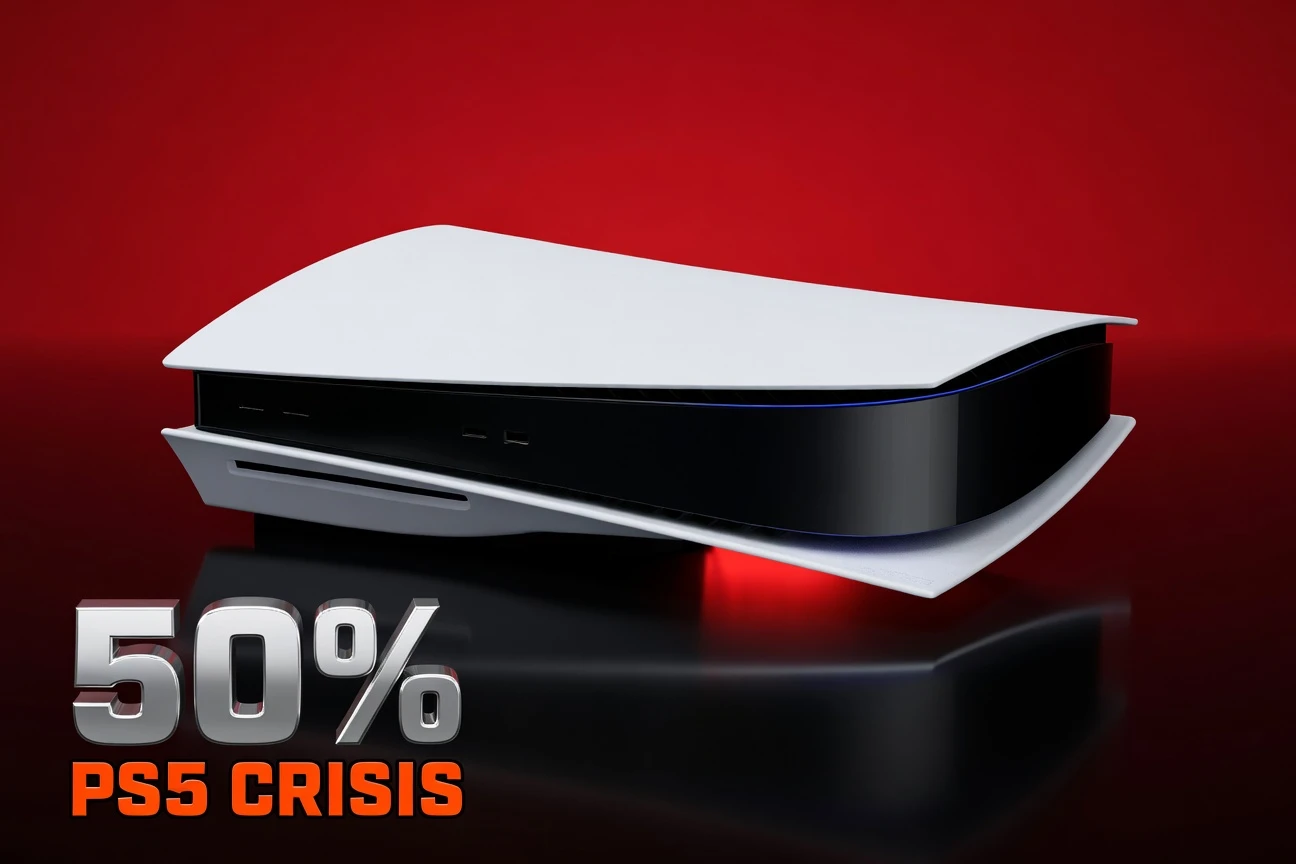
Sony sold 1.5 million PlayStation 5 consoles in the three months ending March 31, 2026, down roughly 46% year over year, after raising the console’s U.S. price to $649.99 in April, the second hike in less than 12 months. The memory chip shortage driving those increases is structural, not cyclical, with AI data centers absorbing an estimated 70% of global high-end DRAM output and leaving consumer electronics manufacturers competing for scraps. Despite the hardware freefall, Sony’s Games and Network Services division posted record operating profits for the full fiscal year.
Why 1.5 Million Units Is Both Bad and Good News for Sony
The last time PlayStation sold so few consoles in a single quarter, the PS5 was a month old and supply chains were in pandemic collapse. In Q4 of fiscal year 2025, Sony shipped 1.5 million units compared to 2.8 million in the same period a year earlier. For a console that was still selling 5 million units a quarter at its 2021 peak, those numbers look grim.
But the full-year picture is less catastrophic than the quarterly headline suggests. Sony sold 16.1 million PS5 units across all of FY2025, beating its internal forecast of 15 million. Lifetime shipments now stand at 93.7 million as of March 31, 2026, per Sony Interactive Entertainment’s official business data. The platform still reaches 125 million monthly active users, up 1% year over year.
The most striking number isn’t hardware units at all. PlayStation Network services, digital software, and subscriptions now carry the business so effectively that the Games and Network Services segment posted operating income of ¥463.3 billion for FY2025, a 12% year-on-year increase and the highest figure in PlayStation history. Sony sold fewer physical boxes and made more money doing it.
- 1.5 million PS5 units sold in Q4 FY2025, vs. 2.8 million in Q4 FY2024
- 16.1 million PS5 units sold in full-year FY2025 (beat 15M forecast)
- 93.7 million cumulative PS5 shipments as of March 31, 2026
- 125 million monthly active PlayStation Network users in March 2026
- 85% of PlayStation game sales in Q4 were digital, up from 83% the prior year
- ¥463.3 billion Games and Network Services operating income for FY2025, a segment record
Two Price Hikes in Twelve Months
The first hike came in August 2025, a $50 increase across all PS5 models that Sony blamed on currency pressures and broader component costs. It felt significant at the time. Eight months later, Sony announced a second round of increases effective April 2, 2026, this time much larger and covering every major market simultaneously. The official PlayStation Blog announcement on March 27, 2026 put Isabelle Tomatis, Sony Interactive Entertainment’s Vice President of Global Marketing, on the record: “With continued pressures in the global economic landscape, we’ve made the decision to increase the prices globally. After careful evaluation, we found this was a necessary step to ensure we can continue delivering innovative, high-quality gaming experiences to players worldwide.”
Combined, the two hikes added $150 to the standard disc PS5 in the U.S. in under a year, a 30% increase from the $499.99 launch price that held steady for four years. The PS5 Pro, already a premium product at $699.99 when it launched in late 2024, now sits at $899.99.
| Model | Price Before Aug 2025 | Price After Aug 2025 | Price After Apr 2026 | Total Increase |
|---|---|---|---|---|
| PS5 Disc Edition | $499.99 | $549.99 | $649.99 | +$150 (+30%) |
| PS5 Digital Edition | $449.99 | $499.99 | $599.99 | +$150 (+33%) |
| PS5 Pro | $699.99 | $749.99 | $899.99 | +$200 (+29%) |
| PlayStation Portal | $199.99 | $199.99 | $249.99 | +$50 (+25%) |
The Memory Crisis Running Beneath the Gaming Industry
Sony didn’t raise prices out of greed or miscalculation. The constraint is real, and it’s industry-wide. The three largest memory manufacturers, Samsung Electronics, SK Hynix, and Micron Technology, have spent the past 18 months shifting cleanroom capacity away from the conventional DRAM and NAND flash used in consumer products and toward high-bandwidth memory for AI accelerators.
The numbers from TrendForce’s Q2 2026 memory contract price analysis are brutal. Conventional DRAM contract prices rose 90% to 95% quarter over quarter in Q1 2026, a new quarterly record. Q2 2026 brings another projected increase of 58% to 63%. NAND Flash contracts are expected to climb 70% to 75% in Q2. These aren’t rounding errors. Memory, once among the cheapest components in a gaming console, has become one of the most expensive line items in the bill of materials.
An analysis by IDC on the global memory shortage’s impact on consumer markets projected global DRAM supply growth at just 16% year on year in 2026, well below the historical 20% to 30% norm that kept prices in check for most of the last decade. New fab capacity from Micron and SK Hynix won’t reach volume production until 2027 at the earliest.
Kioxia, one of the world’s largest NAND manufacturers, has told partners that its capacity is already committed through the end of 2026. Memory is being rationed, not allocated.
Sony’s gaming division sits at the end of a very long supply chain that starts with AI infrastructure spending by Microsoft, Google, Meta, and Amazon. Every wafer dedicated to high-bandwidth memory for an Nvidia data-center chip is a wafer not producing the GDDR6 or LPDDR5 modules that go inside a PS5. That is not a metaphor. It is a physical constraint on semiconductor manufacturing. The console industry didn’t create this problem and cannot solve it unilaterally.
How Sony Is Making More Money by Selling Less Hardware
For most of the PS5’s life, Sony sold hardware at slim margins or at a loss and made its money on software and subscription fees. That model has fully matured. PlayStation Plus subscribers, digital game sales, and third-party title royalties now generate enough income that hardware unit counts matter far less to the bottom line than they did five years ago.
“We plan to base our PS5 hardware sales in FY26 on the volume of memory we can procure at reasonable prices and we expect hardware profitability to be essentially the same as FY25.”
That statement, from Sony’s official FY2025 earnings disclosure, is remarkable in what it acknowledges: Sony is no longer forecasting hardware sales in units. It’s forecasting based on component availability. The unit count is a byproduct of what the supply chain allows, not a target the company is managing toward.
For FY2026, Sony is projecting a 6% decline in Games and Network Services segment revenue, to ¥4.42 trillion, mostly because hardware revenue will fall. But operating income in the segment is forecast to jump 30%, to ¥600 billion, as the Bungie impairment losses that cost the company $767 million in FY2025 don’t recur at the same scale and first-party software releases accelerate. Sony’s Bungie write-downs and the studio’s ongoing struggles have been a persistent drag on an otherwise strong gaming business.
David Cole, CEO of games research firm DFC Intelligence, noted in a Bloomberg-reported comment that Sony had been counting on Grand Theft Auto VI to be the system-seller that convinced the remaining PS4 holdouts to upgrade. GTA 6’s confirmed May 26, 2026 console release date now builds that opportunity back in, and Sony’s FY2026 profit forecast factors in a meaningful software revenue bump tied to the title.
What the PS6 Timeline Means for Gamers
Sony CEO Hiroki Totoki gave investors the clearest, and most sobering, statement yet on next-generation hardware at the May 8 earnings call. On the PS6, he said directly: “We have not yet decided on at what timing we will launch the new console, or at what prices. Looking at the current circumstances, the memory price is also expected to be very high in FY2027, because there will still be a shortage of supply. So under that assumption, we must think carefully what we will do.”
That is not a holding statement. It’s an admission that the component market is actively preventing Sony from committing to a launch window for its next platform. Bloomberg reported in February 2026 that Sony is weighing a delay to 2028 or 2029, and Totoki’s comments do nothing to push back on that timeline. Sony’s PS6 uncertainty amid the DRAM crisis is now the central strategic question hanging over the entire gaming business.
Frequently Asked Questions
Can I still buy a PS5 at a retail store today?
Yes, PS5 consoles are still available at major retailers, but the current U.S. price is $649.99 for the disc edition, $599.99 for the digital edition, and $899.99 for the PS5 Pro, all effective since April 2, 2026. Sony has confirmed it has no current plans for a third price hike. Inventory availability varies by region; check directly on PlayStation Direct, Amazon, Best Buy, or Walmart for current stock.
Why did Sony raise the PS5 price twice in less than a year?
DRAM and NAND flash memory prices have surged dramatically, with conventional DRAM contracts rising roughly 90-95% in Q1 2026 alone, according to TrendForce data. AI data centers run by Microsoft, Google, Meta, and Amazon have locked up most of the world’s high-bandwidth memory production, leaving consumer electronics manufacturers with tighter supply and far higher costs. Sony’s two hikes added $150 to the standard PS5 price between August 2025 and April 2026.
When will the PlayStation 6 come out?
Sony has not set a release date or price for the PS6. CEO Hiroki Totoki confirmed at the May 8, 2026 earnings call that memory prices are expected to remain high through at least FY2027, making it impossible to commit to a launch timeline. Bloomberg has reported Sony is considering a 2028 or 2029 window. The PS5 is expected to remain Sony’s primary gaming platform for at least two more years.
Is the PS5 still worth buying at $649?
That depends on your situation. The PS5’s software library is strong, with over 74.6 million software units sold in Q4 FY2025 alone, and GTA 6 launches May 26, 2026 as a console exclusive for its first release window. If you’re still on PS4, that’s a meaningful upgrade. If you’re holding out for PS6, Totoki’s May 2026 comments suggest the wait could be two to three years. There are no announced Sony trade-in or upgrade programs at this time.
Sony’s PlayStation division has spent five years building a business that doesn’t depend on cheap hardware to generate profit, and the memory crisis has, in a perverse way, validated that strategy faster than anyone expected. The platform reaching 125 million monthly active users while selling 1.5 million consoles in a quarter tells you everything: the software and subscription machine is durable in a way the hardware cycle never was. The PS5 at $649 is a harder sell than it was at $499. But the business behind it has never been healthier.


Workers Still Trust Judgment Over the AI Tools They Use

DigitalOcean’s $894 Million Backlog Rewrites the Old Cloud

Companies Froze Job Design and Called AI a People Problem

AI Capex Looks Unique Because the Chips Wear Out

Samsung Medison’s HERA Z10 Aims at the Sonographer Shortage

GPT-6 Astra Ships as OpenAI’s First Critical Cyber Model

Palms Sells Clean Air Without Ending Casino Smoking

OnlyFans Promo Bots on X Now Pass the Humanity Tests

Datamaran Drops the ESG Label After Winning the Argument

Xiaomi’s Own Chip Lands While Apple Argues Over Color

Oracle Cuts 21,000 Jobs in a Year, Cites AI in 10-K Filing

Fable 5 and Mythos 5 Return as US Lifts Anthropic Export Controls

SpaceX’s Google Deal Turns a Rocket Company Into a Cloud Landlord

CD Projekt Red Co-CEO: Redemption Arc Isn’t Done, Witcher 4 in 2027

XPL Rallies 30% Ahead of Plasma One Card Tier Launch

Google Search Profiles Build a Follow Graph Inside Discover

DGO App Brings Rs 549 Mobile Pass for FIFA World Cup 2026 in Nepal

Moonshot AI Targets $30 Billion in China’s Fastest AI Funding Sprint

Oppo’s ColorOS 17 Eligibility List Leaves A-Series Buyers Behind

Microsoft Xbox Layoffs Start in July as Sharma Slams 3% Margin
-
 AI3 months ago
Oracle Cuts 21,000 Jobs in a Year, Cites AI in 10-K Filing
-
 AI2 months ago
Fable 5 and Mythos 5 Return as US Lifts Anthropic Export Controls
-
 AI3 months ago
SpaceX’s Google Deal Turns a Rocket Company Into a Cloud Landlord
-
 GAMING3 months ago
CD Projekt Red Co-CEO: Redemption Arc Isn’t Done, Witcher 4 in 2027
-
 CRYPTO3 months ago
XPL Rallies 30% Ahead of Plasma One Card Tier Launch
-
 NEWS3 months ago
Google Search Profiles Build a Follow Graph Inside Discover
-
 APPS3 months ago
DGO App Brings Rs 549 Mobile Pass for FIFA World Cup 2026 in Nepal
-
 AI3 months ago
Moonshot AI Targets $30 Billion in China’s Fastest AI Funding Sprint