
GAMING
Double Fine Workers File To Unionize, Putting All 42 Xbox Staff Under CWA

Workers at Double Fine Productions, the San Francisco studio behind Psychonauts and Brütal Legend, filed to unionize with the Communications Workers of America on May 7, putting all 42 of the studio’s regular employees inside a single wall-to-wall bargaining unit. The petition went to the National Labor Relations Board the same day, alongside a request that Microsoft voluntarily recognize the union outright. It is the smallest first-party Xbox studio to organize so far, and one of the most symbolically loaded.
The filing lands seven years after founder Tim Schafer stood on a Game Developers Conference stage and ran a now-famous joke about how studios like his didn’t really need unions, before the lighting crew cut the lights to remind him otherwise. Double Fine workers just gave that bit a sequel.
The Petition, In Plain Numbers
The bargaining unit covers every full-time and part-time employee at Double Fine, from designers and engineers to producers and support staff. According to the CWA’s statement first reported by Aftermath, the goal is “to preserve and extend the studio’s commitments to creative excellence, diversity and inclusion, and worker quality of life.”
The dual-track filing is the tell. Workers asked Microsoft to voluntarily recognize the union under the 2022 labor neutrality agreement that paved the way for the FTC review of the Activision Blizzard acquisition. They also filed an NLRB election petition as a backstop, because the original neutrality agreement had lapsed and a fresh one was not yet in place.
Microsoft’s reply was minimal. “We continue to support our employees’ right to choose how they are represented in the workplace,” a company spokesperson said. CWA followed with: “We appreciate that Microsoft has taken a neutral approach and agreed not to interfere in any way with worker’s rights to organize unions.”
Stats Snapshot
- 42 workers covered by the proposed wall-to-wall unit at Double Fine.
- 11 recognized video game unions now sit under Microsoft, representing roughly 3,000 workers.
- 9,000 layoffs hit Microsoft globally in mid-2025, with cascading project cancellations across Xbox.
- $600 million-plus drop in Xbox holiday 2025 revenue, with content and services results management called “well below expectations.”

Why Now: Keeper, Kiln, And A Twitchy Quarter
Double Fine has shipped two games under Microsoft in the past seven months. Keeper, the surreal lighthouse-on-legs adventure led by Lee Petty, launched in October 2025 and pulled solid reviews but a thin Steam audience. Kiln, the studio’s pottery-themed multiplayer experiment, dropped on April 23 as a day-one Game Pass release and failed to crack a few hundred concurrent Steam players in its first weekend.
Neither result alone would worry a normal publisher. Inside Microsoft’s gaming division in 2026, the math is harsher. Xbox cancelled Everwild, the new Perfect Dark, and ZeniMax Online’s Project Blackbird in July 2025, shutting The Initiative entirely and triggering the resignation of ZeniMax Online founder Mat Firor. Holiday quarter content revenue plunged, accompanied by a quiet impairment charge that signals one or more games being written down internally.
Read against that backdrop, a small studio with two soft launches and a famously experimental greenlight process has every reason to want a contract.
The Schafer Irony Comes Full Circle
At the 2019 GDC Awards, Schafer joked, “I’m not anti-union, but I don’t really think we need them, right? We’re all great here and in this show. No one here is union and…” The lights cut. He recovered with: “Oh, right. Except for the lighting crew. I forgot they’re all union.” He ended the bit in an IATSE Local 16 cap, calling the show better for being a union show.
At the time, Game Workers Unite responded on social media asking whether that meant Schafer would back a Double Fine employee union. He never quite answered. Seven years on, his employees answered for him.
Where Double Fine Sits Inside The Microsoft Wave
This is the eleventh recognized video game union under Microsoft’s umbrella, but Double Fine is not interchangeable with the units that came before it. Most prior organizing concentrated on quality assurance teams or narrow craft groups inside larger studios. Double Fine is small, beloved, and creatively unusual, with no QA bench to peel off. The bargaining unit is the studio.
Three CWA contracts have already been ratified at Microsoft. ZeniMax QA workers ratified first in June 2025 after a two-year fight, a one-day strike, and a strike authorization vote. Raven Software followed in August 2025. Blizzard QA in Albany and Austin closed out the third contract earlier this year. Each agreement built on the last, especially on AI guardrails and crediting policy.
Microsoft Gaming Union Contracts So Far
| Studio Unit | Ratified | Workers | Headline Wins |
|---|---|---|---|
| ZeniMax QA | June 2025 | ~300 | Wage minimums, AI rules, crediting policy |
| Raven Software QA | August 2025 | ~200 | Wage floors, layoff communication |
| Blizzard QA (Albany + Austin) | Early 2026 | 60+ | GenAI restrictions, immigrant worker protections, anti-crunch |
For Double Fine, the Blizzard QA template is the most relevant precedent. Its three-year deal published by the Communications Workers of America spells out wage increases, GenAI usage rules, reasonable disability accommodations, immigrant worker protections, and mandatory overtime restrictions designed to prevent crunch. Those are the bargaining anchors a 42-person creative studio is most likely to lift wholesale.
The AI Anxiety Driving All Of This
The GDC 2026 State of the Game Industry report surveyed more than 2,300 developers and produced numbers that explain the labor weather. 82% of US respondents back unionizing the games industry. Just 5% oppose it. One in four developers has been laid off in the last two years. And 52% now say generative AI is hurting the industry, up from 30% the year before and 18% the year before that.
“We are deeply disappointed in Microsoft’s decision to lay off thousands more workers, including union-represented CWA members, at a time when the company is prospering. We will be bargaining with the company over these layoffs.”
That statement came from CWA president Claude Cummings Jr. after the July 2025 Microsoft layoffs. It marked the moment the union and the company stopped pretending the neutrality agreement was a friendship.
Sentiment alone doesn’t explain a wall-to-wall filing. The mechanics matter. Microsoft’s neutrality language only protects voluntary recognition when an active agreement is in place. Workers at Double Fine added the NLRB petition because the underlying neutrality cover had expired, and they didn’t want a procedural lapse to give anyone a reason to slow the process.
Schafer’s studio sits inside a company shedding studios at a record rate. Counterpoint and industry trackers count nearly 3,000 Xbox jobs lost since 2022, behind only Embracer, Unity, and Ubisoft. A 42-person team has thin margins for absorbing another wave.
What A Double Fine Contract Could Actually Cover
Bargaining hasn’t started, and the workers haven’t published demands. The shape of the table is still predictable, because every Microsoft contract since June 2025 has tracked the same priorities.
- Generative AI restrictions. Limits on whether AI tools can replace creative work, with worker consent baked in. The Blizzard contract guarantees AI “will support, but not replace or harm workers.”
- Layoff procedure. Required notice, severance floors, and consultation rights. Contracts can’t block layoffs but they shape how they happen.
- Crediting protections. Anyone who worked on a shipped game gets named in the credits, a perennial fight in QA-heavy units that may matter less at a wall-to-wall studio but still gets written in.
- Wage floors and step increases. Public minimums and across-the-board raises tied to time-in-role.
The Schafer-era studio handbook already mandates an “Hour of Fun” when staff plays in-development titles together, and the studio’s Microsoft Source profile of Kiln development emphasizes board games, yoga, and shared meals at the South of Market office. The cultural floor is already high. The contract is about what happens when the culture’s owners change their minds.
How This Reads From Redmond
For Microsoft, a 42-person unit is rounding error. For Microsoft Gaming, it’s another step in a slow march toward something closer to industry-wide bargaining. The CWA’s Story and Franchise Development organizing announcement from Blizzard already established that creative, non-QA workers can organize in-house. Double Fine extends that pattern from a sub-team to a full studio.
The neutrality agreement, however lapsed in spirit, is still cited by both sides. Microsoft confirms it. CWA acknowledges it. Neither party wants the political fallout of public conflict, especially with Xbox under a $600 million revenue overhang and the FTC review of the Activision deal still echoing in regulatory circles.
Watch the recognition timeline. ZeniMax took two years from organizing to ratified contract. Raven took a year. Blizzard QA took roughly six months from agreement-in-principle to ratification. If Microsoft recognizes Double Fine voluntarily in 2026, that’s a signal the company has decided cooperation is cheaper than friction.
Industry-wide solidarity is also being reshaped by the United Videogame Workers-CWA cross-industry local launched at GDC 2025. Roughly 10% of GDC 2026 survey respondents already belong to it. That gives smaller studios like Double Fine connective tissue to organizers at Bethesda, Blizzard, and ZeniMax that didn’t exist three years ago.
Frequently Asked Questions
Will Double Fine games get delayed because of the union?
No. Filing a union petition does not pause development, change project timelines, or require any work stoppage. Day-to-day production at Double Fine continues normally during the recognition phase and through bargaining. The CWA’s prior Microsoft contracts, including ZeniMax and Blizzard QA, were all negotiated alongside active game launches. The studio’s next project will ship on whatever schedule it was already on, not a new one set by collective bargaining.
Does this mean Microsoft is going to shut Double Fine down?
There’s no public signal of a closure. Microsoft killed The Initiative, Tango Gameworks (later revived), and several internal projects in 2025, but Double Fine has shipped two titles in seven months and remains an active first-party studio. The neutrality framework that covers Activision Blizzard and ZeniMax also extends to Double Fine, and the company’s official statement on the petition expressed support for organizing rather than resistance.
Is Tim Schafer part of the union?
No. Schafer is the studio head and a founder, which puts him on the management side of the bargaining table. The petition covers “regular part-time and full-time employees,” which excludes executive leadership. Schafer publicly performed a pro-union bit at the 2019 GDC Awards, but as the company’s head he negotiates with the union rather than belongs to it. Most CWA contracts at Microsoft studios use the same management exclusion.
How long until Double Fine has a real contract?
Expect 12 to 24 months if Microsoft recognizes the union voluntarily, longer if an NLRB election is required first. ZeniMax QA took roughly two years from organizing to ratification. Raven Software took about a year. Blizzard QA closed faster because it built on the ZeniMax template. Double Fine can probably reuse most of the Blizzard contract language, which would compress bargaining time meaningfully.
Can the union stop Microsoft from using AI to replace artists at Double Fine?
Not outright, but the existing Blizzard contract language is the strongest precedent in the industry. That deal guarantees generative AI “will support, but not replace or harm workers,” requires disclosure of AI use, and gives workers consultation rights when AI tools are deployed. A Double Fine contract that lifts those clauses would be the strongest AI protection at a creative-led studio anywhere in mainstream gaming.
The smaller story is procedural: a 42-person studio filed paperwork on a Thursday in May. The bigger story is that the most idiosyncratic creative studio inside Microsoft Gaming, run by the developer who once joked about not needing a union, is now one. The reply to the 2019 GDC bit took seven years to land, and it didn’t come from Tim Schafer. It came from his staff.

Sony sold 1.5 million PlayStation 5 consoles in the three months ending March 31, 2026, down roughly 46% year over year, after raising the console’s U.S. price to $649.99 in April, the second hike in less than 12 months. The memory chip shortage driving those increases is structural, not cyclical, with AI data centers absorbing an estimated 70% of global high-end DRAM output and leaving consumer electronics manufacturers competing for scraps. Despite the hardware freefall, Sony’s Games and Network Services division posted record operating profits for the full fiscal year.
Why 1.5 Million Units Is Both Bad and Good News for Sony
The last time PlayStation sold so few consoles in a single quarter, the PS5 was a month old and supply chains were in pandemic collapse. In Q4 of fiscal year 2025, Sony shipped 1.5 million units compared to 2.8 million in the same period a year earlier. For a console that was still selling 5 million units a quarter at its 2021 peak, those numbers look grim.
But the full-year picture is less catastrophic than the quarterly headline suggests. Sony sold 16.1 million PS5 units across all of FY2025, beating its internal forecast of 15 million. Lifetime shipments now stand at 93.7 million as of March 31, 2026, per Sony Interactive Entertainment’s official business data. The platform still reaches 125 million monthly active users, up 1% year over year.
The most striking number isn’t hardware units at all. PlayStation Network services, digital software, and subscriptions now carry the business so effectively that the Games and Network Services segment posted operating income of ¥463.3 billion for FY2025, a 12% year-on-year increase and the highest figure in PlayStation history. Sony sold fewer physical boxes and made more money doing it.
- 1.5 million PS5 units sold in Q4 FY2025, vs. 2.8 million in Q4 FY2024
- 16.1 million PS5 units sold in full-year FY2025 (beat 15M forecast)
- 93.7 million cumulative PS5 shipments as of March 31, 2026
- 125 million monthly active PlayStation Network users in March 2026
- 85% of PlayStation game sales in Q4 were digital, up from 83% the prior year
- ¥463.3 billion Games and Network Services operating income for FY2025, a segment record
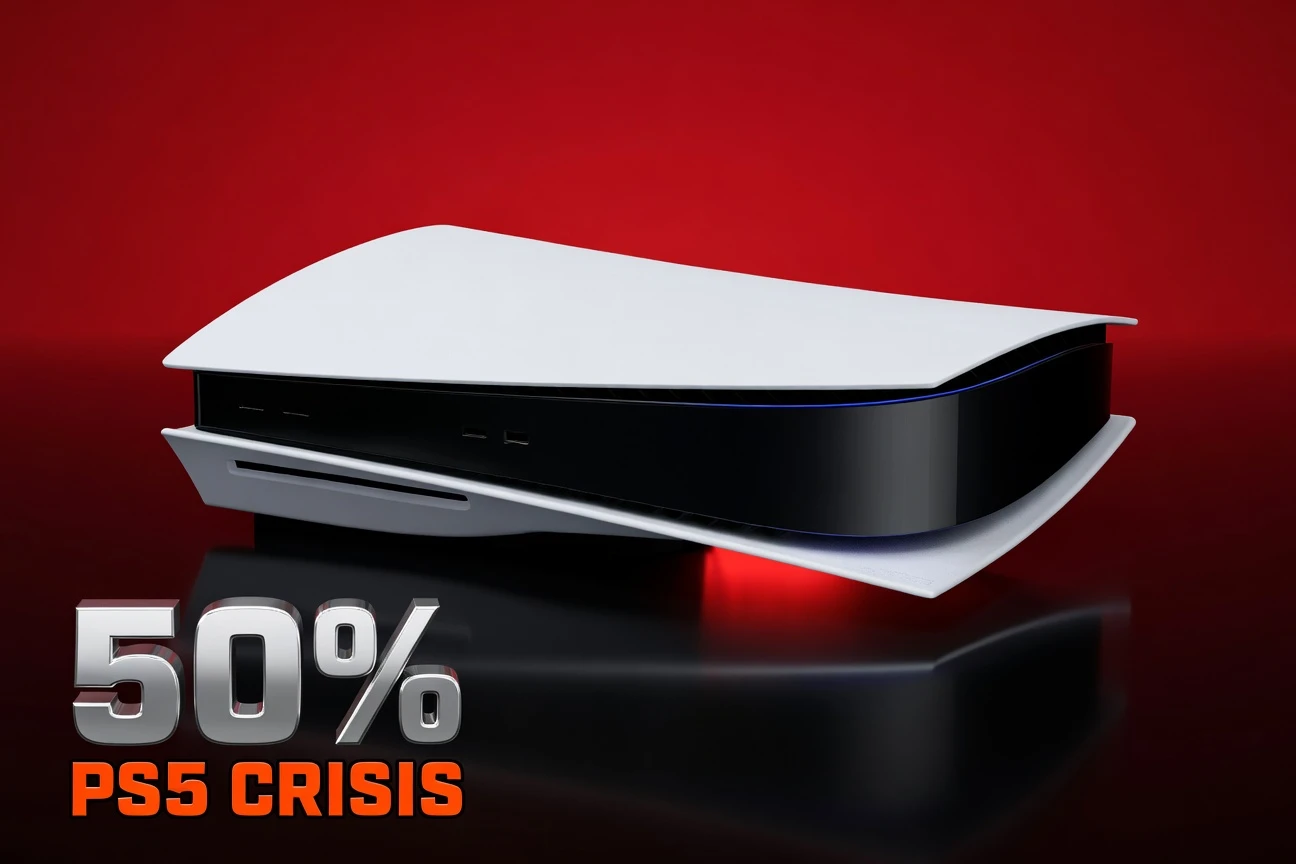
Two Price Hikes in Twelve Months
The first hike came in August 2025, a $50 increase across all PS5 models that Sony blamed on currency pressures and broader component costs. It felt significant at the time. Eight months later, Sony announced a second round of increases effective April 2, 2026, this time much larger and covering every major market simultaneously. The official PlayStation Blog announcement on March 27, 2026 put Isabelle Tomatis, Sony Interactive Entertainment’s Vice President of Global Marketing, on the record: “With continued pressures in the global economic landscape, we’ve made the decision to increase the prices globally. After careful evaluation, we found this was a necessary step to ensure we can continue delivering innovative, high-quality gaming experiences to players worldwide.”
Combined, the two hikes added $150 to the standard disc PS5 in the U.S. in under a year, a 30% increase from the $499.99 launch price that held steady for four years. The PS5 Pro, already a premium product at $699.99 when it launched in late 2024, now sits at $899.99.
| Model | Price Before Aug 2025 | Price After Aug 2025 | Price After Apr 2026 | Total Increase |
|---|---|---|---|---|
| PS5 Disc Edition | $499.99 | $549.99 | $649.99 | +$150 (+30%) |
| PS5 Digital Edition | $449.99 | $499.99 | $599.99 | +$150 (+33%) |
| PS5 Pro | $699.99 | $749.99 | $899.99 | +$200 (+29%) |
| PlayStation Portal | $199.99 | $199.99 | $249.99 | +$50 (+25%) |
The Memory Crisis Running Beneath the Gaming Industry
Sony didn’t raise prices out of greed or miscalculation. The constraint is real, and it’s industry-wide. The three largest memory manufacturers, Samsung Electronics, SK Hynix, and Micron Technology, have spent the past 18 months shifting cleanroom capacity away from the conventional DRAM and NAND flash used in consumer products and toward high-bandwidth memory for AI accelerators.
The numbers from TrendForce’s Q2 2026 memory contract price analysis are brutal. Conventional DRAM contract prices rose 90% to 95% quarter over quarter in Q1 2026, a new quarterly record. Q2 2026 brings another projected increase of 58% to 63%. NAND Flash contracts are expected to climb 70% to 75% in Q2. These aren’t rounding errors. Memory, once among the cheapest components in a gaming console, has become one of the most expensive line items in the bill of materials.
An analysis by IDC on the global memory shortage’s impact on consumer markets projected global DRAM supply growth at just 16% year on year in 2026, well below the historical 20% to 30% norm that kept prices in check for most of the last decade. New fab capacity from Micron and SK Hynix won’t reach volume production until 2027 at the earliest.
Kioxia, one of the world’s largest NAND manufacturers, has told partners that its capacity is already committed through the end of 2026. Memory is being rationed, not allocated.
Sony’s gaming division sits at the end of a very long supply chain that starts with AI infrastructure spending by Microsoft, Google, Meta, and Amazon. Every wafer dedicated to high-bandwidth memory for an Nvidia data-center chip is a wafer not producing the GDDR6 or LPDDR5 modules that go inside a PS5. That is not a metaphor. It is a physical constraint on semiconductor manufacturing. The console industry didn’t create this problem and cannot solve it unilaterally.
How Sony Is Making More Money by Selling Less Hardware
For most of the PS5’s life, Sony sold hardware at slim margins or at a loss and made its money on software and subscription fees. That model has fully matured. PlayStation Plus subscribers, digital game sales, and third-party title royalties now generate enough income that hardware unit counts matter far less to the bottom line than they did five years ago.
“We plan to base our PS5 hardware sales in FY26 on the volume of memory we can procure at reasonable prices and we expect hardware profitability to be essentially the same as FY25.”
That statement, from Sony’s official FY2025 earnings disclosure, is remarkable in what it acknowledges: Sony is no longer forecasting hardware sales in units. It’s forecasting based on component availability. The unit count is a byproduct of what the supply chain allows, not a target the company is managing toward.
For FY2026, Sony is projecting a 6% decline in Games and Network Services segment revenue, to ¥4.42 trillion, mostly because hardware revenue will fall. But operating income in the segment is forecast to jump 30%, to ¥600 billion, as the Bungie impairment losses that cost the company $767 million in FY2025 don’t recur at the same scale and first-party software releases accelerate. Sony’s Bungie write-downs and the studio’s ongoing struggles have been a persistent drag on an otherwise strong gaming business.
David Cole, CEO of games research firm DFC Intelligence, noted in a Bloomberg-reported comment that Sony had been counting on Grand Theft Auto VI to be the system-seller that convinced the remaining PS4 holdouts to upgrade. GTA 6’s confirmed May 26, 2026 console release date now builds that opportunity back in, and Sony’s FY2026 profit forecast factors in a meaningful software revenue bump tied to the title.
What the PS6 Timeline Means for Gamers
Sony CEO Hiroki Totoki gave investors the clearest, and most sobering, statement yet on next-generation hardware at the May 8 earnings call. On the PS6, he said directly: “We have not yet decided on at what timing we will launch the new console, or at what prices. Looking at the current circumstances, the memory price is also expected to be very high in FY2027, because there will still be a shortage of supply. So under that assumption, we must think carefully what we will do.”
That is not a holding statement. It’s an admission that the component market is actively preventing Sony from committing to a launch window for its next platform. Bloomberg reported in February 2026 that Sony is weighing a delay to 2028 or 2029, and Totoki’s comments do nothing to push back on that timeline. Sony’s PS6 uncertainty amid the DRAM crisis is now the central strategic question hanging over the entire gaming business.
Frequently Asked Questions
Can I still buy a PS5 at a retail store today?
Yes, PS5 consoles are still available at major retailers, but the current U.S. price is $649.99 for the disc edition, $599.99 for the digital edition, and $899.99 for the PS5 Pro, all effective since April 2, 2026. Sony has confirmed it has no current plans for a third price hike. Inventory availability varies by region; check directly on PlayStation Direct, Amazon, Best Buy, or Walmart for current stock.
Why did Sony raise the PS5 price twice in less than a year?
DRAM and NAND flash memory prices have surged dramatically, with conventional DRAM contracts rising roughly 90-95% in Q1 2026 alone, according to TrendForce data. AI data centers run by Microsoft, Google, Meta, and Amazon have locked up most of the world’s high-bandwidth memory production, leaving consumer electronics manufacturers with tighter supply and far higher costs. Sony’s two hikes added $150 to the standard PS5 price between August 2025 and April 2026.
When will the PlayStation 6 come out?
Sony has not set a release date or price for the PS6. CEO Hiroki Totoki confirmed at the May 8, 2026 earnings call that memory prices are expected to remain high through at least FY2027, making it impossible to commit to a launch timeline. Bloomberg has reported Sony is considering a 2028 or 2029 window. The PS5 is expected to remain Sony’s primary gaming platform for at least two more years.
Is the PS5 still worth buying at $649?
That depends on your situation. The PS5’s software library is strong, with over 74.6 million software units sold in Q4 FY2025 alone, and GTA 6 launches May 26, 2026 as a console exclusive for its first release window. If you’re still on PS4, that’s a meaningful upgrade. If you’re holding out for PS6, Totoki’s May 2026 comments suggest the wait could be two to three years. There are no announced Sony trade-in or upgrade programs at this time.
Sony’s PlayStation division has spent five years building a business that doesn’t depend on cheap hardware to generate profit, and the memory crisis has, in a perverse way, validated that strategy faster than anyone expected. The platform reaching 125 million monthly active users while selling 1.5 million consoles in a quarter tells you everything: the software and subscription machine is durable in a way the hardware cycle never was. The PS5 at $649 is a harder sell than it was at $499. But the business behind it has never been healthier.
IO Interactive has dropped the final PC system requirements for 007 First Light, and the headline is the one nobody expected from a 2026 AAA showcase: a six-year-old GeForce GTX 1660 still gets you into the game. The Danish studio published a five-tier spec sheet on May 8 covering everything from a 1080p/30 fps minimum to a 4K, 200-plus fps Ultra preset built around the RTX 5080 and DLSS 4.5.
The young James Bond origin story launches May 27 on PC, PlayStation 5, and Xbox Series X/S, with a Nintendo Switch 2 port slipping to summer. Game Informer’s published spec table shows a steep climb from minimum to Ultra, but the floor is unusually generous for a path-traced shooter.
The Five-Tier Spec Sheet At A Glance
IO Interactive split the requirements into Minimum, Recommended, Enthusiast 1440p, Enthusiast 4K, and Ultra. The CPU baseline barely shifts across four of those five tiers. The GPU does almost all the heavy lifting.
Here is the official chart confirmed in IO Interactive’s PC specs reveal post:
| Tier | Target | CPU | RAM | GPU | VRAM |
|---|---|---|---|---|---|
| Minimum | 1080p / 30 fps Low | Core i5-9500 / Ryzen 5 3500 | 16 GB | GTX 1660 / RX 5700 | 6 GB |
| Recommended | 1080p / 60 fps Medium | Core i5-13500 / Ryzen 5 7600 | 16 GB | RTX 3060 Ti / RX 6700 XT | 8 GB |
| Enthusiast 1440p | 1440p / 60 fps High | Core i5-13500 / Ryzen 5 7600 | 16 GB | RTX 4070 / RX 7800 XT | 12 GB |
| Enthusiast 4K | 4K / 60 fps High | Core i5-13500 / Ryzen 5 7600 | 16 GB | RTX 4080 / RX 7900 XTX | 16 GB |
| Ultra | 4K / 200+ fps DLSS 4.5 | Core i5-13600K / Ryzen 7 7700X | 32 GB | RTX 5080 | 16 GB |
Every tier needs 80 GB of free SSD space and Windows 10 or 11 64-bit. The Minimum tier is the only one that does not technically require an SSD, though IOI strongly recommends one across the board.
What Changed Since January
The studio’s first spec leak in January listed 32 GB of RAM as the recommended target. That number was wrong. TechPowerUp’s revision tracker documented the correction, with IO Interactive admitting in March that 16 GB is fine for everything except the Ultra preset.
The fix matters for buyers planning a build this month. A 16 GB DDR5 kit runs about $55 on Newegg right now. Doubling it to 32 GB on bad data would have added roughly $60 nobody needed to spend.
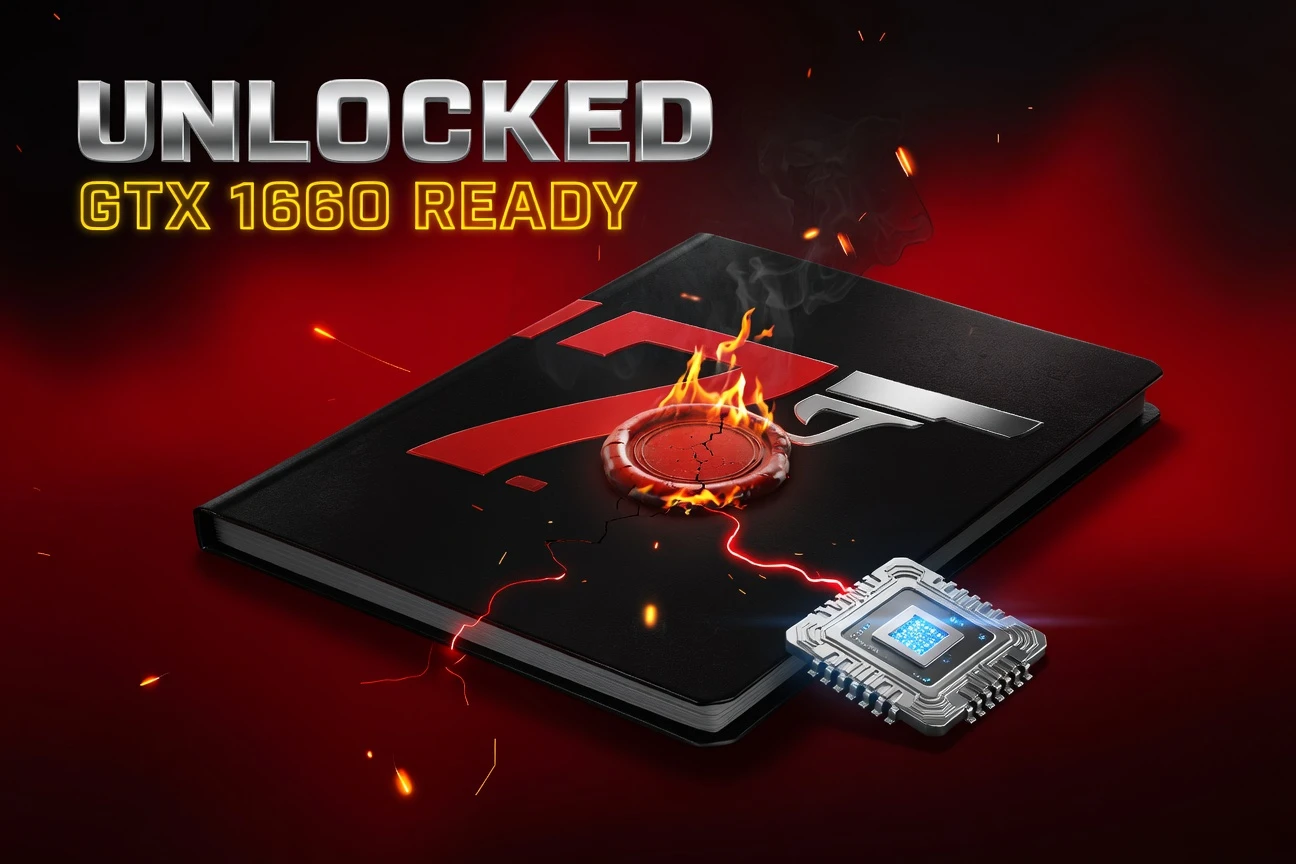
Why A 2019 GTX 1660 Still Boots A 2026 Bond Game
The GTX 1660 launched in March 2019 at $219. It has 6 GB of GDDR5 and zero ray-tracing cores. The fact that it clears the bar for a path-traced AAA in 2026 says more about IO Interactive’s engine than it does about Nvidia’s old midrange card.
007 First Light runs on Glacier 2, the proprietary engine IOI has been sharpening since the original Hitman in 2000. It is not Unreal Engine 5. That single architectural choice is the reason the minimum specs look like 2020 and not 2026.
UE5 titles released in the past 18 months, including Stalker 2 and Black Myth: Wukong, have routinely demanded an RTX 2060 or RTX 3060 just to start. Lumen and Nanite are gorgeous, expensive, and ship with traversal stutter that has plagued nearly every UE5 release since Fortnite migrated. Glacier carries no such baggage.
The Engineering Trade IOI Made
Mert Karademir, IO Interactive’s chief technology officer, explained the philosophy in a TechRadar interview from Summer Game Fest 2025. “Our engine is quite modular. It’s not like Unity or Unreal. It’s very easy for us to add new stuff, so we have a huge separation between the networked engine, the engine editor, and the resource server,” Karademir said.
That modularity is why the same Glacier build runs on PS5, Xbox Series, Switch 2, and iOS without separate forks. Each platform inherits the same LOD profiling tools. The minimum tier on PC is essentially the Switch 2 build with the resolution slider open.
The trade-off is scale. Glacier 2 levels are not the open worlds players got from Rockstar’s open-world ambitions for the GTA 6 PC release. They are dense, hand-built sandbox missions in the Hitman tradition. Christian Elverdam, the studio’s chief creative officer, told Game Developer the structure is closer to 2012’s Hitman Absolution than to a Sapienza or Mendoza-scale playground.
The Ultra Tier Is A Single-Vendor Showcase
Look past the friendly minimum and the Ultra preset tells a different story. It lists exactly one GPU. The RTX 5080. No AMD equivalent. No Intel Arc fallback.
That is because Ultra is not a native preset. It assumes DLSS 4.5 Dynamic Multi Frame Generation 6X running through Nvidia’s second-generation transformer model, an upscaler that does not exist outside GeForce RTX 50-series silicon. AMD FSR 4 and Intel XeSS support remain unconfirmed by IO Interactive at publication.
“GeForce RTX 50 Series players can experience 007 First Light with the highest levels of cinematic detail, and superfast frame rates thanks to NVIDIA’s technical partnership with developer IO Interactive,” Nvidia wrote in its GDC 2026 DLSS 4.5 announcement.
Nvidia is not subtle here. The Ultra tier exists to sell $1,000-plus GPUs.
Path Tracing Is Not Shipping On Day One
This is the line buried in the May 8 update. Path tracing and DLSS Ray Reconstruction, the two features Nvidia spent its GDC keynote celebrating, are not in the launch build.
IO Interactive confirmed in Wccftech’s reporting on the launch feature gap that both ship in a free summer 2026 update. Day-one buyers get standard ray tracing, fully dynamic global illumination, and DLSS 4.5 Super Resolution plus Multi Frame Generation. The path-traced screenshots Nvidia has been pushing for four months are a post-launch promise.
For everyone running an RX 7900 XTX or older GeForce hardware, the launch build is the only build that will ever be tuned for them. The summer update is a Blackwell party.
What The Spec Sheet Tells You About Performance Tuning
Read the table sideways and a clean upgrade path emerges.
- 16 GB of system RAM holds across four of five tiers. Only Ultra needs 32 GB. Most existing rigs are already there.
- The CPU jump from Recommended to Enthusiast 4K is zero. A Core i5-13500 from late 2022 carries you from 1080p/60 to 4K/60 if your GPU can keep up.
- VRAM, not raw shader count, is the real ceiling. 8 GB cards are capped at 1080p Medium. 12 GB unlocks 1440p High. 16 GB is the price of admission for native 4K.
- The GPU is the only line item that scales aggressively. One upgrade, one bracket up.
That is unusually honest scaling for a modern AAA. Most 2025 and 2026 releases bake DLSS Performance mode into their “recommended” target without saying so. IOI listed Minimum through Enthusiast 4K as native rendering numbers and called it out explicitly.
How It Stacks Against The 2026 Field
Compare the Recommended tier against the genuine heavyweights of this calendar year. Doom: The Dark Ages asks for an RTX 3080 to hit 1080p/60 medium. Phantom Blade Zero requires an RTX 4070 for the same target. 007 First Light does it on an RTX 3060 Ti from 2020.
Mike Williams of GameSpot’s specs analysis noted the same gap. The reasonable explanation is the engine. Glacier ships without the streaming overhead UE5 inherits, and IOI’s profiling pipeline catches LOD problems before they ship instead of patching them eight weeks later.
The driver story is also stable. Players running modern Nvidia R595-series drivers on Blackwell hardware already have the DLSS 4.5 runtime baked in. No day-one driver scramble, no “please install Game Ready 595.79 or newer” panic.
The Switch 2 Question Mark
Three platforms launch May 27. The fourth, Nintendo Switch 2, is delayed to summer with no firm date. IO Interactive has only said the team needs more time to optimize.
The reason is structural. Glacier 2’s flexibility is the studio’s calling card, but a 20-hour campaign with path-traced ambition and dense interior environments still has to compress into a hybrid console with an LPDDR5X memory budget. Karademir’s interview suggested the port took roughly two months of focused engineering before it ran end-to-end. “End-to-end” and “shippable” are different milestones.
Pricing, Edition Tiers, And The Pre-Order Hook
The standard edition lands at $69.99 on PC and $69.99 on PS5 and Xbox Series. Pre-orders automatically upgrade to the Deluxe Edition at no extra cost, which adds 24-hour early access plus a set of in-game outfits and skins.
Owners without RTX 50 hardware have a fallback. 007 First Light streams day one through GeForce Now Ultimate, which puts an RTX 4080-class instance behind the player at $19.99 a month. For anyone whose card sits below the Recommended bar, that is roughly the price of three months of cloud streaming versus a $400 GPU upgrade.
Frequently Asked Questions
Will My GTX 1660 Actually Run 007 First Light Well?
Yes, at 1080p with Low settings targeting 30 fps. That is the official Minimum tier confirmed by IO Interactive on May 8. Expect frame drops in the busiest set pieces and longer load times if you are still on a SATA SSD or HDD. For a smoother 1080p/60 experience, an RTX 3060 Ti or RX 6700 XT is the genuine entry point. Nothing below that hits 60 fps consistently.
Do I Need An RTX 5080 To Enjoy The Game?
No. The RTX 5080 is required only for the 4K/200-plus fps Ultra preset, which exists as a Nvidia showcase tier. An RTX 4080 or RX 7900 XTX delivers native 4K/60 fps at High settings without DLSS, which most players will find indistinguishable. The 5080 is a luxury, not a requirement, and the path-tracing payoff for that card is not even shipping until summer.
When Does Path Tracing Actually Arrive?
Summer 2026, in a free post-launch update. IO Interactive has not given a specific date. The launch build on May 27 ships with standard ray tracing, fully dynamic global illumination, and DLSS 4.5 Super Resolution and Multi Frame Generation. DLSS Ray Reconstruction lands alongside path tracing in the same summer patch, so plan accordingly if those visuals are your reason to buy on day one.
Is FSR 4 Or Intel XeSS Supported At Launch?
Not confirmed. IO Interactive has only committed to DLSS 4.5 in writing as of the May 8 spec update. AMD and Intel users running native rendering have functioning Recommended and Enthusiast paths up to 4K/60 fps, so the lack of FSR 4 is annoying but not blocking. Watch the official IOI patch notes near launch for any late-stage upscaler additions.
How Long Is The Campaign Worth Buying At $70?
Around 20 hours for the main story across roughly 15 missions, according to gameplay director quotes summarized in Insider Gaming’s campaign-length report. Add the TACSIM tactical simulation challenges, collectibles, and side content and total runtime climbs to 30 to 40 hours. Note that 007 First Light does not launch with New Game Plus, so a single playthrough is the full ride at retail.
The takeaway for anyone building or upgrading a PC this month is clean. If your card is from the Turing era or newer with at least 6 GB of VRAM, you have a path into 007 First Light at $69.99 without buying anything else. The real upgrade decision is whether path tracing in summer is worth the Blackwell premium. For most players, it is not. The launch build is already the best-looking Glacier game IO Interactive has ever shipped, and it runs on hardware most living rooms already own.
Embark Studios just told its Linux players to hold their breath. In a May 7, 2026 developer update titled “Ensuring Fair Play”, the studio behind Arc Raiders confirmed it is testing a new kernel-level anti-cheat solution to layer on top of Easy Anti-Cheat. The post never says the word Linux. That silence is the story.
Arc Raiders currently sits at Platinum on ProtonDB, one of a tiny handful of semi-competitive shooters with that rating and a six-figure player base. The reason it earned that badge is the same reason its Linux future is now in question: Embark left EAC running in user-space mode, the only mode Proton can translate. A second kernel-level layer threatens to break the compromise that made the game playable on SteamOS in the first place.
What Embark Actually Said And What It Didn’t
The blog post, timed to the Riven Tides update going live April 28, lays out a three-part stack. Easy Anti-Cheat handles the kernel layer. Machine-learning models built with Portuguese AI firm Anybrain’s behavioral detection platform chew through input telemetry. Several other systems sit underneath, undisclosed for operational security.
Then comes the line that set the ProtonDB threads on fire. “Kernel-level detection is a necessity because most commercial cheats operate within that space,” Embark wrote. “Without it, we’d have little to no visibility into the tools doing the most damage.” The studio said it is currently testing a fresh kernel-level solution it expects will sharpen detection across Speranza and the Rust Belt.
Notice what the post leaves out. There is no commitment to keep EAC’s Linux user-space mode active alongside the new layer. There is no acknowledgement of the Steam Deck install base. There is no “we will continue supporting Proton.” The omission is doing heavy lifting.
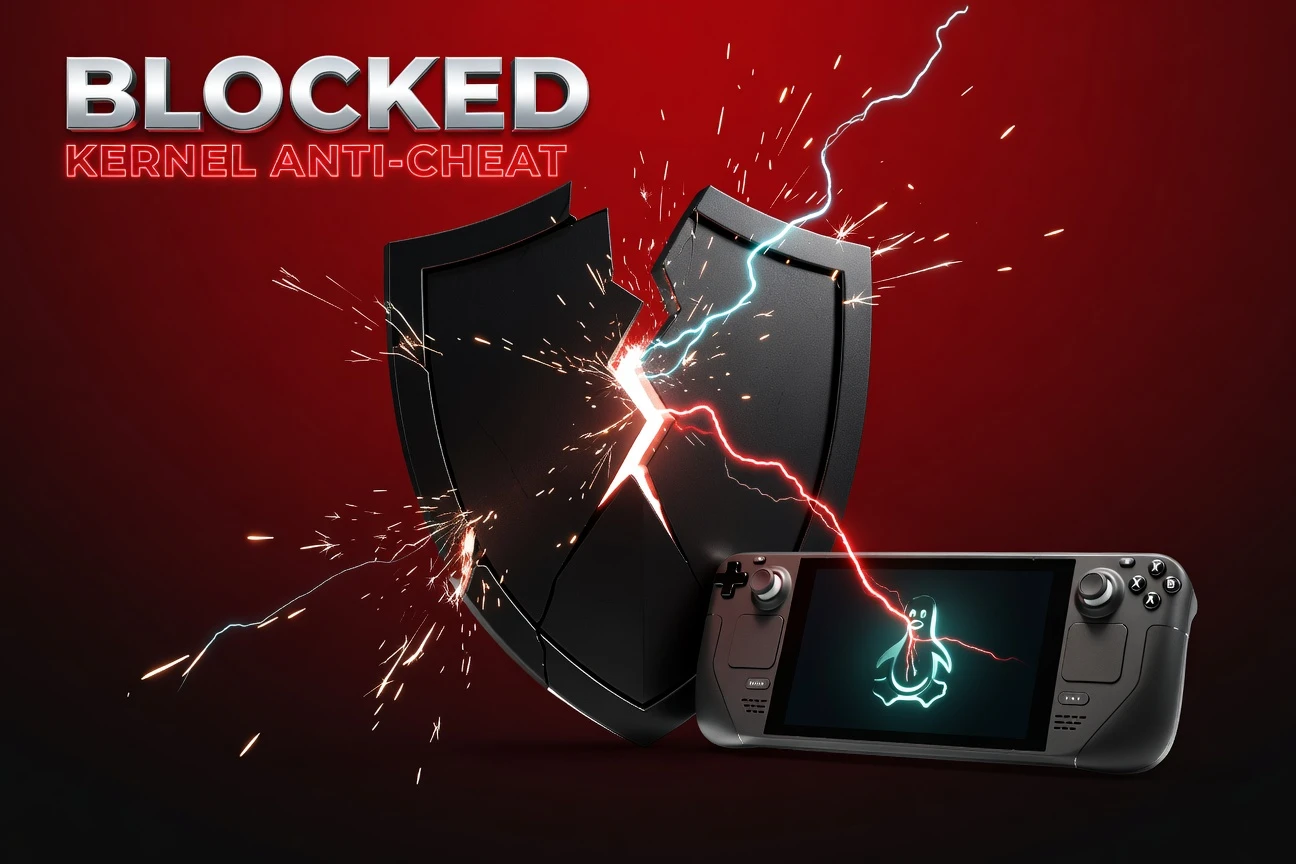
Why The Platinum Rating Was A Tightrope, Not A Promise
Easy Anti-Cheat has a Linux build. It has had one since 2021, when Epic shipped Proton support. The catch is that the Linux version runs in user space, not the kernel. That is fundamentally less invasive and fundamentally less powerful than the Windows build.
Embark is one of the rare developers that flipped the toggle. Counterpoint: most won’t. Of the 1,136 games on Steam that require anti-cheat software, 682 of them do not work on SteamOS, according to crowd-sourced compatibility data tracked by AreWeAntiCheatYet and surfaced in GamingOnLinux’s November 2025 Steam Machine analysis. That is roughly 60 percent of anti-cheat games locked out.
The friction is policy, not technology. Facepunch CEO Garry Newman put it plainly when explaining why Rust dropped Linux support. “It’s a vector for cheat developers, and one that would be poorly maintained by both us and EAC due to the low user base. When we stopped support for Linux, we saw more cheat users exploiting Linux than actual legitimate users,” Newman said in a statement republished across Linux forums. Riot’s anti-cheat lead Phillip Koskinas told The Verge in 2024, “You can freely manipulate the kernel, and there’s no user mode calls to attest that it’s even genuine. You could make a Linux distribution that’s purpose-built for cheating and we’d be smoked.”
The Cheating Crisis That Forced Embark’s Hand
The kernel-layer test isn’t happening in a vacuum. Arc Raiders is bleeding players, and the cheaters are the loudest reason why.
The numbers are brutal:
- 481,966 all-time concurrent peak on Steam, hit November 16, 2025 per SteamDB’s Arc Raiders concurrent-player chart.
- 466,372 concurrent on January 4, 2026, the post-launch second wind.
- 95,642 concurrent in mid-April 2026, an 80 percent drop from the New Year peak.
- 15th most-played game on Steam even after the collapse, ahead of Overwatch and Marvel Rivals.
The cheating drumbeat got louder every week. Tyler “Ninja” Blevins, one of the highest-profile streamers to pick up the game at launch, called it “unplayable” before stepping back from streams. TheBurntPeanut, the largest creator in the Arc Raiders community, throttled his hours despite watching his viewership take the hit. Embark’s earlier response, a three-strike system that mostly issued 30-day suspensions instead of permanent bans, drew accusations of catch-and-release.
The Anybrain Layer, And Why It Isn’t Enough
Embark’s bet on machine learning is real money on the table. Anybrain’s pitch is that aim-bots, trigger-bots, and recoil scripts produce input patterns no human hand can mimic, and a model trained on enough telemetry can flag them in real time. The vendor describes its system as lightweight enough to run alongside gameplay without measurable overhead.
Input telemetry analysis has become one of our most effective tools. We’ve trained and deployed a set of models dedicated to this, and have been working with Anybrain on this research since the start.
That’s Embark’s own framing in the May 7 post. The studio also confirmed every ban appeal is reviewed by a human, not an algorithm, and that input-pattern analysis is the technique it leans on hardest to separate accessibility-device users from cheaters. The hard cases are the ones where someone is using a niche adaptive controller that mimics the macro patterns a cheat tool produces. Embark says it analyzes telemetry plus communication patterns to read intent.
Behavioral ML is good. It is not, by Embark’s own admission, sufficient. The studio said the new kernel test is happening because most commercial cheats live in ring zero, and the only way to see them is to operate there too. That logic is the entire industry’s logic. It is also the logic that has shut Linux out of every Riot, Activision, and EA shooter on the market.
What “Sits Alongside” Could Mean For Steam Deck Owners
The most consequential phrasing in the blog is that the new kernel-level solution will “sit alongside or on top of” the existing EAC implementation. Three scenarios are possible. Each carries a different verdict for Linux.
- Scenario one, soft layer. The new component runs only on Windows clients while EAC continues handling Linux in user space. Linux play continues unaffected. This is the best case and the least likely, because cheat developers will simply migrate to Linux to dodge the new layer.
- Scenario two, parity flag. The new component requires kernel access on every supported platform, and Embark turns Linux off as a result. Steam Deck owners get a refund window and a launch error. This is what happened to Apex Legends in 2024.
- Scenario three, sandboxed Linux mode. Embark keeps Linux on a separate matchmaking pool with weaker anti-cheat coverage, an idea Valve has reportedly pitched to studios. Linux players keep the game but at the cost of being quietly segregated.
Embark hasn’t picked, and that’s why the blog reads as a soft warning. The studio is known for caring about Linux. The Finals, its other live shooter, is still playable on SteamOS nearly two years after launch, and patches that break Linux compatibility usually get fixed within a day. That goodwill is real. It is also unilateral, which means it can be revoked without negotiation.
The Steam Machine Wildcard
Embark is making this call at the exact moment Valve is trying to change the math. The newly announced Steam Machine living-room PC ships with SteamOS, the same Linux-based platform as the Steam Deck. Valve has told Eurogamer it expects more multiplayer play on the Machine than on the Deck, which would in theory raise the commercial incentive for studios to enable Linux anti-cheat support.
The arithmetic still doesn’t add up. PC World pegged Steam Deck unit sales at four to six million through early 2025, with another two million expected by year-end. Best case eight million Decks plus an unknown but small initial Steam Machine pool against 84 million PS5 consoles. For a developer choosing where to put anti-cheat engineering hours, the Linux audience is still rounding error.
What Linux Players Should Do This Week
Until Embark says more, Arc Raiders runs fine on Proton Experimental with the Bleeding-edge beta toggled on, or on GE-Proton 10-22 or 10-24. Players who hit the recent vkCreateRayTracingPipelinesKHR assertion failure after the February 2026 patch can clear the shader cache or disable Vulkan ray tracing as a workaround. The community’s read on Embark’s track record is that breakage usually gets fixed within 24 hours.
The harder question isn’t this week’s launcher. It’s whether the kernel test, once it ends, expands to all platforms. The blog post offered no timeline. Embark told players the system is being trialed across Speranza and the Rust Belt, the two zones that cover all live PvE and PvP modes, which suggests the test is broad rather than confined to a small percentage rollout.
Frequently Asked Questions
Does Arc Raiders Still Work On Steam Deck And Linux Right Now?
Yes. As of May 9, 2026, Arc Raiders runs on Linux through Easy Anti-Cheat’s user-space mode and holds a Platinum rating on ProtonDB. Use Proton Experimental with the Bleeding-edge beta enabled, or GE-Proton 10-24, and force that compatibility tool in the game’s Steam properties. Performance reports are positive on both AMD and Nvidia hardware.
Will The New Kernel-Level Anti-Cheat Break Linux Support?
Embark hasn’t said. The May 7 blog post confirms a new kernel-level solution is in testing alongside Easy Anti-Cheat but does not commit to Linux compatibility for that new layer. Watch the official Arc Raiders news feed and Embark’s status page for the rollout announcement. Until then, no patch has shipped that disables Linux play.
What Is Anybrain And How Does Its AI Detect Cheaters?
Anybrain is a Lisbon-based AI firm Embark partnered with from the start of Arc Raiders development. Its system reads mouse and keyboard input telemetry and trains models to flag patterns no human can produce, like perfect recoil compensation or sub-100-millisecond reaction chains. It runs lightweight on the client and feeds detection signals back to Embark’s review team.
Can I Get Banned For Playing Arc Raiders On Linux?
No reports indicate Embark bans for Linux play itself. The accidental bans being discussed in the community involve players using accessibility controllers whose input patterns occasionally trigger ML detection. Embark says every ban appeal is reviewed by a human reviewer, and the studio has restored items to players who could prove a hacker killed them through its Abnormal Match Compensation system.
If Arc Raiders Drops Linux Support, Can I Get A Refund?
Yes, in most cases. Steam’s standard refund policy covers fewer than two hours of playtime within 14 days of purchase, but Valve has historically extended refunds beyond that window when a game removes a previously supported platform. File the request through Steam Support and cite the platform-removal change in the ticket.
For now, Linux Arc Raiders players are stuck in the same posture as everyone else watching this story: waiting on the next Embark patch note to see whether the kernel layer is a Windows-only experiment or a stack-wide upgrade. The studio earned a lot of credit by shipping the game with Linux support intact when it didn’t have to. That credit is about to be tested. The cheaters forced this conversation, but the answer Embark gives in the next few weeks will set the tone for how every other live-service shooter handles SteamOS for the rest of the decade.


Anthropic Traced Claude’s Blackmail Behavior to the Internet’s AI Villain Scripts

GTFOICE.org Leak Exposes 17,662 Anti-ICE Activists On Open API

vivo X300 Ultra Lands In India At INR 1,59,999 With 400mm ZEISS Lens Kit

Andreessen Horowitz Bets $2.2B on Crypto’s Quiet Cycle

Google’s Buried Page Reveals 500 Niche Websites Still Making Cash

Asha Sharma Reshuffles Xbox Leadership In Race To Project Helix
-
 CRYPTO4 days ago
Andreessen Horowitz Bets $2.2B on Crypto’s Quiet Cycle
-
APPS4 days ago
Google’s Buried Page Reveals 500 Niche Websites Still Making Cash
-
 GAMING4 days ago
Asha Sharma Reshuffles Xbox Leadership In Race To Project Helix
-
 NEWS3 days ago
SEBI Names Claude Mythos, Sets Up cyber-suraksha.ai Task Force
-

 COMPUTERS3 days ago
PCB Shortage Hits China After Saudi Strike Sends Prices Up 40%
-

 NEWS3 days ago
Samsung’s 500 PPI Sensor OLED Reads Pulse And Blocks Snoopers
-

 AI4 days ago
Subquadratic Launches A 12-Million-Token AI Model And Says The Wall Is Gone
-

 CRYPTO4 days ago
Wells Fargo Says Circle Is Crypto’s Underappreciated Winner