
Connect with us

GADGETS

Samsung Magnetic Power Bank Makes the Case the Catch

Published

on

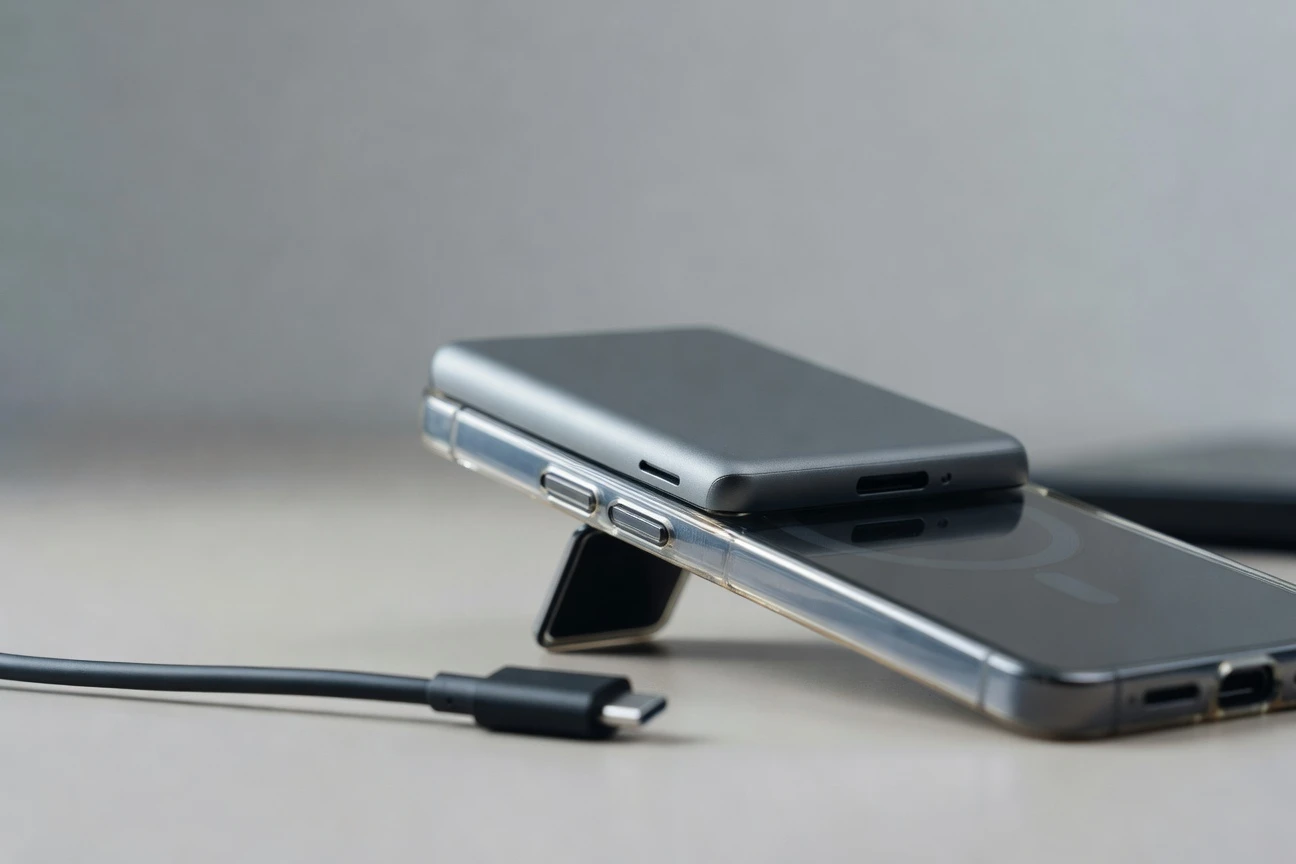
Samsung Magnetic Wireless Battery Pack is a 5,000 mAh Qi2 portable charger that snaps to compatible phones, delivers up to 15W wirelessly and can send up to 25W over Universal Serial Bus Type-C (USB-C, the reversible port used for charging and data). The catch is on the phone side: Galaxy owners still need a Qi2-ready magnetic case for the snap-on part to work as intended, according to the official Magnet Wireless Battery Pack specification.

That makes the accessory less a simple pocket battery than a test of Samsung’s case-dependent charging strategy. It fixes alignment and camera-bump headaches, but it also asks buyers to understand which Galaxy, case and speed tier they are paying for before they click add to cart.

Specs Put the Ceiling at 15W, Not 25W

The simple number to remember is 15W. Samsung lists the pack for Qi2 wireless charging at that ceiling, while the wired USB-C path can reach 25W. Qi2 (the Wireless Power Consortium wireless charging standard with magnetic alignment) matters because it reduces the old problem of setting a phone slightly off-center on a pad and waking up to a weak charge.

  • 5,000 mAh typical: Samsung’s headline battery capacity for the magnetic pack.
  • 4,855 mAh rated: the listed rated capacity at 3.88V for the lithium-ion cell.
  • 15W wireless: the maximum wireless output Samsung lists for the accessory.
  • 25W wired: the maximum fast wired input and output through USB-C.

The spec sheet also gives the physical reason this is meant as a daily carry item rather than a travel power brick. It measures 67.6 x 102.5 x 14.2 mm and weighs 140 g. That is small enough to live on the back of a phone while you keep using it, especially with the foldable stand opened for video or calls.
The Certification Confirms the Design Choice

The more revealing document is not Samsung’s store page. It is the Wireless Power Consortium (WPC, the standards group that certifies Qi wireless charging devices) listing. The Qi certified product record for EB-U2500 lists Samsung’s Magnet Wireless Battery Pack with Qi ID 24969, version 2.1.0, a certification date of Dec. 5, 2025 and a potential load power of 15.0.

    MPP – Magnetic Power Profile, the Qi2 profile that uses magnets to align a charger and device.
    PTx Product – A power transmitter, meaning the accessory sends power to another device.
    Potential Load Power – The certified wireless power level the product is built to deliver under the standard.

That record says Samsung chose mainstream Qi2 magnetic charging rather than the faster Qi2 25W tier for this battery. For a pocket pack, that is defensible. Heat, thickness and battery drain all get harder when wireless wattage rises. But it also means buyers should not confuse the 25W number on the box with wireless output.

The Case Requirement Is the Hidden Cost

The case is the gate. Samsung’s Galaxy S26 accessory guide says its magnet cases support fast wireless charging up to 25W and snap onto magnetic accessories. The battery page goes further for Galaxy phones: use the charger with a Qi2-ready case to enable charging, and expect speed to vary by device and conditions.

For shoppers, that turns a power bank purchase into a small compatibility checklist:

  • Phone: Galaxy S25 series or later, Galaxy Z Fold7, Galaxy Z Flip7 or another Qi2-supported device.
  • Case: a Qi2-ready magnetic case if the phone does not have the needed magnetic hardware on its own.
  • Speed path: 15W for wireless charging from the pack, 25W for wired charging through USB-C.
  • Interference: Samsung warns magnets can affect S Pen input, autofocus, compass behavior, wireless charging and near-field communication (NFC, the short-range radio used for payments and pairing).

This is where the product feels both smart and fussy. Samsung is not asking buyers to trust random adhesive rings. It is steering them toward certified cases. But the cleaner route comes with another purchase, and that purchase can decide whether the battery feels premium or oddly picky.

Samsung’s Battery Line Now Splits in Two

Samsung already sells a different portable battery for people who care more about capacity than magnets. The Wireless Battery Pack 10Ah specification lists 10,000 mAh capacity, 7.5W wireless charging, 25W wired charging, two USB-C ports and three-device charging when using two wired devices plus one wireless device.

Feature Magnet Wireless Battery Pack EB-U2500 Wireless Battery Pack 10Ah EB-U2510
Best Use Snap-on top-ups while using a phone Longer trips and multi-device charging
Capacity 5,000 mAh typical, 4,855 mAh rated 10,000 mAh
Wireless Output Qi2 magnetic charging up to 15W Non-magnetic wireless charging at 7.5W
Wired Output USB-C up to 25W USB-C up to 25W when connected to one device
Simultaneous Charging Two devices, with power shared Three devices, two wired and one wireless
Weight 140 g 222 g

The split is clean. The older 10Ah pack is the utility pick. The magnetic pack is the convenience pick. One carries more energy. The other is built around phone-in-hand use, alignment and a stand. Buyers who want a bag battery should not be distracted by magnets. Buyers who want a pocketable snap-on slab should accept the smaller cell.

Price Makes the Decision Sharper

At publication, the Samsung U.S. Magnet Wireless Battery Pack listing showed the gray model at $61.74, down from a visible $64.99 reference price, while the page also showed delivery and in-store pickup as not available. Availability can change by location, so the useful part is the pricing signal: Samsung is treating this as a premium first-party accessory, not a commodity battery.

That price only makes sense for a narrow buyer. If you already use a Galaxy magnetic case, want a slim pack that clears the camera area, and value Samsung’s own compatibility notes, the math can work. If you mainly need raw capacity, the 10,000 mAh pack is the saner buy. If you want the fastest wireless number Samsung talks about elsewhere, this battery is not the product that gets you there.

Do not buy it for speed alone. Buy it for fit, the stand, the magnetic attachment and the chance to leave a cable in your bag. Those are real conveniences, but they are convenience features first.

Qi2 25W Leaves This Pack a Step Behind

The timing is awkward because the broader standard is already moving faster. The WPC says Qi2 25W adds nearly 70 percent more power than the original Qi2 generation. Put plainly, 25W is about 1.67 times 15W. That is a meaningful gap when a phone is low and you have only half an hour near an outlet.

Samsung knows that. Its Galaxy S26 accessories include a separate Qi2 25W Wireless Magnet Charger for faster desk charging. The battery pack sits below that tier because portability changes the trade-off. A pocket battery has to manage heat while it is stuck to a phone and draining its own cell. A wired or wall-powered charger can be more aggressive.

The result is a product with a very specific job. It is for keeping a phone alive during the day, not for replacing a wall charger. If Samsung makes magnetic cases part of the normal Galaxy purchase, the pack becomes boring in the best sense. If buyers discover the case rule after a slow first charge, the neat gray slab will take the blame for a choice made in the phone.

Frequently Asked Questions

Does the Samsung Magnetic Wireless Battery Pack work without a case?

It can charge Qi certified devices wirelessly, but Samsung says Galaxy phones need a Qi2-ready case to enable magnetic charging and optimal performance.

How fast does it charge wirelessly?

The wireless output is rated at a maximum of 15W, while the USB-C port supports up to 25W wired charging.

What is the battery capacity?

Samsung lists a 5,000 mAh typical capacity and a 4,855 mAh rated capacity for the lithium-ion pack.

Can it charge two devices at the same time?

Yes. Samsung says the pack can share power when charging two devices at once, wired or wireless, but shared charging can lower the effective speed.

Is it safe near cards or medical devices?

Samsung warns that the magnets should be kept away from credit cards and implantable medical devices, with at least 15 cm of distance for medical devices.

Is it better than a 25W Qi2 charger?

Not for top speed. It is a portable 15W wireless battery; a Qi2 25W wall charger can be faster with compatible phones, cases and adapters.

Logan Pierce is a writer and web publisher with over seven years of experience covering consumer technology. He has published work on independent tech blogs and freelance bylines covering Android devices, privacy focused software, and budget gadgets. Logan founded Oton Technology to publish clear, no nonsense tech news and reviews based on real hands on testing. He has personally tested and reviewed dozens of mid range and budget Android phones, written extensively about app privacy, and built and managed multiple WordPress publications over the past decade. Logan holds a bachelor's degree in English and studied digital marketing at a certificate level.

Continue Reading
Click to comment

Leave a Reply

Your email address will not be published. Required fields are marked *

GADGETS

Chromecast Update Scare Exposes Google’s Support Gap

Published

on

Chromecast security updates have not ended for most Google streaming devices, based on Google’s own support table checked on Saturday, May 23, 2026. The current list still marks Chromecast (2nd gen), Chromecast Audio, Chromecast Ultra, Chromecast (3rd gen), Chromecast with Google TV (4K), Chromecast with Google TV (HD), and Google TV Streamer (4K) as receiving critical security updates. The original 2013 Chromecast is the lone No.

That makes Friday’s scare useful, just not in the way early readers expected. Google’s older dongles remain covered on paper, yet the company has left owners to decode three support signals at once: a minimum-date table, a firmware page, and a hardware line that stopped production.

The Support Page Still Says Yes

The page that matters most is not a store listing or a forum thread. It is Google’s security update status table, the official list that pairs connected home devices with release dates, five-year minimum support dates, and a column for critical security updates.

  • 5 years – Google’s minimum automatic critical security update pledge starts from the date a device first went on sale in the US Google Store.
  • 1 unsupported Chromecast – The original model, released on July 31, 2013, is the only Chromecast row that currently shows No.
  • Oct. 2025 – The firmware page lists that Android security patch level for both Chromecast with Google TV models.

There is a catch. Google’s public table does not show a change log for the status column, so a brief flip from Yes to No would leave no easy audit trail for normal users. The visible evidence right now points to a support-page scare rather than a mass end-of-life notice.

The Five-Year Column Changed the Read

The panic came from treating the five-year date as a hard cutoff. Google’s table labels that column as a release date plus five-year minimum, and the word minimum does a lot of work. A device can pass that date and still receive critical fixes if Google keeps it in the supported pool.

The minimum commitment gives Google room to keep shipping urgent fixes without promising full software support forever. That is why several older rows can sit years beyond their listed minimum dates and still show Yes in the support column.

Device Release Date Five-Year Minimum Date Current Critical Updates Current Firmware or Build
Chromecast (2nd gen) Sept. 30, 2015 Sept. 30, 2020 Yes 1.56.467165
Chromecast Audio Sept. 29, 2015 Sept. 29, 2020 Yes 1.56.467166
Chromecast Ultra Nov. 6, 2016 Nov. 6, 2021 Yes 1.56.469779
Chromecast (3rd gen) Oct. 22, 2018 Oct. 22, 2023 Yes 1.56.291998
Chromecast with Google TV (4K) Sept. 30, 2020 Sept. 30, 2025 Yes UTTC.250917.004
Chromecast (1st gen) July 31, 2013 July 31, 2018 No 1.36.159268

That comparison is the core of the false alarm. Five of the rows above have already crossed the listed five-year mark and still carry Google’s active critical-update status.

The Firmware Page Draws the Hardware Line

The second official signal is the Chromecast and Google TV Streamer firmware page, last updated on Nov. 24, 2025. It lists production firmware versions for older Cast devices, build numbers for Google TV devices, and release notes for the newest streaming box.

That firmware page is cleaner than the support table in one way: it gives the old devices a version number owners can compare against what appears in the Google Home app. The 2nd gen model, Audio, Ultra, and 3rd gen all sit on the 1.56 branch with bug-fix notes. The 4K and HD Google TV models share build UTTC.250917.004.

The original model gets different treatment. Google says support for the first-generation device has ended, and that it no longer receives software or security updates or technical support. That row matches the No status on the security table.

For everyone else, the firmware list matters because support status alone does not tell you whether your unit has actually taken the latest update. A device can be eligible and still lag if it has been unplugged, moved to a weak Wi-Fi spot, or left on a power strip that gets shut off every night.

Production End Made Every Support Signal Louder

Part of the confusion comes from Google’s own product shift. In its Chromecast history post, the company said the line had sold more than 100 million devices and would be available only while supplies lasted.

After 11 years and over 100 million devices sold, we’re ending production of Chromecast

Majd Bakar, VP of Engineering, Health & Home at Google, wrote that in the company’s Aug. 6, 2024 post. The same post said existing devices would keep getting software and security updates under the latest-device policy, which is why the current Yes rows carry weight.

The replacement is a more expensive living-room hub, not another tiny stick. Google’s Google TV Streamer launch post describes a 4K box with more storage, Matter support, a built-in Thread border router, and a redesigned voice remote. That move also puts more attention on the Google TV interface itself, including changes like the YouTube Google TV sidebar update now showing up for some users.

Owner Checklist for Older Google Streamers

For owners, the practical read is simple: do not replace a working device just because its five-year date passed. Do take the support page seriously if your exact model switches to No and stays there.

A few checks separate a normal old streamer from one that should leave your TV:

  • Identify the exact model in the Google Home app before assuming a Reddit thread applies to your device.
  • Compare the Cast firmware version or Google TV build number against Google’s official firmware page.
  • For Google TV models, run System Update from the About menu after leaving the device powered on and connected.
  • Retire the original 2013 model if apps stop seeing it, setup fails, or account behavior starts looking strange.
  • Factory reset any streaming device before selling it, donating it, or handing it to someone outside your home.

The security point is narrower than the panic. A streamer without new critical fixes may still play video, but it becomes a weaker place to leave a signed-in Google account, streaming apps, and local-network access.

Google’s Support Gap Remains

Google’s broader Nest security commitments promise automatic critical security updates for at least five years and point users back to the published device list. The support gap is that the list itself gives no history, no timestamped row changes, and no explanation when a status changes.

The Android Open Source Project’s Chromecast Security Bulletin page adds another layer. It says Chromecast bulletins are published quarterly and that devices start receiving over the air (OTA, sent through the device’s own network connection) updates in the same month the bulletin is released. The newest Chromecast-specific entry shown there is December 2025, with security patch level 2025-12-01.

Those pages are useful for people who already know where to look. They are thin comfort for someone who sees a support row change, cannot find Google’s cached version of the old page, and has no official note explaining whether the change was intentional.

If Google leaves the table as it stands, Friday’s episode will fade as a bad screenshot day. If it silently flips older rows again, the next scare will be harder to wave away.

Continue Reading

GADGETS

Google TV 300 Million Devices Tests Its Slower Growth

Published

on

Google TV 300 million devices is the number Google, the search and Android company, wants developers to notice. The May 19 Android Developers update says Google TV and Android TV together now sit above that monthly active device tier worldwide, giving Google reach across smart TVs, streaming boxes, and app makers chasing the home screen.

The catch is pace and timing. Google reported 270 million devices on September 23, 2024, then used the same over 300 million phrasing in a September 22, 2025 Gemini rollout. At Google I/O, the number returned without a higher public tier, putting attention on discovery, ads, and app placement on the biggest screen at home.

A Milestone With Slower Math

The clean comparison starts with Google’s September 2024 Google TV update, which put the platform at 270 million monthly active Google TV and Android TV operating system (Android TV OS, the software base shared by Google TV and Android TV devices) units. The current public tier is only 30 million higher, and Google has not given a sharper figure.

A separate wrinkle matters. Google’s Gemini for TV rollout note already said the platform powered the 300M plus device tier in September 2025. That makes the I/O figure a restated scale marker rather than a fresh jump. The number remains large, but the cadence has cooled.

Public Marker Stated Scale Signal for Google TV
September 2024 product update 270M monthly active devices The smart TV licensing wave was still running hot.
September 2025 Gemini rollout 300M plus active devices AI search became the next selling point.
May 2026 I/O developer update Same public tier Google put the scale in front of app developers, not a higher count.

The route to scale came through licensing as much as hardware. TCL, the Chinese TV maker, and Hisense, the Chinese electronics company, helped put Google software into living rooms where buyers were choosing a television first and a platform second.

The Count Has Become a Surface-Area Number

Monthly active devices are not the same as people. One household can have a living-room TV, a bedroom TV, and a streaming puck all counted as separate active devices. That does not weaken Google’s number, but it changes what the number means.

For app developers, surface area is still valuable. A device can host a home row, a voice result, a free channel, a continue-watching card, and a search answer. Each placement can push a viewer toward one service and away from another before the viewer opens an app.

  • 30 million disclosed net adds separate the late 2024 count and the current tier.
  • Three home-screen surfaces now matter most: recommendations, voice answers, and channel rows.
  • One household can own multiple active TV devices, so the count should not be read as people.

That is why the slower growth does not make the platform less important. It makes each screen more valuable. When hardware adoption cools, the money shifts to what Google can do with the screens it already has.

Gemini Moves the Fight to Discovery

Google’s answer to slower net adds is to make each screen do more. Gemini brings artificial intelligence (AI, software that turns prompts and context into responses) into TV discovery, letting viewers ask loose questions, get mixes of visuals, videos, and text, and continue the search with follow-up prompts while choosing what to watch.

The first rollout started on select TCL models, then expanded toward Google’s own streamer and more TV lines. That matters because search on a TV used to mean typing awkwardly into a box. A conversational answer can skip the app grid and move straight to a show, a clip, or a YouTube result.

  • Streaming apps need cleaner metadata because prompts can surface a title before a viewer opens the app.
  • YouTube gets another path into living-room answers when Gemini responds with supporting videos.
  • Google Photos, Veo, and Nano Banana push the TV toward shared creation as well as playback.

That connects with the Google Gemini Omni Flash conversational video push, where Google is trying to make media creation feel less like editing software and more like a chat. On TV, the bet is similar: less menu diving, more intent.

North America Is the Weak Spot

The global count hides a regional problem. Omdia, the technology research firm, said in its North American TV operating system forecast that retailers are projected to control 47% of the region’s TV OS market by 2029, up from 27% in 2025. The same forecast said Google TV leads outside North America and China with 40% share, but faces gradual pressure from Vidaa, Titan, and TiVo.

That is the North American gatekeeper fight. Walmart, the US retailer, owns Vizio, the TV brand, and is building around CastOS. Amazon, the retail and cloud company, keeps pushing Fire TV. Google can be huge worldwide and still face a tougher path in the US living room.

Roku, the San Jose streaming platform company, makes the metric problem clear. Its first-quarter shareholder letter says more than 100 million Streaming Households worldwide use a device powered by the Roku TV operating system, and defines that as distinct accounts that streamed within the last 30 days.

That is a different metric from Google’s device count. It is also closer to how advertisers and subscription services think. A household can buy, churn, subscribe, and respond to ads. A device can only open the door.

Developers Get a New Remote Problem

The developer post gives app makers a practical clue beyond the headline count: remote input is changing. Pointer remotes bring motion-controlled input to the Google TV home page and content-heavy apps, which means old directional pad (D-pad, the up, down, left, right control on a remote) layouts need a rethink.

The idea sits near Google’s AI Pointer cursor move on smaller screens, though the TV version is about couch input rather than screen-reading assistance. The shared theme is clear enough: Google wants pointing and intent to replace slow, repeated taps.

  1. Add hover feedback so a viewer can see what the pointer is selecting from across the room.
  2. Make rows and grids respond to touchpad-style scrolling without losing focus state.
  3. Declare pointer support in Google Play, Google’s app marketplace, so compatible TV apps can be found and installed.

Google also wants video apps to move toward Engage SDK (software development kit, a package of tools that connects app content to Google TV recommendations). The older Watch Next API (application programming interface, a software bridge for continue-watching data) is due to lose support in the second half of 2027, which gives developers a calendar reason to pay attention now.

Advertising Turns Scale Into a Test

The business reason is advertising. The Google TV Network launch note from Google Ads, Google’s advertising business, said the network offered targeted in-stream inventory across more than 125 built-in channels. It also said Google TV and other retail Android TV OS devices had 20.1 million addressable monthly active devices in the US in 2023, with free-channel viewers averaging more than 75 minutes per day.

Those older ad figures predate the current scale marker, but they show why the device count matters. Google does not need every new viewer to buy a streamer. It needs more of the installed base to spend time in surfaces Google can measure, sell, and improve.

The same placement instinct shows up in the YouTube Google TV sidebar test, where Subscriptions and Library move higher in the rail. Small interface changes become valuable when they sit in front of hundreds of millions of devices.

If Google can make Gemini answers, Freeplay channels, and developer metadata raise viewing time per screen, the repeated scale number will look conservative. If the next public update still sits in the same tier, the living-room race will have moved from shipments to who owns the first click.

Continue Reading

GADGETS

Android Hardware Week Shows the Niche Device Era Arriving

Published

on

Android hardware week made the market’s split plain: Samsung kept privacy hardware on its slab flagship while Fold 8 reports point to restraint, Google and Samsung pushed Gemini into glasses, Anker put artificial intelligence (AI) in earbuds, REDMAGIC sold cooling as a feature, and Walmart held the budget tablet line at $97. For buyers, the signal is simple: the Android shelf is becoming a set of specialized tools for privacy, gaming, calls, health and cheap shared screens.

That makes this a mixed week. The wins are concrete, but the shelf gets messier when the strongest answer may be on your face, in your ear, on a family tablet or in a phone with a fan.

Android Hardware Split Into Specific Jobs

The connective tissue is hardware specialization. Samsung’s Galaxy S26 Ultra Privacy Display guide says the feature is integrated into the display hardware and changes how pixels send light, so the screen stays clear head-on while limiting side viewing. That is a narrow job, but it is a valuable one in trains, offices and airport lounges.

The same week brought devices that make narrower promises. The result is less tidy than the old flagship ladder, where every premium Android phone tried to win the same camera, chip and battery contest. Now privacy became a hardware lane, and so did voice calls, eyewear, fan cooling and cheap household screens.

Lane Device Or Move Hardware Choice Job It Claims
Privacy flagship Galaxy S26 Ultra Built-in privacy display layer Hide sensitive screen content in public
AI eyewear Samsung and Google Intelligent Eyewear Gemini voice access in glasses Handle navigation, messages and translation hands-free
AI audio soundcore Liberty 5 Pro Max Thus AI chip and 10-sensor call system Clean up calls and capture meeting notes
Gaming phone REDMAGIC 11S Pro Snapdragon 8 Elite Gen 5 Leading Version with active cooling Sustain game performance under heat
Budget tablet Walmart onn tablets Low-cost Android screens Give families cheap shared devices

Seen together, the week reads like a product map rather than a spec race. The phone remains central, but more tasks now have a better place to live.

Samsung’s Foldable Restraint Carries the Warning

The Fold 8 part of the week needs a caveat: Samsung has not announced the device, and current reports could change before launch. Still, the claim that the next book-style foldable may skip the privacy layer matters because it follows a pattern Samsung shoppers know well.

Foldables already carry more mechanical burden than slab phones. They need thin glass, hinge control, crease management, battery room and display durability in a body people still expect to pocket. Adding another screen layer is never free. If Samsung leaves the S26 Ultra’s privacy trick off a future foldable, the choice would say less about indifference to privacy and more about the physics of stacked compromises.

The leaked Galaxy Z Fold 8 Wide front design matters here because Samsung appears to be testing form as much as feature count. A wider foldable can make video, reading and typing feel less cramped, but it also changes weight balance and panel stress.

The same logic appeared in Oton Technology’s Galaxy Z Flip 8 and Flip 7 price comparison: once foldables mature, shoppers punish missing conveniences more than they reward another fast chip. That is the pressure Samsung is walking into.

AI Moved to Faces and Ears

Samsung and Google made the clearest confirmed AI move with the Intelligent Eyewear first look. The companies showed two premium styles created with Gentle Monster and Warby Parker, with first collections scheduled for this fall in select markets. The pitch is practical: ask Gemini for directions, summaries, calendar help, translation or a photo without pulling out a phone.

Intelligent eyewear represents a powerful step forward in our shared vision with Samsung to make AI more helpful and accessible in everyday life

Shahram Izadi, vice president and general manager of Android XR at Google, said that in Samsung’s May 19 press release. The line matters because it puts Google’s assistant work into a daily object instead of another phone app.

Anker’s contribution is smaller but more intimate. The soundcore Liberty 5 Pro Series page says the Liberty 5 Pro Max uses the Thus AI chip, 10 sensors and an AI note-taker in the case. It also claims 150 times the AI computing power for Environmental Noise Cancellation (ENC, call processing that cuts background noise) compared with its previous flagship earbuds.

The common bet is that AI moved closer to the senses. A phone sees only when it is raised; glasses can see what the wearer sees, and earbuds hear the call while the phone stays in a pocket.

Gaming Phones Turned Heat Into the Spec

REDMAGIC’s gaming pitch is blunt. The REDMAGIC 11S Pro launch page lists Qualcomm Snapdragon 8 Elite Gen 5 Leading Version, RedCore R4, Energy Cube 3.0, upgraded AquaCore liquid cooling, Liquid Metal 3.0, a larger vapor chamber and a 24,000 revolutions per minute (RPM, fan speed) turbo fan. It also lists a 7,500 milliamp-hour battery with 80W wired and wireless fast charging.

That is not a subtle phone. It is the Android gaming niche saying the quiet part out loud: peak silicon needs thermal hardware if the buyer wants long sessions, not just strong benchmark bursts. The rumored OnePlus Ace direction, with fan-cooled performance chatter still waiting on official confirmation, points at the same buyer psychology.

  • heat is now a feature when a brand can show active cooling and sustained frame rates.
  • Battery size has become part of gaming credibility because high refresh displays and flagship chips drain fast under load.
  • Display speed needs game support, so a fast panel alone cannot promise a better match.

The loser in this lane is the do-it-all flagship. A thin glass sandwich with broad camera appeal can be the better daily phone, but it cannot easily look like the better gaming machine beside a device built around airflow.

Walmart Kept the Cheap Tablet Door Open

Walmart’s Android news sits at the other end of the shelf. On the company’s own onn Android tablet listings, new Core models appear at prices far below premium tablets: a 7-inch Core at $97, an 8-inch Core at $138 and an 11-inch Core at $167.

  • $97 – Walmart’s listed price for the 7-inch onn Core Tablet.
  • $138 – Walmart’s listed price for the 8-inch onn Core Tablet.
  • $167 – Walmart’s listed price for the 11-inch onn Core Tablet.

The pitch is household utility: a kitchen recipe screen, a kid’s video device, a travel display, a smart-home controller or a couch browser that nobody worries about like an expensive iPad. Cheap Android tablets have always lived in that lane, but Walmart’s prices keep it alive in a week otherwise dominated by AI and premium components.

That matters for Android as a platform. Google and Samsung can push AI into eyewear, but the user base also grows through devices that cost less than a pair of high-end earbuds. Walmart’s onn line is not glamorous. It keeps Android present in the rooms where a flagship phone would be too personal, too fragile or too expensive to share.

The risk is support. Budget tablets age fast when updates slow or storage fills. A low price opens the door; software maintenance decides whether people come back for the next one.

Google Health Made the Widget Make Sense

A home-screen health widget has value only if the app behind it is becoming central. Google’s new Google Health app announcement says the Fitbit app is becoming Google Health, with an automatic rollout beginning May 19 and no separate app download needed for existing users.

The redesign gives Google four tabs: Today, Fitness, Sleep and Health. It also brings Google Health Coach, built with Gemini, into workout planning, sleep consistency and health summaries. That makes the widget in this week’s Android chatter more than a shortcut. It is a small front door into Google’s attempt to gather wearables, apps, medical records and coaching into one place.

Google also included the careful part. The company says Fitbit health and wellness data will not be used for Google Ads, and its footnotes say Google Health is not intended to diagnose, treat, cure, prevent or monitor disease. That language is not decoration. When AI moves into health, trust becomes as important as the interface.

The New Android Shelf Has Fewer Universal Answers

The buying question is becoming sharper. Someone who wants privacy on a train may look at Samsung’s slab flagship. Someone who wants phone-free prompts may wait for the eyewear launch. Someone who games hard may accept a fan. Someone who needs a family tablet may buy the cheapest onn model and ignore the rest of the week’s premium noise.

For Samsung, the risk is that foldable fans read restraint as stagnation. For Google and Samsung eyewear, the risk is comfort, battery life and data trust. For Anker, the challenge is proving that AI call processing and note-taking feel useful after the novelty fades. For Walmart, the test is whether cheap Android tablets age well enough to avoid becoming disposable screens.

If the fall eyewear launch arrives with normal-looking frames, useful battery life and careful data controls, Android gains a daily surface that does not need a hand. If it feels awkward or costly, this week still showed where the category is headed: sell the job first, then choose the shape.

Continue Reading

Trending





