
NEWS
Foldable iPhone Bet Tests Apple’s Premium Upgrade Ladder

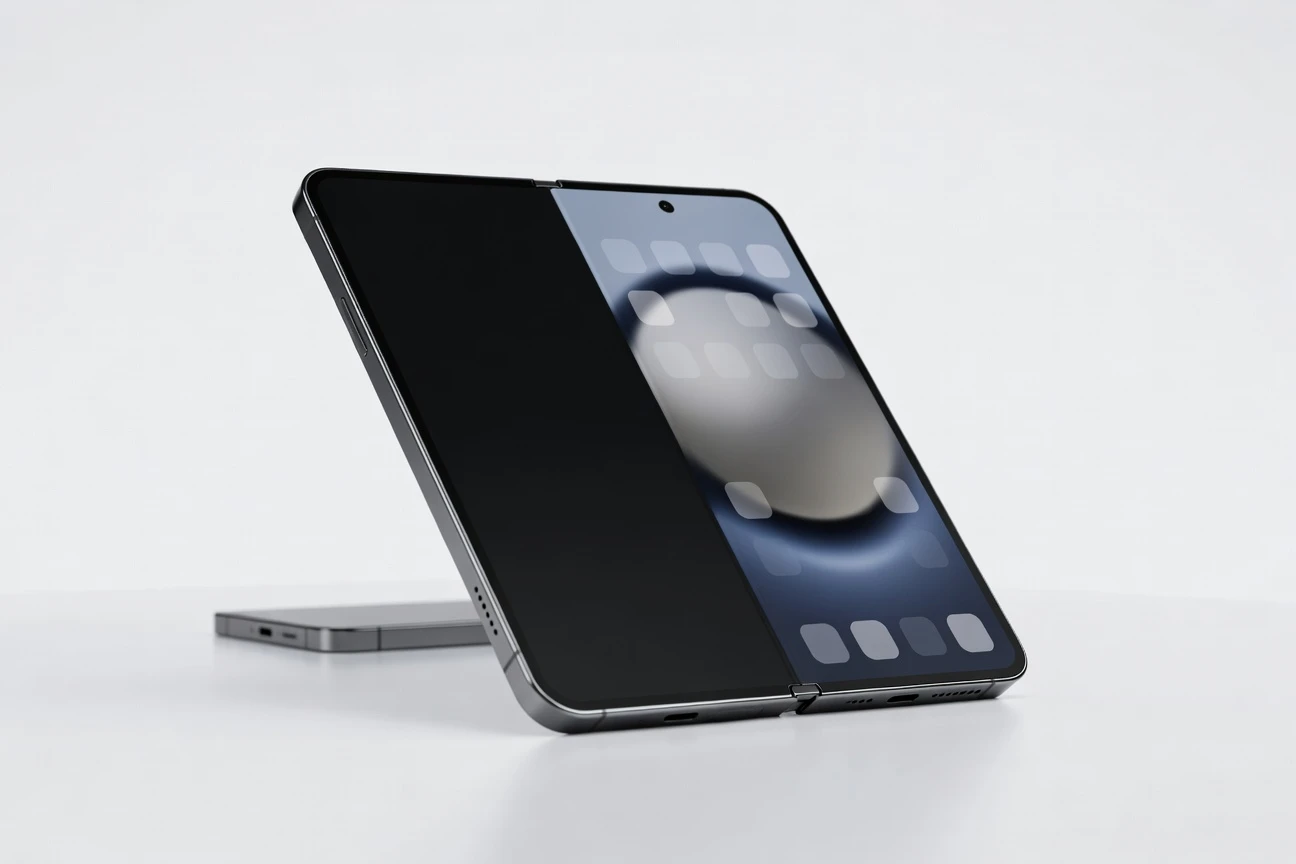
The foldable iPhone reportedly lined up for September would give Apple its first book-style handset, a roughly tablet-sized inner screen and the possible iPhone Ultra name. Price will decide how far the redesign travels. A device near $2,000 would sit far above the current Pro Max, asking loyal buyers to pay for a new iPhone tier.
The timing remains softer than the buzz. Bloomberg’s Mark Gurman, the publication’s Apple columnist, has pointed to Apple’s normal fall launch period, while a May 18 rumor cycle raised hinge reliability worries that could push shipments. As of May 23, 2026, Apple has not announced a folding handset, even as Samsung Electronics, the South Korean phone and chip group, and Google, Alphabet Inc.’s hardware and software unit, keep iterating in public.
The Fall Window Comes With a Hinge Caveat
Apple, the Cupertino-based iPhone maker, usually likes a clean September story: invitation, keynote, preorders, retail launch. A first foldable would make that rhythm harder. The company would be selling a new shape, a new software behavior and a new price point, all while asking buyers to trust a hinge on day one.
That is why the rumor split matters. A fall reveal can still be plausible if early supply is tight or if delivery slips later than the rest of the iPhone line. Apple did that with the iPhone X years ago, when announcement and broad availability did not move in lockstep. A foldable launch would give Apple the same option, but with a much more complicated part list.
- 20%: Counterpoint’s foldable smartphone forecast projects global foldable shipment growth for 2026.
- 19.8 million: TrendForce’s 2025 foldable phone shipment estimate, with the category still around 1.6% of the smartphone market.
- $1,199: Apple’s iPhone 17 Pro launch pricing for the Pro Max starting point in the United States.
Together, those numbers show a tiny category waiting for a very large brand. They also show why Apple cannot treat the first folding iPhone like another color or camera bump.
Apple’s Price Ladder Gets a New Top Rung
The reported price is the cleanest way to see the bet. If the new model starts near $2,000, Apple would be placing it above the Pro Max rather than beside it. That helps protect the existing flagship while giving the company a new ceiling for buyers who already pick the largest storage tiers, AppleCare and carrier financing.
| Phone | Positioning | Main Screen Story | Starting Price | Main Risk |
|---|---|---|---|---|
| Reported foldable iPhone | New Apple ultra tier | Rumored 7.7 to 7.8-inch inner display, with a 5.3 to 5.5-inch outer display | Estimated at or above $1,999 | Unconfirmed timing, hinge durability and first-generation supply |
| iPhone 17 Pro Max | Current top slab iPhone | Large single display with mature camera and accessory support | $1,199 | No folding use case, but far less hardware risk |
| Galaxy Z Fold7 | Mature Android book foldable | 8-inch inner display, 6.5-inch cover display and a thinner Fold design | $1,999.99 U.S. MSRP | Premium price with visible foldable trade-offs |
| Pixel 10 Pro Fold | Google’s large-screen Pixel | 8-inch inner display and 6.4-inch outer display | $1,799 before trade-in offers | Bulk, app fit and heavy discounting pressure |
The table makes Apple’s problem plain. Matching Samsung’s sticker price would not shock the foldable market, but it would shock the iPhone aisle. Apple would need to make the hinge feel less like a novelty and more like the reason the most expensive model exists.
The Screen Sizes Point to a Pocket iPad
TF International Securities analyst Ming-Chi Kuo has put the rumored hardware in the book-foldable camp, with a large inner screen, two rear cameras and a Touch ID power button instead of Face ID. That mix says Apple may be saving internal space wherever it can. It also hints that the new phone would ask users to think of authentication, cases and one-handed use differently.
The software burden is just as heavy. Reports have pointed to iPhone operating system (iOS, Apple’s software layer for iPhone apps and services) changes that would let apps sit side-by-side on the inner screen. Apple has already moved the iPad in that direction through Apple’s iPadOS 26 windowing preview, which brought a more flexible window system to the tablet.
That matters because a folding iPhone without better multitasking becomes a larger phone that costs twice as much. Oton Technology has also covered Apple’s iOS 26.5 feature move, a reminder that Apple often lays service and interface plumbing before the hardware that makes it feel obvious.
Samsung Already Paid the Tuition
Samsung’s lead is not just that it sells a foldable today. The advantage comes from years of public fixes: hinge behavior, crease visibility, display layers, thickness, repair complaints and app layout. Samsung now talks about artificial intelligence (AI, software that assists with tasks such as translation, photo edits and search) as part of the foldable experience, but the harder work is still mechanical.
- Its Armor FlexHinge uses a thinner structure that Samsung says reduces visible creasing and strengthens durability.
- The Galaxy Z Fold7 weighs 215 grams and measures 8.9 mm when folded, making it much closer to a normal flagship than early book-style foldables.
- The 8-inch inner screen gives Samsung a simple pitch for video, editing and multi-window work.
- The trade-off is real: Galaxy Z Fold7 does not support S Pen, a reminder that thin foldables still force feature choices.
Apple can study that record, but it cannot borrow Samsung’s forgiveness. A first Apple foldable will arrive with higher expectations because Apple waited. Buyers will not judge it against the first Galaxy Fold. They will judge it against the best foldables already on shelves.
The Cover Screen May Be the Awkward Part
The rumored outer display could become the daily-use pinch point. A 5.5-inch cover screen would be about one inch smaller on the diagonal than Galaxy Z Fold7’s cover screen and well below the current Pro Max class. That may keep the device narrow and pocketable, but it also changes how often users must open it.
This is where the smaller cover screen becomes more than a spec-sheet footnote. If the outside display feels like a secondary window, Apple has to make opening the phone effortless enough that users do it dozens of times a day. If it feels too cramped for typing, payments, maps or quick camera checks, the fold becomes a chore.
The possible iPhone Ultra branding helps only if the experience feels complete in both states. Apple has sold bigger phones before. It has not sold a phone that changes what it is halfway through a task.
The Supplier Math Is the Quiet Swing Factor
Foldables are supply-chain stories before they are retail stories. Apple needs flexible organic light-emitting diode (OLED, display technology that lights each pixel without a backlight) yields, a hinge that survives repeated folding, battery packaging that does not ruin thinness and enough finished units to avoid turning the launch into a lottery.
The display supply question also connects to Apple’s broader premium panel push. Oton Technology has covered Samsung and LG’s iPhone 18 Pro LTPO+ panel wins, with low-temperature polycrystalline oxide plus (LTPO+, a high-end display backplane term) becoming another dividing line between Apple’s premium suppliers and everyone else.
TrendForce believes Apple’s 2026 debut could be the turning point that drives foldables into the mainstream and injects renewed momentum into the smartphone industry.
That line from TrendForce’s foldable phone forecast captures the optimistic case. The same report also put foldable penetration around 1.6% penetration rate in 2025, which is a useful brake on the hype.
Apple does not need foldables to become the whole iPhone business. It needs enough high-end buyers to prove that the top of the range can move again after years of camera, chip and display upgrades that looked familiar from across the room.
The Upgrade Test Starts Before Preorders
The first buyer question starts with use: what daily job does the fold handle better than a Pro Max plus an iPad? Video is easy. Split-screen work is plausible. Gaming could be strong. The harder answer is whether the device feels natural when closed, because most phone use still happens in short bursts.
Apple’s late entry gives it cleaner targets and fewer excuses. A reduced crease will be expected. A durable hinge will be expected. Strong battery life will be expected. The company can price above the Pro Max only if the folding screen feels like the center of the product, not an expensive mechanical trick.
If Apple turns the fold into a dependable pocket tablet, the premium tier can stretch. If hinge doubt or a cramped cover screen dominates the first reviews, the most expensive iPhone becomes the one Apple has to explain at the Genius Bar.


South Korea Retail Investors Face Reckoning After KOSPI AI Rally Collapses

Surrey AI Maps Three Heart Attack Paths and Their Molecular Roots

Germany Locks Neutral Apple ATT Prompts Across Most of Europe

Apple’s 5% EU Fee Quietly Rewrites Alternative App Store Math

Apple’s EU Fee Truce Cuts Complexity but Leaves Rivals Fuming

Pixel 11 Pro Fold Trades Thinness for Durability and Seven-Year Stay

Mayo AI Flags HCM Obstruction From Everyday Ultrasound Videos

Indian Brands Quietly Scale Landmark Screens and Home Tech

Navin Vatsa Turns Grief Into a Lifetime of Quiet Seeing

Google Bets Pixel 11 Agentic AI Will Redefine Phones

Oracle Cuts 21,000 Jobs in a Year, Cites AI in 10-K Filing

Fable 5 and Mythos 5 Return as US Lifts Anthropic Export Controls

SpaceX’s Google Deal Turns a Rocket Company Into a Cloud Landlord

CD Projekt Red Co-CEO: Redemption Arc Isn’t Done, Witcher 4 in 2027

XPL Rallies 30% Ahead of Plasma One Card Tier Launch

Google Search Profiles Build a Follow Graph Inside Discover

DGO App Brings Rs 549 Mobile Pass for FIFA World Cup 2026 in Nepal

Moonshot AI Targets $30 Billion in China’s Fastest AI Funding Sprint

Oppo’s ColorOS 17 Eligibility List Leaves A-Series Buyers Behind

Microsoft Xbox Layoffs Start in July as Sharma Slams 3% Margin
-
 AI2 months ago
Oracle Cuts 21,000 Jobs in a Year, Cites AI in 10-K Filing
-
 AI2 months ago
Fable 5 and Mythos 5 Return as US Lifts Anthropic Export Controls
-
 AI3 months ago
SpaceX’s Google Deal Turns a Rocket Company Into a Cloud Landlord
-
 GAMING2 months ago
CD Projekt Red Co-CEO: Redemption Arc Isn’t Done, Witcher 4 in 2027
-
 CRYPTO3 months ago
XPL Rallies 30% Ahead of Plasma One Card Tier Launch
-
 NEWS3 months ago
Google Search Profiles Build a Follow Graph Inside Discover
-
 APPS3 months ago
DGO App Brings Rs 549 Mobile Pass for FIFA World Cup 2026 in Nepal
-
 AI3 months ago
Moonshot AI Targets $30 Billion in China’s Fastest AI Funding Sprint