
NEWS
Meta Settlement Puts School Social Media Costs on Trial

The Meta school district lawsuit settlement reached on May 21 kept Facebook’s parent out of a June jury trial, but it did not settle the larger fight. Breathitt County School District’s case was the first school-district bellwether in a federal docket of more than 1,200 similar claims, and the payment terms remain undisclosed, according to the settlement report on the school case.
The bigger shift is practical. Schools are no longer arguing only that social media hurt students. They are arguing that addictive product design moved mental health, discipline, cyberbullying and classroom attention costs onto public budgets. That cost theory survives the settlement.
A Settlement That Avoided the Test Case
Breathitt County, a rural Kentucky school district, had been preparing to ask for more than $60 million to create a long-term program addressing mental health and learning issues it tied to excessive social media use. Meta settled after Snap, TikTok and YouTube had already resolved the same district’s claims.
The timing matters. The Northern District of California pretrial order had set jury selection for June 12, with opening statements and evidence to begin no earlier than June 15 before U.S. District Judge Yvonne Gonzalez Rogers. A public trial would have put platform design, school spending and student harm before jurors for weeks.
Instead, the first school case ends without a verdict, without public settlement math and without a jury’s view of whether the district could prove the chain from app design to budget injury. For the companies, that removes immediate downside. For plaintiffs, it avoids the risk of losing the first test case.
| Case Track | Main Claim | Signal for Platforms |
|---|---|---|
| Breathitt County school case | School costs from alleged addictive design | Settled before the first federal school bellwether trial |
| California personal-injury trial | Individual harm from alleged addiction and failure to warn | March jury verdict of about $6 million against Meta and YouTube |
| New Mexico attorney general case | Consumer protection and child safety violations | March jury penalty of $375 million against Meta |
| Remaining school cases | District spending on counseling, safety and classroom disruption | More than 1,200 claims still need a valuation map |
The Lawsuit Put District Budgets in the Causal Chain
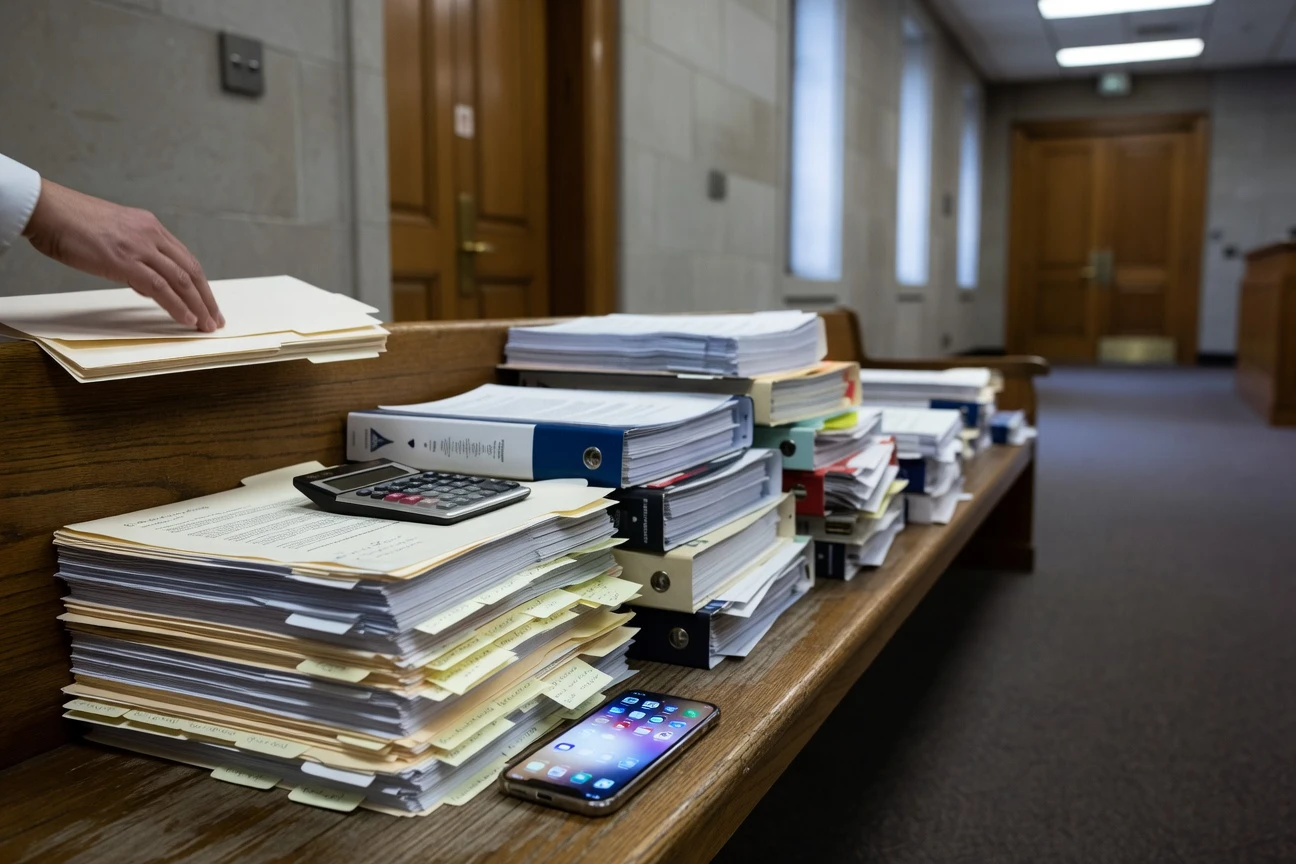
The school cases are different from the family lawsuits. A parent can describe a child’s depression, anxiety or self-harm. A district has to translate student behavior into staff time, counseling programs, filters, safety measures and lost classroom focus.
That is why Breathitt’s case drew attention. It tried to make a public school system the plaintiff with a bill. The district alleged that companies designed platforms to exploit young users’ reward systems, then left educators to handle the consequences during the school day.
Before the settlement, the court had already refused to end the case at summary judgment, according to the Breathitt docket maintained by the Northern District of California. That ruling gave plaintiffs room to argue that design choices could cause district-level expenses, though it did not decide that they had proved those expenses.
- Staff time – administrators and teachers said social media disputes, distractions and online conflicts consumed work hours.
- Mental health spending – plaintiffs tied student anxiety, depression and self-harm concerns to counseling and support costs.
- Technology controls – schools described filters, monitoring and network blocks as part of the response.
- Classroom disruption – the theory includes lost attention, cyberbullying spillover and behavior incidents that start online but land at school.
Section 230 Narrowed the Road, It Did Not Close It
The central legal fight is not just whether social media is bad for some teenagers. It is whether a platform can be sued for product design without turning the case into a lawsuit over third-party posts. Communications Decency Act Section 230 (CDA Section 230, the federal shield that protects online services from many claims based on user content) still matters.
Judge Gonzalez Rogers narrowed the claims. Some allegations tied to feeds, recommendations and content publication faced First Amendment and CDA Section 230 limits. Other theories survived because they focused on product design and warnings rather than the content users posted.
The surviving design lanes are the part other districts will study most closely:
- Age checks – whether platforms did enough to verify users’ ages.
- Parental controls – whether safety tools were effective enough for parents and guardians.
- Use-session limits – whether platforms failed to offer opt-in restrictions on length and frequency of use.
- Account deletion barriers – whether it was easier to create an account than to leave one.
- Edited-content labels – whether filters and manipulated appearance tools were handled safely.
- Reporting systems – whether platforms gave users adequate ways to report child sexual abuse material (CSAM, illegal exploitative content involving minors).
The Mental Health Evidence Comes With Caveats
The public health record gives schools a broad backdrop, but not a shortcut. The U.S. Department of Health and Human Services (HHS, the federal health agency) says the Surgeon General’s advisory cannot conclude social media is sufficiently safe for children and adolescents, while also acknowledging that online spaces can bring connection and support for some young people through the youth mental health advisory.
That distinction is where these cases will be fought. A national trend can explain why districts are worried. A damages case has to connect particular platform choices to particular costs. The companies will keep pressing that gap.
- Up to 95% of young people ages 13 to 17 report using a social media platform, according to the Surgeon General’s advisory.
- 77.0% of U.S. high school students reported using social media at least several times a day in the Centers for Disease Control and Prevention (CDC, the national public health agency) 2023 Youth Risk Behavior Survey.
- Frequent use was associated with higher prevalence of electronic bullying, persistent sadness or hopelessness, and some suicide-risk measures in the CDC’s 2023 social media analysis.
The CDC report is careful about causation. It describes associations, not a simple one-way proof that an app caused a student’s harm. That caution helps the defense. It also helps explain why plaintiffs lean so heavily on internal documents, warnings, product decisions and school-specific spending.
Meta’s Safety Record Now Has to Carry More Weight
Meta’s public answer is that teen mental health is complex and that lawsuits oversimplify a wider crisis. In a January post updated in April, the company said it had spent years researching youth safety, listening to parents and experts, and building protections such as Instagram Teen Accounts, time limits and content restrictions through Meta’s teen safety record page.
That response is not just public relations now. In future cases, it becomes part of the evidence fight. If a company says it built protections, plaintiffs will ask when those protections arrived, what was known before they arrived and whether schools were warned about risks.
The jury’s verdict is a historic victory for every child and family who has paid the price for Meta’s choice to put profits over kids’ safety
Raúl Torrez, New Mexico’s attorney general, said that after a state jury ordered $375 million in civil penalties against the company in March, according to the New Mexico Department of Justice verdict announcement. That case involved state consumer protection claims, not a school district budget claim, but it changed the legal weather around child-safety arguments.
The Remaining Districts Have a Map, Not a Verdict
The settlement gives both sides less than they wanted. Plaintiffs lose a public verdict that could have anchored negotiations. Defendants lose the chance to win the first school case and slow the rest of the docket. Everyone else inherits a map built from pretrial rulings, sealed settlement talks and two recent jury losses in related youth-safety fights.
Meta had already warned investors in its annual filing with the U.S. Securities and Exchange Commission (SEC, the federal market regulator) that the first school bellwether in the multidistrict litigation (MDL, a federal process for coordinating related lawsuits before one judge) was scheduled for June 15, and that claimed damages or penalties in certain related cases ranged up to the high tens of billions of dollars, according to Meta’s annual SEC litigation disclosure.
For school districts, the next problem is valuation. A single district’s counseling plan can be priced. A nationwide settlement over years of alleged design harm is harder. Lawyers will need models for staff hours, prevention programs, student services and future safety spending that courts can trust.
If the next school case produces a plaintiff verdict, the Breathitt settlement may look like the first quiet move in a national education-cost negotiation. If the next district loses, the May settlement will look more like a company buying certainty before a risky but winnable trial.


South Korea Retail Investors Face Reckoning After KOSPI AI Rally Collapses

Surrey AI Maps Three Heart Attack Paths and Their Molecular Roots

Germany Locks Neutral Apple ATT Prompts Across Most of Europe

Apple’s 5% EU Fee Quietly Rewrites Alternative App Store Math

Apple’s EU Fee Truce Cuts Complexity but Leaves Rivals Fuming

Pixel 11 Pro Fold Trades Thinness for Durability and Seven-Year Stay

Mayo AI Flags HCM Obstruction From Everyday Ultrasound Videos

Indian Brands Quietly Scale Landmark Screens and Home Tech

Navin Vatsa Turns Grief Into a Lifetime of Quiet Seeing

Google Bets Pixel 11 Agentic AI Will Redefine Phones

Oracle Cuts 21,000 Jobs in a Year, Cites AI in 10-K Filing

Fable 5 and Mythos 5 Return as US Lifts Anthropic Export Controls

SpaceX’s Google Deal Turns a Rocket Company Into a Cloud Landlord

CD Projekt Red Co-CEO: Redemption Arc Isn’t Done, Witcher 4 in 2027

XPL Rallies 30% Ahead of Plasma One Card Tier Launch

Google Search Profiles Build a Follow Graph Inside Discover

DGO App Brings Rs 549 Mobile Pass for FIFA World Cup 2026 in Nepal

Moonshot AI Targets $30 Billion in China’s Fastest AI Funding Sprint

Oppo’s ColorOS 17 Eligibility List Leaves A-Series Buyers Behind

Microsoft Xbox Layoffs Start in July as Sharma Slams 3% Margin
-
 AI2 months ago
Oracle Cuts 21,000 Jobs in a Year, Cites AI in 10-K Filing
-
 AI2 months ago
Fable 5 and Mythos 5 Return as US Lifts Anthropic Export Controls
-
 AI3 months ago
SpaceX’s Google Deal Turns a Rocket Company Into a Cloud Landlord
-
 GAMING2 months ago
CD Projekt Red Co-CEO: Redemption Arc Isn’t Done, Witcher 4 in 2027
-
 CRYPTO3 months ago
XPL Rallies 30% Ahead of Plasma One Card Tier Launch
-
 NEWS3 months ago
Google Search Profiles Build a Follow Graph Inside Discover
-
 APPS3 months ago
DGO App Brings Rs 549 Mobile Pass for FIFA World Cup 2026 in Nepal
-
 AI3 months ago
Moonshot AI Targets $30 Billion in China’s Fastest AI Funding Sprint