
NEWS
Apple Locks Hybrid Glass iPhone After Pure Design Died
Apple’s 20th-anniversary Pro models keep curved glass front and back with a metal band after the pure all-glass version failed yields.

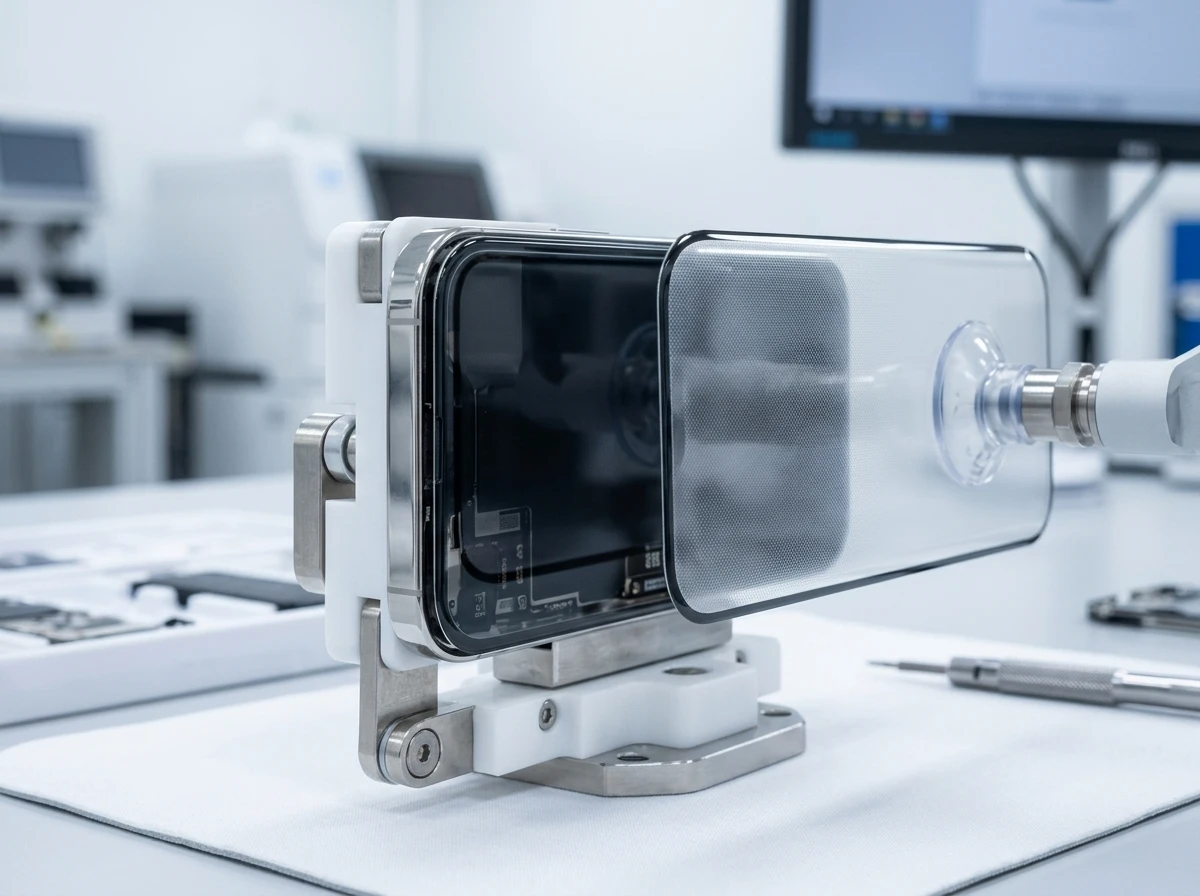
Apple still plans a glass-centric overhaul of its Pro iPhones for the device’s 20th anniversary in 2027, people familiar with the matter said, directly countering a Jefferies report that the project was dead. The phones, known internally as V73 and V74, will use glass on the front and back that curves into the sides around a metal band in the middle.
A more extreme all-glass version pushed by the design studio was scrapped early after panel-joining problems and poor mass-production yields. The hybrid that survived is already in advanced testing.
The distinction matters for how the anniversary story will be told. Apple is not abandoning glass as the hero material. It is keeping the curve and the continuous look while retaining a structural spine the pure concept never found a way to replace at volume.
The Hybrid Locked for Next Year’s Pros
New iPhone designs usually firm up about a year before the fall launch. That puts the 2027 Pro models past the point of casual change, barring a late hitch. Glass wraps the front and back and flows into the edges. A slim metal band sits in the middle for structure and antennas.
Mark Gurman of Bloomberg, who first detailed the counter-report, later clarified the distinction that tripped supply-chain checks:
There have been no recent changes to the iPhone roadmap or any recent development hiccups. This is a matter of an analyst not seeing an entirely glass iPhone in the supply chain – which isn’t possible with today’s tech. Instead, it’s glass that curves into a slim metal frame.
Gurman wrote that in a follow-up post that drew tens of thousands of views. The pure version, he added in another note, ran into trouble connecting glass panels and failed when the company tried to scale it.
- Codename pair: V73 and V74 for the Pro models
- Materials: Glass front and back, curved sides, metal mid-band
- Scrapped path: All-glass with no metal, abandoned early for yield and join issues
- Timing: Fall 2027 launch window, designs largely locked
Apple declined to comment. The hybrid still aims for the visual splash the company wants for the anniversary of the original 2007 iPhone.
Locking a chassis this early is normal, not exceptional. Suppliers tool around fixed outer dimensions, antenna cuts, and glass radii long before software features freeze. Once those tools move, a late redesign becomes expensive and slow. That is why the hybrid’s survival in advanced testing carries more weight than a single analyst note about a pure-glass unit no one expected to see on a line.
The metal mid-band is doing double duty. It restores structural stiffness the all-glass stack could not guarantee, and it gives antennas a known, controllable home. The curve still delivers the continuous edge the design studio wanted. The compromise is visible only on close inspection, which is the point of the hybrid path.
Jefferies Saw a Ghost and Cut the Stock
On August 10 Jefferies analyst Edison Lee said supply-chain checks pointed to cancellation of the all-glass iPhone due to low yields. He downgraded Apple to Underperform from Hold and cut the price target to $263.66 from $285.56. Shares fell as much as 2.8 percent that session, with other reports citing a 2.1 percent drop after the note.
Lee had once seen the all-glass model as plausible. He called its apparent end “a major setback to efforts to bring in higher-priced iPhones amid soaring memory costs.” He estimated a blended retail price around $2,060 for the canceled device, higher than prior flagships, and fretted that the Pro and Pro Max lines would lose a path to higher average selling prices.
| Claim or move | Detail | Source timing |
|---|---|---|
| Project status | All-glass canceled on low yield | Jefferies Aug 10 |
| Rating change | Underperform from Hold | Same note |
| Price target | $263.66 from $285.56 | Same note |
| Share reaction | Down as much as 2.8% | Monday session |
| Counter detail | Hybrid still on track; pure version already dead early | Bloomberg sources Aug 10-11 |
Forum reaction on MacRumors treated the downgrade as thin: several top comments called it a cut on “vaporware” and noted Apple can raise prices without a radical chassis. Fragility worries surfaced immediately. One highly voted reply simply said glass is “prone to breaking.” Another called the pure concept a “handling nightmare.”
The second-order point is simpler. Lee’s checks likely scanned for a pure-glass chassis that Apple’s own design studio had already abandoned. The hybrid never left the roadmap.
The market move was real even if the premise was incomplete. A same-day drop of as much as 2.8 percent shows how quickly anniversary expectations trade. Once Gurman’s clarification circulated, the narrative shifted from cancellation to misread. The price-target cut and the Underperform rating still stand as the published Jefferies view until the firm revises them.
Corning’s Kentucky Lines Sit Under the Curve
Any curved-glass leap runs through Corning. In August 2025 Apple announced a $2.5 billion commitment for all cover glass on iPhone and Apple Watch to come from Corning’s Harrodsburg, Kentucky plant. That made the facility the world’s largest smartphone-glass line dedicated to Apple and brought 100 percent of those covers under U.S. production for the first time.
Corning CEO Wendell Weeks noted the same Kentucky site made glass for the original iPhone. The two companies also opened an Apple-Corning Innovation Center there for advanced materials and next-generation manufacturing platforms. Ceramic Shield, already the toughest smartphone cover glass, is the current fruit of that partnership.
Curved side glass that meets a metal band at scale is exactly the kind of problem an innovation center exists to solve. Yield math that killed the pure version will still apply to the hybrid’s tighter radii and joins. Corning’s expanded U.S. capacity and engineering headcount become a quiet stakeholder in whether the 2027 Pros look and feel premium enough to support higher prices.
Full domestic cover-glass production also shortens the feedback loop when a radius or join fails on the line. Engineers in Harrodsburg can iterate without waiting on overseas tooling cycles. That speed does not erase the physics of glass strength at a curve, but it does give Apple more shots at a shippable process before the fall 2027 window closes.
Glass Front and Back Has Been Here Before
The hybrid shape is not a blank sheet. It reworks formulas Apple already shipped.
- 2007, Original iPhone: glass front, metal and plastic back, stainless band.
- 2010, iPhone 4: glass front and back held by a stainless steel band. The dual-glass look defined the era and made wireless charging and a premium feel possible, at the cost of grip and drop risk.
- 2017, iPhone X: glass front and back again, with a stainless band that paid deliberate homage to the original. Every glass and metal layer curved for a continuous edge feel.
- 2017 onward, Ceramic Shield and later glass backs became standard; the pure wraparound glass vision stayed out of reach until the current program.
Designers have chased uninterrupted glass for years. The 20th-anniversary brief simply forced the question again. Manufacturing reality answered first: full glass panels that meet without a structural band still do not yield at iPhone volumes. The metal band returns as the practical spine.
Each earlier dual-glass generation traded the same risks. Grip suffered. Drop damage rose. Wireless charging and a colder, heavier feel arrived as the offsets. The 2027 hybrid inherits that bargain and extends the glass further onto the sides, which only sharpens the durability question forum users already raised.
What the 2027 Splash Still Has to Deliver
iPhone remains roughly half of Apple revenue and has been the growth engine. In the fiscal third quarter ended June 27, 2026, Apple posted strongest June quarter ever with double-digit iPhone growth, total revenue of $109.4 billion up 16 percent, and iPhone sales rising about 22 percent in the period that matched the source reporting. Gross margin hit 50.1 percent with help from tariff refunds.
Memory costs are climbing industry-wide. Lee’s note framed the all-glass cancel as a lost lever for average selling price. The hybrid must still look and feel different enough from the 2026 lineup to justify Pro pricing and to pull upgrades. Under-display Face ID, solid-state buttons, and micro-curved panels remain in the rumor set around the anniversary models, but none of those replace a chassis that photographs and feels new in the hand.
User-level durability sits in the background. Glass that wraps further onto the sides creates more impact surface. Apple’s Ceramic Shield work and the Kentucky lines are the counterweight. Whether that is enough will only show after millions of units ship.
The revenue base leaves little room for a soft anniversary cycle. When iPhone is roughly half of the company and just delivered about 22 percent growth in a record June quarter, the next flagship has to defend both volume and mix. A chassis that reads as incremental would undercut the higher blended prices Lee once tied to a pure-glass halo. The hybrid has to carry that load without the pure version’s drama.
How the Pure Build Failed and the Hybrid Held
The design studio’s all-glass push and the hybrid that replaced it failed and survived for concrete process reasons already on the record. Those reasons still shape what can ship in 2027.
- Panel joins: Connecting full glass panels without a metal spine produced failures early in development.
- Mass-production yields: The pure stack could not scale to iPhone volumes, so it was abandoned well before supply-chain checks in August.
- Hybrid radii: Curved glass meeting a slim mid-band still faces tight-radius and join yield pressure, only with a structural partner the pure build lacked.
- Antenna and stiffness path: The metal band restores a known home for radios and a rigid core the all-glass concept never secured.
Gurman’s account is blunt on the sequence. The pure version died on joins and scale. The hybrid stayed on the roadmap and reached advanced testing. Lee’s checks, aimed at an entirely glass unit, were always going to come up empty once that early kill decision stuck.
None of that guarantees easy production. Tighter curves still break more blanks than flat covers. Ceramic Shield and the Harrodsburg innovation center exist to push those odds, not to erase them. The anniversary brief forced the question; process limits wrote the answer in metal and glass together.
The Anniversary Bet Still Runs Through Price
Lee’s canceled-device estimate of about $2,060 framed the commercial hope behind a radical chassis. Higher average selling prices were supposed to offset soaring memory costs and lift the Pro tier. The hybrid keeps the visual brief alive, yet it must still earn a price step without the pure-glass talking point.
| Pricing pressure | What the record shows |
|---|---|
| Blended retail hope | About $2,060 on the pure-glass concept Lee modeled |
| Memory costs | Climbing industry-wide; cited as a reason ASP levers matter |
| Pro mix risk | Fear that Pro and Pro Max lose a path to higher selling prices |
| Forum counter | Apple can raise prices without a radical chassis |
| Durability drag | Glass called “prone to breaking” and a “handling nightmare” |
Those tensions do not cancel each other. A curved hybrid can still photograph as new and feel different in the hand. It can also arrive under heavier scrutiny on drops and repairs than a flat-sided Pro. MacRumors voters already sketched both sides of that trade in a single thread.
The commercial test is narrow. Either the wrap and the mid-band read as anniversary-worthy at the register, or the company leans on cameras, AI features, and color to move mix. Hardware differentiation remains the bet. The pure dream is gone; the price ceiling question is not.
Ternus Inherits a Crowded 2027 Lineup
John Ternus becomes CEO on September 1. The product pipeline already under way will define his early stretch. Beyond the glass Pros, Apple is preparing a second-generation foldable for the same 2027 window, camera-equipped AirPods, smart glasses, and other AI-centric wearables and home devices. The first foldable arrives sooner, as the biggest single look change in iPhone history, with supply ties that already draw attention to Apple’s own foldable screen supply path.
Spring 2027 is also slated for the base iPhone 18, the 18e, and a second-generation ultrathin iPhone Air with an extra camera, better processor, and more battery. Near-term, the September 2026 cycle brings the first foldable plus iPhone 18 Pro models with major camera upgrades and a new dark red color expected to generate buzz.
The same window now holds several hardware stories at once:
- Fall 2027 Pro pair (V73 and V74) with the curved glass hybrid
- Second-generation foldable in the 2027 window
- Spring 2027 base iPhone 18, 18e, and second-generation Air
- Camera-equipped AirPods, smart glasses, and AI-centric home devices
- September 2026 first foldable, 18 Pro camera upgrades, and dark red color
The glass hybrid is one piece of a wider bet that hardware differentiation plus AI features can keep iPhone revenue climbing even as component costs rise. Gurman’s reporting shows the roadmap itself has not shifted. The pure-glass dream is gone. The curved hybrid with its metal band is what manufacturing can actually build, and what Ternus will have to sell as anniversary-worthy.
Apple shares absorbed the Jefferies cut and the subsequent clarification. The test now moves from supply-chain rumors to whether the hybrid can raise the ceiling on what customers will pay for glass that finally wraps the long way around.


OpenAI Loses Its Only Ethicist After a Year of Safety Exits

Samsung Smart Switch Now Lets iPhones Jump Without the App Tax

Galaxy S26 FE Price Leak Puts It Too Close to Flagships

Coforge Turns Its PE Deal Playbook Into a Nuuron Business Unit

OCBC Lets Retail Buy Platinum and Palladium From 0.01 Ounce

Xiaomi’s Safer 67W Power Banks Preview China’s 2027 Cull

Galaxy Z Fold 8 Settings That Turn Battery Gains Into Years

PlayStation Discount Codes Hide a Stickier Savings Trap

Free Fire Max Codes Today Feed the Free Tier and the Scammers

Kazakhstan Crypto Amnesty Feeds State Reserve Machine

Fable 5 and Mythos 5 Return as US Lifts Anthropic Export Controls

Oracle Cuts 21,000 Jobs in a Year, Cites AI in 10-K Filing

SpaceX’s Google Deal Turns a Rocket Company Into a Cloud Landlord

CD Projekt Red Co-CEO: Redemption Arc Isn’t Done, Witcher 4 in 2027

XPL Rallies 30% Ahead of Plasma One Card Tier Launch

Google Search Profiles Build a Follow Graph Inside Discover

DGO App Brings Rs 549 Mobile Pass for FIFA World Cup 2026 in Nepal

Moonshot AI Targets $30 Billion in China’s Fastest AI Funding Sprint

Microsoft Xbox Layoffs Start in July as Sharma Slams 3% Margin

Oppo’s ColorOS 17 Eligibility List Leaves A-Series Buyers Behind
-
 AI1 month ago
Fable 5 and Mythos 5 Return as US Lifts Anthropic Export Controls
-
 AI2 months ago
Oracle Cuts 21,000 Jobs in a Year, Cites AI in 10-K Filing
-
 AI2 months ago
SpaceX’s Google Deal Turns a Rocket Company Into a Cloud Landlord
-
 GAMING2 months ago
CD Projekt Red Co-CEO: Redemption Arc Isn’t Done, Witcher 4 in 2027
-
 CRYPTO2 months ago
XPL Rallies 30% Ahead of Plasma One Card Tier Launch
-
 NEWS2 months ago
Google Search Profiles Build a Follow Graph Inside Discover
-
 APPS2 months ago
DGO App Brings Rs 549 Mobile Pass for FIFA World Cup 2026 in Nepal
-
 AI2 months ago
Moonshot AI Targets $30 Billion in China’s Fastest AI Funding Sprint