
AI
Claude Watermarks Text Worldwide and Signs Files Under EU Rules
Anthropic embeds invisible watermarks in all new Claude text and C2PA metadata on files worldwide from August 2026 models.

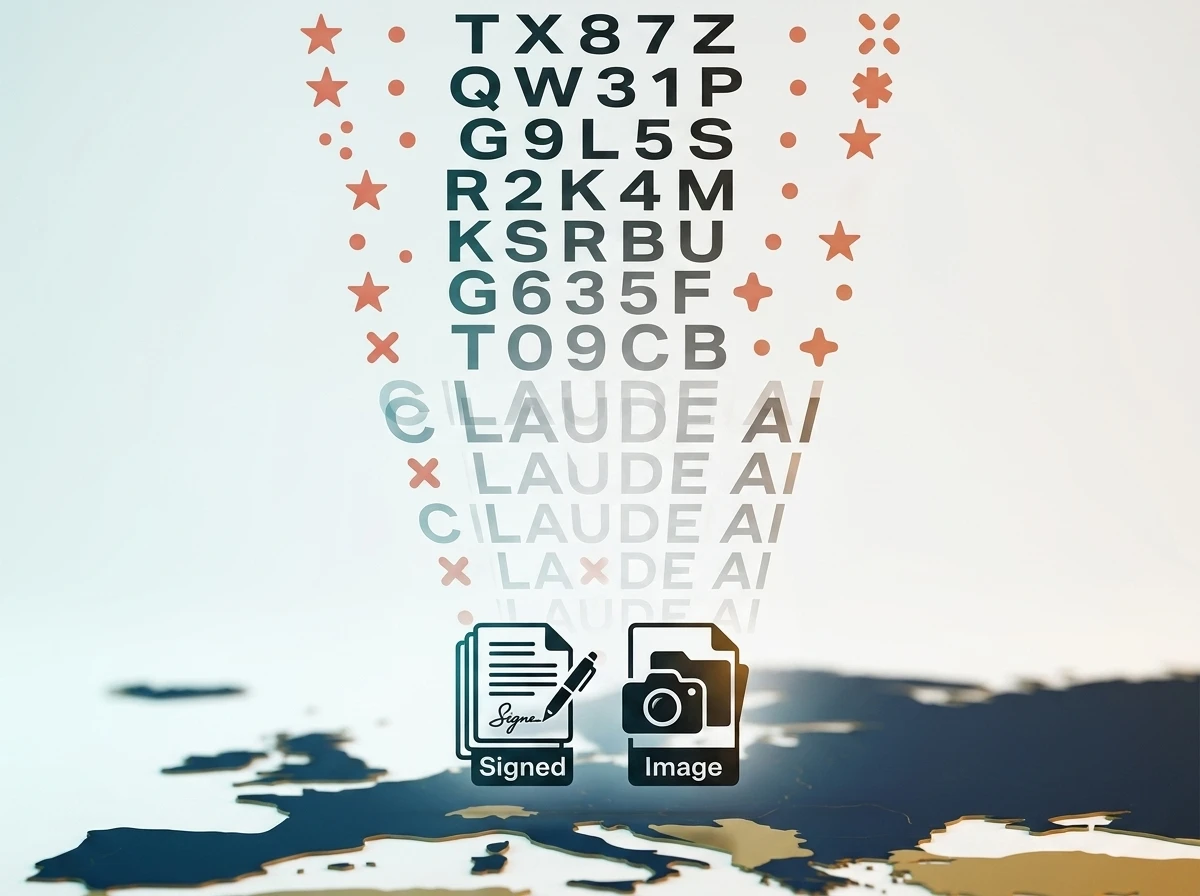
Anthropic has begun embedding invisible watermarks into text from new Claude models and attaching digitally signed provenance metadata to supported generated files, rolling the system out worldwide rather than limiting it to Europe. Models launched on or after August 2, 2026 carry the marks from day one across the Claude Platform API, Claude, Claude Code, Claude Cowork and Claude Tag.
The move tracks the European Union’s AI Act transparency rules yet reaches every user, including those in Australia and New Zealand. Platforms and community moderators now gain a partial technical signal for spotting Claude-processed material in gaming guides, esports recaps and creative drafts.
Because the rollout is product-wide rather than region-locked, the same marking behavior appears for API partners, consumer chat, coding sessions and collaborative tools. That uniformity simplifies engineering for Anthropic and removes any incentive to route requests through a quieter jurisdiction.
Two Separate Marking Systems for Text and Files
Claude treats text and files differently because each faces distinct technical limits. When a supported model produces text it weaves an imperceptible watermark directly into the token stream. The mark does not alter meaning, quality or readability. It can travel with copied passages and may survive light editing.
Supported file types such as PNG, JPG and SVG receive signed provenance metadata that follows the C2PA open standard for provenance. The metadata records that Claude processed the file and can show later tampering. Anthropic’s own documentation lists the products covered:
- Claude Platform (API)
- Claude consumer interfaces
- Claude Code
- Claude Cowork
- Claude Tag
File metadata can vanish during re-saving, screenshots or format conversion. Text watermarks prove harder to scrub completely once the passage is pasted elsewhere. Detection tools for third parties remain under development.
| Trait | Text watermark | File C2PA metadata |
|---|---|---|
| How it is applied | Woven into the token stream | Signed provenance on PNG, JPG, SVG |
| Effect on output quality | No change to meaning or readability | Container-level tag, content unchanged |
| Survival under light use | Can travel with copy-paste and mild edits | Lost on re-save, screenshot or conversion |
| What a hit can show | Possible Claude processing of the passage | Claude processing plus later tampering signals |
The split design matches how people actually move content. Chat replies usually leave as plain text. Images and diagrams leave as files that can hold credentials until the next export step strips them.
EU Rules Force the Timeline
The trigger is the bloc’s flagship regulation. Providers of systems that generate synthetic text, images, audio or video must mark outputs in machine-readable form so they can be detected as artificially generated or manipulated. The core Article 50 transparency obligations take effect on 2 August 2026.
- 2 August 2026: Article 50 transparency rules begin to apply for new systems.
- 2 August 2026 onward: Claude models launched on or after this date support marking at launch.
- Until 2 December 2026: Limited transition window for systems already on the market before the August date to add marking.
- Ongoing: Anthropic works to extend support to earlier models and to release detection methods for users and third parties.
Content generated and published before the August date does not need retroactive labels. Anthropic chose to apply the same marking everywhere Claude is offered instead of geo-fencing the feature. That choice turns a regional compliance task into a global product change.
The December end of the transition window matters for teams still running older endpoints. Once that window closes, the practical pressure to move workloads onto marked models or off Claude entirely rises for anyone who needs a clear compliance story.
What a Detected Mark Proves
What We Know
- A detected watermark indicates content may have been processed by Claude.
- The mark is not conclusive proof that Claude was the original or sole author.
- Heavy editing can fade or remove text watermarks.
- File-level C2PA tags strip easily via re-encode or screenshot.
- Absence of a mark does not prove the content is human-written.
What’s Unconfirmed
- Exact public release date and accuracy of third-party detection tools.
- Full list of older models that will receive retroactive support and when.
- How platforms will surface or act on the signals at scale.
Anthropic states clearly that people often use Claude to edit, translate or summarize existing material. A positive detection therefore functions more like a processing fingerprint than an authorship stamp. That nuance matters for any moderator who might treat a hit as automatic evidence of pure AI generation.
In practice a hit should open a review queue, not close a case. Editors still need to weigh style, sourcing and disclosure norms beside the technical signal.
Gaming Content Pipelines Just Gained a Weak Signal
AI chatbots already sit inside many gaming workflows. Writers draft patch-note summaries, build guides and match recaps with model help. Streamers script overlays. Esports orgs generate social copy and thumbnail concepts. An invisible, machine-readable mark traveling with that text gives wiki editors, subreddit moderators and outlet fact-checkers a new data point they previously lacked.
The signal is partial. It will not catch every Claude-assisted paragraph after heavy human rewrite, and it will not catch output from unmarked models or other labs. Still, it raises the cost of fully stealth AI use inside communities that care about disclosure. Content studios that lean on generative tools for highlight scripts or art now face a practical choice: keep the C2PA metadata and accept potential platform labels, or strip it and lose the provenance trail.
The same dynamic appears in broader creative and technical writing. Some power users on X already signal plans to reduce Claude reliance in multi-agent setups precisely because the watermark cannot be disabled and applies outside Europe. That friction is the second-order cost of a compliance-first design.
Anthropic has faced other high-profile model issues recently, including an earlier Anthropic model distillation dispute involving claims of unauthorized training. Provenance tools sit in the same transparency conversation even when the technical mechanisms differ.
- Wiki and subreddit moderators gain a machine-readable clue on pasted drafts.
- Esports social teams must decide whether to keep or strip file credentials.
- Guide writers who lightly edit model output may still carry a detectable mark.
- Studios chasing zero disclosure face higher scrubbing effort than before.
How Claude’s Approach Sits Beside Other Labs
| Lab / Tool | Text Watermark | File / Media Metadata | Notes |
|---|---|---|---|
| Anthropic Claude | Yes (new models from 2 Aug 2026) | C2PA signed on supported files | Worldwide, detection tools pending |
| Google DeepMind | SynthID available | SynthID + C2PA expansions | SynthID watermarking for AI content already in multiple products |
| OpenAI | Discussed / partial | Adopting SynthID and C2PA for images | Broader image focus announced mid-2026 |
Google moved earlier with SynthID across images, audio, text and video. OpenAI has expanded partnerships around the same stack. Anthropic’s contribution is the explicit, model-level text watermark applied globally from a hard regulatory date plus C2PA on the file side. No single system yet offers perfect, unbreakable coverage across every modality and every downstream edit.
Readers comparing labs should note the different maturity curves. SynthID already ships in multiple products. Claude’s text marks arrive tied to the August 2026 line, with third-party detectors still pending. Cross-lab checks will therefore stay uneven for some time.
Marks That Travel Still Leave Gaps
Text watermarks can persist through copy-paste and mild revision. That property makes them more useful than pure metadata for chat-style output that never becomes a containerized file. Yet heavy paraphrasing, translation chains or deliberate adversarial editing can degrade the signal. File provenance tags require the receiving platform or user to preserve the container; most social uploads and screenshot workflows destroy them.
These limits shape the real-world impact. A detected Claude mark gives a useful prior for human review. It does not replace editorial judgment or catch unmarked competitors. Platforms that begin surfacing provenance labels will still confront false negatives and the risk of over-flagging legitimate assisted work.
For now the system covers newly launched models. Older Claude releases sit in a transition window. Users who need unmarked output for research or creative iteration have a shrinking set of options inside the Claude family and may route sensitive work elsewhere. That migration pressure is already visible in early reaction threads.
The larger pattern is clear. Regulatory deadlines in one major market are forcing technical changes that reshape product behavior everywhere. Gaming communities and content teams that treat AI as invisible infrastructure will notice the shift first when their drafts start carrying a fingerprint they cannot turn off.
Global Rollout Changes Everyday Product Behavior
Anthropic’s decision against geo-fencing means Australia, New Zealand and every other market receive the same marked models as the European Union. API partners and cloud platforms inherit that behavior without a separate regional switch.
The practical effects stack quickly:
- One model family behaves the same for every caller, which cuts configuration drift.
- Moderators outside Europe still receive the partial signal on Claude-processed text and files.
- Users who hoped to avoid marks by changing region find no quieter path inside Claude.
- Compliance work done for Article 50 becomes the default product surface worldwide.
That design also locks in the friction some power users already describe on X. Multi-agent pipelines that mixed Claude freely must now treat its outputs as potentially fingerprintable wherever they run. Teams that need unmarked drafts for internal research face a narrower set of Claude options during and after the transition window.
Pending Detectors Limit Near-Term Enforcement
Marks without widely available detectors are only half a system. Anthropic is still working on detection methods for users and third parties. Until those tools ship with known accuracy, most wiki editors and platform moderators cannot run bulk checks even when the watermark is present in the token stream.
The gap leaves three near-term realities in place. First, early reliance falls on Anthropic-side or partner tooling rather than open community scanners. Second, platforms that want to surface labels must wait on both detector quality and product integrations. Third, absence of a public hit remains meaningless because older models, heavy edits and other labs all produce clean negatives.
When detectors do arrive, their value will track the same limits already documented for the marks themselves. Lightly edited chat text should be the easiest case. Heavily rewritten guides, translated chains and screenshot-only image posts will stay hard. Enforcement culture, not only cryptography, will decide whether a weak signal becomes useful or noisy.
Frequently Asked Questions
When do Claude models start embedding watermarks?
Claude models launched on or after August 2, 2026 support machine-readable marking at launch. Anthropic is also working to add the capability to earlier models during the EU transition period that runs until early December 2026 for systems already on the market.
Does a Claude watermark prove the entire piece was written by AI?
No. Detection only indicates the content may have been processed by Claude. Users frequently employ the model for editing, summarizing or translating human drafts, so a positive hit is a processing signal rather than conclusive sole authorship proof.
What is C2PA and why does Claude use it for files?
C2PA is an industry open standard that attaches signed Content Credentials metadata to media files so origin and edit history can be verified. Claude applies it to supported outputs such as PNG, JPG and SVG because those formats can carry the metadata; plain chat text cannot.
Can the watermarks and metadata be removed?
Text watermarks may survive ordinary copy-paste and light edits but can fade under heavy rewriting. File metadata is routinely stripped by re-saving, screenshots, social-platform re-encoding or simple format conversion, so it is not a durable enforcement mechanism by itself.
Why does the marking apply outside the European Union?
Anthropic chose a single global implementation rather than region-specific model variants. The company states that markings cover output wherever Claude is offered, including API partners and cloud platforms, so every user receives the same behavior.


iOS 27 Beta 5 Locks Six iPhones and a Split Launch

Edge AI Forces Hybrid Data Centers Into a Split Reality

Qi2 25W Magnets Quietly Rewrite Desk and Car Charging

Spotify AI Persona Badges Wall Off Synthetic Discovery

GCCs Build AI Bullet Trains on Incomplete Data Tracks

Coreum Bridge Multisig Signed Off on Its Own 200k XRP Drain

AI Shrinks Solar Inspection Crews While Paying Hybrid Skills Far More

Intel Graphics Driver Fixes Still Fight Windows and OEMs

Codex Now Runs Your Mac Apps and Remembers Across Days

Mercado Takes DOH as Dual Leadership Faces Health Funding Test

Fable 5 and Mythos 5 Return as US Lifts Anthropic Export Controls

Oracle Cuts 21,000 Jobs in a Year, Cites AI in 10-K Filing

SpaceX’s Google Deal Turns a Rocket Company Into a Cloud Landlord

CD Projekt Red Co-CEO: Redemption Arc Isn’t Done, Witcher 4 in 2027

XPL Rallies 30% Ahead of Plasma One Card Tier Launch

Google Search Profiles Build a Follow Graph Inside Discover

DGO App Brings Rs 549 Mobile Pass for FIFA World Cup 2026 in Nepal

Moonshot AI Targets $30 Billion in China’s Fastest AI Funding Sprint

Microsoft Xbox Layoffs Start in July as Sharma Slams 3% Margin

Oppo’s ColorOS 17 Eligibility List Leaves A-Series Buyers Behind
-
 AI1 month ago
Fable 5 and Mythos 5 Return as US Lifts Anthropic Export Controls
-
 AI2 months ago
Oracle Cuts 21,000 Jobs in a Year, Cites AI in 10-K Filing
-
 AI2 months ago
SpaceX’s Google Deal Turns a Rocket Company Into a Cloud Landlord
-
 GAMING2 months ago
CD Projekt Red Co-CEO: Redemption Arc Isn’t Done, Witcher 4 in 2027
-
 CRYPTO2 months ago
XPL Rallies 30% Ahead of Plasma One Card Tier Launch
-
 NEWS2 months ago
Google Search Profiles Build a Follow Graph Inside Discover
-
 APPS2 months ago
DGO App Brings Rs 549 Mobile Pass for FIFA World Cup 2026 in Nepal
-
 AI2 months ago
Moonshot AI Targets $30 Billion in China’s Fastest AI Funding Sprint