
NEWS
Redmi 17 Trades Sharp Screens for a 7500mAh Battery Crown
Xiaomi’s new Redmi 17 pair delivers 7500mAh endurance and RGB lighting by dropping to HD+ panels and splitting storage tech, starting near $163 in Malaysia.

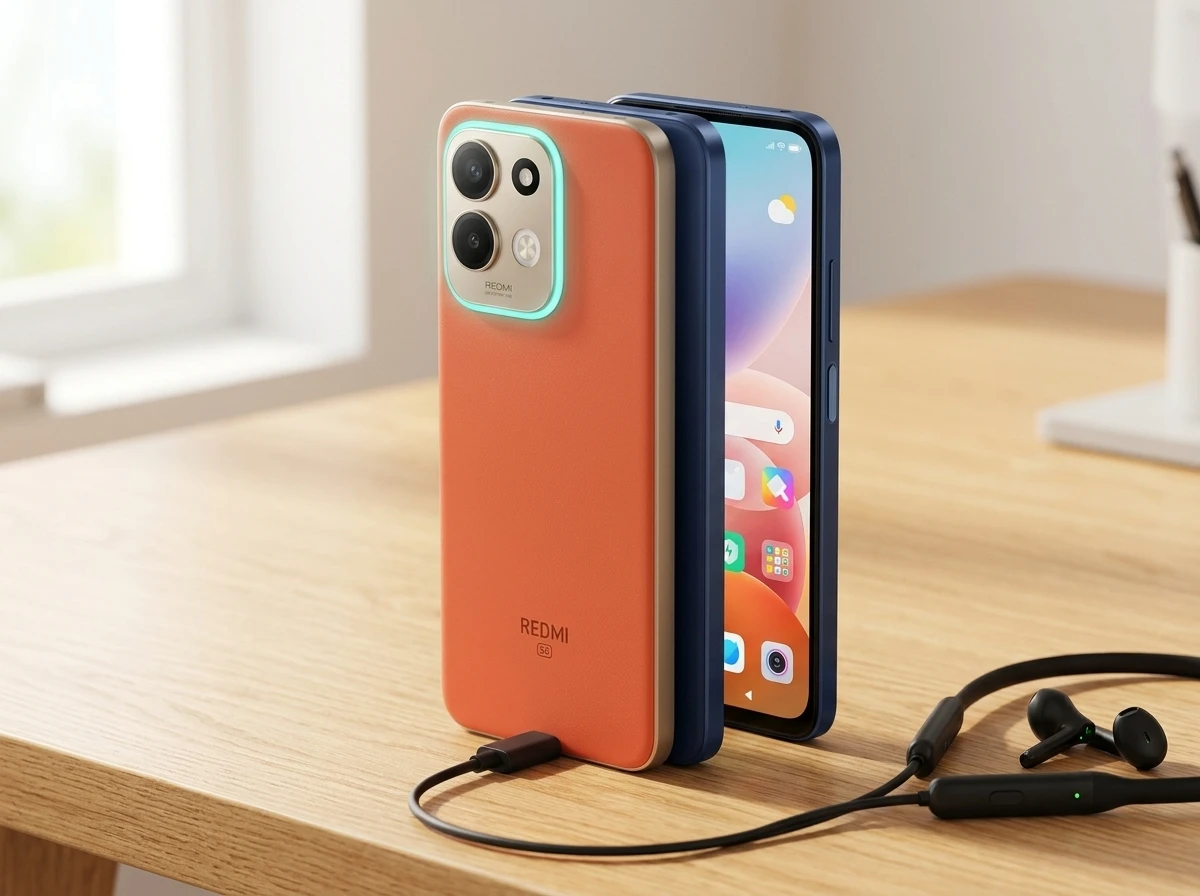
Xiaomi’s Redmi 17 4G and Redmi 17 5G launched with a shared 7,500mAh battery, 6.9-inch 120Hz screens and a programmable rear RGB light, starting at MYR 669 (about $163) in Malaysia. The pair also drops resolution to HD+ and puts the 4G model on eMMC storage.
That combination is the whole pitch. Endurance first, style second, pixel density third.
At this price band the order of those priorities is deliberate. Xiaomi is betting that multi-day runtime and a few old-school ports will outsell sharper panels and faster flash for the buyers who actually open the box.
7500mAh Comes With a Clear Trade
Both phones use the same 6.9-inch IPS LCD panel running at up to 120Hz. Resolution sits at 1600 x 720. That is a step down from the FHD+ panels on the Redmi 15 series that these devices succeed.
GSMArena noted the change explicitly: the new models feature 1600 x 720 panels instead of the FHD ones on their predecessors. Lower pixel count helps the big cell last longer and keeps the chassis light enough for the price. Peak brightness reaches 825 nits HBM and 675 nits typical, with Gorilla Glass 7i and several TÜV Rheinland eye-care certifications.
| Display trait | Redmi 15 series | Redmi 17 pair |
|---|---|---|
| Size and refresh | 6.9-inch, 120Hz | 6.9-inch, 120Hz |
| Resolution | 1080 x 2340 FHD+ | 1600 x 720 HD+ |
| Peak brightness | Not restated here | 825 nits HBM / 675 nits typical |
| Protection | Prior generation glass | Gorilla Glass 7i |
The ironic part is simple. The battery number looks like a win because the screen asks for less power. Buyers who stream video or read outdoors will notice the softer image before they notice the extra hours.
On a 6.9-inch slab, HD+ leaves individual pixels easier to pick out at normal reading distance. The 120Hz refresh still smooths scrolling, so the panel does not feel sluggish. It simply does not look as dense as the FHD+ screens it replaces. Brightness headroom and the eye-care certifications soften that hit for outdoor glance use, yet they cannot restore the missing pixels.
Snapdragon or Helio, Same Shell
The two models share almost every exterior and camera trait. Inside they split.
| Feature | Redmi 17 4G | Redmi 17 5G |
|---|---|---|
| Processor | MediaTek Helio G91-Ultra | Qualcomm Snapdragon 4 Gen 5 (4nm) |
| Storage | eMMC 5.1 | UFS 2.2 |
| RAM options | 4GB / 6GB LPDDR4X | 4GB / 6GB LPDDR4X (up to 12GB with extension) |
| Storage options | 128GB / 256GB | 128GB / 256GB + microSD to 2TB |
| Network | 4G LTE | 5G |
| Starting price (Malaysia) | MYR 669 (~$163) | MYR 769 (~$188) |
| Colours | Black, Deep Blue, Lotus Purple, Oak Green | Black, Deep Blue, Vivid Orange |
Both carry a 50MP main rear camera (f/1.8) and an 8MP front camera. Video tops out at 1080p. Side fingerprint, 3.5mm jack, NFC, dual stereo speakers with a claimed 300% volume boost, and IP64 dust and splash resistance round out the common list. Dimensions for the 5G model are 170.12 x 78.42 x 8.8 mm and 232 g.
The 4G model’s eMMC storage drew quick online pushback. Commenters on GSMArena called eMMC on a 2026 phone a crime. The 5G’s UFS 2.2 is the safer long-term choice for app installs and file moves.
The shell parity means colour and network band are the only exterior clues to which chip is inside. Camera hardware, speaker tuning, jack, NFC and IP rating stay locked together. Shoppers who want the faster flash and 5G radio pay the roughly $25 premium and accept a shorter colour list that swaps Lotus Purple and Oak Green for Vivid Orange.
How Long the Cell Lasts
Xiaomi’s own lab numbers sit on the 7500mAh battery and dynamic RGB details page and make the endurance case concrete.
- Music playback: up to 109 hours
- Video playback: up to 28 hours
- Calling: up to 53 hours
- Video recording: up to 10 hours
- Claimed daily use: 2-day battery life under moderate mixed load
Charging is 45W wired. Xiaomi says 40 minutes reaches 51% and a full charge takes about 96 minutes. No charger ships in the box; the company recommends its own 45W adapter. After 1,000 full cycles the cell should still hold 80% or more capacity, per internal tests.
Reverse wired charging hits 22.5W. That turns the phone into a power bank for earbuds, a watch or another handset. In markets where power cuts are common, the reverse feature may matter more than the RGB light.
Read as a set, the lab figures point to a phone that can idle through a long weekend of music or cover two full work days of mixed use before it needs a wall. The 96-minute full charge is not class-leading, yet the 40-minute hop to half capacity keeps midday top-ups short when a compatible 45W brick is nearby.
The Rear Light That Does More Than Glow
Both phones embed a programmable RGB notification light in the rear camera module. Xiaomi calls it Dynamic RGB and offers eight colours. It can signal incoming calls, system status, charging state and selected game lighting effects.
The light is the most visible differentiator in a sea of black and blue plastic. It gives the design a small personality without raising the bill of materials much. Whether it stays useful after the novelty fades depends on how well HyperOS exposes the customisation.
Software is Xiaomi HyperOS 3 on Android 16. Xiaomi promises a “48-month like-new software experience” through optimisations that resist performance decline. Memory extension can push the 6GB model to a claimed 12GB of virtual RAM by carving space from storage.
Eight colours and a short list of triggers keep the feature simple. Calls, charging and game effects cover the moments when a rear glow is actually visible to the user or to someone nearby. Deeper automation will live or die on how many toggles HyperOS 3 puts in settings after the first week of novelty.
IP64, Jack and the Old-School Touches
A short list of practical extras that still matter at this price:
- IP64 dust and splash resistance plus Wet Touch Technology for damp or oily fingers
- Physical 3.5mm headphone jack and FM radio support
- Side-mounted fingerprint sensor and AI face unlock
- Hybrid dual-SIM plus microSD expansion (up to 2TB on the 5G model)
- NFC for payments and transit where supported
These features keep the phones usable for buyers who refuse wireless-only audio or who need a spare SIM and expandable storage. The full technical sheet lives on Xiaomi’s full REDMI 17 5G specifications page.
None of these extras is exotic on its own. Together they form a checklist that many pricier handsets have already dropped. Buyers who still own wired earphones, rely on FM in low-signal areas, or juggle work and personal SIMs will notice the absences on competing designs before they notice the RGB ring.
Malaysia Prices and the Global Wait
Malaysia is the first confirmed market. Redmi 17 4G opens at MYR 669 for the base 4GB/128GB trim. Redmi 17 5G opens at MYR 769, with a 4GB/256GB option near MYR 869. Some secondary reports list broader global starting prices near $249 for higher 5G configurations; local currency and tax will decide final stickers.
Availability outside Malaysia is still rolling out. The phones are already listed on Xiaomi’s Malaysian storefronts and Shopee. Other regions should follow in the coming weeks. In the Philippines the MYR pricing converts to roughly PHP 8,700-10,000 before local duties, putting the pair in the same value conversation as other under-PHP-15K devices, including a recent budget tablet option under PHP 15K.
Colours stay simple: four options on 4G, three on 5G including the loud Vivid Orange that shows off the RGB ring best.
The MYR openers set a clear floor. The jump from 4G to 5G is about MYR 100 at the entry trims, with the roomier 4GB/256GB 5G pack landing near MYR 869. Global figures near $249 for richer 5G configs suggest some markets will see higher stickers once taxes and higher RAM or storage land on the shelf.
How the Big Cell Shapes Daily Habits
The endurance claims only matter if they change how people carry a charger. Xiaomi’s own mixed-use line of two days under moderate load is the figure most buyers will test first.
Music at up to 109 hours and calling at up to 53 hours describe edge cases more than office days, yet they show where the 7,500mAh cell has headroom. Video playback up to 28 hours and video recording up to 10 hours sit closer to real weekend use. The HD+ panel is part of that math: fewer pixels lit at 120Hz simply draw less than the FHD+ panels on the Redmi 15 series.
- 40 minutes: wired charge to about 51% on a 45W adapter
- 96 minutes: roughly a full charge from empty
- 1,000 cycles: cell still rated for 80% or more capacity in internal tests
- 2 days: claimed mixed daily use between wall visits
Reverse wired charging at 22.5W extends the same cell outward. Earbuds, a watch or a second phone can draw from the Redmi when a wall outlet is missing. In that mode the handset is both the device and the spare battery, which is why the feature may outlast the novelty of the rear light in markets with uneven power.
No charger in the box keeps the street price low and shifts the 45W brick to a separate purchase. Buyers who already own a compatible adapter feel no pain. Everyone else should budget for one if they want the published 40-minute and 96-minute curves.
What HyperOS 3 Promises on Modest Hardware
Software is the quiet half of the endurance story. HyperOS 3 on Android 16 arrives with a stated goal of a 48-month like-new software experience, aimed at resisting the slowdown that often hits entry phones after a year of updates and app growth.
Memory extension is the concrete tool tied to that claim. On the 6GB trims the system can carve storage into a claimed 12GB of virtual RAM. That does not match physical LPDDR4X for speed, but it gives the interface more room to keep background apps alive on hardware that tops out at 6GB of real memory.
The same software layer hosts the Dynamic RGB controls. Eight colours and the triggers for calls, status, charging and game effects only stay useful if the settings remain easy to reach. A buried menu turns the ring back into a static ornament after the first month.
Storage type still caps how far software polish can go. UFS 2.2 on the 5G model will absorb app installs and file moves with less friction than eMMC 5.1 on the 4G model. HyperOS can smooth animations either way. It cannot fully hide slower flash when large games or update packages land.
Who Gains and Who Should Look Elsewhere
The Redmi 17 pair is built for people who care most about not charging every night. Students, secondary-phone buyers, delivery workers and anyone who uses a phone as a hotspot or reverse charger will feel the 7,500mAh cell first.
The compromises are equally clear. HD+ on a 6.9-inch panel means visible pixels at normal reading distance. Max 6GB physical RAM and eMMC on the 4G model will show up when multitasking or installing large games. Camera hardware is serviceable for social posts, not for low-light photography contests.
If battery life is the only metric that moves the purchase, these phones deliver. If screen sharpness, storage speed or future-proof RAM matter more, the next step up in Xiaomi’s own lineup or a competing mid-ranger will feel better day to day.
The RGB light and reverse charging are genuine extras, not pure gimmicks. They just cannot paper over the resolution and storage choices that made the big battery possible at this price.
Pick the 5G model when the local network and the extra outlay are available; its Snapdragon 4 Gen 5 on 4nm and UFS 2.2 age more gently. Pick the 4G model only when the budget is tight and the workload stays light. In both cases the 7,500mAh cell, the jack, the hybrid tray and IP64 are the reasons to stay in this aisle rather than chase a sharper screen one shelf up.
Frequently Asked Questions
What is the exact battery capacity and charging speed on the Redmi 17 series?
Both the 4G and 5G models use a 7,500mAh (typical) cell with 45W wired turbo charging and 22.5W wired reverse charging. Xiaomi’s lab tests list roughly 96 minutes for a full charge and 40 minutes to reach 51 percent when using a compatible 45W adapter. No charger is included in the box.
How does the Redmi 17 display compare with the previous Redmi 15?
Both generations share a 6.9-inch size and 120Hz refresh, but the Redmi 17 pair drops from the Redmi 15’s 1080 x 2340 FHD+ resolution to 1600 x 720 HD+. The cut reduces power draw and helps the larger battery deliver multi-day claims while keeping the price low.
Does the Redmi 17 still include a 3.5mm headphone jack and microSD slot?
Yes. Both models keep the 3.5mm jack, FM radio support via the jack, a side fingerprint reader, NFC and a hybrid SIM tray that also accepts a microSD card. The 5G model officially supports expansion up to 2TB.
What does the programmable rear RGB light actually do?
The light sits in the camera module and can be set to one of eight colours. It signals incoming calls, notifications, charging status, camera activity and limited game lighting effects. Customisation lives inside HyperOS 3 settings.
Which chipset and storage should I pick between the 4G and 5G models?
The 5G model’s Snapdragon 4 Gen 5 on 4nm plus UFS 2.2 storage is the stronger daily performer and future-proof choice. The 4G model’s Helio G91-Ultra with eMMC 5.1 is adequate for light use but slower for app installs and large file transfers. Choose 5G if the local network and extra $25-30 are available.


South Korea Retail Investors Face Reckoning After KOSPI AI Rally Collapses

Surrey AI Maps Three Heart Attack Paths and Their Molecular Roots

Germany Locks Neutral Apple ATT Prompts Across Most of Europe

Apple’s 5% EU Fee Quietly Rewrites Alternative App Store Math

Apple’s EU Fee Truce Cuts Complexity but Leaves Rivals Fuming

Pixel 11 Pro Fold Trades Thinness for Durability and Seven-Year Stay

Mayo AI Flags HCM Obstruction From Everyday Ultrasound Videos

Indian Brands Quietly Scale Landmark Screens and Home Tech

Navin Vatsa Turns Grief Into a Lifetime of Quiet Seeing

Google Bets Pixel 11 Agentic AI Will Redefine Phones

Oracle Cuts 21,000 Jobs in a Year, Cites AI in 10-K Filing

Fable 5 and Mythos 5 Return as US Lifts Anthropic Export Controls

SpaceX’s Google Deal Turns a Rocket Company Into a Cloud Landlord

CD Projekt Red Co-CEO: Redemption Arc Isn’t Done, Witcher 4 in 2027

XPL Rallies 30% Ahead of Plasma One Card Tier Launch

Google Search Profiles Build a Follow Graph Inside Discover

DGO App Brings Rs 549 Mobile Pass for FIFA World Cup 2026 in Nepal

Moonshot AI Targets $30 Billion in China’s Fastest AI Funding Sprint

Oppo’s ColorOS 17 Eligibility List Leaves A-Series Buyers Behind

Microsoft Xbox Layoffs Start in July as Sharma Slams 3% Margin
-
 AI2 months ago
Oracle Cuts 21,000 Jobs in a Year, Cites AI in 10-K Filing
-
 AI2 months ago
Fable 5 and Mythos 5 Return as US Lifts Anthropic Export Controls
-
 AI3 months ago
SpaceX’s Google Deal Turns a Rocket Company Into a Cloud Landlord
-
 GAMING2 months ago
CD Projekt Red Co-CEO: Redemption Arc Isn’t Done, Witcher 4 in 2027
-
 CRYPTO3 months ago
XPL Rallies 30% Ahead of Plasma One Card Tier Launch
-
 NEWS3 months ago
Google Search Profiles Build a Follow Graph Inside Discover
-
 APPS3 months ago
DGO App Brings Rs 549 Mobile Pass for FIFA World Cup 2026 in Nepal
-
 AI3 months ago
Moonshot AI Targets $30 Billion in China’s Fastest AI Funding Sprint