
NEWS
Xiaomi Packs Redmi 17 Note 17 Pro and 18 Pro Into Four Months
Tipster maps Xiaomi’s India H2: Redmi 17 on Sept 5, Note 17 Pro mid-month, 18 Pro with rear display by December in a shrinking market.

Tipster Abhishek Yadav mapped Xiaomi India’s second-half 2026 on August 10: Redmi 17 series on September 5, Redmi Note 17 Pro series on September 18 or 20, and Xiaomi 18 Pro series by December with a tiny secondary rear display. The calendar lands weeks after the standard Redmi Note 17 reached Indian shelves.
Three lineups in roughly four months would keep Xiaomi’s budget and mid-range shelves full into the festive window, then close the year with a flagship experiment the company skipped last cycle.
The tip itself is lean on hardware detail and silent on price. What it supplies is cadence: two Redmi waves stacked inside three weeks, then a numbered flagship before the calendar turns. That rhythm is the story retailers and rivals will watch first.
Three Waves Mapped for the Rest of 2026
Yadav’s post, viewed more than 25,000 times, lays out the sequence without pricing or full specs. Xiaomi has not confirmed any of the dates.
- September 5, 2026, Redmi 17 series (4G and 5G variants already selling in other markets).
- September 18 or 20, 2026, Redmi Note 17 Pro series.
- By December 2026, Xiaomi 18 Pro series carrying a secondary display on the rear.
The same tipster has a solid recent hit rate on Xiaomi India timing, including the Note 17’s August 6 event. Still, every date remains an estimate until the company posts its own invites.
The order matters as much as the dates. Budget hardware lands first, the tougher mid-range Pro follows while festive channel fill is still open, and the premium experiment waits until the year-end upgrade window. Each wave feeds a different shelf and a different buyer.
Why the Calendar Feels Compressed
The standard Redmi Note 17’s 8000mAh India launch just cleared. Xiaomi normally spaces its Redmi and numbered flagship drops more widely. Stacking the next two Redmi waves inside three weeks of each other, then the 18 Pro before year-end, reads like a deliberate volume push.
India’s smartphone market has been soft. Shipments fell in recent quarters while value held up on higher average prices. Vendor trackers show Vivo leading and Xiaomi’s share sitting in the mid-teens or lower depending on the month. A rapid succession of battery-heavy Redmis gives retailers fresh SKUs for the festive run-up; the December flagship supplies a premium story that last year’s India 17 lineup never fully delivered.
Compression also limits the quiet stretch rivals usually enjoy between Xiaomi events. When three waves land inside one half-year, marketing calendars and retail planograms have less room to settle. The company appears willing to trade spacing for presence.
Redmi 17 Already Exists Outside India
The Redmi 17 5G and 4G pair launched quietly in several global markets in early August. Official pages list nearly identical shells with different silicon.
| Feature | Redmi 17 5G | Redmi 17 4G | Redmi Note 17 (India) |
|---|---|---|---|
| Display | 6.9-inch HD+ LCD, 120Hz | 6.9-inch HD+ LCD, 120Hz | 7-inch FHD+ AMOLED, 120Hz |
| Chipset | Snapdragon 4 Gen 5 | Helio G91-Ultra | Snapdragon 4 Gen 4 |
| Battery / charge | 7500mAh, 45W | 7500mAh, 45W | 8000mAh, 45W |
| Main camera | 50MP | 50MP | 50MP |
| Storage type | UFS 2.2 | eMMC 5.1 | UFS 2.2 |
| Protection | IP64, Gorilla Glass 7i | IP64 | IP65 |
Xiaomi’s global product page highlights the 7500mAh battery and 45W turbo charging, claiming up to 109 hours of music playback and 40 minutes to 51 percent under lab conditions. Both models run HyperOS 3 on Android 16, carry an 8MP front camera, a programmable rear RGB light, dual speakers, a 3.5mm jack and side fingerprint sensor. Malaysia pricing started near $163 for the 4G and $188 for the 5G, giving a rough floor for whatever India tags appear on September 5.
Resolution sits at 720p-class on the large LCD. That choice keeps cost and power draw down but will draw comparisons to the Note 17’s sharper AMOLED panel that arrived only weeks earlier.
Shared traits across the global pair still give India buyers a clear picture of the hardware envelope. Same battery size, same charge rate, same main camera count, same software stack. The silicon split and the storage type are the main forks between 4G and 5G, which lets Xiaomi price the two rungs without redesigning the shell.
Note 17 Pro Steps Up Two Weeks Later
The Pro series is the natural follow-on. China already sells a Note 17 Pro with a 9000mAh cell, 67W charging, higher-brightness 1.5K OLED and far tougher IP69K rating. Xiaomi teased that phone with robotic arms stopping footballs and surviving a fire-hose blast; the local site covered the Note 17 Pro’s fire-hose durability teaser when it first circulated.
Global leaks also point to a Note 17 Pro Max carrying a Snapdragon 6 Gen 5, up to 12GB RAM, roughly 9210mAh battery and 100W charging. Geekbench listings for a global unit already appeared. Whether India gets Pro only, Pro plus Max, or a local tweak remains open. The mid-September window leaves just enough time for festive channel fill after the base Note 17’s first sales.
Two weeks after the Redmi 17 series is a tight gap. It keeps the Note brand in the conversation while the base Note 17 is still new, and it hands mid-range shoppers a durability and capacity step that the standard model does not claim. Channel partners get a second fresh SKU before festive campaigns lock their creatives.
December’s Xiaomi 18 Pro Brings the Rear Screen Home
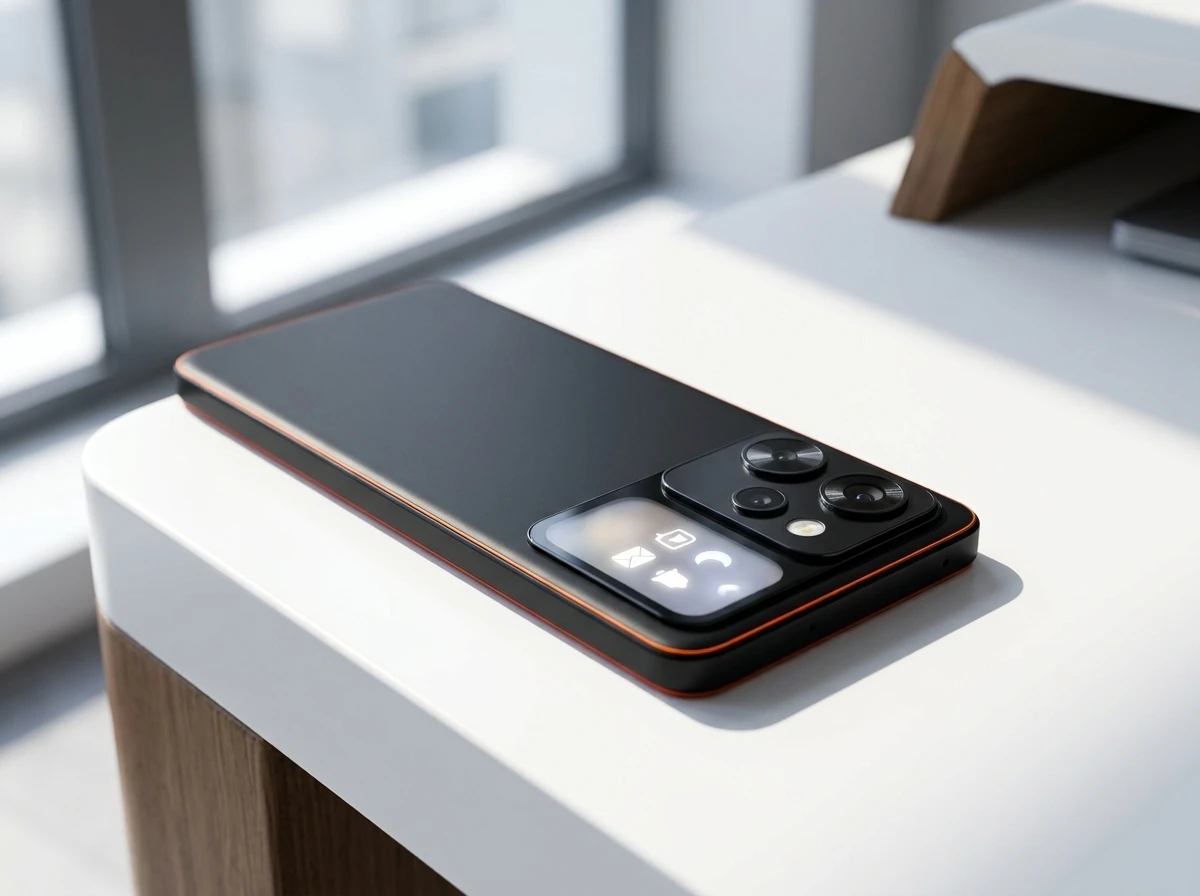
Last cycle Xiaomi brought the 17 and 17 Ultra to India in March and left the Pro and Pro Max as China exclusives. Those China Pros revived a small rear display, sometimes called a Magic Back Screen, used for notifications, camera previews and quick controls. Yadav’s latest note says the 18 Pro series arrives in India by December “featuring a tiny secondary display on the back.”
Separate Weibo-linked reports from June claimed the 18 Pro rear panel could grow to about 4 inches, brighter and higher-resolution than the 2.7-to-2.9-inch units on the 17 Pro models, plus privacy film. The word “tiny” in the India tip sits in mild tension with those size-upgrade rumors. Either way, India has not yet seen the feature on a local Xiaomi flagship.
- Expected differentiator: secondary rear display for notifications, framing aids and AI shortcuts.
- Chipset chatter: Snapdragon 8 Elite Gen 6 class silicon in broader leaks.
- Camera chatter: dual 200MP sensors floated in some reports.
- Timing risk: December puts it after most festive peaks, aiming at year-end and early-2027 upgrade cycles.
If the rear screen lands with useful software rather than a gimmick, it gives Xiaomi a talking point rivals lack. If it stays a novelty, the phone still has to win on cameras, battery and price against Samsung and the rising Chinese premium set.
Software will decide the feature’s fate more than panel size. Notifications and framing aids are easy demos; sustained daily use depends on how deeply HyperOS ties the rear panel to camera and AI shortcuts. That is the open question December will answer.
Who Feels the Schedule First
Retailers get a steady drip of new boxes instead of one big drop. That helps shelf presence when overall shipments are soft.
- Budget shoppers chasing multi-day battery life see two fresh Redmi options inside three weeks of each other.
- Mid-range buyers waiting for the tougher Note 17 Pro finally get a date window after months of China-only availability.
- Premium shoppers who skipped the 17 Ultra get a second chance at a numbered Xiaomi with a hardware novelty.
- Competitors (Vivo, Realme, Samsung, Motorola) face fresh battery-capacity marketing just as festive campaigns lock.
Trackers already list Vivo ahead on current India mobile vendor shares. Xiaomi’s response is volume plus one quirky flagship rather than a quiet quarter.
The schedule also pressures internal launch teams. Three waves mean three sets of packaging, training, and retail demos inside one half-year. Execution risk rises even when the tipster’s hit rate looks strong.
Battery Capacity Climbs Through the Lineup
Every model named in the tip or already on sale leans on cell size as a headline. The figures already public form a clear step ladder from budget to mid-range.
| Model | Battery | Charging | Status for India |
|---|---|---|---|
| Redmi 17 5G / 4G | 7500mAh | 45W | Expected September 5 |
| Redmi Note 17 | 8000mAh | 45W | Already launched |
| Note 17 Pro (China) | 9000mAh | 67W | Pro series window mid-September |
| Note 17 Pro Max (leaks) | roughly 9210mAh | 100W | India mix still open |
Capacity rises as the brand rung rises. Charge speed stays modest on the volume models and jumps only on the Pro and Pro Max tiers. That pattern lets Xiaomi sell endurance at every price without forcing every SKU onto a high-watt brick.
For a soft market that still rewards higher average selling prices, multi-day battery life is an easy claim to put on a festive banner. The ladder above shows why the company can repeat the message from September through the Note Pro window without inventing a new story each time.
Last Cycle Left a Flagship Gap in India
The India 17 generation arrived as the 17 and 17 Ultra in March. The Pro and Pro Max stayed China exclusives, and with them stayed the rear display that those China Pros carried. Buyers who wanted the numbered series had no local path to the Magic Back Screen.
Yadav’s December note closes that gap on paper. The 18 Pro series is slated to bring the secondary rear display to India for the first time on a local flagship. The tip’s wording (“tiny”) and the earlier Weibo-linked talk of a panel near 4 inches do not fully match, yet both point at the same hardware idea India never received last cycle.
- Last cycle local lineup: 17 and 17 Ultra only.
- China-only last cycle: Pro and Pro Max with rear display.
- This cycle’s stated aim: 18 Pro series in India with a secondary rear display by December.
Whether the panel proves useful or ornamental, the strategic shift is plain. Xiaomi is no longer content to leave the experiment offshore while India gets a trimmed numbered set. The festive Redmi volume buys share; the December rear screen tries to buy attention in the premium aisle the 17 Ultra never fully locked down.
Confirmation Still Sits With Xiaomi
Abhishek Yadav’s exclusive timeline post is the sole public source for the three dates. Earlier tips from the same circle correctly flagged the Note 17’s August window, so the pattern is familiar. Xiaomi can still slip any of the launches, merge models, or drop the rear-display claim if engineering or channel math changes.
Until official invites appear, the practical reading is simple: September will be loud on Redmi shelves, and December will test whether a secondary rear screen is enough to make the 18 Pro feel like a true India flagship rather than another China leftover. The next 90 days will show how much of the tip survives contact with the company’s actual marketing calendar.


Samsung Smart Switch Now Lets iPhones Jump Without the App Tax

Galaxy S26 FE Price Leak Puts It Too Close to Flagships

Coforge Turns Its PE Deal Playbook Into a Nuuron Business Unit

OCBC Lets Retail Buy Platinum and Palladium From 0.01 Ounce

Xiaomi’s Safer 67W Power Banks Preview China’s 2027 Cull

Galaxy Z Fold 8 Settings That Turn Battery Gains Into Years

PlayStation Discount Codes Hide a Stickier Savings Trap

Free Fire Max Codes Today Feed the Free Tier and the Scammers

Kazakhstan Crypto Amnesty Feeds State Reserve Machine

Nvidia Turns AI Compute Into a $500 Billion Asset Class

Fable 5 and Mythos 5 Return as US Lifts Anthropic Export Controls

Oracle Cuts 21,000 Jobs in a Year, Cites AI in 10-K Filing

SpaceX’s Google Deal Turns a Rocket Company Into a Cloud Landlord

CD Projekt Red Co-CEO: Redemption Arc Isn’t Done, Witcher 4 in 2027

XPL Rallies 30% Ahead of Plasma One Card Tier Launch

DGO App Brings Rs 549 Mobile Pass for FIFA World Cup 2026 in Nepal

Google Search Profiles Build a Follow Graph Inside Discover

Moonshot AI Targets $30 Billion in China’s Fastest AI Funding Sprint

Microsoft Xbox Layoffs Start in July as Sharma Slams 3% Margin

Oppo’s ColorOS 17 Eligibility List Leaves A-Series Buyers Behind
-
 AI1 month ago
Fable 5 and Mythos 5 Return as US Lifts Anthropic Export Controls
-
 AI2 months ago
Oracle Cuts 21,000 Jobs in a Year, Cites AI in 10-K Filing
-
 AI2 months ago
SpaceX’s Google Deal Turns a Rocket Company Into a Cloud Landlord
-
 GAMING2 months ago
CD Projekt Red Co-CEO: Redemption Arc Isn’t Done, Witcher 4 in 2027
-
 CRYPTO2 months ago
XPL Rallies 30% Ahead of Plasma One Card Tier Launch
-
 APPS2 months ago
DGO App Brings Rs 549 Mobile Pass for FIFA World Cup 2026 in Nepal
-
 NEWS2 months ago
Google Search Profiles Build a Follow Graph Inside Discover
-
 AI2 months ago
Moonshot AI Targets $30 Billion in China’s Fastest AI Funding Sprint