
GAMING
Sega Wagers Virtua Fighter Crossroads on RGG’s City Craft
SEGA handed Virtua Fighter Crossroads to RGG as a 2027 Fighting Adventure, betting a city game can outgrow a shrinking versus scene.

SEGA set Virtua Fighter Crossroads for 2027 and handed the first original series game since 2006 to RGG Studio. The company filed it as a Fighting Adventure, not a numbered arcade sequel, and still has not named a platform.
Producer and creative director Riichiro Yamada has been blunt about why. Other fighting games kept shipping while Virtua Fighter sat. A straight follow-up, he said, would not close that gap or pull in the new players a global release now has to find.
Sega Needs New Players, So RGG Built a City
Yamada joined after technical work on a sequel had already started. The commercial brief was larger than a versus ROM. Big games now have to travel, and they have to teach strangers why they should care. RGG’s stock in trade is cities, side stories, and long character work, so that is the product SEGA chose to fund.
Before it was arcade into console, and now it really is a pad-led console game first.
Riichiro Yamada, producer and creative director
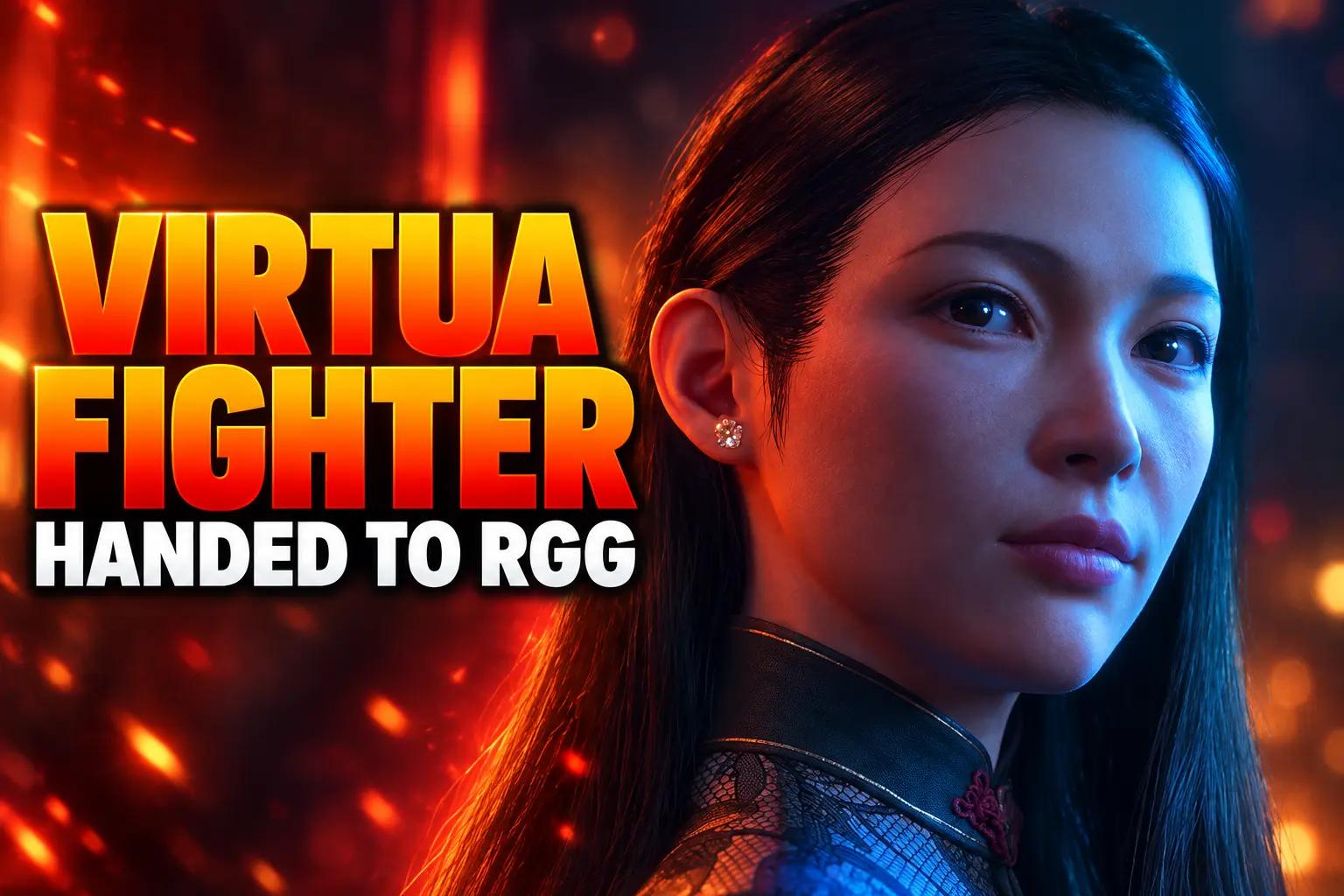
He spent about a month on the new pitch. The picture that sold the room was an older Pai Chan turning to a fighter and telling him his kung fu was not enough. RGG games let people age. Virtua Fighter, built on kung fu cinema, can do the same. Some staff did not want to see Pai older. Yamada asked for the younger face in an early cut to be redone, makeup off, because she is undercover in the scene.
SEGA’s own sheet now lists a Fighting Adventure due in 2027. Versus is still in the box, local and online. The thing the trailers sell is a walkable town and an anthology, because that is the wager: story buyers pay for the lights, and the old crowd still gets a 1v1 mode when they mash start.
The June 5, 2026 Summer Game Fest trailer is the pitch in two minutes.
Four Strangers Share One Fighting Town
The story sits in Vilasapara, a made-up Southeast Asian city SEGA calls a fighting town. Walls cut off the center. There are nightlife blocks and resort blocks. Yamada’s scale check is blunt: think of several districts the size of Kamurocho, the Like a Dragon downtown RGG has rebuilt for years.
He picked the region because Japan is a street RGG already owns, and a Western city from this team would ring false. Thailand from his student trips stuck. The official plot line is dry and specific.
The use of firearms in this city will be punished by death.
SEGA, Virtua Fighter Crossroads plot synopsis
In the year 20XX, a pact called the Arma Carta froze an old bloodletting and left syndicates in a weak truce. President Bato is running again on the Vila Fight Fest, an underground tournament he wants to turn into a national sport. A man called the Bakunawa Killer is putting martial artists in the ground. SEGA says the two plots are “probably unrelated.”
Play starts as Cielo, one of four protagonists. Yamada sketched him as a man who wants to climb in this city and who already throws fights to pay for a sick grandfather. The other three leads do not share his job or his tone. Paths split, then cross. Cielo’s own hands are boxing-first MMA, a modern striker in a series that used to lean on kung fu film styles. He is playable in versus, as are the other three. The idea is that hours in the city teach the same buttons you take online.
RGG posted the same dump of Vilasapara and new combat details after the showcase. Side stories and quests hang off shops and people, the studio’s usual street clutter, now wrapped around fights that include mosh-pit brawls and bosses as well as clean 1v1s. The Bakunawa Killer, shown at Evo on June 29, 2026, is in the Cielo arc and on the versus list. Pai is on his trail. Wolf Hawkfield is back too, older, with a wrestler’s silhouette Yamada says he earned in the lost years.
SEGA staffed the script like a prestige show, then ran a blind writing trial of about 10 packets to pick the lead.
THE STORY BENCH SEGA NAMED
| Role | Name | Prior work SEGA cites |
|---|---|---|
| Worldbuilding supervisor | David Hayter | X-Men, Watchmen, Wolves |
| Lead writer | Brad Kane | Ghost of Tsushima, As Dusk Falls |
| Scenario director | Tsuyoshi Furuta | Like a Dragon, Judgment, Lost Judgment |
| Scenario writer | Shinji Yamamoto | Persona 5 Royal, Shin Megami Tensei IV |
Yamada said Kane’s anonymous pages won the trial, and only later did the room learn the Ghost of Tsushima credit. Hayter came in for a Hollywood eye on tone. Furuta and Yamada locked who the people are. Yamamoto joined later to deepen the leads so a player might actually stick with them. Yamada wanted a Southeast Asian crime story that does not read like a manga first, which is why the English-language names are on the call sheet.
Why the Game Is Not Called Virtua Fighter 6
Inside SEGA, people assumed the next one would be 6. Yamada did not want the number. Crossroads, he said, is the word for a break, and the logo changed with it. The series had already tried extra single-player in Virtua Fighter 4’s quest mode. This time the single-player slice is the center, because a home release that skimps on a campaign is, in his words, pointless.
He also said the team is not building a Like a Dragon clone with Virtua Fighter skins. They keep using a phrase of their own, Crossroads style, for a mix they still will not fully spell out. Story mode can change with choices in and out of fights. Ring-outs and stage toys stay in versus. In the campaign, Yamada said, they do not have to nurse competitive balance. They only have to be fun.
On the platforms and price still listed as TBA product page, player count is TBA too. CERO has not rated it. The official Virtua Fighter Crossroads site is live and almost as spare: a 2027 mark and the social links. That blank is part of the bet. SEGA named the genre and the city before it named a box.
WHAT WE KNOW
- The window: SEGA says the game comes in 2027, with no day or season attached.
- The structure: a city campaign with four new leads sits beside a dedicated versus suite.
- The inputs: punch, kick, and guard remain the three-button base Yamada keeps citing from 1993.
WHAT IS UNCONFIRMED
- The hardware: SEGA’s sheet still prints TBA for platform, price, and player count.
- The arcade: Yamada called this pad-first and said other cabinets can wait; he did not kill them.
- The other leads: Cielo is the only one of the four protagonists SEGA has really introduced by name.
A 25-minute showcase the same day walked adventure, battle, story, and versus in that order. The running order is the argument.
Punch, Kick, and Guard Still Run Versus
Battle director Yosuke Takeda has been the public voice on how the fights actually work. At Tokyo Game Show 2025 he split rules in two and added three systems on top of the old three-button kit. Yamada later said the big versus rule set still needed a later show, which it has not fully had.
THE SYSTEMS TAKEDA PUT ON STAGE
- Standard: classic Virtua Fighter win terms, empty the life bar or throw the other body out of the ring, first to 3.
- Uprising: a second main rule, not a bonus toy, built around swings in momentum.
- Flow Guard: a new defend tool meant to look like real blocking and to open fresh punish windows.
- Break and Rush: damage stocks on body parts until they break, and that damage carries into the next round.
- Stunner and Stun Combo: a stun state with its own follow-up string.
Takeda’s line is intuition plus realism. Guards should look like a fighter’s guard, not a pane of glass. Yamada still sells the 1993 promise: press punch, see a punch, then spend years on timing, reads, and combo knowledge. Story fights reuse that kit in crowds. The camera can snap onto the next body when one drops, so a street brawl still resolves as Virtua Fighter rounds instead of a brawler mash.
That split is how the bet is supposed to clear both desks. New players learn in Vilasapara. People who already lab in Virtua Fighter 5 get a mode they can launch without a cutscene. Whether Break and Rush’s leftover limb damage survives a serious tournament rulebook is a later fight, and Takeda has not had to answer it on a live build yet.
Yu Suzuki Called It the Virtua Fighter He Imagined
Yamada took the concept to Yu Suzuki, who made Virtua Fighter and later Shenmue. He walked in scared. Suzuki, he said, told them a home game had to carry real backstories, then signed off on the larger shift away from arcade-only thinking.
wow, this is really what I imagined Virtua Fighter could be
Yu Suzuki, series creator, as recounted by Riichiro Yamada
Yamada later wrote that the praise put him back in his first years at the company. Suzuki was already the house legend when he joined, and they had never even spoken.
Shenmue itself started life under a working idea as a Virtua Fighter RPG. Crossroads walks that road from the other end: a fighting game that grew a city, a camera that locks 1v1 inside a street full of bodies, and a killer whose motion language is close enough to Suzuki’s old film grammar that the comparison does not have to be stretched. Yamada called the Shenmue read a little emotional and then owned it. If you chase a lived-in martial arts town far enough, you land near Yokosuka.
He also put the timeline in a wide band, 10 or 20 years after Virtua Fighter 5, and said he will not print ages. Judgment 6, the old shadow org, is out of the picture in the new pitch. The legends are mostly forgotten in Vilasapara, which is the point of aging Pai and Wolf instead of resetting them.
Evo 2026 Drew 112 Virtua Fighter Entrants
The versus audience SEGA still has to keep is small, loud, and already served by a 2006 game that RGG and AM2 have been patching for years. Virtua Fighter 5 R.E.V.O. and its World Stage update finally added rollback and cross-play, and the majors still fit in a side hall.
VIRTUA FIGHTER 5 AT 2026 MAJORS
| Event | Date | Entrants | Prize |
|---|---|---|---|
| Evo Japan 2026 | May 1-2, 2026 | 197 | $6,684.79 |
| Combo Breaker 2026 | May 22-24, 2026 | 170 | $1,700 |
| Evo 2026, Las Vegas | June 26-27, 2026 | 112 | $20,000 |
GentlemanThief won Combo Breaker and then Evo. Gakusei Sarah was the Las Vegas runner-up. Those are dedicated rooms, not main-stage numbers. They also explain the Crossroads wager better than any trailer line. A new numbered arcade board sold to that pool does not move a SEGA P&L. A city game that can be sold to Like a Dragon buyers, with versus as the spare key, might.
Evo was still useful as a billboard. The Bakunawa Killer trailer ran there, Pai in frame, the new murderer playable later. SEGA is not ignoring the people who already know a ring-out. It is refusing to let them set the budget.
RGG Already Has a January 2027 Launch
Crossroads is not RGG’s only 2027 date. Stranger Than Heaven, the studio’s other big swing, is dated January 15, 2027. SEGA’s Tokyo Game Show 2026 list, posted in late August for the September 17 to 21 show at Makuhari Messe, puts a Stranger Than Heaven demo on the floor. Virtua Fighter Crossroads is not on that list. Japanese players looking for Flow Guard lab time, Uprising rules, or the other two leads should not expect a booth drop there.
THE DATES THE BET IS ON
- December 2024: SEGA opens the New Virtua Fighter Project at The Game Awards.
- September 2025: Takeda puts Standard, Uprising, Flow Guard, Break and Rush, and Stunner on a Tokyo Game Show stage.
- June 5, 2026: Summer Game Fest names it Virtua Fighter Crossroads and sets 2027.
- June 29, 2026: Evo 2026 gets the Bakunawa Killer trailer.
- September 17-21, 2026: Tokyo Game Show runs RGG’s other 2027 game, not this one.
- January 15, 2027: Stranger Than Heaven ships, with Crossroads still only dated by year.
That calendar is the constraint inside the wager. The same studio that has to finish a January ship is also supposed to finish a fighting adventure with four campaigns, a living city, a versus netcode stack, and a rule set Takeda has only partly shown. Yamada said the work is hard because they are not allowed to phone in a reskin.
SEGA still has not filled in a box, a price, or a day. Until it does, Virtua Fighter Crossroads is a city SEGA can tour and a versus mode it can promise, with RGG’s other 2027 game already on a clock.

Huang Sells Cybersecurity as AI’s Next Always-On App

Gemini for Windows Cannot Act on Gmail or Drive

Apple Health App Will Sell $119 Quest Blood Tests

AMD’s EPYC Playbook Now Runs Against NVIDIA’s AI Lead

A Nevada Ring Clip Turns a Door Kick Into Evidence

Fable 5 Came Back Under a Commerce On-Off Switch

Google’s SpaceX GPU Lease Has a Sept. 30 Deadline

Plasma One’s XPL Locks Face a 1.81 Billion Cliff

DGO’s Rs 549 World Cup Pass Cost Fans Sleep and Data

Moonshot AI’s $30 Billion Ask Became a $35 Billion Close
-
 AI3 months ago
Fable 5 Came Back Under a Commerce On-Off Switch
-
 AI4 months ago
Google’s SpaceX GPU Lease Has a Sept. 30 Deadline
-
 CRYPTO4 months ago
Plasma One’s XPL Locks Face a 1.81 Billion Cliff
-
 APPS4 months ago
DGO’s Rs 549 World Cup Pass Cost Fans Sleep and Data
-
 AI4 months ago
Moonshot AI’s $30 Billion Ask Became a $35 Billion Close
-

 NEWS4 months ago
ColorOS 17 Device List Spans Oppo, OnePlus and Realme
-
 GAMING4 months ago
Xbox Cuts 3,200 Jobs After Five Years of Thin Returns
-
 GAMING3 months ago
The RTX 4050 Under Rs 70,000 Hides a Wattage Gap