
AI
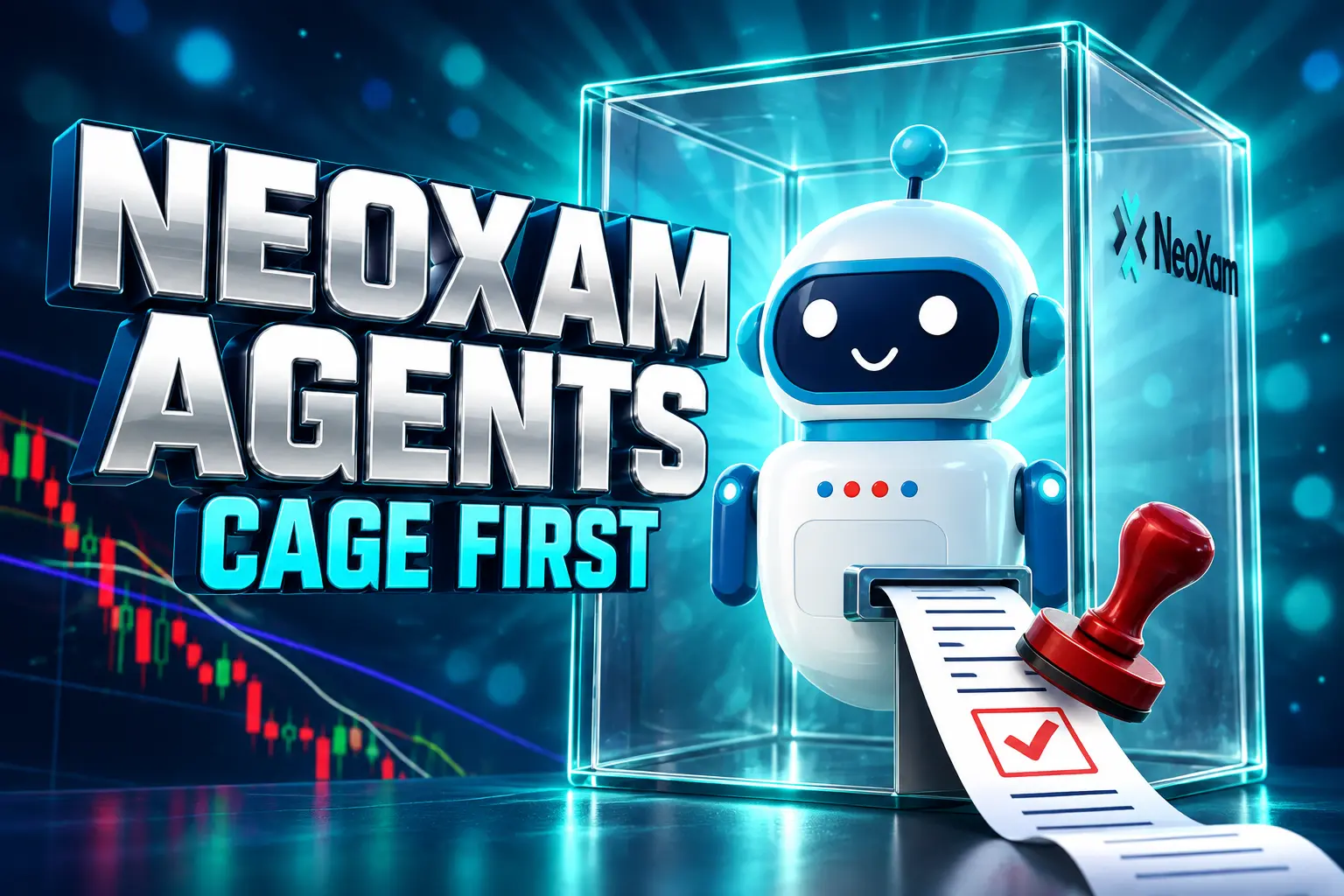
NeoXam Agents Ship a Regulator Cage Before Go-Live
NeoXam Agents puts a regulator-ready cage around investment-ops AI, with specialised agents dated for September 2026 and client production in early 2027.

NeoXam launched NeoXam Agents on June 24, 2026, a platform to run AI inside middle- and back-office investment work. Specialised agents are dated for general availability in September 2026, while client production is slated for early 2027.
Clément Miglietti, Chief Product and Technology Officer, said the firm built the regulator-facing layer first because clients could already run pilots. They still could not walk an agent through a supervisory review and show every step it took.
NeoXam Built the Cage Before the Agents
The Paris software house, which says it has €25 trillion managed by core systems for 150+ customers in 30 countries, did not ship a single general assistant. It shipped a platform for building and supervising agents that attach to products already used for market and reference data, portfolio and accounting records, reconciliations, compliance monitoring, and regulatory reporting.
That choice is the launch. The agents sit inside workflows a firm already runs, and they inherit the same hosting options as the rest of the stack, cloud, hybrid, on-premises, or a fully sovereign setup, so the client keeps control of where data lives.
Most of our clients don’t have an AI problem. They have a production problem. They’ve run the pilots and seen the demos. What they can’t do yet is sit an agent in front of a regulator and account for every step it took, so we built that part first. Having an agent is the easy bit. Running a fleet of them in a regulated firm is the real challenge, and that’s what we’ve delivered.
Clément Miglietti, Chief Product and Technology Officer, NeoXam launch statement
Day to day, business teams call agents from the screens they already use, specialist teams create and tune new ones, and compliance officers review the fleet and certify it. The controls are the product surface.
WHAT THE PLATFORM PUTS IN FRONT OF AN AGENT
- Approved catalogue: Only listed agents are allowed to run.
- Full action log: Every step is kept in a record a reviewer can inspect.
- Human gates: Sensitive decisions wait for a person before they go through.
- Model switch: The firm can change the underlying model without a migration project.
Those four pieces are how NeoXam answers the gap that still sits under most agent demos. A log the vendor itself controls is still a vendor log, which is why a public draft on tamper-evident records of agent actions treats operator-owned trails as something a third party should be able to verify. NeoXam is selling the in-house version of that trail, tied to software the operations team already runs.
Up to 75% Less Manual Reconciliation, in Preview
The first specialised agents are split into three jobs: they answer questions, they take action, and they help configure the software. Each one is tied to a named NeoXam product rather than floating as a generic copilot. The company calls the figures below early outcomes, and it dated general availability for this family to September 2026.
EARLY OUTCOMES NEOXAM CITES FOR THE FIRST AGENTS
| Job | Product | Claimed result | Agent type |
|---|---|---|---|
| Clear routine breaks | Aro | Up to 75% less manual reconciliation | Action |
| Triage rule breaches | PMS | 90% less time to address each alert | Action |
| Routine set-up | DataHub | Around 90% time savings on simple tasks | Configure |
| Client presentations | Impress | Minutes rather than hours | Action |
| Product questions | Across the suite | Faster onboarding and support, with guards against wrong answers | Question |
Those cuts still run through the human approval path for anything the firm marks as sensitive. An Aro agent that clears routine mismatches can shrink the break pile, and a PMS agent can push specialists toward the hard alerts, but the platform is built so a person remains on the hook for the calls a regulator would care about. Microsoft’s own agent guidance tells builders to add mandatory human review for high-stakes tasks, and NeoXam has written that same pause into the control set.
Aro itself was already sold as AI-powered reconciliation after NeoXam bought EZOPS in 2024. The June launch wraps that line, and the rest of the suite, in a shared catalogue and a shared log. The new claim is not that matching engines exist. It is that a firm can put a named agent on a named break, then show who approved the next step.
Why Production Waits Until Early 2027
Software general availability in September 2026 is not the same as an agent running inside a regulated client. NeoXam opened a one-year early-adopter programme in the third quarter of 2026 for a select group of investment firms. Test deployment and measurement run through the fourth quarter, with a path to production in early 2027.
The trial is built around three workstreams that have little to do with prompting. Firms are asked to build the business case and measure return, map agents, models, tools, and data flows onto their own audit and regulatory rules, and plan how the platform sits in the current system estate. That mapping work is the year. The agents are the test objects.
THE PATH FROM LAUNCH TO A LIVE FLEET
- February 2014: NeoXam is established in Paris, after buying SunGard’s GP3 and Decalog line.
- 2024: NeoXam completes the EZOPS deal and folds AI reconciliation into Aro.
- November 2025: NeoXam launches intelligent document processing for private-markets files, later branded Structure.
- June 24, 2026: NeoXam Agents launches as the supervision layer, with specialised agents in preview.
- Q3 2026: The one-year early-adopter programme opens to a select group of firms.
- September 2026: Specialised agents are dated for general availability.
- Q4 2026: Test deployment and measurement run at participating firms.
- Early 2027: The stated path to production begins.
NeoXam employs 750+ people across 21 offices and says more than 10,000 users sit on its software. That installed base is why a 2027 production date is not a small-lab delay. Each early adopter has to show its own board how an agent’s steps map onto existing audit files, and that work does not compress to a software release note.
Broadridge’s 30% Claim Sets a Faster Clock
Other vendors are not waiting for a 2027 production window to talk about live agents. Broadridge has said its agentic AI partnership model can cut operational costs by up to 30% from day one for managed-services clients, with extra savings later. SimCorp presented an Agent Launchpad for its SimCorp One suite in April 2026, aimed at agents that run across front-to-back workflows rather than sitting in a sandbox.
Those claims do not cancel NeoXam’s point. They put a clock on it. A firm that already buys Broadridge managed services is being offered a same-day cost cut. A firm that already runs SimCorp One is being offered a native place to park agents. NeoXam is offering a cage inside the middle- and back-office products it already sells, and asking early adopters to spend a year proving that cage to their own compliance team.
WHERE EXPERTS DISAGREE
- NeoXam: Miglietti says clients do not lack demos; they lack a way to sit an agent in front of a regulator and account for every step.
- Broadridge: The firm has told investors agentic tools in managed services can take up to 30% off operating cost from the first day.
- Mujiruddin Shaikh, CTO at the Reserve Bank Innovation Hub: He has said there is still no universal protocol for how agents hand off work or log decisions, so each shop is inventing its own trail.
Shaikh’s gap is the one NeoXam is trying to productise. If there is no shared way for two agents, or two vendors, to pass a decision log, then a catalogue inside one suite becomes the practical standard for that client. The downside sits in the same sentence. The audit trail is only as portable as the platform that wrote it.
Switching Models Without a Migration Project
Miglietti’s second line at launch was aimed at model vendors, not at operations staff. “We are deliberately not betting our clients’ firms on one model provider. If a better model comes along next quarter, they should be able to use it without a migration project. Locking a regulated institution into a single AI vendor for a decade is a risk, not a feature.”
That is a bet on the cage, not on the brain. If the log, the catalogue, and the approval gates stay in NeoXam’s software, the model underneath can be swapped. The client’s regulator file stays in the same place. The model supplier becomes a replaceable part.
The irony is already on another product page. NeoXam Structure, the document tool sold alongside the agents, is powered by Claude Sonnet 4.5 for extraction. The platform story says do not lock in. The document story names a model. Firms that care about Miglietti’s warning will want to see whether Structure’s engine sits behind the same switch as the agents, or whether the 95%+ extraction figures depend on one named model staying put.
Uncertain Fields Still Go to a Person
Structure is the other half of the June launch, and it makes the human gate visible at field level. NeoXam says the tool is used by 50+ financial institutions and has processed 10M+ documents. Manual handling is put at 15 minutes per document. With Structure, extraction takes 5-30 seconds and the company puts the full pass, including checks, at 2 minutes.
STRUCTURE’S OWN CHECKPOINTS
- Accuracy claim: 95%+ field-level accuracy on financial documents, with a human pass on the rest.
- Auto-clear share: 80% of fields auto-validated in green, above 85% confidence.
- Flags: Yellow sits at 60-85% confidence and red below 60%, and those fields go to a person.
- Time: 15 minutes of typing becomes a 2-minute review of the uncertain lines.
The agent does not get the last word on a broker statement. It extracts, scores, and waits. That is the same pattern as the sensitive-decision gate on NeoXam Agents, applied to PDFs, trade confirmations, and capital-call notices. Speed comes from skipping the green fields, not from removing the reviewer.
The Fleet That Still Needs a Signature
The people who gain power in this design are not the ones writing prompts. Compliance officers inherit a catalogue they can approve, a reviewable record of every agent action, and a duty to certify the fleet. Operations staff keep the break queues and the rule-breach lists, now with an agent proposing the routine clears. Model vendors keep the chance to be swapped out next quarter if a better engine shows up.
What nobody has yet is a year of production evidence at a named asset manager. The specialised agents are dated to ship in September 2026. Participating firms will keep testing through the fourth quarter of 2026, with a path to production in early 2027.

The Yemen Cell Kept Claude’s Flight Code After the Ban

Brian Bengs Bets His Senate Race on an AI Stop

FloWrestling Scorekeeper Turns Dual Meets Into Live Data

OpenAI Wants a Shared Pause the Law May Forbid

Bitcoin Slips as a U.S. Bank Mints a Dollar Token

Fable 5 Came Back Under a Commerce On-Off Switch

Google’s SpaceX GPU Lease Has a Sept. 30 Deadline

Plasma One’s XPL Locks Face a 1.81 Billion Cliff

DGO’s Rs 549 World Cup Pass Cost Fans Sleep and Data

Moonshot AI’s $30 Billion Ask Became a $35 Billion Close
-
 AI3 months ago
Fable 5 Came Back Under a Commerce On-Off Switch
-
 AI4 months ago
Google’s SpaceX GPU Lease Has a Sept. 30 Deadline
-
 CRYPTO4 months ago
Plasma One’s XPL Locks Face a 1.81 Billion Cliff
-
 APPS4 months ago
DGO’s Rs 549 World Cup Pass Cost Fans Sleep and Data
-
 AI4 months ago
Moonshot AI’s $30 Billion Ask Became a $35 Billion Close
-

 NEWS4 months ago
ColorOS 17 Device List Spans Oppo, OnePlus and Realme
-

 GAMING4 months ago
Xbox Cuts 3,200 Jobs After Five Years of Thin Returns
-

 GAMING3 months ago
The RTX 4050 Under Rs 70,000 Hides a Wattage Gap