
AI
Sierra’s Pay-Per-Result AI Bet Comes With a Rising Token Bill
Sierra’s AI agents serve 40% of the Fortune 50 under pay-only-for-results pricing, even as rising AI token costs squeeze that same bet.

Sierra closed a $950 million funding round in May at a valuation above $15 billion, and its AI agents now serve more than 40% of the Fortune 50. The startup builds customer service agents for banks, airlines and health insurers, and it charges many of them only when an agent actually resolves a problem.
Co-founder Clay Bavor spent 18 years at Google, most recently running Google Labs, before discussing Sierra’s approach with CNBC’s Arjun Kharpal this month. The same model winning Sierra its Fortune 50 contracts also leaves Sierra holding the industry’s fastest-growing expense, the compute burned on every attempt at an answer.
Sierra Doesn’t Bill by the Seat
Sierra’s product runs on what the company calls Agent OS, built so both engineers and non-technical customer experience staff can build, test and release an agent before it ever talks to a real customer. Sierra calls the full process its Agent Development Life Cycle, meant to take an agent from first draft through testing and release without a separate engineering sprint at every step.
The company also builds agents to build its own agents. A tool called Ghostwriter takes notes, call transcripts or whiteboard sketches and turns them into a working agent, then tests and validates the changes in a sandboxed environment before anything reaches a live customer.
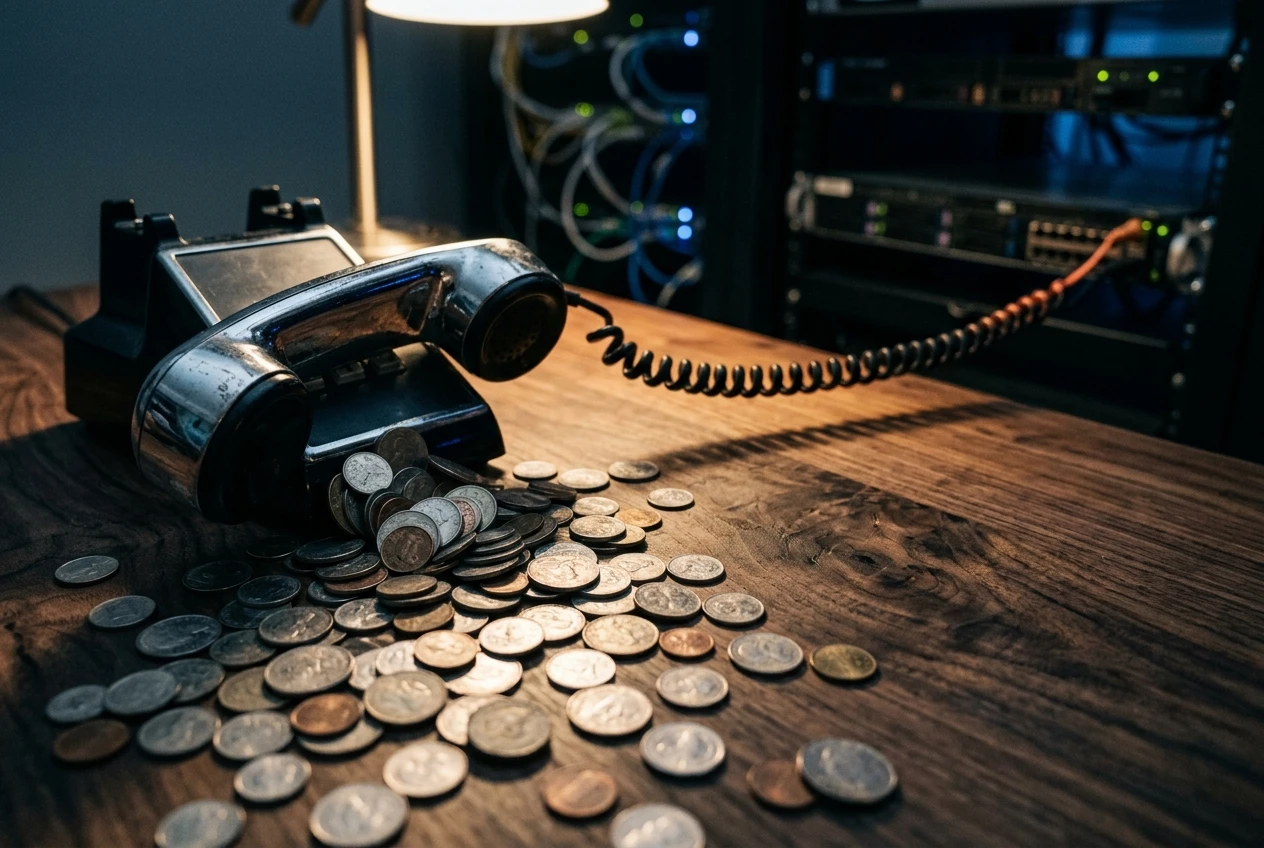
Instead of a subscription or a per-seat license, Sierra charges a fee tied to a specific result: a resolved support ticket, a completed loan refinance, a processed insurance claim. The company’s May round, its third since founding in 2023, was led by Tiger Global and GV. Sierra says the new capital gives it more than $1 billion to spend on becoming the global standard for AI-driven customer experience. As the company put it in that same post, its agents have let it “digitize the last remaining analog channel: the telephone.”
Why Is Everyone Ditching Seat-Based Pricing?
Software has charged per seat for decades, but an AI agent has no seat to bill. A recent Pilot study found seat-based pricing among SaaS companies fell from 21% to 15% in twelve months, while hybrid models blending subscriptions with usage or outcome fees jumped from 27% to 41%. Bessemer Venture Partners calls the shift the AI pricing pivot. Andreessen Horowitz describes the same move as a turn toward outcome-based pricing industry wide.
Sierra isn’t alone in charging for results. Intercom’s competing support agent, Fin, resolves an average of 76% of conversations without a human, using data drawn from 12,000 of its customers, and it bills $0.99 only when a conversation actually closes. Zendesk introduced its own outcome-based tier this year, charging $1.50 per automated resolution on committed volume or $2.00 pay-as-you-go.
| Vendor | Pricing Model | Disclosed Rate | Scale Signal |
|---|---|---|---|
| Sierra | Outcome-based, per resolved interaction | Not publicly disclosed | 40%+ of the Fortune 50; $950M raised at $15B+ valuation |
| Intercom Fin | Outcome-based, per resolved conversation | $0.99 per resolution | 76% average resolution rate across 12,000 customers |
| Zendesk AI Agents | Outcome-based, per automated resolution | $1.50 committed volume; $2.00 pay-as-you-go | Launched in 2026 as a direct challenge to per-seat support pricing |
Sierra keeps its own rate private, negotiating contracts deal by deal rather than posting a price list.
Five Weeks to Go Live
Sierra sells speed as hard as it sells price. Customers are deploying finished agents in weeks rather than the months or years enterprise software rollouts usually take.
- Nordstrom launched its voice agent, Nora, in five weeks.
- Singtel went live in ten weeks with resolution rates above 70%, serving one of Asia’s largest telecom customer bases.
- Cigna, one of the largest health insurers in the US, reached production in eight weeks and cut the time needed to authenticate a patient by 80%.
The pattern isn’t confined to customer support. Kraken, the cryptocurrency exchange, rebuilt its trading app around AI agents this year to compete for retail traders chasing the next rally, evidence that the shift Bavor described to CNBC, agents moving out of demos and into live workflows, is showing up well beyond call centers.
The Token Bill Nobody Priced In
Outcome-based pricing sounds simple. No result, no charge. It also means Sierra, not its customers, absorbs the cost whenever an agent needs extra reasoning steps to reach that result, and that cost is climbing.
Goldman Sachs Research expects token consumption to multiply 24 times by 2030, reaching 120 quadrillion tokens a month, as agents replace single-shot chatbot queries with multi-step reasoning loops. A single agentic task can already burn 5 to 30 times more tokens than a standard chatbot query, according to Gartner’s analysis.
Uber found out what that multiplier means in practice. Claude Code adoption jumped from 32% to 84% of its 5,000-engineer organization between December and March, and by April the company’s entire annual AI budget for the year was gone. Chief technology officer Praveen Neppalli Naga said the team was back at the drawing board, rebuilding a budget that evaporated faster than anyone had modeled.
OpenAI chief executive Sam Altman told CNBC in June that doubts about whether AI spending will ever pay off are “the most fair criticism right now of AI.” Per-token prices keep falling anyway, yet the cost of a completed task keeps climbing as agentic workflows resend context and retry failed steps rather than answering once.
Enterprise AI Keeps Stalling at the Login Screen
Bavor has pointed to what he calls the hardest part of enterprise AI: getting an agent from a working demo to a system trusted to act inside a company’s real infrastructure. Much of that gap has nothing to do with how smart the model is.
Enterprise AI deployment is stalling on multi-factor authentication prompts, session tokens and bot-detection systems built specifically to keep automated processes out, Tech Times reported this month. Software was engineered for human operators, and that design choice is now the biggest friction point for a machine trying to act on a company’s behalf.
A 2026 connectivity benchmark that surveyed more than 1,000 IT leaders found that only 27% of enterprise applications are currently connected, even among organizations actively deploying AI. The average enterprise runs nearly 1,000 distinct applications, and most were never built to talk to each other, let alone to an autonomous agent.
That mandate-versus-infrastructure gap isn’t unique to the US. Four in five Indian chief executives report pressure to adopt AI they can’t measure, echoing the same disconnect between what leadership wants and what the systems underneath can support.
Gartner expects more than 40% of agentic AI projects to be canceled by 2027 because of unclear returns and weak governance. A widely cited MIT study of more than 300 enterprise deployments found that 95% delivered no measurable return at all.
Who’s Betting Against Sierra
Not every prospective customer is convinced that outsourcing a customer-facing agent is the right call. One chief executive, quoted anonymously in a November Forbes profile of Sierra, framed the hesitation as a question of durability: whether a vendor-built agent still represents the brand the way an in-house system would.
I foresee a great philosophical war between us and Sierra, and it’s going to be really fun to see who the market chooses.
Sierra’s founders see it differently. Bret Taylor and Clay Bavor expect agents to become the primary way businesses reach customers, eventually working as personal concierges across text, phone, app and chat.
- Sierra’s founders – Bret Taylor and Clay Bavor argue agents will become the primary way businesses reach customers, eventually working as personal concierges across every channel.
- An unnamed customer CEO – questioned handing brand identity to an outside vendor, telling Forbes the decision would come down to durability.
- Independent researchers – a 2026 WRITER survey found only 23% of organizations report significant ROI from AI agents, a gap neither side of the vendor debate disputes.
The financial case for outcome-based pricing still holds up when it works. Vendors using the model can post 94% gross margins against negative margins under pure usage-based billing. That upside depends on the agent actually holding up over time. Agents that drift until the system quietly breaks erase that margin fast, especially once a task that used to take one model call starts taking twenty.
Whether the bet pays off depends on whether Sierra’s margins can outrun its own token bill.
Frequently Asked Questions
What is outcome-based pricing for AI agents?
Outcome-based pricing charges a company only when an AI agent completes a specific, measurable result, such as a resolved support ticket or a booked appointment, rather than billing per seat or per token used. The hardest unsolved problem with the model is attribution: proving the agent, not the human reviewing its work or the process already in place, actually caused the result.
How much does Sierra charge for its AI agents?
Sierra doesn’t publish a per-outcome rate the way Intercom and Zendesk do. Bavor has said half of Sierra’s customers generate more than a billion dollars in revenue each year, which points to pricing negotiated contract by contract rather than posted on a rate card.
Why are AI token costs rising even though the price per token is falling?
Per-token prices have dropped sharply, but agentic workflows make up for it in volume. Multi-agent systems can use about 15 times as many tokens as a simple chat exchange, because every step in a reasoning chain resends context and prior tool results rather than starting fresh.
How fast has Sierra’s valuation grown since it was founded?
Sierra raised $175 million at a $4.5 billion valuation in October 2024, then $350 million at a $10 billion valuation in September 2025, before closing the $950 million round above $15 billion this past May, three markups in about 19 months.
What happens if a Sierra agent can’t resolve a customer’s issue?
Outcome-based pricing generally means unresolved conversations that escalate to a human aren’t billed as a completed result. Intercom’s Fin, a competing agent, explicitly charges nothing for conversations that escalate to a human agent or end without resolution.
Which companies use Sierra’s AI agents?
Beyond Nordstrom, Singtel and Cigna, Sierra’s customer roster includes Discord, Rivian, Ramp, ADT, Bissell, SiriusXM, Weight Watchers, Sonos and OluKai, spanning retail, telecommunications, insurance and financial services.


Lenovo Prices the IdeaPad Vibe Against Apple’s $699 Neo

Xbox Caps Game Pass Cloud Gaming at 15 Hours

GTA 6 DualSense Controllers Follow Sony’s Usual $84.99 Script

South Korea Retail Investors Face Reckoning After KOSPI AI Rally Collapses

Surrey AI Maps Three Heart Attack Paths and Their Molecular Roots

Germany Locks Neutral Apple ATT Prompts Across Most of Europe

Apple’s 5% EU Fee Quietly Rewrites Alternative App Store Math

Apple’s EU Fee Truce Cuts Complexity but Leaves Rivals Fuming

Pixel 11 Pro Fold Trades Thinness for Durability and Seven-Year Stay

Mayo AI Flags HCM Obstruction From Everyday Ultrasound Videos

Oracle Cuts 21,000 Jobs in a Year, Cites AI in 10-K Filing

Fable 5 and Mythos 5 Return as US Lifts Anthropic Export Controls

SpaceX’s Google Deal Turns a Rocket Company Into a Cloud Landlord

CD Projekt Red Co-CEO: Redemption Arc Isn’t Done, Witcher 4 in 2027

XPL Rallies 30% Ahead of Plasma One Card Tier Launch

Google Search Profiles Build a Follow Graph Inside Discover

DGO App Brings Rs 549 Mobile Pass for FIFA World Cup 2026 in Nepal

Moonshot AI Targets $30 Billion in China’s Fastest AI Funding Sprint

Oppo’s ColorOS 17 Eligibility List Leaves A-Series Buyers Behind

Microsoft Xbox Layoffs Start in July as Sharma Slams 3% Margin
-
 AI2 months ago
Oracle Cuts 21,000 Jobs in a Year, Cites AI in 10-K Filing
-
 AI2 months ago
Fable 5 and Mythos 5 Return as US Lifts Anthropic Export Controls
-
 AI3 months ago
SpaceX’s Google Deal Turns a Rocket Company Into a Cloud Landlord
-
 GAMING2 months ago
CD Projekt Red Co-CEO: Redemption Arc Isn’t Done, Witcher 4 in 2027
-
 CRYPTO3 months ago
XPL Rallies 30% Ahead of Plasma One Card Tier Launch
-
 NEWS3 months ago
Google Search Profiles Build a Follow Graph Inside Discover
-
 APPS3 months ago
DGO App Brings Rs 549 Mobile Pass for FIFA World Cup 2026 in Nepal
-
 AI3 months ago
Moonshot AI Targets $30 Billion in China’s Fastest AI Funding Sprint