
NEWS
FBI Warns Dating App Matches Are Turning Into Armed Robberies
FBI Miami warns criminals are using dating apps to lure victims into armed robberies, including forced ATM withdrawals at gunpoint.

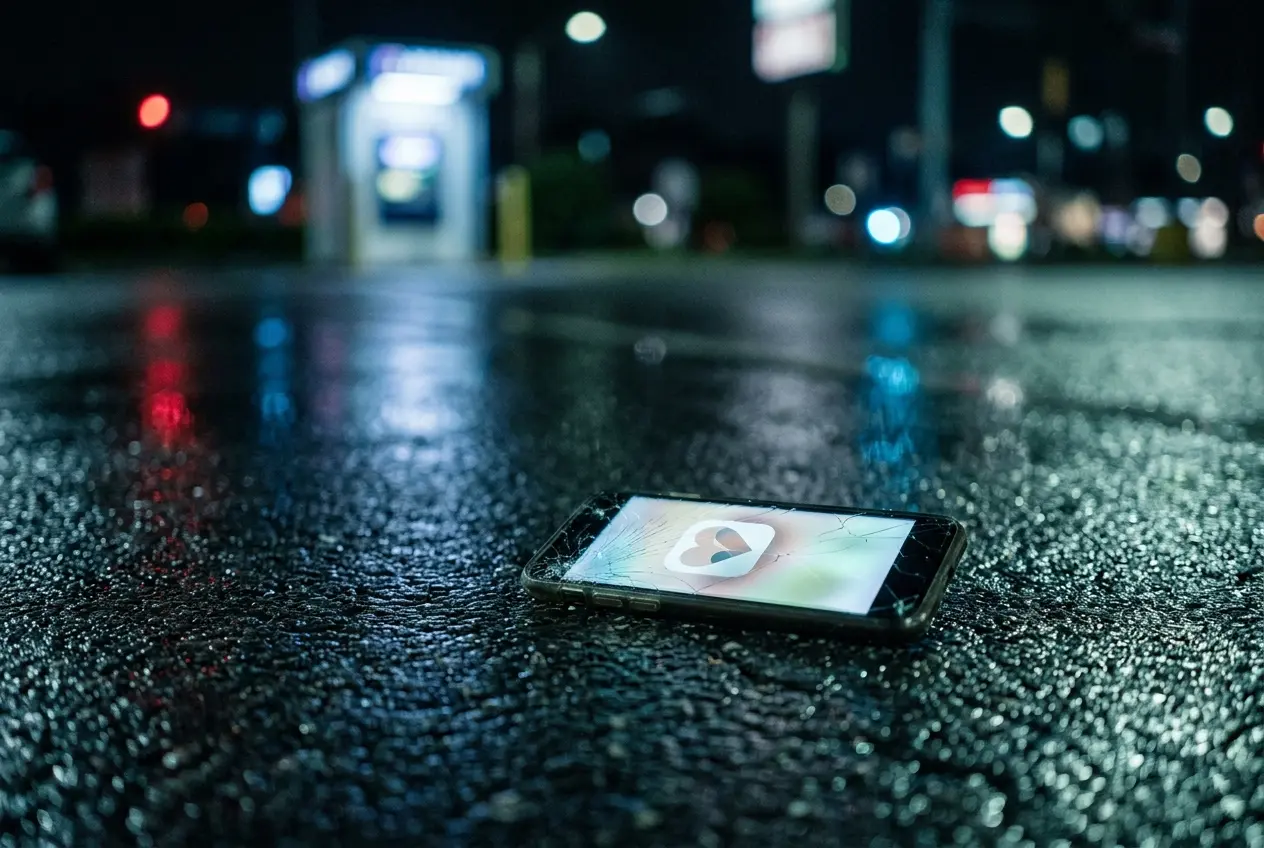
The FBI’s Miami field office says a match on a dating app is now sometimes the opening move in an armed robbery, not a date. Agents issued the warning Thursday, describing cases where a private meetup ends with a gun drawn and a forced trip to the automated teller machine (ATM).
Dating apps have spent years selling photo verification as proof a match is who they claim to be. None of that checks whether the person waiting at the meeting spot plans to rob you once you arrive.
A Private Meeting Turns Into an Armed Robbery
Special agents in Miami describe a scheme that starts like any other match. Two profiles connect. The conversation clicks. The pair agree to meet in person, usually somewhere private.
Then, according to the bureau, the date turns into a robbery. In one case the FBI detailed, the meeting ended with the suspect displaying a firearm and taking the victim’s cash and belongings on the spot. The gunman then forced the victim to a nearby ATM to withdraw more money.
A criminal posing as a legitimate dating interest can take advantage of a potential victim who is looking for a romantic relationship.
Adam Berry, assistant special agent in charge at FBI Miami, said the bureau wants daters to take basic precautions before agreeing to meet a match face to face.
On Miami Beach, the warning already matches what people there are telling each other. “Linking up, getting horny and getting robbed,” one dating app user told Local 10 News, describing the risk in blunter terms than the FBI’s own statement.
Retired Miami Assistant Police Chief Craig McQueen told the station most victims never file a report at all. “I’m sure there’s a lot of unreported. People are embarrassed about it,” he said. McQueen added that criminals are increasingly targeting users on gay dating apps, betting that some victims aren’t ready to disclose their sexual orientation and may be less likely to call police.
Why a Verified Profile Can’t Catch a Robber
Every major dating app now pitches some version of photo verification. Take a live selfie, and the app confirms it matches your profile pictures. It’s the industry’s standard answer to catfishing.
That system has a blind spot. An investigation into Tinder’s Face Check verification tool found profiles where one photo could pass its entire identity check, even when eight other pictures on the same profile showed a completely different person. The accounts behind those mismatched photos turned out to be crypto scammers, not the people shown in most of the pictures.
The Miami scheme does not even require a fake photo to work, which is exactly the gap Face Check and its rivals were never built to close.
That gap fits a broader pattern in how the industry treats safety. Time magazine’s reporting on dating app risk found that one researcher, identified as Valentine, said current practices leave the full burden of preventing a sexual assault on the potential victim, since most safety guidance exists only as text that users can skip.
How Many People Have Been Robbed This Way?
The FBI has not published a count specific to armed dating-app robberies since the scheme was only flagged this week. Related fraud categories hint at the scale though: the Federal Trade Commission (FTC) and the FBI’s own cybercrime unit each track billions of dollars in yearly romance-related losses under different names.
| Measure | Classic Long-Con Romance Scam | Miami’s Armed Robbery Variant |
|---|---|---|
| Federal reports | 17,910 IC3 reports in 2024 | One case detailed by FBI Miami so far |
| Money taken | $4,400 median loss (FTC, 2022) | Cash plus a forced ATM withdrawal, amount undisclosed |
| Time from match to loss | Weeks to months of messaging | Same day as the first in-person meeting |
| Weapon involved | None; the scam is purely digital | Firearm displayed during the robbery |
| Federal tracker | FTC Consumer Sentinel and FBI IC3 | FBI Miami field office warning, no dedicated tracker yet |
Those two figures, $1.3 billion and 17,910 reports, come from different trackers. The Federal Trade Commission’s Consumer Sentinel Network logged the $1.3 billion romance-scam total in 2022, with a median loss of $4,400 per victim. The 17,910 romance scam reports logged in 2024 come from the FBI’s Internet Crime Complaint Center (IC3), a separate system for cyber-enabled crime that recorded just over $672 million in losses that year.
Zoom out further and the money gets even bigger. The FTC says social media scam losses reaching $2.1 billion in 2025, an eightfold jump since 2020, with dating platforms named alongside social media as an entry point. Of people who lost money to a romance scam in 2022, 40% said contact started on social media and 19% said it began on a dating app or website, per the agency.
The Pattern Reaches Beyond Miami Beach
Miami is not an isolated case. News reports describe similar attacks surfacing in Texas, and a man was arrested in Pompano Beach on kidnapping charges after meeting his alleged victim through a dating app.
The pattern predates this year’s warning. In a case reported last year, a man using the alias “Sebastian” lured victims through the gay dating app Grindr, then robbed and kidnapped them, taking wallets and phones along with a ransom demand. He was sentenced to 25 years in federal prison.
- What we know: FBI Miami issued its warning on Thursday, July 9; the case agents detailed involved a firearm and a forced ATM withdrawal; similar reports have surfaced in Texas and in Pompano Beach.
- What’s unconfirmed: The total number of South Florida victims, whether one organized group is behind multiple incidents, and how many additional cases went unreported entirely.
What to Do Before You Ever Meet in Person
None of this means giving up on dating apps. It means changing a few habits before agreeing to meet someone face to face.
- Keep your finances to yourself – don’t mention your salary, your car, or your net worth in chat or on your profile.
- Meet in public, every time – a busy coffee shop or restaurant works; a private home or secluded spot does not, especially for a first meeting.
- Verify before you go – a short video call can confirm a match looks like their photos before you settle on a location.
- Tell someone your plan – share who you’re meeting, where, and when, then check in once you’re home safely.
The FBI’s own guidance echoes that last point. Agents in Jacksonville advise anyone meeting an online match in person to meet in public and share your itinerary with someone they trust before they go.
The Industry’s Investment Gap
Congress has taken notice of the broader problem. Representative Pettersen has co-authored legislation that would force dating apps to notify users when they’ve been contacted by a known scammer. She calls it common sense, and the bill has bipartisan support and has cleared a House committee vote.
“You are going up against big special interests,” she said, describing the opposition the measure could face.
Match.com’s parent company has spent $9 million on lobbying in five years, according to congressional records cited by CBS News. One researcher who has audited dating platforms, identified in that report as Kosmides, put the industry’s reluctance to invest in trust and safety bluntly: “Trust and safety is not generating enough revenue for them to invest in it.”
Match Group CEO Bernard Kim has pushed back on that framing, telling CBS News, “It’s existential to our business to remain safe.” The bill’s next step is a full House vote. No date has been set.
Frequently Asked Questions
Which Dating Apps Have Come Up in These Robbery Reports?
Federal investigators have named Tinder, Bumble, Hinge, and Facebook Dating as platforms where fake profiles were used to arrange meetups that turned violent. That doesn’t make those apps uniquely dangerous. They’re simply among the largest dating platforms, which is likely why they show up most often in reports of this kind.
How Is This Different From a Typical Romance Scam?
A classic romance scam relies on wire transfers, gift cards, or crypto sent over weeks or months, payments that sometimes leave a trail investigators can follow. This scheme takes physical cash from an ATM in one sitting, which leaves far less of a paper trail behind.
What if Someone Pressures Me to Meet Right Away?
Slow down. The FTC recommends running a reverse image search on a match’s profile photos before agreeing to meet, since scammers frequently reuse pictures stolen from real people’s social media accounts. Pressure to skip that step, or to meet somewhere private on short notice, is reason enough to say no.
Do Most Victims Actually Report These Crimes?
Usually not. A February 2026 AARP Fraud Watch Network survey found that 55% of romance scam victims never report their losses to anyone, and only about one in four contact police, which suggests official counts understate how often this actually happens.
Should I Just Delete My Dating Apps?
No. The FBI’s guidance is not to quit online dating but to stick with well-known, established platforms, avoid unverified profiles, and keep the first few meetings in public. Agents are framing this as a precautions problem, not a reason to give up on meeting people online.


South Korea Retail Investors Face Reckoning After KOSPI AI Rally Collapses

Surrey AI Maps Three Heart Attack Paths and Their Molecular Roots

Germany Locks Neutral Apple ATT Prompts Across Most of Europe

Apple’s 5% EU Fee Quietly Rewrites Alternative App Store Math

Apple’s EU Fee Truce Cuts Complexity but Leaves Rivals Fuming

Pixel 11 Pro Fold Trades Thinness for Durability and Seven-Year Stay

Mayo AI Flags HCM Obstruction From Everyday Ultrasound Videos

Indian Brands Quietly Scale Landmark Screens and Home Tech

Navin Vatsa Turns Grief Into a Lifetime of Quiet Seeing

Google Bets Pixel 11 Agentic AI Will Redefine Phones

Oracle Cuts 21,000 Jobs in a Year, Cites AI in 10-K Filing

Fable 5 and Mythos 5 Return as US Lifts Anthropic Export Controls

SpaceX’s Google Deal Turns a Rocket Company Into a Cloud Landlord

CD Projekt Red Co-CEO: Redemption Arc Isn’t Done, Witcher 4 in 2027

XPL Rallies 30% Ahead of Plasma One Card Tier Launch

Google Search Profiles Build a Follow Graph Inside Discover

DGO App Brings Rs 549 Mobile Pass for FIFA World Cup 2026 in Nepal

Moonshot AI Targets $30 Billion in China’s Fastest AI Funding Sprint

Oppo’s ColorOS 17 Eligibility List Leaves A-Series Buyers Behind

Microsoft Xbox Layoffs Start in July as Sharma Slams 3% Margin
-
 AI2 months ago
Oracle Cuts 21,000 Jobs in a Year, Cites AI in 10-K Filing
-
 AI2 months ago
Fable 5 and Mythos 5 Return as US Lifts Anthropic Export Controls
-
 AI2 months ago
SpaceX’s Google Deal Turns a Rocket Company Into a Cloud Landlord
-
 GAMING2 months ago
CD Projekt Red Co-CEO: Redemption Arc Isn’t Done, Witcher 4 in 2027
-
 CRYPTO2 months ago
XPL Rallies 30% Ahead of Plasma One Card Tier Launch
-
 NEWS2 months ago
Google Search Profiles Build a Follow Graph Inside Discover
-
 APPS2 months ago
DGO App Brings Rs 549 Mobile Pass for FIFA World Cup 2026 in Nepal
-
 AI2 months ago
Moonshot AI Targets $30 Billion in China’s Fastest AI Funding Sprint