
NEWS
ARRI Hands Honor Its First-Ever Smartphone Camera Deal
Honor’s Robot Phone launches August 12 carrying ARRI’s first-ever smartphone camera license, a deal Honor’s own CEO says beat out a rival bidder.

Honor will unveil its Robot Phone on August 12, and its headline camera feature did not come from Honor’s own labs. It runs on color science licensed from ARRI, the Munich, Germany, cinema camera maker behind a century of Hollywood pictures, in what is ARRI’s first smartphone deal ever.
Honor’s own product chief says a rival phone maker wanted that same deal first and lost it. What ARRI risked by saying yes anyway is the part the marketing never mentions.
Two 200-Megapixel Eyes on a Robotic Arm
Gizchina, the outlet that first detailed the sensor sizes, reports the main camera runs a 200-megapixel sensor at 1/1.28 inches, large enough to pull in serious light, paired with built-in gimbal stabilization so handheld video does not shake even while walking or shooting in the dark. A second 200-megapixel sensor, this one a periscope telephoto at 1/1.4 inches, handles distance shots.
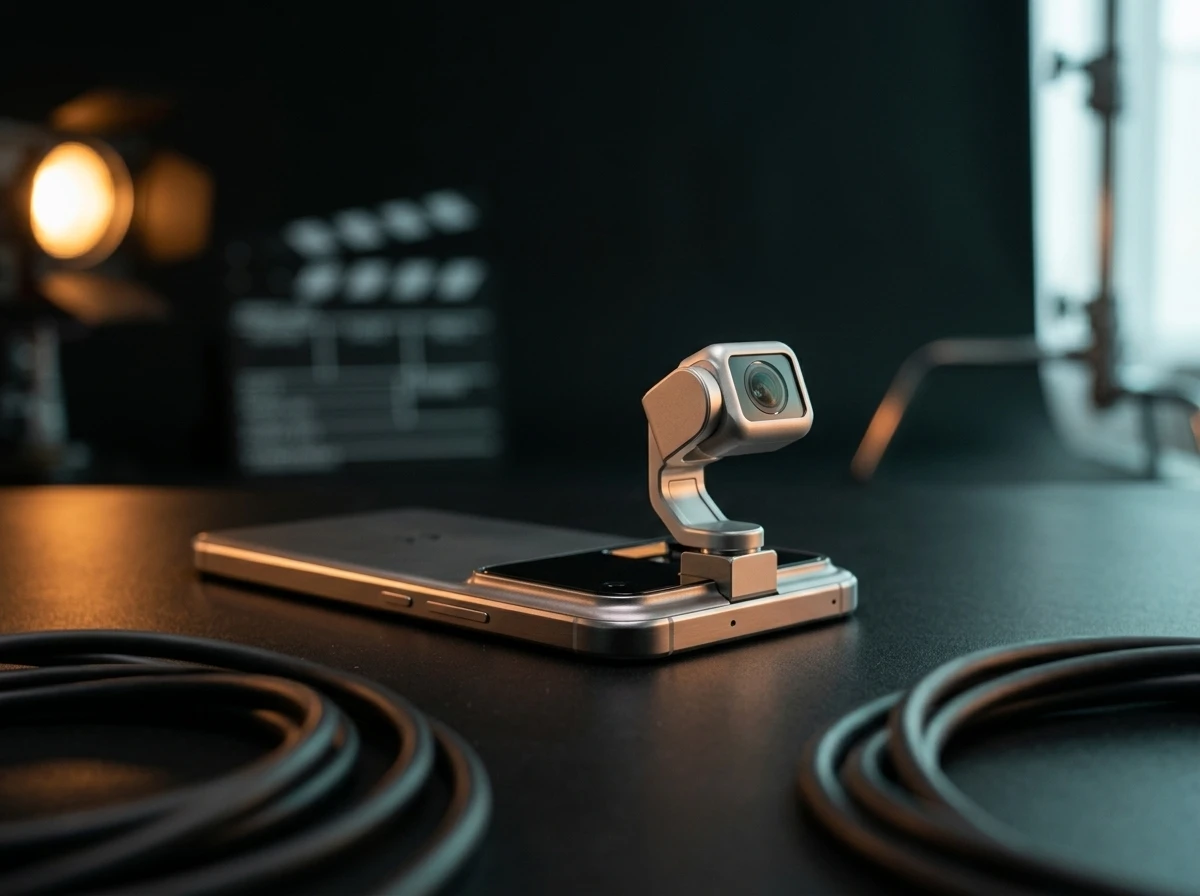
Both sensors sit on a titanium arm Honor demonstrated at the Cannes Film Festival in May: a four-degree-of-freedom gimbal that rotates a full 360 degrees and folds flush into the chassis when not shooting, according to Gagadget’s coverage of the reveal. The arm does more than steady footage. It tilts and tracks a subject’s face and body language, the same nodding, dancing tracking motions from Honor’s Shanghai reveal, according to China Daily’s report on the Cannes showcase.
Behind both lenses sits Honor’s own Yu Guang H1 chip, built in-house rather than licensed, tuned to process the huge files two 200-megapixel sensors generate without lag. The confirmed hardware, per Gizchina and corroborated across recent leaks, includes:
- A 200-megapixel main sensor (1/1.28 inch) with built-in gimbal stabilization
- A 200-megapixel periscope telephoto sensor (1/1.4 inch)
- The Yu Guang H1 imaging chip for on-device processing
- A Snapdragon 8 Elite Gen 5 processor, 120W charging and a 6,000mAh battery, per Memeburn
- Support for ARRI LogC3 video and the AWG3 wide color gamut
One Gagadget leak, about two weeks old, describes a triple array with a third 50-megapixel sensor rounding out the setup. Honor has not confirmed that detail.
Why Would a Cinema Camera Brand Touch a Phone at All?
ARRI has spent more than a century building the cameras that shot some of Hollywood’s biggest films, and until Honor came along, it had never let a phone maker near its actual color science. The furthest it had gone was licensing a single ARRI LogC3 profile to four Panasonic Lumix cameras.
The GH7, GH6, S1II and S1RII could shoot in that profile as one setting among many, CineD reported. The Honor deal goes deeper. CineD described it as folding ARRI’s fundamental image science into the core imaging pipeline of a consumer device for the first time, rather than offering it as an optional filter buried in a menu.
ARRI holds more than 20 Scientific and Technical Academy Awards, and its Alexa cameras remain fixtures on professional film sets worldwide, credentials the company built by staying almost entirely out of consumer electronics. CineD itself framed the open question plainly: whether the tie-up ends up enhancing or diluting that legacy depends on how the resulting images look, and whether the deal generates enough value to support ARRI’s continued independence.
An Unnamed Rival Lost This Deal
Honor’s own product boss has said the deal almost went elsewhere. Luo Wei, Honor’s product chief executive, posted on Chinese social media that he learned about a competing bid during a workshop in Germany this past March, according to a translation published by Huawei Central.
In March, ARRI told me that another mobile phone manufacturer had also approached them at the same time, but they ultimately chose Honor because after visiting China, they felt that Honor had stronger technical capabilities.
Luo did not name the rival manufacturer. Huawei Central reported that ARRI’s team visited Honor’s facilities in China before making its choice, weighing engineering access as heavily as brand recognition.
Critics Call the Pitch Vague Marketing
Coverage of the deal is not all admiring. Gadget Hacks, citing reporting from The Verge, called Honor’s own phrase for the collaboration, core elements of ARRI image science, loose enough to describe anything from a genuine co-engineered pipeline to a licensing arrangement built around a recognizable name.
The outlet pointed out that Vivo already ships 4K, 120fps, 10-bit log video with LUT handling across all three rear cameras without borrowing a cinema brand’s name to do it. That comparison sits at the center of a real disagreement among outlets that have covered the partnership closely:
- CineD and DIYPhotography call it a genuine first: ARRI’s foundational science built into a phone’s core pipeline rather than offered as a selectable filter.
- Gadget Hacks, citing The Verge, calls the phrasing vague enough to describe a branding deal, noting Vivo already delivers log video and LUT handling without a cinema-brand name attached.
- Newsshooter called the tie-up a little odd for a brand most of its own readers would not recognize, and raised the risk of repeating RED’s Hydrogen phone, an earlier cinema-camera crossover into handsets the industry still treats as a warning.
Newsshooter went further, asking a question Honor has not directly answered: why not partner with Apple or Samsung, brands that would have handed ARRI far bigger reach than a Chinese phone maker most consumers outside China have never heard of.
Rival Phones Still Lean on Photography Brands
Every other major Chinese flagship still pairs with a still-photography optics brand. Xiaomi’s flagships carry Leica’s name and color tuning. Vivo works with Zeiss on lens coatings and natural color science. Oppo, and OnePlus before it, built its portrait and color work around Hasselblad, the Swedish medium-format camera maker. Honor is the only one reaching into cinema-camera territory instead of still photography.
| Phone Brand | Camera Partner | Partner’s Specialty | What It Brings |
|---|---|---|---|
| Xiaomi | Leica | Still-photography optics, Wetzlar, Germany | Leica color profiles and lens branding |
| Vivo | Zeiss | Still-photography optics, Oberkochen, Germany | T* coatings and natural color tuning |
| Oppo | Hasselblad | Medium-format cameras, Gothenburg, Sweden | Portrait tuning and color calibration |
| Honor | ARRI | Cinema cameras, Munich, Germany | ARRI Image Science pipeline, its first phone deal ever |
The three older deals never asked a camera company to break its own rule about staying off phones. ARRI’s did, which is why Cannes organizers gave Honor the only official imaging partner slot at this year’s China Night event, according to Fonearena’s coverage of the showcase.
A Spinoff Chasing Its Own IPO
Honor has its own reasons to want this specific win. Huawei sold the brand in November 2020 so Honor could keep buying American components outside Huawei’s own sanctions, Newsshooter noted, and Honor has run as an independent company since, majority owned by Shenzhen Zhixin New Information Technology Co.
That independence is heading toward a stock listing. Honor entered A-share IPO tutoring in the opening months of this year, with CITIC Securities running the process, an early step toward the domestic listing the company has pursued since splitting from Huawei, according to filings reported by C114. The Robot Phone’s August 12 date lands squarely inside that push, timing that has already put IPO pressure building around Honor’s launch date.
Honor is not chasing share from a weak position. Honor, Huawei, Oppo and Vivo together already hold a combined mainland smartphone share above 60 percent, according to market share data for Chinese smartphone brands. A cinema-grade camera story gives Honor something Leica, Zeiss and Hasselblad badges no longer do for its rivals: a claim none of them can copy without ARRI’s own signature attached.
Whatever ARRI weighed when it picked Honor over an unnamed rival, the wager goes public on August 12. Camera specs on paper will not decide whether Robot Phone photos look like the pitch ARRI and Honor have been selling since Cannes, or like an expensive rebrand of a chip Honor already owned.
Frequently Asked Questions
What do ARRI LogC3 and AWG3 actually do for video?
LogC3 is ARRI’s flat log color profile, built to preserve highlight and shadow detail so editors can grade footage afterward instead of baking in contrast at the moment of capture. AWG3 is the wide color gamut that holds those extra colors before grading. Leaked details point to LogC RAW output and DaVinci Resolve compatibility, tools editors already use on ARRI’s own cinema cameras.
How much smaller is the Robot Phone’s gimbal motor?
Honor claims the micro motor driving the camera arm is 70 percent smaller than the industry standard, based on details shown at the phone’s Cannes preview in May. That claim has not been independently verified ahead of the August 12 launch.
Will the ARRI camera system reach other Honor phones?
Possibly. A Gagadget leak describes the Robot Phone’s camera system as an early preview of imaging technology Honor plans to bring to its Magic 9 flagship series later this year, though Honor has not confirmed that rollout.
Is the Honor Robot Phone launching outside China?
Not at launch. Reporting on the device describes a China-only debut on August 12, with global pricing and availability unconfirmed and Honor’s own trade restrictions in Western markets clouding any wider rollout.
Why didn’t ARRI just partner with Apple or Samsung?
Outlets covering the tie-up, including Newsshooter, have raised exactly that question, since Apple or Samsung would have offered ARRI far bigger reach. Honor’s product chief has said ARRI chose the company after auditing its technical facilities in China, weighing engineering access over brand size.


Nintendo Already Tested These NES Remakes, With Mixed Results

South Korea’s Crypto Framework Bill Hinges on a Bank Standoff

Court of Appeal Restores Imo APP Ahead of 2027 Polls

Vivo’s X300 Costs $647, but No US Carrier Sells It

Super Micro’s Bargain Stock Price Rests on One Hidden Customer

Resident Evil’s Remake Profits Just Vindicated Capcom’s Pragmata Bet

XRP Stalls Near $1 While Ripple’s Own Stablecoin Surges

WhatsApp Web’s Free Calling Update Takes Aim at Zoom

Hiya Toys’ Fox Figure Ships the Same Year as Persona 6

ARRI Hands Honor Its First-Ever Smartphone Camera Deal

Fable 5 and Mythos 5 Return as US Lifts Anthropic Export Controls

SpaceX’s Google Deal Turns a Rocket Company Into a Cloud Landlord

CD Projekt Red Co-CEO: Redemption Arc Isn’t Done, Witcher 4 in 2027

Oracle Cuts 21,000 Jobs in a Year, Cites AI in 10-K Filing

XPL Rallies 30% Ahead of Plasma One Card Tier Launch

DGO App Brings Rs 549 Mobile Pass for FIFA World Cup 2026 in Nepal

Moonshot AI Targets $30 Billion in China’s Fastest AI Funding Sprint

Google Search Profiles Build a Follow Graph Inside Discover

Microsoft Xbox Layoffs Start in July as Sharma Slams 3% Margin

Oppo’s ColorOS 17 Eligibility List Leaves A-Series Buyers Behind
-
 AI4 weeks ago
Fable 5 and Mythos 5 Return as US Lifts Anthropic Export Controls
-
 AI2 months ago
SpaceX’s Google Deal Turns a Rocket Company Into a Cloud Landlord
-
 GAMING1 month ago
CD Projekt Red Co-CEO: Redemption Arc Isn’t Done, Witcher 4 in 2027
-
 AI1 month ago
Oracle Cuts 21,000 Jobs in a Year, Cites AI in 10-K Filing
-
 CRYPTO2 months ago
XPL Rallies 30% Ahead of Plasma One Card Tier Launch
-
 APPS2 months ago
DGO App Brings Rs 549 Mobile Pass for FIFA World Cup 2026 in Nepal
-
 AI2 months ago
Moonshot AI Targets $30 Billion in China’s Fastest AI Funding Sprint
-
 NEWS2 months ago
Google Search Profiles Build a Follow Graph Inside Discover