
NEWS
Oxford Rejects BT’s 3-Metre Street Hub Over Clutter Fears
Oxford City Council refused BT’s 3-metre Street Hub in Summertown, citing visual clutter, joining Preston.

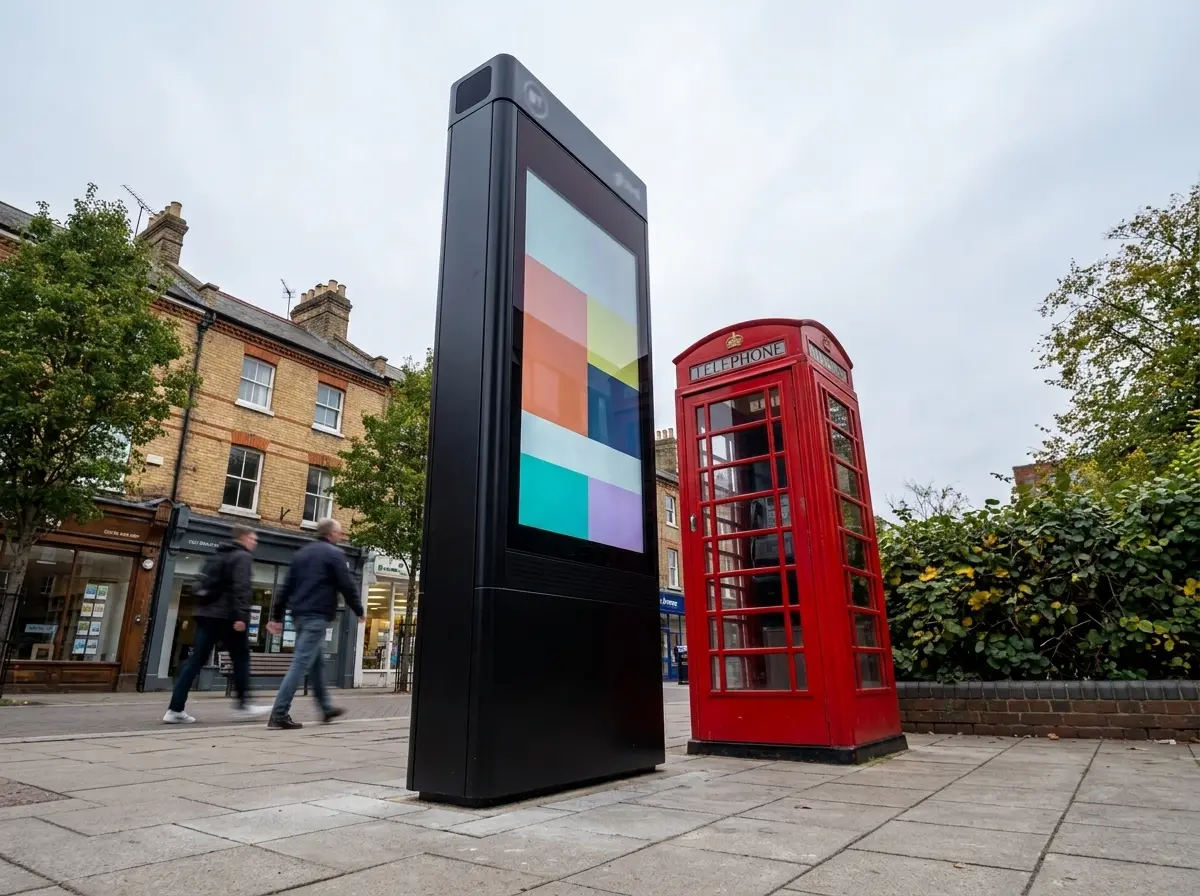
Oxford City Council has refused BT’s plan to swap Summertown’s phone boxes for a 3-metre digital advertising hub, ruling the design obtrusive and out of place on Banbury Road. A planning officer’s report found the illuminated screen would dominate the street rather than sit quietly within it. The decision makes Oxford at least the eighth UK planning authority in recent years to turn down the same product.
BT pitched the hub as free calls, WiFi and future technology rolled into one unit. Council after council keeps saying no for the same two reasons: how the thing looks, and what BT itself admits happens at some of the hubs already switched on.
A Design Officer Calls the Hub “Incongruous”
The proposal would have removed pay phones on Banbury Road and installed a BT Street Hub, a freestanding unit with an illuminated advertising screen offering free calls and WiFi. BT told the council the unit could later add “air quality monitoring, emergency messaging” and 4G/5G mobile coverage.
A city council planning officer accepted those benefits existed but recommended refusal anyway. The report said “obtrusive designs and unthoughtful siting of signs and advertisements can have a detrimental effect on visual amenity or on the character of an area.”
Height was the central problem. “The proposed hub would have a very substantial height of 3 metres and would appear particularly prominent and incongruous because of its siting,” the officer wrote. Unlike a phone box, the hub would not attach to a structure, and its advertising would not have to relate to nearby shops.
Illumination made it worse. “The impact of the proposed advertisements on amenity would be exacerbated by the proposed illumination, which would make their appearance more prominent,” the officer found. Summertown’s existing kiosks are already 2.51 metres tall and already carry side adverts that harm the area, the report said, calling that proof of the damage a taller, brighter unit could do. The hub would bring “street clutter” and “an incongruous addition to the street scene and character of the surrounding area,” the officer concluded.
Oxford Joins a List That Keeps Growing
Oxford is not the first council to say no. Crime and clutter concerns have led several UK councils to refuse Street Hub applications since 2018, including Bristol City, Brighton and Hove and Middlesbrough. A wider look at planning records shows the list runs longer still, and the objections repeat almost word for word from one town to the next.
| Council or Authority | Where | When | Stated Reason |
|---|---|---|---|
| Oxford City Council | Banbury Road, Summertown | 2026 | Height and illumination ruled obtrusive and incongruous |
| Preston City Council | Friargate North and New Hall Lane | Reported by the BBC | Added to street clutter, narrowed a pedestrianised route |
| Brighton and Hove City Council | Citywide | November 2022 | Six hubs refused as street clutter |
| Middlesbrough Council | Newport Road, Benson Street, Marton Road | Spring 2026 | Highway safety, clutter and crime risk |
| Middlesbrough Development Corporation | Corporation Road | Late 2025 | One of three hubs refused over crime risk; two approved nearby |
| Harrogate Town Council | Town centre | October 2025 | Objected over street scene impact and anti-social behaviour risk |
| Bath and North East Somerset area (Keynsham) | High street | December 2025 | Blocked over anti-social behaviour and pavement obstruction |
| Stroud District Council | High Street | 2023 | Called the design alien and incongruous to the town centre |
Two planning authorities inside one town, Middlesbrough, reached opposite conclusions on hubs a few streets apart within months of each other. The outcome depends heavily on which committee reviews the file.
The Free Call BT Admits Got Misused
BT did not deny the crime problem. In its application to Oxford City Council, the company said “a small number of locations drew attention to local drug issues,” caused by misuse of the free call service, and said it has since “invested significantly in developing call restriction capabilities.”
Other councils have heard blunter accounts of what that misuse looks like. In Middlesbrough, Cleveland Police described the free phones at existing hubs as an ongoing nuisance linked to repeated crime, Teesside Live reported.
The centre of a series of linked incidents of violence, drug use, and anti-social behaviour.
A Cleveland Police officer used that description for the town’s existing street hubs while objecting to three new applications this spring. Drug users gathered in public view to order class A drugs through the free call line, the officer said.
A similar account turned up near Bath. A design-out-crime officer covering Tower Hamlets said CCTV footage there showed drug users forming an orderly queue to use the hubs’ free call, feeding a decision to block a similar hub in Keynsham in December, the Bath Echo reported.
BT’s published anti-social behaviour policy leans on an algorithm that can restrict mobile numbers tied to illegal drug buys once police confirm the pattern, the same safeguard Thames Valley Police asked to see applied on Banbury Road.
Why Didn’t Thames Valley Police Object?
Thames Valley Police reviewed the Summertown proposal and raised no formal objection, a lighter stance than other forces have taken. The force accepted the hub on one condition: BT keeps using an algorithm to flag repeated anti-social number use, with a joint review three months after installation to check for problems.
Oxford’s refusal came down to planning grounds only. With that condition in place, the hub “would not be likely to cause unacceptable harm to public safety and accessibility,” the report said. Views on the same technology differ sharply from force to force and town to town.
- Thames Valley Police – raised no objection to the Oxford hub, subject to an algorithm review after three months
- Cleveland Police – called existing Middlesbrough hub freephones an ongoing nuisance tied to violence and drug use
- North Yorkshire Police’s designing out crime officer – told Harrogate’s planning committee BT’s anti-social behaviour plan was comprehensive
- Tower Hamlets design-out-crime officer – documented drug users queuing at hubs to place free calls ordering drugs, cited near Bath
Harrogate’s town council objected anyway on street scene grounds, even after hearing that police assessment. Oxford ran the opposite way: police comfort, and still a planning refusal.
How BT’s Ad-Funded Hubs Pay for Themselves
BT frames the hubs as a free upgrade to public infrastructure. Deployment and upkeep are funded entirely by on-screen advertising revenue, with “no cost to the taxpayer, national or local,” according to BT’s own pitch to councils. Each unit gives councils five per cent of screen time free for local messages.
A single Street Hub bundles several services into one 3-metre column:
- Free UK calls, backed by the number-blocking algorithm described to police
- Public WiFi rated at up to 1Gbps within a 150-metre radius
- A dedicated 999 button and USB charging ports
- Double-sided 75-inch screens that rotate adverts every 10 seconds
- Small-cell 4G and 5G boosts, plus sensors councils can use for air quality data
The rollout behind these applications is large. Trade title Telecoms.com reported in March 2024 that BT had 959 Street Hubs live nationally, alongside a 10-year deal with media firm Global to convert up to 2,000 more BT payphones into hubs from 2025 onward. Global’s own site says its partnership with BT has turned more than 25,000 phone box sites digital, a figure covering its wider roadside advertising estate built on old kiosks as well as full hubs. BT’s more recent planning submissions, including ones seen by Teesside Live this March, tell councils that more than 900 hubs have gone live nationally since 2017, when the first InLink-branded units appeared on British streets. BT bought that underlying technology outright in December 2019.
What Happens to Summertown’s Old Phone Boxes Now
Refusing the hub does not automatically save the phone boxes themselves. Ofcom rules protect a payphone only if it meets strict criteria: no full coverage from all four mobile networks, a location at a recognised accident or suicide hotspot, or boxes that log more than 52 calls a year. Regulator estimates put roughly 5,000 boxes nationally under that protection. Anything outside those criteria can be removed by BT without a council consultation, hub application or no hub application.
Thousands of unprotected boxes have gone to local authorities through BT’s adopt-a-kiosk scheme instead, turned into WiFi points, book exchanges or defibrillator cabinets. Summertown’s kiosks could follow that path, stay as ordinary phone boxes, or resurface in a fresh hub application.
BT has not said whether it will appeal the Oxford refusal. In Middlesbrough, a near-identical refusal on Southfield Road was overturned on appeal at the end of March, though a separate Middlesbrough refusal on Borough Road was not appealed. The three-month police review that would have tested Oxford’s algorithm will not happen now, at least not on Banbury Road.
Frequently Asked Questions
What Exactly Is a BT Street Hub?
A Street Hub is a freestanding column, roughly 3 metres tall, that replaces a traditional phone box with free calls, WiFi and advertising screens funded entirely by that advertising. BT built the current generation on technology it bought from InLink Limited in December 2019, after InLink’s original units began appearing on British streets in 2017.
Why Do So Many Councils Keep Refusing BT’s Street Hub Plans?
Most refusals cite two issues: the unit’s height and lighting harming a street’s visual character, and free call features being misused for drug dealing or anti-social behaviour elsewhere. Outcomes still vary by planning authority. Middlesbrough’s town centre body approved two hubs on one street in 2025 while a neighbouring committee rejected three more nearby in 2026.
Are Old BT Phone Boxes Protected from Removal?
Only if they meet Ofcom’s criteria: poor mobile coverage from all four networks, a location at a recognised accident or suicide hotspot, more than 52 calls logged in a year, or another exceptional local need. Boxes outside those rules can be removed by BT without consulting the council, regardless of any hub application’s outcome.
Can BT Appeal Oxford’s Refusal?
Yes, and it has succeeded before. A refusal of a Street Hub on Southfield Road in Middlesbrough was overturned on appeal at the end of March this year, though a separate refusal on the town’s Borough Road was left unappealed.
How Long Is the Free Call on BT’s Street Hubs?
Reports from council meetings near Bath describe a free 30-second call as the feature drug users were seen queuing to use before the line cuts off. BT’s call-restriction algorithm is designed to block specific numbers once police confirm that pattern of misuse.


Nintendo Already Tested These NES Remakes, With Mixed Results

South Korea’s Crypto Framework Bill Hinges on a Bank Standoff

Court of Appeal Restores Imo APP Ahead of 2027 Polls

Vivo’s X300 Costs $647, but No US Carrier Sells It

Super Micro’s Bargain Stock Price Rests on One Hidden Customer

Resident Evil’s Remake Profits Just Vindicated Capcom’s Pragmata Bet

XRP Stalls Near $1 While Ripple’s Own Stablecoin Surges

WhatsApp Web’s Free Calling Update Takes Aim at Zoom

Hiya Toys’ Fox Figure Ships the Same Year as Persona 6

ARRI Hands Honor Its First-Ever Smartphone Camera Deal

Fable 5 and Mythos 5 Return as US Lifts Anthropic Export Controls

SpaceX’s Google Deal Turns a Rocket Company Into a Cloud Landlord

CD Projekt Red Co-CEO: Redemption Arc Isn’t Done, Witcher 4 in 2027

Oracle Cuts 21,000 Jobs in a Year, Cites AI in 10-K Filing

XPL Rallies 30% Ahead of Plasma One Card Tier Launch

DGO App Brings Rs 549 Mobile Pass for FIFA World Cup 2026 in Nepal

Moonshot AI Targets $30 Billion in China’s Fastest AI Funding Sprint

Google Search Profiles Build a Follow Graph Inside Discover

Microsoft Xbox Layoffs Start in July as Sharma Slams 3% Margin

Oppo’s ColorOS 17 Eligibility List Leaves A-Series Buyers Behind
-
 AI4 weeks ago
Fable 5 and Mythos 5 Return as US Lifts Anthropic Export Controls
-
 AI2 months ago
SpaceX’s Google Deal Turns a Rocket Company Into a Cloud Landlord
-
 GAMING1 month ago
CD Projekt Red Co-CEO: Redemption Arc Isn’t Done, Witcher 4 in 2027
-
 AI1 month ago
Oracle Cuts 21,000 Jobs in a Year, Cites AI in 10-K Filing
-
 CRYPTO2 months ago
XPL Rallies 30% Ahead of Plasma One Card Tier Launch
-
 APPS2 months ago
DGO App Brings Rs 549 Mobile Pass for FIFA World Cup 2026 in Nepal
-
 AI2 months ago
Moonshot AI Targets $30 Billion in China’s Fastest AI Funding Sprint
-
 NEWS2 months ago
Google Search Profiles Build a Follow Graph Inside Discover