
GAMING
PlayStation Discount Codes Hide a Stickier Savings Trap
Last-day PS Store Summer Sale discounts up to 75% stack with Visa bonuses and Plus perks, locking players deeper into Sony’s digital ecosystem.

PlayStation’s Summer Sale closes August 12 with digital PS5 and PS4 titles marked down as much as 75 percent, some older games sitting under $20 or even $6. The clock is measured in hours, not weeks.
Yet the loudest percentage tags are only the entry point. The lasting discounts come from stacking a Visa card bonus, a Plus membership, gift-card balances and certified refurbished hardware, each of which pulls a player deeper into Sony’s store and subscription rails.
None of those levers is new on its own. Used together against a short deadline, they change both the final receipt and the habits that follow it.
Hours Left on the Biggest Digital Markdowns
Official PlayStation messaging confirms the Summer Sale ends August 12 at 23:59 PDT/BST/JST. It opened July 15, refreshed mid-run, and still carries thousands of PS5 and PS4 games plus add-ons.
Recent highlights from coverage and storefronts include Baldur’s Gate 3 near $49, Ghost of Yotei around $50, and Forza Horizon 5 at roughly half price near $30. The “Games Under 20” bin holds older titles as low as $6. Plus members often see an extra cut layered on top.
- Deadline: August 12, 23:59 regional time zones
- Peak cut: up to 75% on selected titles
- Floor bin: multiple older games under $20, some near $6
- Member layer: additional percentage off for active Plus subscribers on many SKUs
The sale calendar itself is short and fixed:
- July 15: Summer Sale opens across PS5 and PS4 storefronts
- Mid-run: catalog refreshes with fresh markdowns and bins
- August 12, 23:59: regional clocks cut the base percentages
Players on X have been blunt about the fine print. One widely liked post called out 50 percent off five-year-old £70 games as thin and noted first-party prices rarely move, tying the frustration to the broader digital-only push. The bargains exist, but they land hardest on backlog and third-party catalogs.
That split matters at checkout. A shopper chasing current first-party releases will see thinner movement. A shopper clearing older third-party backlog will hit the floor bin and the member layer more often.
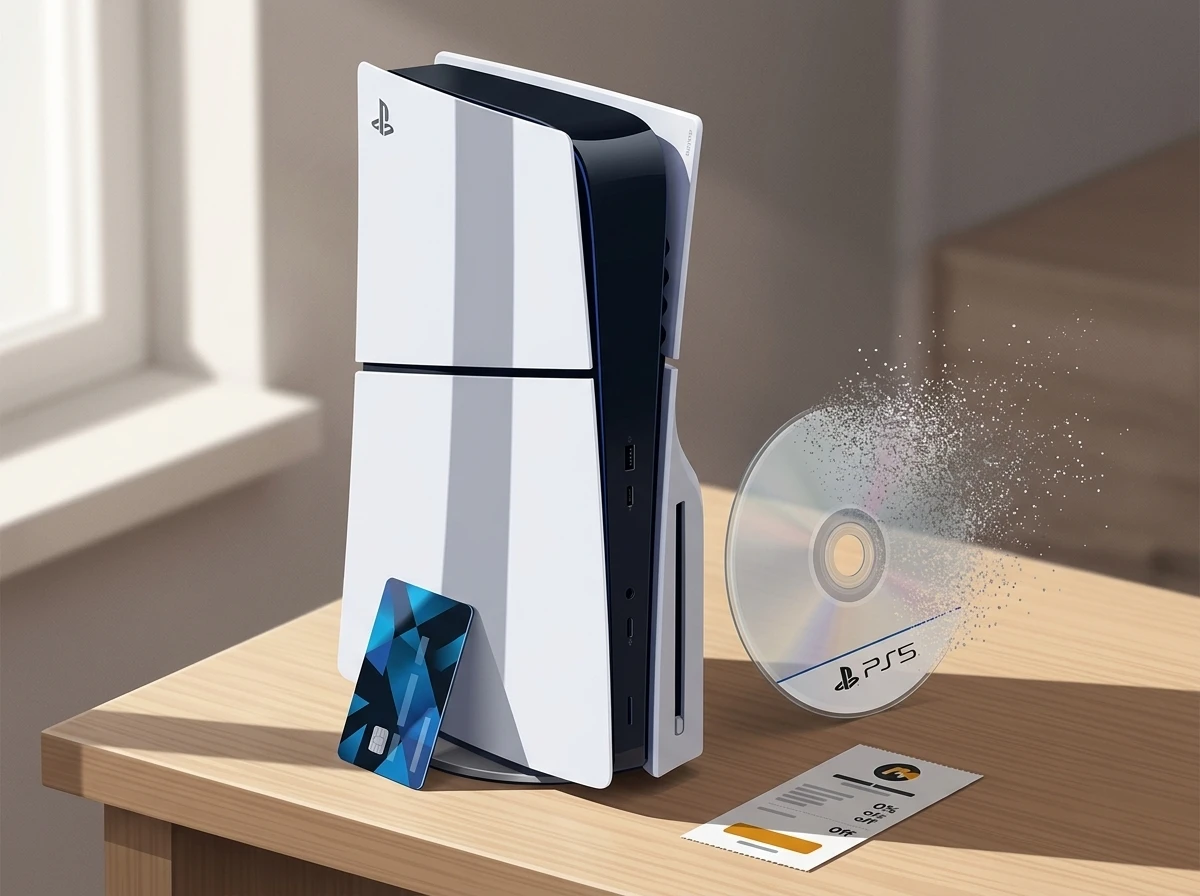
The Visa Card Turns Spend Into Instant Credit
Sony’s own PlayStation Visa Credit Card (issued with Comenity) skips the classic coupon code. New cardholders who hit a $100 statement credit after $500 spend inside the first 60 days pocket the bonus as account credit. There is no annual fee.
Ongoing earn rates favor the ecosystem:
| Category | Points back | Notes |
|---|---|---|
| PlayStation Store and Sony Store | 5% | Games, add-ons, hardware, subscriptions |
| Internet, cable, streaming | 3% | Monthly bills and services |
| Groceries and restaurants | 2% | Including delivery and takeout |
| Everything else | 1% | Everyday Visa purchases |
Spend $6,000 in a calendar year and the card unlocks a free 12-month PlayStation Plus Premium membership (claim window applies). Points redeem for Store codes, statement credits, gift cards or hardware. Same email on the PSN account and card is required or the gaming perks can miss.
The math is simple for anyone already buying a console or a stack of sale games. The card turns ordinary outlays into a $100 buffer and then into recurring 5 percent kickbacks inside the same store that just ran the sale.
Because the highest earn rate sits on PlayStation Store and Sony Store purchases, every later game, add-on or subscription renewal feeds the same loop. Everyday spend at 1 to 3 percent still helps clear the $500 welcome threshold and the $6,000 annual mark, but the design clearly rewards staying inside Sony’s rails once the card is open.
Plus Memberships Multiply the Cut
Sony sells three PlayStation Plus membership tiers: Essential, Extra and Premium. All three include online multiplayer, monthly games, exclusive content packs and member-only Store discounts. Extra adds the large Game Catalog. Premium layers Classics, game trials and cloud streaming.
Recent U.S. pricing reported around $80 per year for Essential, higher for Extra and Premium near $160 annually, with monthly options starting near $11 for the base tier. Exact figures shift with promotions and region; the official site shows live plans at checkout.
| Tier | Core extras beyond Essential | Discount access |
|---|---|---|
| Essential | Monthly games, multiplayer, cloud saves | Member deals + content packs |
| Extra | Full Game Catalog (hundreds of titles) | Same member deals |
| Premium | Classics Catalog, trials, PS5 cloud streaming | Same member deals + more catalog depth |
Context from deal roundups notes Plus can add another 5 percent on ordinary purchases and exclusive discounts that reach as high as 30 percent on selected titles each month. During the Summer Sale those layers compound. A subscriber walking the “Under 20” aisle can finish well below the already-reduced sticker.
The membership also normalizes recurring billing. Free monthly games and catalog access make the next renewal feel cheaper than canceling.
Tier choice still shapes the value. Essential mainly multiplies the sale through member pricing. Extra and Premium shift more playtime into the catalogs themselves, so some wishlist titles never need a paid sale purchase at all. That is a different kind of discount, paid up front through the annual fee.
Gift Cards Work Only Inside the Digital Walls
Retail gift cards and digital codes still look like pure savings, especially when bought at a discount from third parties or stacked from rewards. Once redeemed they sit as wallet balance.
Sony is explicit: gift cards work only on digital Store products. They cannot buy physical consoles or accessories from PlayStation Direct, nor merchandise from PlayStation Gear. Region locks apply; a U.S. code stays on a U.S. account.
- Redeem on console, app or web browser
- Balance applies to games, DLC, subscriptions and add-ons
- No Direct hardware or Gear store checkout
- Codes are region-locked to the account country
That limitation turns a “free money” gift into another reason to stay inside the digital catalog rather than hunting physical stock or third-party retailers.
Balance that arrives from rewards or discounted cards still spends like cash on the Store. It simply cannot leave the Store. Hardware shoppers must pay Direct with other methods, while game and subscription buyers can drain the wallet first and keep the Visa or bank card for whatever remains.
Certified Refurbished Is Still the Console Discount Path
New PS5 hardware rarely sees deep official cuts. Sony’s answer is its own factory program. Certified refurbished consoles on PlayStation Direct go through inspection and carry a manufacturer warranty. Listings for slim Digital and disc models have historically sat roughly $100 under new street prices, though current stock and exact tags move with inventory.
Controllers and other accessories appear in the same section. Buyers avoid gray-market uncertainty and still keep the full Sony support path. Availability swings; some models show low stock or “currently unavailable” on any given day.
For someone who needs a console first and games second, this remains the cleanest official hardware markdown. Pair it with the Visa spend requirement and the $100 statement credit can offset a chunk of the outlay.
Gift-card balance cannot cover that hardware step. The refurbished path and the digital wallet path stay separate by design. Players who need both a console and a sale library must plan two payment flows, not one.
How the Stack Compounds
The practical order most players follow looks like this:
- Open the Visa if credit qualifies, then route the next $500 of planned spend (sale games, Plus renewal, accessories) through it for the $100 credit.
- Confirm Plus status before checkout so member pricing and any extra percentage apply automatically.
- Apply gift-card or rewards balance to the remaining digital total.
- Hit the sale before 23:59 on August 12 for the base markdowns.
- Consider Direct refurbished only if hardware is the missing piece and stock matches.
Each step is legitimate. Together they produce real dollars saved. They also move more of the player’s wallet, subscription calendar and future purchases onto Sony-controlled rails. That matters more as physical disc production ends in 2028 and digital becomes the default path for new releases.
Crowd chatter on X keeps circling the same tension: deep cuts feel good until the next full-price first-party title arrives and the only levers left are the same card and membership. The sale itself becomes training for permanent Store living.
Third-Party Titles Absorb the Heaviest Markdowns
The loudest storefront tags and the quietest first-party stickers tell different stories. Coverage highlights put Baldur’s Gate 3 near $49, Ghost of Yotei around $50, and Forza Horizon 5 near $30. The “Games Under 20” bin, with some older titles near $6, is built from backlog depth rather than brand-new platform exclusives.
Players on X already flagged the pattern. Fifty percent off five-year-old £70 games can feel thin, and first-party prices rarely move. The Summer Sale still reaches up to 75 percent on selected titles, yet that ceiling shows up most often where publishers are clearing older catalog, not where Sony is protecting current full-price launches.
| Example title or bin | Reported sale area | What it signals |
|---|---|---|
| Baldur’s Gate 3 | Near $49 | Large third-party cut, still above budget bins |
| Ghost of Yotei | Around $50 | Mid-pack markdown, not a floor price |
| Forza Horizon 5 | Near $30, roughly half | Clearance-style third-party pricing |
| Games Under 20 bin | Under $20, some near $6 | Oldest backlog takes the deepest tags |
Plus member layers widen that gap further. An extra percentage on ordinary purchases, and exclusive discounts that reach as high as 30 percent on selected titles, apply across the Store. They simply bite hardest where the base sale price is already low. A subscriber in the under-$20 aisle stacks more meaningful dollars than a shopper staring at a stubborn first-party tag.
The result is a sale that rewards backlog hunters and multi-platform catalogs more than anyone waiting on Sony’s own newest releases to break. That is useful if the wishlist is old and deep. It is less useful if the only missing games are current first-party holdouts.
The Store Tightens Its Grip After 2028
Physical disc production ending in 2028 removes the main off-ramp from the digital catalog. Once new releases default to the Store, the same tools that sweeten this Summer Sale become ordinary checkout furniture rather than seasonal extras.
Gift cards already refuse to buy Direct hardware or Gear merchandise. Plus already folds multiplayer, monthly games and member pricing into one renewal. The Visa already pays its richest 5 percent inside PlayStation Store and Sony Store purchases, with a free Premium year waiting behind $6,000 of annual spend. Each piece works today. Together they form the path of least resistance when discs stop arriving.
- Sale markdowns train shoppers to wait for Store percentages
- Member pricing rewards keeping Plus active through every checkout
- Wallet balance from gift cards spends only on digital goods
- Card points and statement credit pull everyday spend back toward the same account
Refurbished consoles on Direct remain the official hardware relief valve, historically about $100 under new street prices, but they still route buyers through Sony’s own storefront and warranty path. They do not reopen a broad physical-game market. They only lower the cost of entry into the same ecosystem.
Ongoing PlayStation Store monopoly cases already test how much control one storefront should hold. The sale stack does not resolve those cases. It does show why the habits formed before August 12 will matter more after 2028, when the alternative shelf is thinner.
What Players Keep After the Clock Hits Zero
When the Summer Sale banner drops, the games stay licensed to the account. The Visa points and statement credit remain. Plus keeps delivering monthly titles and catalog access until the next billing cycle. Gift-card balance carries forward for the next digital drop.
What disappears is the temporary percentage theater. What remains is a tighter relationship with the single storefront, the subscription tiers and the co-branded credit product. That outcome sits beside the larger legal pressure on the Store model itself, visible in the ongoing PlayStation Store monopoly cases.
Licenses, points and wallet balance outlast the banner. The deadline only removes the base markdowns and the urgency around them. Everything else in the stack keeps working on ordinary days, ordinary full-price launches and ordinary renewals.
For anyone staring at a long wishlist tonight, the numbers still favor acting before the deadline. Just know the cheapest path also installs the habits Sony needs for the fully digital years ahead.
The sale ends. The stack stays.


OpenAI Loses Its Only Ethicist After a Year of Safety Exits

Samsung Smart Switch Now Lets iPhones Jump Without the App Tax

Galaxy S26 FE Price Leak Puts It Too Close to Flagships

Coforge Turns Its PE Deal Playbook Into a Nuuron Business Unit

OCBC Lets Retail Buy Platinum and Palladium From 0.01 Ounce

Xiaomi’s Safer 67W Power Banks Preview China’s 2027 Cull

Galaxy Z Fold 8 Settings That Turn Battery Gains Into Years

PlayStation Discount Codes Hide a Stickier Savings Trap

Free Fire Max Codes Today Feed the Free Tier and the Scammers

Kazakhstan Crypto Amnesty Feeds State Reserve Machine

Fable 5 and Mythos 5 Return as US Lifts Anthropic Export Controls

Oracle Cuts 21,000 Jobs in a Year, Cites AI in 10-K Filing

SpaceX’s Google Deal Turns a Rocket Company Into a Cloud Landlord

CD Projekt Red Co-CEO: Redemption Arc Isn’t Done, Witcher 4 in 2027

XPL Rallies 30% Ahead of Plasma One Card Tier Launch

Google Search Profiles Build a Follow Graph Inside Discover

DGO App Brings Rs 549 Mobile Pass for FIFA World Cup 2026 in Nepal

Moonshot AI Targets $30 Billion in China’s Fastest AI Funding Sprint

Microsoft Xbox Layoffs Start in July as Sharma Slams 3% Margin

Oppo’s ColorOS 17 Eligibility List Leaves A-Series Buyers Behind
-
 AI1 month ago
Fable 5 and Mythos 5 Return as US Lifts Anthropic Export Controls
-
 AI2 months ago
Oracle Cuts 21,000 Jobs in a Year, Cites AI in 10-K Filing
-
 AI2 months ago
SpaceX’s Google Deal Turns a Rocket Company Into a Cloud Landlord
-
 GAMING2 months ago
CD Projekt Red Co-CEO: Redemption Arc Isn’t Done, Witcher 4 in 2027
-
 CRYPTO2 months ago
XPL Rallies 30% Ahead of Plasma One Card Tier Launch
-
 NEWS2 months ago
Google Search Profiles Build a Follow Graph Inside Discover
-
 APPS2 months ago
DGO App Brings Rs 549 Mobile Pass for FIFA World Cup 2026 in Nepal
-
 AI2 months ago
Moonshot AI Targets $30 Billion in China’s Fastest AI Funding Sprint